Portrait of Bernard Meninsky

Meet the 62 Most Famous Paintings by Bernard Meninsky

Updated oktober 2026 · ranked by our popularity score (searches, visits and orders for each work) · 62 works by Bernard Meninsky in our catalogue

In short

If you know one Bernard Meninsky painting, it's probably The Red Hat (Margaret Meninsky) (1919), which hangs in the Ferens Art Gallery, Hull. Portrait of a Girl (1916) and Portrait of a Boy (1917) round out the three pieces people recognise right away. Our catalogue has 62 works by Bernard Meninsky. Below are the 62 people know best, each with its year, where to find it and what makes it special.

1891 – 1950, Konotop Post-impressionism Most works: Somerville College

Start here: the top 10 Bernard Meninsky paintings

1
The Red Hat (Margaret Meninsky) (1919) by Bernard Meninsky

The Red Hat (Margaret Meninsky)

1919 · Oil · Ferens Art Gallery, Hull

In the quiet intimacy of The Red Hat, painted in 1919, we are invited into a world that feels both profoundly personal and timelessly poised. Bernard Meninsky, an artist whose life was shaped by the shifting shadows of early 20th-century Europe, captures here more than just a seated figure; he captures a breath held in time. The focal point is a woman, her presence commanding yet contemplative, draped in the…

6
Portrait of a Boy (1923) by Bernard Meninsky

Portrait of a Boy

1923

The Portrait of a Boy by Bernard Meninsky, created in 1923, is a masterpiece that exudes an aura of serenity and contemplation. This oil on canvas painting measures 91 x 71 cm and is a testament to Meninsky's skillful brushwork and his ability to capture the essence of his subjects. Composition and Details The boy in the portrait sits on a wooden chair, which dominates the scene, stretching from the…

7
Portrait of a Girl (1942) by Bernard Meninsky

Portrait of a Girl

1942 · Oil · Arts Council Collection, Londen

In the quietude of 1942, amidst a world convulsed by the tremors of global conflict, Bernard Meninsky captured a moment of profound stillness. His Portrait of a Girl serves as a poignant sanctuary of introspection, inviting the viewer into a private, contemplative space. The subject, a young woman with cascading locks, is caught in a downward gaze, her eyes averted from the observer to focus on something unseen—perhaps her own…

8
Two Women and Child (1913) by Bernard Meninsky

Two Women and Child

1913 · Drawing · Ben Uri Gallery and Museum, Londen

In the quiet, evocative realm of Bernard Meninsky’s 1913 work, Two Women and Child, we are invited into a moment of profound intimacy that transcends the mere depiction of figures. This finely executed drawing serves as a poignant window into the artist's early mastery, capturing a scene that feels both timeless and deeply personal. The composition centers on two women standing in close proximity, their presence anchored by the delicate…

More Bernard Meninsky favourites, 11 to 62

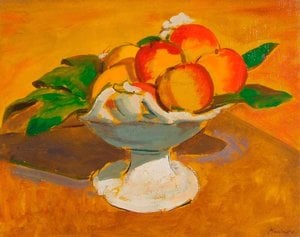
11Standing Female Nude by Bernard MeninskyStanding Female NudeBen Uri Gallery and Museum 12Lilies (1917) by Bernard MeninskyLilies1917 · The Hepworth Wakefield 13On the Departure Platform, Victoria Station (1918) by Bernard MeninskyOn the Departure Platform, Victoria Station1918 14Lady in Red (1922) by Bernard MeninskyLady in Red1922 15The Platform Canteen, Victoria Station (1918) by Bernard MeninskyThe Platform Canteen, Victoria Station1918 16The Arrival (1918) by Bernard MeninskyThe Arrival1918 17The Arrival of a Leave Train, Victoria Station, 1918 (1919) by Bernard MeninskyThe Arrival of a Leave Train, Victoria Station, 19181919 18Victoria Station, District Railway (1918) by Bernard MeninskyVictoria Station, District Railway1918 19Portrait of a Girl (The Artist's Sister) (1919) by Bernard MeninskyPortrait of a Girl (The Artist's Sister)1919 · The Stanley - Audrey Burton Gallery 20Beech Trees (1921) by Bernard MeninskyBeech Trees1921 · Somerville College 21Still Life (1921) by Bernard MeninskyStill Life1921 · The Mercer Art Gallery 22Still Life with Yellow Bowl and Fruit (1920) by Bernard MeninskyStill Life with Yellow Bowl and Fruit1920 · Nottingham Castle Museum And Art Gallery 23Boy with a Cat (1925) by Bernard MeninskyBoy with a Cat1925 24Seated Nude (1924) by Bernard MeninskySeated Nude1924 25Girl with a Book (1924) by Bernard MeninskyGirl with a Book1924 · Scottish National Gallery of Modern Art 26View on the Oxford Canal (1924) by Bernard MeninskyView on the Oxford Canal1924 · Somerville College 27Hillside in Cumberland (1924) by Bernard MeninskyHillside in Cumberland1924 · Somerville College 28Trees (1924) by Bernard MeninskyTrees1924 · Somerville College 29View across Radcliffe House Garden (1924) by Bernard MeninskyView across Radcliffe House Garden1924 · Somerville College 30Portrait of a Young Jewess (1928) by Bernard MeninskyPortrait of a Young Jewess1928 31Mother and Child (1930) by Bernard MeninskyMother and Child1930 · Jerwood Gallery 32Cookham Dean, Berkshire (1930) by Bernard MeninskyCookham Dean, Berkshire1930 33Toddler (1938) by Bernard MeninskyToddler1938 34Elsie Farleigh (1900–1981) (1934) by Bernard MeninskyElsie Farleigh (1900–1981)1934 · Walker Art Gallery 35Andalusian Landscape (1937) by Bernard MeninskyAndalusian Landscape1937 · Arts Council Collection 36On the Beach, Spanish Bathers (1936) by Bernard MeninskyOn the Beach, Spanish Bathers1936 · Pallant House Gallery 37Irish Peasants (1940) by Bernard MeninskyIrish Peasants1940 · Jerwood Gallery 38Sleeping Woman in a Landscape (1945) by Bernard MeninskySleeping Woman in a Landscape1945 39Figure in a Landscape (1948) by Bernard MeninskyFigure in a Landscape1948 · Central Saint Martins College of Arts And Design 40Torremolinos, South of Spain (1947) by Bernard MeninskyTorremolinos, South of Spain1947 · Ben Uri Gallery and Museum 41Pears in a Bowl (1947) by Bernard MeninskyPears in a Bowl1947 · Reading Museum - Town Hall 42The Bathers (1948) by Bernard MeninskyThe Bathers1948 · Walker Art Gallery 43Landscape (1923) by Bernard MeninskyLandscape1923 · Walker Art Gallery 44Standing Female Nude in a Landscape by Bernard MeninskyStanding Female Nude in a Landscape 45Female Nude, Back View by Bernard MeninskyFemale Nude, Back ViewBen Uri Gallery and Museum 46Italian Landscape by Bernard MeninskyItalian LandscapeSomerville College 47Bathers by Bernard MeninskyBathersHet Ashmolean Museum van Kunst en Oudheden 48Still Life, Fruit by Bernard MeninskyStill Life, Fruit 49The Fruit Gatherers by Bernard MeninskyThe Fruit Gatherers 50Portrait af a Woman by Bernard MeninskyPortrait af a WomanAbbot Hall Art Gallery 51Helen Darbishire, CBE, MA (1881–1961), Governor of the Froebel Educational Institute (1932–1961) by Bernard MeninskyHelen Darbishire, CBE, MA (1881–1961), Governor of the Froebel Educational Institute (1932–1961)Froebel College 52Figures in a Landscape by Bernard MeninskyFigures in a Landscape 53Landscape by Bernard MeninskyLandscapeTowner 54Still Life, Onions and Leeks by Bernard MeninskyStill Life, Onions and LeeksBen Uri Gallery - Museum 55Still Life with Apples by Bernard MeninskyStill Life with Apples 56Woman with a Basket of Fruit by Bernard MeninskyWoman with a Basket of Fruit 57Flowers in a Pot by Bernard MeninskyFlowers in a Pot 58Study of Trees (1924) by Bernard MeninskyStudy of Trees1924 · Somerville College 59John Banting (1924) by Bernard MeninskyJohn Banting1924 · National Portrait Gallery 60Mother and Child (1919) by Bernard MeninskyMother and Child1919 · The Stanley - Audrey Burton Gallery 61Still Life with Apples (1927) by Bernard MeninskyStill Life with Apples1927 · Nottingham Castle Museum And Art Gallery 62Mother and Child by Bernard MeninskyMother and Child

What Bernard Meninsky painted most

The four subjects that come up most often in these pieces, each with its best-known example.

Where you can see Bernard Meninsky's paintings

The 8 museums that hold the most of the paintings on this page.

Museum City Works by Bernard Meninsky Paintings from this list
Somerville College, OxfordSomerville College Oxford 7 Beech Trees, View on the Oxford Canal, Hillside in Cumberland
Ben Uri Gallery and Museum, LondenBen Uri Gallery and Museum Londen 4 Two Women and Child, Standing Female Nude, Torremolinos, South of Spain
Walker Art Gallery, LiverpoolWalker Art Gallery Liverpool 3 Elsie Farleigh (1900–1981), The Bathers, Landscape
The Hepworth Wakefield, WakefieldThe Hepworth Wakefield Wakefield 2 Portrait of a Boy, Lilies
Arts Council Collection, LondenArts Council Collection Londen 2 Portrait of a Girl, Andalusian Landscape
The Stanley - Audrey Burton Gallery, LeedsThe Stanley - Audrey Burton Gallery Leeds 2 Portrait of a Girl (The Artist's Sister), Mother and Child
Nottingham Castle Museum And Art Gallery, NottinghamNottingham Castle Museum And Art Gallery Nottingham 2 Still Life with Yellow Bowl and Fruit, Still Life with Apples
Jerwood Gallery, HastingsJerwood Gallery Hastings 2 Mother and Child, Irish Peasants

Bernard Meninsky decade by decade: one standout piece each

Works per decade

Pick a decade to see its standout piece.

Your questions about Bernard Meninsky's paintings

Which Bernard Meninsky painting is the most famous?See the answer

Top of the list is The Red Hat (Margaret Meninsky) (1919), Ferens Art Gallery, Hull. Right behind it: Portrait of a Girl (1916) and Portrait of a Boy (1917).

How old was Bernard Meninsky when The Red Hat (Margaret Meninsky) was made?See the answer

28 years old. Bernard Meninsky was born in 1891, and The Red Hat (Margaret Meninsky) dates from 1919.

What are the 10 best-known Bernard Meninsky paintings?See the answer

The Red Hat (Margaret Meninsky), Portrait of a Girl, Portrait of a Boy, Sketch of Soldiers Arriving on Leave, Portrait, Portrait of a Boy, Portrait of a Girl, Two Women and Child, Robin and The Woman's Head. You'll find the year and the museum of each in the list above.

How many paintings did Bernard Meninsky create?See the answer

We have 62 works by Bernard Meninsky in our catalogue, dated 1913 to 1948.

Where can you see Bernard Meninsky's famous paintings?See the answer

You'll find most of them in Somerville College (Oxford), Ben Uri Gallery and Museum (Londen) and Walker Art Gallery (Liverpool). The museum list above has the full breakdown.

When did Bernard Meninsky paint the best-known pieces?See the answer

In 1920s, more than any other time: 17 of the 62 pieces on this page date from then, Portrait of a Boy among them.

Which famous Bernard Meninsky paintings came first and last?See the answer

The earliest piece here is Two Women and Child (1913); the most recent is Figure in a Landscape (1948).

What subjects show up most in Bernard Meninsky's paintings?See the answer

Portrait (5), Reflection (3) and Victorian era (2), out of the 62 pieces on this page.

What materials did Bernard Meninsky paint with most?See the answer

Oil, used in 3 of the 62 pieces on this page.

What art movement was Bernard Meninsky part of?See the answer

Post-impressionism and Contemporary realism, as you can see in the pieces on this page.

Which Bernard Meninsky pieces can you see at the Somerville College?See the answer

You can see 7 of the pieces on this page at the Somerville College, Oxford, including Beech Trees, View on the Oxford Canal and Hillside in Cumberland.

Can I get a reproduction of a Bernard Meninsky painting?See the answer

Yes. Every painting on this page is available as a hand-painted oil reproduction or a print, in the size that suits you. Just open the painting's page to order.

Getting to know Bernard Meninsky

Bernard Meninsky: Een leven geschilderd in schaduw en licht

Geboren in Konotop, Oekraïne – een plek doordrenkt van zowel de Oekraïense als de Jiddische cultuur – begon de artistieke reis van Bernard Meninsky ver verwijderd van de bruisende kunstcentra van Londen. Zijn vroege jaren, gekenmerkt door een snelle verhuizing naar Liverpool met zijn familie, legden de basis voor een kunstenaar die diep verbonden was met menselijke emotie en de stille waardigheid van alledaagende momenten. Ondanks het feit dat hij op elfjarige leeftijd de formele school verliet, kwam er al snel een opmerkelijk talent voor tekenen aan de oppervlakte, wat leidde tot beurzen die hem in 1912 naar de prestigieuze Slade School of Fine Art brachten. Deze cruciale periode draaide niet enkel om technische training; het was een transformerende onderdompeling in de ontluikende wereld van de moderne kunst, sterk beïnvloed door figuren als Walter Sickert en Henry Tonks, terwijl hij tegelijkertijd de gevestigde normen uitdaagde die door Roger Fry werden gepredikt.

De afwijzing van avant-gardebewegingen door de Slade – in het bijzonder het kubisme – vormde Meninsky’s benadering. Hij omarmde niet onmiddellijk radicale experimenten, maar ontwikkelde in plaats daarvan een eigenzinnige stijl die werd gekenmerkt door evocatieve figuren, aangrijpende landschappen en bovenal zijn diep bewegende ‘Moeder en Kind’-scènes. Deze werken, doordrenkt met een gevoel van melancholie en stille kracht, werden het handelsmerk van zijn oeuvre. Zijn tijd aan de academie leidde tot verbindingen die onschatbaar zouden blijken voor zijn carrière, waaronder een levenslange vriendschap met William Roberts en mentorschap van Walter Sickert, die een essentieel platform bood voor zijn werk.

Het oog van de oorlogskunstenaar

De Eerste Wereldoorlog veranderde het traject van Meninsky onherroepelijk. Nadat hij in 1918 bij de Royal Fusiliers was getreden, transformeerde hij tot oorlogskunstenaar onder de Britse War Memorials Committee, waarbij hij de realiteit van het conflict vastlegende met onverzettelijke eerlijkheid en gevoeligheid. Zijn oorlogsschilderijen – in het bijzonder ‘The Arrival of a Leave Train, Victoria Station’ – bieden een krachtig venster op het leven van terugkerende soldaten; ze vangen hun vermoeidheid, verlangen en stille veerkracht. Deze werken waren niet louter afbeeldingen van de strijd; het waren intieme portretten van de menselijke ervaring te midden van verwoesting. Meninsky’s toewijding aan deze rol ging verder dan louter observatie; hij streefde ernaar om het emotionele gewicht van de oorlog over te brengen, een weerspiegeling van een diepe empathie voor degenen die erdoor getroffen werden.

Na de oorlog zette Meninsky zijn carrière als docent voort aan de Central School of Arts and Crafts, waar hij een nieuwe generatie kunstenaars vormgaf. Zijn toewijding aan het onderwijs werd ondersteund door een onwankelbaar geloof in de kracht van kunst om de menselijke conditie te verlichten. Zijn werk tijdens deze periode weerspiegelde een verschuiving naar grotere introspectie, met een focus op huiselijke scènes en familiale relaties – in het bijzonder zijn gevierde ‘Moeder en Kind’-serie. Deze schilderijen, uitgevoerd in gedempte tonen en doordrenkt met een gevoel van stille intimiteit, werden steeds centraler voor zijn artistieke identiteit.

Stijl en invloeden

Meninsky's stijl wordt vaak omschreven als postimpressionistisch, maar hij ontwikkelde een unieke stem die eenvoudige categorisering oversteeg. Hij absorbeerde de gewaagde kleuren en expressieve penseelstreken van kunstenaans zoals Cézanne en Van Gogh, maar temperde deze met een uitgesproken Britse gevoeligheid. Zijn landschappen worden gekenmerkt door atmosferisch perspectief en een subtiel gebruik van kleur, terwijl zijn figuren een opmerkelijk gevoel van realisme combineren met emotionele diepgang. De invloed van Walter Sickert is bijzonder zichtbaar in Meninsky’s gebruik van licht en schaduw, evenals in zijn vermogen om de stemming en de atmosfeer van een scène te vangen.

De impact van zijn oorlogservaringen vormde ongetwijfeld zijn artistische visie. Het trauma van de oorlog bracht hem een diep besef bij van de kwetsbaarheid van het leven en het belang van menselijke verbinding. Deze gevoeligheid komt krachtig tot uiting in zijn ‘Moeder en Kind’-schilderijen, die niet slechts sentimentele afbeeldingen zijn, maar eerder diepzinnige meditaties over moederschap, verlies en hoop. Zijn werk staat als een testament voor de blijvende kracht van kunst om getuige te zijn van de geschiedenis en de complexiteit van de menselijke geest te verkennen.

Nalatenschap en blijvende relevantie

De nalatenschap van Bernard Meninsky reikt verder dan zijn individuele schilderijen. Hij was een belangrijke figuur binnen de London Group en droeg bij aan de ontwikkeling van het Britse modernisme. Zijn werk blijft vandaag de dag resoneren bij toeschouwers en biedt een aangrijpende herinnering aan de blijvende kracht van kunst om de menselijke ervaring vast te leggen. Het Imperial War Museum beheert een substantiële collectie van zijn oorlogswerken, wat ervoor zorgt dat zijn krachtige weergaven van het conflict nog generaties lang bestudeerd en gewaardeerd zullen worden. Zijn toewijding aan het onderwijs liet eveneens een onuitwisbare indruk achter op het artistieke landschap van Groot-Brittannië, door de carrières van talloze aspirant-kunstenaars vorm te geven.

All 62 works by Bernard Meninsky →