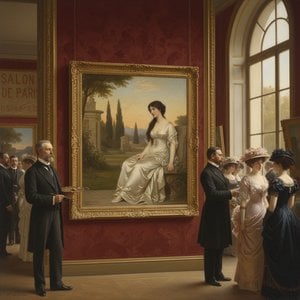
De Poëet van het Franse Platteland
Jules Breton (1827–1906) staat te boek als een hoeksteen van het Franse Realisme, een artistieke stroming die zich wijdde aan het accuraat en waarheidsgetrouw afbeelden van het leven, zonder enige opsmuk—een missie die hij met volledige overgave in zijn doeken verweefde. Geboren in het kleine dorp Courrières in de regio Pas-de-Calais in Noord-Frankrijk, werd de vroege jaren van Breton gekenmerkt door bescheiden omstandigheden, maar werden ook gevoed door een onwankelbare passie voor observatie en representatie. Zijn opvoeding, diep geworteld in het agrarisch rijke landschap van Artois, installeerde in hem een diep respect voor traditie en een liefde voor het land die centraal zou blijven staan in zijn kunst gedurende zijn lange carrière. Het verlies van zijn moeder op jonge leeftijd en zijn opvoeding door zijn vader, die het land van een rijke landheer beheerde, gaven hem een intieme verbinding met de ritmes van het rurale bestaan.
Terwijl veel van zijn tijdgenoten zochten naar de grandeur van mythologische of historische onderwerpen, richtte Breton zijn blik op de waardigheid van de gewone arbeider. Hij bezat het zeldzame vermogen om het alledaagse—de korensplinteraars, de oogsters en de herders—te verheffen, waarbij hij hen behandelde met een academische gratie die traditioneel was voorbehouden aan klassieke figuren. Deze unieke synthese stelde hem in staat om een van de belangrijkste overdragers te worden van een idyllisch visioen op het plattelandsleven, waarbij hij de schoonheid van het Franse landschap vastlegde door een lens die zowel diep naturalistisch als diep poëtisch was.
Artistieke Evolutie en de Realistische Geest
Bretons artistieke reis werd gevormd door een rigoureuze toewijding aan de principes van het Realisme en Naturalisme. Zijn vroege opleiding, waaronder studies aan het College St. Bertin, leidde hem uiteindelijk naar een diepere betrokkenheid bij de meesters van zijn tijd. Hij absorbeerde de compromisloze technieken van de beweging, met het doel kunst te creëren die diende als een spiegel die de samenleking in al haar complexiteit reflecteerde. Deze ontwikkelingsperiode werd gekenmerkt door een verlangen om te bereiken wat hij de grand style noemde—een manier om het rustieke genre te voorzien van een gevoel van monumentale belangrijkheid en tijdloosheid.
Zijn techniek kenmerkte zich door minutieuze details en een lumineus kleurenpalet, dat hij bekwaam inzette om de texturen van de natuurlijke wereld over te brengen. Of hij nu het zachte licht van de dageraad over een weide vastlegde of de zware, zonovergoten atmosfeer van een zomerveld, Breton gebruikte olieverf op canvas om een opmerkelijke diepte te bereiken. Zijn composities roepen vaak een gevoel van pastorale rust op, met scènes zoals:
- Vrouwen die kleding wassen aan de rivieroever, waar het spel van licht op het water de sereniteit van het landschap weerspiegelt.
- Kinderen die spelen in weiden, waarbij de onschuld en vitaliteit van de jeugd binnen de natuurlijke omgeving wordt gevangen.
- De ritmische arbeid van oogsters, die de kracht en adeldom tonen die te vinden zijn in handarbeid.
Door deze onderwerpen versierde Breton niet louter een canvas; hij creëerde meditaties over de blijvende relatie tussen de mensheid en de aarde.
Erfenis en Historisch Belang
De historische betekenis van Jules Breton ligt in zijn vermogen om de kloof te overbruggen tussen de academische tradities uit het verleden en het moderne realisme van de 19e eeuw. Door verfijnde, klassieke methoden toe te passen op de afbeelding van het boerenleven, schonk hij een gevoel van permanentie en waardigheid aan een klasse mensen die door de hoge kunst vaak werd over het hoofd gezien. Zijn werk resoneerde diep met het publiek van zijn tijd, wat hem aanzienlijke lof opleverde op de Parijse Salon en hem vestigde als een leidende figuur in de Franse kunst.
Buiten zijn individuele doeken strekte Bretons invloed zich uit via zijn familie en zijn rol binnen de bredere artistieke gemeenschap. Zijn dochter, Virginie Demont-Breton, zou eveneens een gevierd schilder worden en de erfenis van diepgaande observatie en technische meesterschap voortzetten. Vandaag de dag worden de werken van Jules Breton gekoesterd om hun nostalgische kracht en hun vermogen om de kijker te transporteren naar een verdwenen tijdperk van het Franse pastorale leven. Zijn schilderijen dienen als een tijdloos venster naar de ziel van de 19e eeuw, die ons herinneren aan de stille schoonheid die te vinden is in de eenvoudigste momenten van het bestaan.
Vraag en antwoord
Kan ik de werken van Jules Breton verkennen op basis van trefwoorden?
Om werken van Jules Breton met een specifiek thema te vinden, kunt u de Op trefwoorden pagina van de kunstenaar gebruiken, waarop de kunstwerken per trefwoord zijn gegroepeerd.
In welke stad en welk land is Jules Breton geboren?
Jules Breton werd geboren in Courrières, in Frankrijk.
Hoeveel kunstwerken van Jules Breton zijn beschikbaar om te bekijken?
U kunt 141 kunstwerken werken van Jules Breton bekijken op de Alle kunstwerken-pagina.