Early Life and Education
- Born: August 8, 1869, in Emerald Hill (now South Melbourne, Victoria), Australia
- Parents: John Coates (artist-lithographer) and Elizabeth Irwin
- Education: St James Grammar School; apprenticed to Ferguson and Urie (glass-stainers); North Melbourne school of design; National Gallery of Victoria Art School (under Frederick McCubbin).
- Early struggles with affording art education due to his father's early death.
- Demonstrated artistic talent early, winning prizes for drawing and painting from the nude at the National Gallery.
Artistic Development and European Influences
- 1896: Won the Melbourne national gallery travelling scholarship.
- 1897-1900: Travelled to Europe, particularly Paris.
- Studied at Julien's classes in Paris.
- Influenced by French artists such as Pierre Puvis de Chavannes, Claude Monet, Pierre-Auguste Renoir, Edgar Degas, and Jean-Paul Laurens.
- Met and married Dora Meeson (also an artist) in Paris.
Career and Recognition
- 1903: Marriage to Dora Meeson.
- Early career involved supplying drawings for *Historian's History of the World*.
- Struggled initially to sell artwork, focusing on portrait commissions.
- 1912: Gained recognition at the Royal Academy exhibition in London with paintings like "Arthur Walker and his brother Harold," "Christine Silver," and "Mother and Child."
- Elected an associate of the Société Nationale des Beaux Arts in 1913.
- Became a Member of the Royal Academy in 1927.
World War I and Later Works
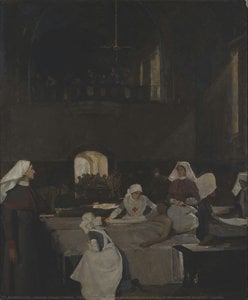
- 1919: Served as an official war artist to the Australian government, creating paintings depicting scenes from World War I.
- Discharged due to health reasons after the war.
- Returned to Australia in 1921 for exhibitions and sales of his work.
- Continued painting portraits and subject works until his death.
Artistic Style and Legacy
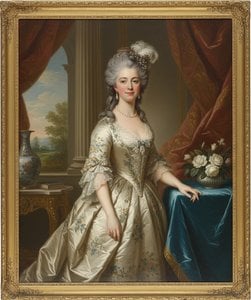
- Primarily a portrait painter, known for refined technique and luminous tones.
- Demonstrated ability in subject paintings with attention to rhythm and composition.
- Often used low-toned palettes without sacrificing luminosity.
- His work is represented in numerous Australian galleries and at the Australian War Museum.
- Died: July 27, 1930, in London, England.
- Legacy as a significant Australian portraitist and war artist.
Vraag en antwoord
Waar zijn de kunstwerken van George James Coates gegroepeerd per techniek te vinden?
Om alle werken van George James Coates in een bepaald medium te vinden, kunt u de Alle technieken pagina van de kunstenaar gebruiken.
Is er een overzicht van alle onderwerpen die George James Coates heeft geschilderd?
De Onderwerpsindex-pagina brengt de kunstwerken van George James Coates in kaart op basis van onderwerp.
In welke stad en welk land is George James Coates geboren?
George James Coates werd geboren in South Melbourne, in Australia.