A Life Etched in Light and Shadow
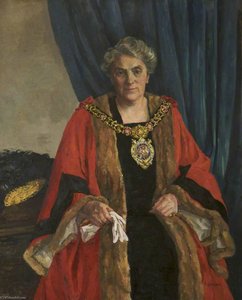
Ethel Léontine Gabain, a name perhaps less instantly recognizable than some of her contemporaries, nevertheless occupies a significant place in the narrative of early 20th-century British art. Born in Le Havre, France, in 1883 to a French father and Scottish mother, Gabain’s artistic journey was one of remarkable independence and quiet innovation. Her story is not simply that of a painter or printmaker, but of a woman navigating the complexities of an evolving art world while forging her own path with unwavering dedication. The blend of her heritage – a foot in both French artistic tradition and British sensibility – shaped a unique perspective reflected in her evocative works. From a young age, she demonstrated a keen aptitude for visual expression, nurtured during her education at Wycombe Abbey School where she was even commissioned to paint the headmistress, an early indication of her burgeoning talent. This foundation led her to further studies at the prestigious Slade School of Fine Art in London and later, Raphaël Collin’s studio in Paris, before returning to London to master the intricacies of lithography at the Central School of Arts and Crafts under F.E. Jackson.Early Influences and Artistic Formation
Gabain's formative years were marked by a profound engagement with artistic ideals prevalent during her time. Growing up in France instilled within her an appreciation for Impressionism and Post-Impressionism, movements that championed capturing fleeting moments of light and color—principles she would subsequently translate into her own distinctive style. However, her upbringing in England exposed her to Victorian sensibilities and a tradition of portraiture rooted in meticulous detail and psychological insight. This duality undoubtedly contributed to Gabain’s artistic vision, informing her approach to both painting and printmaking. Her decision to attend Wycombe Abbey School wasn't merely an academic pursuit; it was also a deliberate immersion into the cultural landscape of British aristocracy—a formative experience that instilled discipline and fostered a keen eye for observation. The commission to paint Miss Watt Whitelaw served as an early validation of her artistic abilities, demonstrating her capacity to capture likenesses with accuracy and nuance.The Lithographic Revolution
Gabain's artistic breakthrough arrived through her mastery of lithography—a technique that allowed for a unique interplay of light, shadow, and texture. In an era where printmaking often played second fiddle to painting, Gabain distinguished herself as one of the few artists able to sustain a livelihood solely through the sale of her prints. This achievement speaks volumes about her skill and the compelling nature of her artistic vision. She wasn’t merely replicating images; she was crafting atmospheres, imbuing her lithographs with a distinctive moodiness that resonated with audiences. A pivotal moment in solidifying her commitment to this medium came with her founding membership in the Senefelder Club—an organization dedicated to promoting lithography as a legitimate and respected art form. The club provided a vital platform for artists working in printmaking, fostering collaboration and raising awareness of its potential. Gabain’s work from this period frequently featured melancholic young women, often depicted in solitary settings, their expressions hinting at unspoken stories and inner turmoil. Her favorite model, Carmen Watson, became the face of these introspective studies, posing for over sixty depictions—a testament to both her loyalty to her subject and the enduring power of that particular aesthetic.Notable Achievements and Artistic Recognition
Gabain’s artistic reputation grew steadily throughout her career, culminating in significant accolades from the British art establishment. Her election to the Royal Society of British Artists (RBA) in 1932 recognized her contribution to the visual arts—a prestigious honor bestowed upon artists who demonstrated exceptional talent and dedication. Furthermore, she secured the esteemed de Laszlo Silver Medal from the RBA for her portrait of Flora Robson as Lady Audley—a testament to her skill as a portraitist and her ability to convey complex emotions through visual representation. Her work was exhibited extensively in London and abroad, cementing her place within the artistic canon of her time. Gabain’s lithographs gained particular acclaim for their atmospheric qualities and expressive use of tonal range—characteristics that distinguished them from more conventional depictions of subjects.A Legacy Defined by Resilience and Quiet Innovation
Ethel Léontine Gabain passed away in 1950, leaving behind a body of work that continues to captivate and inspire. Her legacy rests not only on her artistic achievements but also on her unwavering commitment to her craft, her ability to adapt to changing circumstances—particularly during the challenging years of World War II—and her quiet determination to succeed as a woman artist in a society often resistant to female voices within the arts. She remains a compelling figure whose contributions deserve continued recognition and appreciation for their sensitivity, innovation, and enduring beauty.Vraag en antwoord
Kan ik het kleurgebruik van Ethel Léontine Gabain in al het werk bestuderen?
Het kleurgebruik van Ethel Léontine Gabain in de werken die op deze website worden vermeld, kan worden bestudeerd op de Kleurenpalet van de kunstenaar pagina van de kunstenaar.
Kan ik de werken van Ethel Léontine Gabain bekijken op basis van stemming?
Op de Sfeercollectie pagina van de kunstenaar vindt u de kunstwerken van Ethel Léontine Gabain, gerangschikt op basis van hun sfeer.
Waar en wanneer is Ethel Léontine Gabain geboren?
Ethel Léontine Gabain werd geboren in Le Havre in 1883.