

William H. Johnson: A Life Painted in Bold Strokes – Race, Identity & Modernism
Inhoudsopgave
Early Life & Artistic Foundations: From South Carolina to the National Academy
 Wikipedia: William H. Johnson (artist)
William Henry Johnson (March 18, 1901 – April 13, 1970) was an American painter. Born in Florence, South Carolina, he became a student at the National Academy of Design in New York City, working with Charles Webster Hawthorne. He later lived and work...
William Henry Johnson’s story is one of relentless pursuit—a journey from the humble beginnings of Florence, South Carolina, to a place among the most significant American artists of the 20th century. Born in 1901 into a world deeply segregated and economically constrained, young William demonstrated an early aptitude for drawing, sketching figures and scenes he observed around him. His initial artistic spark wasn’t nurtured within formal institutions but rather blossomed from a raw desire to capture his surroundings. The Wilson School, Florence's first public school for African American children, provided a basic education, and it was there that Louise Fordham Holmes, a teacher who occasionally incorporated art into her curriculum, likely recognized and encouraged his talent. He initially envisioned a career as a newspaper cartoonist, a pragmatic ambition reflecting the limited opportunities available to him. However, a move to New York City at seventeen ignited a more profound artistic calling.
New York proved a crucible of experience. Johnson worked tirelessly—as a stevedore, cook, and porter—saving every penny towards his dream: formal art training. His dedication led him to the prestigious National Academy of Design, where he studied with Charles Louis Hinton, Charles Courtney Curran, and George Willoughby Maynard. These instructors emphasized classical portraiture and figure drawing, providing Johnson with a solid foundation in technique. The influence of Charles Webster Hawthorne proved particularly pivotal; Hawthorne instilled in Johnson the importance of color—a lesson that would reverberate throughout his evolving style. Despite facing racial prejudice within the art world, Johnson excelled, earning awards and recognition for his skill. A near-miss on a coveted Pulitzer Travel Scholarship prompted Hawthorne and fellow artists to pool resources, enabling Johnson to embark on a transformative journey to Europe.
Parisian Influences & The Embrace of Modernism
Arriving in Paris in 1927 marked a turning point in Johnson’s artistic development. The city pulsed with the energy of modernism—Cubism, Fauvism, Expressionism—and Johnson immersed himself in this vibrant milieu. He exhibited at the Students and Artists Club, gaining early exposure to an international audience. His work began to shift away from the academic realism he had mastered in New York, embracing a more expressive and emotionally charged aesthetic. A move to Cagnes-sur-Mer in the south of France further accelerated this evolution, influenced by the powerful works of Chaïm Soutine, whose raw intensity resonated deeply with Johnson’s own burgeoning artistic vision.
Paris wasn't merely a place for technical study; it was a space for self-discovery. Johnson experimented with different mediums—woodcuts, oils, watercolors, pen and ink—and developed a willingness to utilize whatever materials were at hand to convey his feelings. This adaptability would become a hallmark of his later work. It was during this period that he met Holcha Krake, a Danish textile artist who would become his wife and lifelong companion. Their connection transcended cultural differences, forging a partnership that profoundly shaped Johnson’s artistic trajectory.
The Scandinavian Interlude: Folk Art & A Developing Style
The years spent with Holcha Krake in Scandinavia proved crucial to the development of Johnson's unique style. Living and working alongside her exposed him to the strong folk art traditions prevalent in Denmark and Norway. This influence wasn’t about imitation but rather a deeper appreciation for the directness, simplicity, and emotional honesty inherent in these artistic forms. The couple spent much of the 1930s immersed in Scandinavian culture, absorbing its aesthetic principles and incorporating them into Johnson's evolving visual language.
This period saw a move away from pure expressionism towards a more stylized representation of form and color. Johnson’s paintings began to exhibit flattened perspectives, bold outlines, and a deliberate rejection of academic realism in favor of conveying emotional truth. He wasn’t simply depicting what he *saw* but rather how he *felt*. This shift was not merely aesthetic; it reflected a growing desire to connect with his own cultural heritage and to find a visual language that could authentically represent the African American experience.
Harlem Renaissance & Portraits of a Community
The Harlem Renaissance was an intellectual and cultural movement of African-American music, dance, art, fashion, literature, theater, politics, and scholarship centered in Harlem, Manhattan, New York City, spanning the 1920s and 1930s. At the time, i...
The return to the United States in 1938, prompted by rising concerns about fascism in Europe, marked a new chapter for Johnson. He and Holcha settled in Greenwich Village and quickly became involved in the vibrant artistic community flourishing during the Harlem Renaissance. Johnson secured employment through the Federal Art Project as an instructor at the Harlem Community Art Center (HCAC), the largest WPA-funded center in the country. This position placed him at the heart of a dynamic network of artists—Charles Alston, Henry Bannarn, Selma Burke, Gwendolyn Knight, and Jacob Lawrence among them.
The HCAC provided Johnson with access to new techniques, including screenprinting, which he skillfully repurposed for fine art. More importantly, it ignited a passion for portraying the lives of African Americans—their joys, struggles, aspirations, and resilience. He began creating hundreds of prints and paintings depicting scenes of Harlem life: elegant couples dressed in their finest attire, lively street scenes, portraits of community leaders and everyday individuals. His work captured the spirit of an era—a celebration of Black culture, identity, and pride.
Themes of Social Justice and American Identity
 william h. johnson
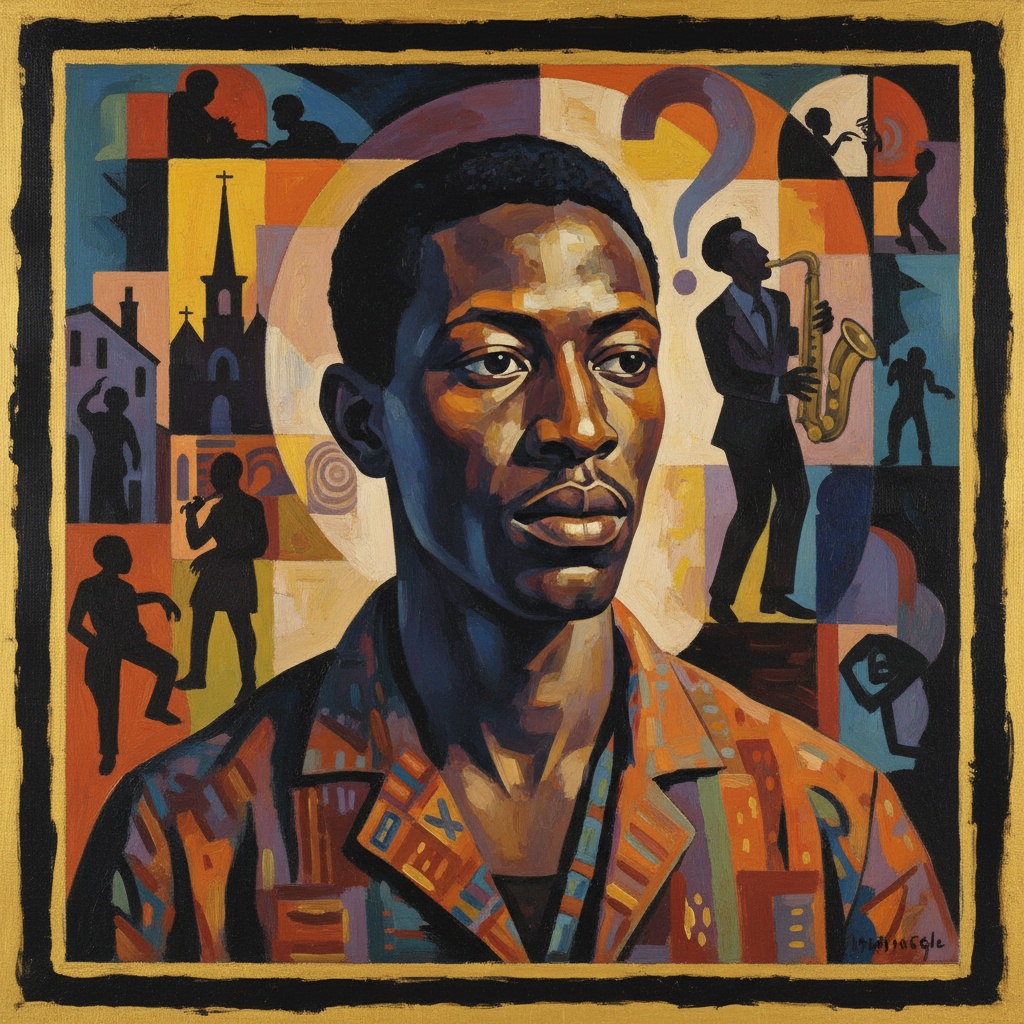
William H. Johnson (1901-1970) was a pivotal American painter of the Harlem Renaissance, known for his expressive portraits & folk art style depictions of African American life and experiences. Explore his powerful modernist works!
Johnson’s art wasn't simply about aesthetic beauty; it was deeply imbued with themes of social justice and a profound exploration of American identity. His paintings often served as tributes to African American activists, scientists, teachers, and performers—individuals who were fighting for equality and progress in a society riddled with racism and discrimination. The *Fighters for Freedom* series from the mid-1940s exemplifies this commitment, honoring those working towards peace and justice on both sides of the Atlantic.
Street Life, Harlem, for example, captures not just the fashionable attire of its subjects but also their dignity and determination. His portraits weren’t idealized representations; they were honest depictions of individuals striving to live full lives in a challenging world. Johnson's use of bold colors and simplified forms wasn’t merely stylistic; it was a deliberate choice—a way to convey emotional power and to challenge conventional notions of beauty and representation. He sought to create art that resonated with the African American community, reflecting their experiences and celebrating their cultural heritage.
A Legacy Rediscovered: Johnson's Enduring Impact on American Art
Despite achieving a degree of success during his lifetime, financial security remained elusive for William H. Johnson. Following Holcha’s death in 1944, his physical and mental health declined dramatically, leading to decades spent in a state hospital on Long Island. Tragically, his entire life's work nearly faced disposal due to storage fees before being rescued by friends at the last moment.
Today, over a thousand of Johnson’s paintings, watercolors, and prints are held by the Smithsonian American Art Museum—a testament to his enduring legacy. His art is now recognized as pivotal in the development of American modernism, bridging the gap between expressionism, folk art, and social realism. Johnson's powerful depictions of African American life continue to resonate with audiences today, offering a poignant and unflinching portrayal of a community striving for equality and self-determination. ArtsDot is proud to offer high-quality reproductions of Johnson’s masterpieces, allowing you to experience the emotional power and artistic brilliance of this remarkable artist firsthand. Explore our collection and discover the enduring beauty and significance of William H. Johnson's work.
Gerelateerde artikelen

Top 10 Acryl op Papier Meesterwerken die de Kunst Voorgoed Veranderden | ArtsDot
Ontdek de 10 meest legendarische acryl op papier meesterwerken die de kunstwereld veranderden! Van abstract expressionisme tot pop art – leer over iconische kunstenaars en hun baanbrekende technieken. Vind museumkwaliteit reproducties & woondecoratie inspiratie op ArtsDot.com.


Echoes of Innovation: Commissioning Inspired Modern Reproductions & Navigating Intellectual Property
Discover the art of commissioning inspired modern reproductions. Expert guidance on copyright, materials & artist selection for discerning collectors. Elevate your space with timeless beauty – learn more!

