


Het werk volgt uw keuzes: , .
Beschrijving verzamelobject
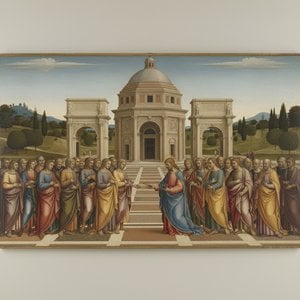
Simone Martini’s ‘Window,’ created in 1312, exemplifies the elegance of Early Gothic style. This fresco showcases vibrant colors and detailed depictions of people and animals within a stunning stained glass composition. Located at Pinacoteca Nazionale Siena, it's a captivating glimpse into medieval artistry. Discover museum-quality reproductions on ArtsDot.
 Lees meer
Biografie kunstenaar
Simone Martini was een meester van de internationale gotiek, bekend om zijn Maestà. Ontdek vandaag nog zijn elegante Sienese meesterwerken.
Bestel uw in vier eenvoudige stappen
Neem de tijd. U kunt elk antwoord nog wijzigen; de prijs in uw besteloverzicht wordt direct aangepast aan elke keuze.
1 Stap één van de vier
Welke maat wilt u kiezen?
Deze formaten behouden de proporties van het originele schilderij. De tekening laat uw keuze zien op een muur, boven een bank van twee meter.
Of geef uw eigen afmetingen op
Kies uit onze vooraf ingestelde maten die overeenkomen met de originele verhoudingen van het kunstwerk.

Voer de breedte en hoogte in die u nodig heeft, passend bij uw lijst of uw muur. Omdat dit handgeschilderd is, kan de kunstenaar bij een afmeting met een andere beeldverhouding iets meer rondom het schilderij schilderen of juist iets meer weglaten — u kiest zelf. Wij sturen u een digitaal mockup ter goedkeuring voordat het schilderwerk begint. De afbeelding die op deze pagina wordt getoond, is niet het uiteindelijke resultaat — alleen de mockup geeft dit weer.
2 Stap twee van vier
Hoe moet het worden geleverd: gerold, opgespannen of ingelijst?
De onderstaande prijzen zijn voor de maat die u in stap één heeft gekozen.
Kies de randen van het canvas
Kies uw lijst

Wit €1

Vervagende randen €1

Doorlopende rand €1

P118B €10

P118H €10

P118W €10

P438Z €10

P508JH €12

P508YH €12

P805H €10

P805Z €10

P919BZ €10

P919G €10

P919XJ €10

P959ZH €10

P968JZ €12

W106C €8

W218G €10

W218JH €8

W218Y €10

W307PJ €10

W316G €10

W316PJ €8

W316Y €10

W398PJ €8

W4111J €10

W500HY €15

W500JH €15

W692G €12

W849H €8

W940BG €15

W953PJ €8

H24-GOLD €30

H24-SILVER €30

H36-GOLD €45

H36-SILVER €45
Ingelijst
Lijstrand: . Totale afmetingen inclusief lijst: .
3 Stap drie van vier
Wilt u dat er iets aan het schilderij wordt aangepast?
De meeste mensen antwoorden nee. Omdat elk schilderij met de hand wordt gemaakt, kan onze kunstenaar het ook voor u aanpassen.
Na de bestelling zal het team van ArtsDot.com per e-mail contact opnemen met de klant voor instructies en een mockup-voorbeeld verstrekken
4 Stap vier van vier
Enkele afwerkingsopties
Ze zijn allemaal optioneel. De reeds geselecteerde antwoorden brengen geen extra kosten met zich mee.
Wie is de kunstenaar?
Wereldwijde levering () binnen 3 tot 4 weken in plaats van de standaard 5 weken. (20 november). Zonder concessies aan de kwaliteit.
Een naambordje, zoals in een museum?
Details van de gegraveerde bronzen plaat
This elegant plaque features the artist's name and the title of the artwork, finely engraved for a timeless presentation.
It is made from bronze with a refined, elegant finish. The text is precisely laser-engraved for a sharp and permanent result. Measuring 9x2 cm, the plaque is compact yet easy to read. It's built to be durable and scratch-resistant, offering a professional, museum-quality look. Mounting is simple thanks to the included adhesive backing.
Details transparante acrylplaat
The plaque includes essential engraved details such as the artist's name, the title of the artwork, the date it was created, the type of media used-like oil on canvas or watercolor-a brief description of the piece, and a QR code that links to the complete artwork information.
It is crafted from clear acrylic, offering a sleek, modern appearance. The text is UV-engraved in black to ensure strong visual contrast. With a size of 10x15 cm, it ensures optimal readability. It comes equipped with two metal hooks for secure wall mounting. The plaque is designed to be weather-resistant, making it suitable for various environments, and it includes interactive features that work seamlessly with smartphone scanning.
Details zwarte acrylplaat
This elegant plaque includes engraved information such as the artist's name, the title of the artwork, the date it was created, the type of media used (like oil on canvas or watercolor), a short description of the artwork, and a QR code for quick access to more information.
The plaque itself is made from refined black acrylic with a premium finish. The text is laser-engraved in white for high contrast and readability. Its size is 10x15 cm, designed to be easy to read. It comes with two metal hooks for professional mounting. The design is sleek and fits any interior style. It is also weather-resistant and durable, with built-in digital integration for mobile compatibility.
Een beschermende vernis?
Wanneer heeft u het nodig?
✓ Controleren en bestellen
Uw schilderij, zoals u het heeft besteld

Window
Druktechniek
Afmetingen reproductie
-

Geselecteerde topkunstenaars
Meer detail, verfijning en extra productietijd
-

Lijst voor reproductie
-
-
Voor kunstwerken of reproducties die aan één zijde groter zijn dan 105 cm (ongeveer 41 inch), wordt de lijst als een losse set verzonden. Deze methode garandeert een veilige levering en voorkomt schade tijdens het transport.
Professionele montage vereist - dit is geen doe-het-zelfproduct.
De set moet worden gemonteerd en het canvas moet worden gespannen door een ervaren professionele lijstenmaker, met gebruik van houtlijm (niet inbegrepen), een doekspanter en klemmen om de sponningen recht te houden terwijl de lijm droogt. Onjuiste montage of een ongelijkmatige spanning op het canvas kan het kunstwerk permanent beschadigen en wordt niet gedekt door onze garantie.
 Voor kunstwerken of reproducties die aan één zijde groter zijn dan 105 cm (ongeveer 41 inch), wordt de lijst als een losse set verzonden. Deze methode garandeert een veilige levering en voorkomt schade tijdens het transport.
Alle massief houten onderdelen zijn inbegrepen, nauwkeurig op maat gesneden voor montage.
Te monteren met de meegeleverde schroeven, plus houtlijm voor de hoekverbindingen, die niet wordt meegeleverd en door uw lijstenmaker moet worden aangeschaft.
Professioneel gereedschap is vereist en niet inbegrepen: een spanner voor canvas en klemmen om de latten recht te houden terwijl de lijm droogt.
Belangrijk:
De hoekverbindingen vereisen houtlijm, de latten moeten met lijmklemmen worden vastgehouden tot de lijm volledig is opgedroogd, en het spannen van het canvas op het samengestelde frame vereist een doekspanter. Geen van deze artikelen is inbegrepen in de set. Wij adviseren u om een ervaren professionele lijstenmaker te raadplegen voordat u deze maat bestelt.

Naamplaatje
-
-

Beschermende vernislaag
Glanzende vernis (versterkt de kleuren en biedt bescherming tegen licht en vocht)
-

Mijn kunstwerk aanpassen
Voorbeelden van aanpassingen: vervang het gezicht door een eigen foto; voeg een huisdier toe (bijv. vervang de kat door een hond); verwerk een verborgen boodschap in de achtergrond; wijzig het landschap of andere elementen op de achtergrond.
-

Spoedlevering
Wereldwijde levering () binnen 3 tot 4 weken in plaats van de standaard 5 weken. (20 november). Geen concessies aan de kwaliteit.
-
Spoedlevering
Wereldwijde levering naar binnen 5 weken. (27 november).
Inbegrepen
Eindtotaal
€ 234
De optie voor glas is alleen beschikbaar bij een formaat kleiner dan 110 cm.
Inbegrepen bij elke bestelling
- Gratis wereldwijde expressverzending
- Hoogwaardig linnen canvas
- Volledige verzendverzekering
- Garantie op terugbetaling van invoerrechten
- Garantie op exacte kleurweergave
- Retourbeleid van 100 dagen (alleen bij defecten)
- 100% Geld-terug-garantie
- Korting bij meerdere afnames


Simone Martini’s Window: A Fragment of Siena’s Gothic Soul
The painting “Window” by Simone Martini—a masterpiece executed in 1312—isn't merely an image; it’s a portal into the artistic fervor and spiritual contemplation of Siena during its zenith as a medieval principality. More than just depicting a simple architectural element, Martini transforms this commonplace feature into a vehicle for profound symbolism and masterful execution, embodying the very essence of International Gothic style. Its unassuming appearance belies the intricate artistry that defines it.- Subject Matter: The composition centers around a stained glass window—a motif prevalent in Sienese churches at the time—illuminated by diffused light. Within its frame are meticulously rendered figures, including human forms and avian creatures – doves symbolizing peace and divine grace – creating a harmonious blend of earthly and celestial realms.
- Style: Martini’s work exemplifies International Gothic style, characterized by delicate lines, luminous colors, and an emphasis on elegance and refinement. Unlike the harsher realism championed by Giotto di Bondone, Martini prioritizes beauty and expressive detail, prioritizing visual impact over strict anatomical accuracy. This stylistic choice reflects Siena's cultural aspirations during a period marked by papal patronage and artistic innovation.
- Technique: Martini employed tempera paint on panel—a technique favored for its vibrancy and durability—allowing him to achieve astonishing levels of color saturation and textural nuance. The artist’s meticulous layering of glaze, combined with painstaking attention to detail in rendering drapery folds and facial expressions, speaks volumes about his dedication to craftmanship.
Historical Context: Siena Under Papal Influence
Siena flourished as a center of papal diplomacy and artistic production during the early 14th century. The papacy actively encouraged artistic endeavors, fostering a competitive environment where artists like Martini sought to elevate their reputations through ambitious commissions—particularly those honoring religious saints. This patronage fueled stylistic experimentation and ensured that Siena’s art would resonate across Europe. Martini's "Window" stands as testament to this era of cultural dynamism and papal ambition.Symbolism: Light, Faith, and Divine Harmony
The window itself serves as a potent symbol—representing divine illumination and the gateway to spiritual understanding. The doves adorning the composition reinforce this theme, symbolizing purity, peace, and the Holy Spirit’s presence. Martini skillfully integrates these visual cues into a carefully balanced composition that reflects Siena's devout Catholic faith. The artist’s deliberate use of color—particularly blues and golds—further enhances the painting’s spiritual aura, conveying grandeur and transcendence.Emotional Impact: A Moment Frozen in Time
“Window” transcends mere representation; it evokes a feeling of serene contemplation and wonder. Martini's masterful rendering captures not only the visual beauty of the stained glass but also its emotional resonance—a reflection of Siena’s artistic spirit and its unwavering belief in divine grace. Viewing this artwork is akin to stepping back into a moment frozen in time, allowing oneself to be transported by the artistry and symbolism of a bygone era. It remains an enduring emblem of Gothic elegance and a captivating glimpse into the soul of medieval Siena.Veelgestelde vragen
Wanneer en met welke materialen is "Window" gemaakt?
De techniek van "Window" door Simone Martini is Acrylic On Canvas, en het werk dateert uit 1312.
Hoe is de kleurcompositie van "Window" door Simone Martini opgebouwd?
De kleuranalyse van "Window" door Simone Martini legt een Gentle contrast en een Softly Mixed Palette harmonie vast.
Hoe harmonieus is het kleurgebruik in "Window" door Simone Martini?
De kleurharmonie van "Window" wordt beschreven als Softly Mixed Palette.
Meer over dit schilderij
 Voorvertoning
 Schakel over naar print
 Verstuur
 Delen
Delen
 Details bekijken
 Gids
Gids

 Download
 Vergelijkbare items
 Röntgenonderzoek
 Diavoorstelling
 Vraag & antwoord
 Statistieken
Vergelijkbare kunstwerken


Simone Martini
1284 - 1344, Italië
Biografie kunstenaar
Het leven en de identiteit van Simone Martini
Geboren in Siena, Italië, rond 1284, leidde Simone Martini een leven dat de wankele stromingen van zijn tijd weerspiegelde. Ook bekend als Simone di Martino, was hij een centrale figuur in de ontwikkeling van de vroege Italiaanse schilderkunst. Zijn aanwezigheid in de kunstwereld was voelbaar van het hart van Toscane tot aan de pauselijke hoven van Frankrijk, wat hem markeerde als een man wiens invloed veel verder reikte dan zijn geboortegrond. Hij was een schilder die de taal van zijn tijd begreep en zich met een vaste, doelgerichte hand bewoog door de religieuze en burgerlijke centra van Europa.
Zijn identiteit was diep geworteld in de stad Siena, een plek van handel en diepe devotie. Deze omgeving hielp bij het vormen van een man die zowel de heilige vereisten van een kerk als de verfijnde smaak van een koninklijk hof kon navigeren. Hij was geen eenling die in isolement werkte; zijn leven was verweven met het sociale en intellectuele weefsel van de veertiende eeuw. Zijn connecties reikten zelfs tot de beroemde dichter Petrarca, wat suggereert dat hij een leven doorbracht te midden van de denkers en leiders van zijn tijd.
De omvang van zijn leven kan worden begrepen aan de hand van de verschillende steden waar hij zijn sporen naliet, waaronder:
- Siena, Italië
- Napels, Italië
- Orvieto, Italië
- Assisi, Italië
- Avignon, Frankrijk
Het Vroege Leven, Familie en Opleiding
Geboren in Siena, Italië, rond 1284, groeide Simone Martini op in een stad waar kunst de taal was van zowel het geloof als het burgerlijke trots. Hoewel de exacte details van zijn jeugd enigszins verborgen zijn gebleven door de sluier van de tijd, lijkt zijn pad naar de wereld van de schilderkunst te zijn geleid door de handen van de meesters. Hij was waarschijnlijk een leerling van Duccio di Buoninsegna, de vooraanstaande kunstenaar van Siena, wiens invloed hielp bij het vormen van de vroege sensibiliteit van de jonge man die uiteindelijk de Sienese stijl zou herdefiniëren.
Familiebanden speelden een cruciale rol in zijn leven en zijn professionele kring. Hij was de broer van Donato, en zijn sociale en artistieke banden werden verder versterkt door zijn huwelijk. In 1324 trouwde hij met Giovanna, de dochter van Memmo di Filippuccio. Deze verbintenis bracht hem in een hecht netwerk van makers, aangezien zijn schoonbroer de kunstenaar Lippo Memmi was. Deze relaties boden waarschijnlijk meer dan alleen gezelschap; ze boden een gedeelde taal van techniek en een collaboratieve geest die een groot deel van de artistieke activiteit in Siena tijdens dit tijdperk zou kenmerken.
Artistieke activiteit in Siena en Toscane
Tegen 1315 had Simone Martini zijn stempel al stevig gedrukt op het burgerlijke leven van Siena. In dat jaar schilderde hij het Maestà-fresco voor het Palazzo Pubblico, de zetel van het stadsbestuur. Dit werk plaatste hem in het hart van het publieke leven in Siena, werkend in de zalen waar de leiders van de stad bijeenkwamen. Zijn aanwezigheid in de regio groeide gestaag terwijl hij zich bewoog tussen de stad en de omliggende gebieden, waarmee hij een reputatie opbouwde die hem spoedig ver voorbij de muren van Siena zou dragen.
Gedurende het daaropvolgende decennium waren zijn handen voortdurend bezig met uiteenlopende opdrachten. In 1319 voltooide hij het Polyptiek van de Heilige Catharina van Alexandrië Polyptych in Pisa. Naarmate zijn carrière vorderde, reikte zijn invloed steeds verder naar andere Toscaanse steden, waaronder Orvieto, waar hij in 1320 actief was. Deze jaren vormden een periode van constante beweging en een gestage artistieke productie, terwijl hij inspeelde op de behoeften van verschillende religieuze en burgerlijke opdrachtgevers door het hele landschap.
Het werk dat hij in deze tijd produceerde, weerspiegelde een groeiende beheersing van de specifieke eisen van zijn beschermheren. Rond 1324 kreeg hij de opdracht om het Blessed Agostino Novello Altarpiece te schilderen. Deze levensfase werd gekenmerkt door een ritmische afwisseling van reizen en creëren, terwijl hij zich een weg baande door de heuvels en valleien van Toscane en een spoor van geschilderde meesterwerken achterliet die zijn aanwezigheid in de regio getuigenis wilden doen.
Mecenassen, Werkplaats en Opdrachten
De carrière van Simone Martini werd gevormd door de verschuivende machtscentra in Italië en Frankrijk. In zijn vroege jaren werkte hij nauw samen met het Bestuur van de Negen in Siena, waarbij hij de zalen van het Palazzo Pubblico versierde. Deze burgerlijke verbondenheid bood een stevig fundament voor zijn groeiende reputatie. Uiteindelijk reikte zijn invloed tot aan de koninklijke hoven, zoals toen hij in 1317 door het Huis Anjou in Napels werd ingehuurd. Deze vroege rollen stelden hem in staat om te bewegen tussen de religieuze en de politieke wereld, waarbij hij werk vond dat zowel spirituele diepgang als een gevoel van hofelijke gratie vereiste.
Zijn reputatie voor elegantie bracht hem uiteindelijk naar de hoogste niveaus van het Europese mecenaat. In 1336 accepteerde hij een prestigieuze opdracht van Paus Benedictus XII. Deze benoeming leidde hem naar Avignon, waar hij de taak kreeg om fresco's te vervaardigen voor het Pauselijk Paleis. Terwijl hij in het hart van het pauselijk hof woonde, bewoog hij zich in een intellectuele kring waartoe ook de dichter Petrarca behoorde. Deze periode in zijn leven werd gekenmerkt door een overgang van de lokale tradities van Toscane naar de verfijnde, internationale smaak van het Franse hof.
- Saint Louis of Toulouse Crowning His Brother Robert of Anjou, 1317
- Maestà, 1315
Artistieke Stijl en Techniek
Simone Martini werkte met een verfijnde gevoeligheid die de voorkeur gaf aan gratie boven de zware, monumentale vormen die in Florence de norm waren. Hij was een architect van elegantie, die zich concentreerde op de manier waarop een lijn over een oppervlak kon vloeien om een gevoel van beweging te creëren. Zijn composities kenmerkten zich vaak door langgerekte figuren en zachte, decoratieve details die zijn werk een hofwaardige verfijning gaven. Deze esthetiek werd gevormd door de komst van Franse invloeden via de Via Francigena, in het bijzonder de ingewikkelde patronen uit de handschriftverlichting en de fijne texturen van ivoren snijwerk. Hij nam deze vreemde stijlen niet simpelweg over; hij versmolt ze met de tradities van Siena om een visuele taal te creëren die zowel geraffineerd als diep spiritueel aanvoelde.
Om de lumineuze kwaliteit van zijn kleuren te bereiken, vertrouwde Martini op de temperatechniek. Hij gebruikte eigeel als bindmiddel voor zijn pigmenten, een methode die uiterst precieze, fijne penseelstreken en een blijvende helderheid mogelijk maakte. Deze technische precisie was essentieel voor de ingewikkelde ornamentiek waar hij zo van hield. In zijn schilderijen werd het samenspel van licht en kleur gebruikt om emotie over te brengen via subtiele verschuivingen in houding en gebaar, in plaats van door middel van dramatische schaalvergroting. Zijn vermogen om deze decoratieve elementen in evenwicht te brengen met een gevoel van narratieve helderheid stelde hem in staat om complexe religieuze scènes af te beelden met een verstilde, poëtische intensiteit.
- The Annunciation with St. Margaret and St. Ansanus, 1333
- Saint Louis of Toulouse Crowning His Brother Robert of Anjou, 1317
- Maestà, 1315
Belangrijke Werken en Meesterwerken
De handen van Simone Martini bleven gedurende al zijn reizen onvermoeibaar aan het werk, waarbij hij een erfenis achterliet van kunstwerken die de voortdurend veranderende behoeften van zijn opdrachtgevers weerspiegelen. In 1317 wijdde hij zijn talent aan het Altaar van de Heilige Ludovicus van Toulouse, een werk dat de heilige afbeeldt naast zijn broer, Robert van Anjou. Dit meesterwerk, dat tegenwoordig te bewonderen is in het Museo Nazionale di Capodimonte in Napels, vangt een intiem moment van zowel familiale als spirituele verbondenheid. Zijn meesterschap in het vertellen van complexe narratieven kwam ook duidelijk naar voren in het Polyptiek van de Heilige Catharina van Alexandrië, dat hij in 1319 voltooide.
Naarmate zijn reputatie groeide, veranderden zowel de omvang als de intimiteit van zijn onderwerpen. In 1333 schilderde hij de Aankondiging met de Heilige Margaretha en de Heilige Ansanus, een werk dat momenteel ondergebracht is in de Galleria degli Uffizi in Florence. Dit stuk illustreert prachtig zijn vermogen om religieuze devotie te verweven met een gevoel van hofse gratie. Zelfs in zijn latere jaren bleef zijn penseelstreek vastberaden en trefzeker. In 1342 voltooide hij Christus ontdekt in de Tempel, een schilderij dat te vinden is in de Walker Art Gallery in Liverpool.
- De Heilige Ludovicus van Toulouse die zijn broer Robert van Anjou kroont, 1317
- Polyptiek van de Heilige Catharina van Alexandrië, 1319
- Aankondiging met de Heilige Margaretha en de Heilige Ansanus, 1333
- Christus ontdekt in de Tempel, 1342
De latere jaren en het overlijden
De laatste jaren van het leven van Simone Martini werden gekenmerkt door een betekenisvolle verschuiving in zowel geografie als sociale kringen. Rond 1334 of 1335 verliet hij de vertrouwde landschappen van Toscane om zich te vestigen in Avignon, Frankrijk. Deze overgang plaatste hem in het kloppende hart van de Europese macht, waar hij nauw samenwerkte met het pauselijk hof. Zijn aanwezigheid in Avignon stelde hem in staat zich te bewegen in hoog intellectuele kringen, wat leidde tot een bijzondere vriendschap met de humanistische dichter Petrarca. Deze verbinding tussen de beeldende kunsten en het opkomende humanisme van die tijd vormde een bepalend kenmerk van zijn verblijf in Frankrijk.
Tijdens zijn tijd in Avignon bleven zijn werken de verfijnde smaak van zijn patroons weerspiegelen. Sommige verslagen suggereren dat hij zelfs een portret schilderde van Laura de Noves, de vrouw die als levenslange muze voor Petrarca diende, hoewel dat specifieke werk verloren is gegaan aan de geschiedenis. Zijn verblijf aan het Franse hof was een periode van prestigieuze betrokkenheid, ver verwijderd van het provinciale leven uit zijn vroege jaren van opleiding. Hij bleef actief in deze kosmopolitische omgeving tot aan zijn dood in juli 1344. Hij overleed in Avignon, maar liet een oeuvre na dat al lang en breed de kloof tussen verschillende Europese tradities had weten te overbruggen.
Nalatenschap en Blijvende Invloed
Simone Martini hielp de kloof te overbruggen tussen de middeleeuwen en de Renaissance. Zijn aanwezigheid in de kunstwereld markeerde een verschuiving naar een nieuwe manier van kijken, waarbij hij zich losmaakte van de zware, monumentale vormen uit het verleden. Door de Sienese stijl over de bergen heen te brengen, hielp hij de schilderkunst uit Siena diep doordringen in het Franse territorium, waardoor zijn specifieke esthetiek wortel kon schieten in nieuwe landen. Deze beweging droeg bij aan de verspreiding van de Internationale Gotiek over heel Europa, en beïnvloedde de wijze waarop kunstenaars op het hele continent de lijn en decoratie benaderden.
De reikwijdte van zijn werk reikte veel verder dan zijn eigen levensduur. Generaties kunstenaars volgden de paden die hij had vrijgemaakt, waarbij zij de gratie en het verfijnde detail overnamen die zijn hand zo kenmerkend maakten. Zijn vermogen om het spirituele te versmelten met een zekere hofelijke elegantie liet een onuitwisbare stempel achter op de ontwikkeling van de Europese schilderkunst. Zelfs toen stijlen veranderden, bleef de wijze waarop hij kleur en silhouet gebruikte een belangrijk referentiepunt voor degenen die na hem kwamen.
- Saint Louis of Toulouse Crowning His Brother Robert of Anjou, 1317
- Annunciation with St. Margaret and St. Ansanus, 1333
- Christ Discovered in the Temple, 1342
Waar u de werken vandaag de dag kunt bewonderen
Om de fysieke aanwezigheid van de kunst van Simone Martini werkelijk te ervaren, moet men een reis maken door de landschappen van Italië en daarbuiten. In Siena herbergt het Palazzo Pubblico de Maestà-fresco, een meesterwerk dat al sinds 1315 zijn plek in de zaal inneemt. Het aanschouwen van dit werk in het hart van het stadhuis geeft een uniek gevoel van de schaal en de burgerlijke betekenis die zijn schilderijen ooit in zich droegen. In Napels bewaart het Museo di Capodimonte het Altaar van Sint-Lodewijk van Toulouse, een stuk dat de ongekende gave van de kunstenaar illustreert om complexe religieuze verhalen te vertalen naar kleur en vorm.
Zijn invloed reikte echter veel verder dan de grenzen van Toscane. In Florence vindt men in de Galleria degli Uffizi de Aankondiging met Sint-Margaretha en Sint-Ansanus, vervaardigd in 1333. Dit werk biedt een intieme blik op de delicate, vloeiende lijnen die zijn benadering kenmerkten tijdens zijn meest productieve jaren. Voor reizigers naar het Verenigd Koninkrijk herbergt de Walker Art Gallery in Liverpool het werk Christus ontdekt in de Tempel, een compositie uit 1342 die zijn meesterschap zelfs in zijn latere jaren getuigt.
Een overzicht van zijn belangrijke werken en hun huidige locaties:
- 1308: Madonna en Kind - Pinacoteca Nazionale, Siena
- 1317: Sint-Lodewijk van Frankrijk en Sint-Lodewijk van Toulouse - Museo di Capodimonte, Napels
- 1321: Orvieto Polyptych - Museo dell'Opera del Duomo, Orvieto
- 1326: Sint-Andreas - Metropolitan Museum of Art, New York
- 1330: Sint-Johannes de Evangelist - Barber Institute of Fine Arts, Birmingham


Gerelateerde artikelen
Pietro Perugino: Umbrian Master of Serenity & Precursor to Raphael's High Renaissance
Explore the life & art of Pietro Perugino, a pivotal Renaissance master and Raphael’s influential teacher. Discover his serene compositions, Sistine Chapel frescoes, and lasting legacy with ArtsDot.

Illuminating Belief: Faith & Symbolism Across Art History's Canvas
Explore the rich history of faith through art! Discover religious symbolism, Renaissance masterpieces & iconic artists. Expert analysis for collectors & enthusiasts. Learn more at ArtsDot.

Emotional Transmutation in Visual Art: A Study of Affective Representation Through Color, Form, and Texture
Explore the fascinating intersection of art & emotion! Discover how color, form, and texture convey feelings in masterpieces. Expert analysis for collectors & enthusiasts.