

 Bekijk op ware grootte
 Verstuur
 Delen
Delen
 Details bekijken

 Download
 Vergelijkbare werken
 Röntgenonderzoek
 Diavoorstelling
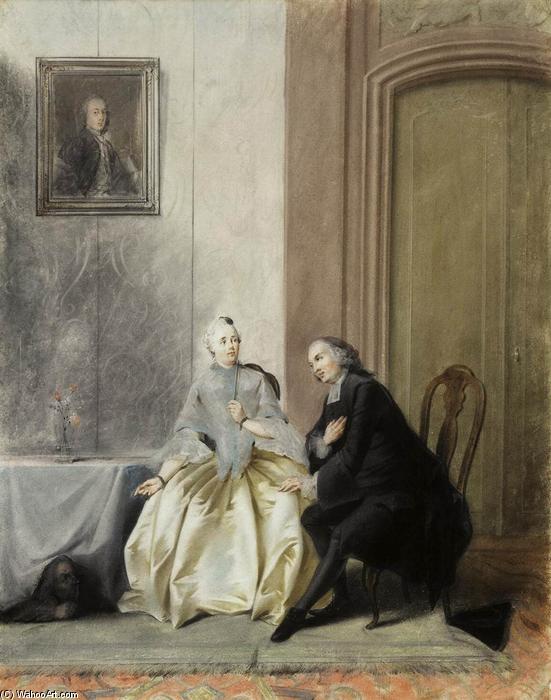
Scène de Tartuffe de Molière
 Rococo Style
 1795
1795 61.0 x 48.0 cm
 Hermitage Museum
 Lees meer
Handgemaakte olieverfreproductie
Met de hand geschilderd in olieverf op canvas in uw gewenste maat en lijst, op bestelling gemaakt door onze kunstenaars. ( Bestel een print Naar afbeelding wisselen)




P118B $10

P118H $10

P118W $10

P438Z $10

P508JH $12

P508YH $12

P805H $10

P805Z $10

P919BZ $10

P919G $10

P919XJ $10

P959ZH $10

P968JZ $12

W106C $8

W218G $10

W218JH $8

W218Y $10

W307PJ $10

W316G $10

W316PJ $8

W316Y $10

W398PJ $8

W4111J $10

W500HY $15

W500JH $15

W692G $12

W849H $8

W940BG $15

W953PJ $8




Kies uit onze vooraf ingestelde maten die overeenkomen met de originele verhoudingen van het kunstwerk.

U kunt uw eigen afmetingen invoeren om in een specifieke lijst of ruimte te passen. Als de door u gekozen maat niet overeenkomt met de verhoudingen van het originele beeld, zullen we het kunstwerk bijsnijden of het schilderij uitbreiden met extra handgeschilderde elementen. Een digitale mockup wordt ter goedkeuring naar u verzonden voordat de productie begint.
Houd er rekening mee dat de preview op het scherm niet de werkelijke uitsnede of uitbreiding weergeeft. Alleen de mockup toont de uiteindelijke compositie nauwkeurig.
Hoewel aangepaste afmetingen mogelijk zijn, raden we aan een maat uit de vooraf gedefinieerde lijst te selecteren om de originele verhoudingen te behouden.
Na de bestelling zal het team van ArtsDot.com per e-mail contact opnemen met de klant voor instructies en een mockup-voorbeeld sturen.
Wereldwijde levering () binnen 3 tot 4 weken in plaats van de standaard 5 weken. (8 augustus). Zonder concessies aan de kwaliteit.

Gratis wereldwijde expressverzending

Hoogwaardig linnen canvas

Volledige verzendverzekering

Garantie op terugbetaling van invoerrechten

Garantie op exacte kleurweergave

60 dagen retourbeleid (alleen bij defecten)

100% Geld-terug-garantie

Korting bij meerdere afnames
 De optie voor glas is alleen beschikbaar bij een formaat kleiner dan 110 cm.

Scène de Tartuffe de Molière
Medium reproductie
Formaat reproductie
-


Totaalprijs
$ 263
Beschrijving kunstwerk
Een Scène uit Tartuffe van Jacobus Buys
Deze prachtige pasteltekening, geschilderd door Jacobus Buys in 1795 en nu te bewonderen in het Hermitage Museum in Sint Petersburg, Rusland, biedt een fascinerende kijk op een dramatische scène uit het stuk Tartuffe van Molière. Een kunstwerk dat getuigschrift is van de meesterlijke stijl van Buys en zijn vermogen om emotie en karakterdynamiek vast te leggen.Stijl en Samenstelling
De tekening wordt gekenmerkt door een zachte en delicate uitstraling, dankzij het gebruik van pasteltechniek. Deze techniek staat bekend om zijn subtiele kleuren en lichteffecten, waardoor Buys een gevoel voor atmosfeer en emotionele nuance kon creëren. De compositie is zorgvuldig gepland om de aandacht te trekken naar het centrale onderwerp: een gesprek tussen twee personen. Een vrouw, gekleed in een gele jurk met een witte halslijn en manchetten, zit op een stoel en kijkt naar iets buiten beeld. Haar houding suggereert aandacht en verwachting – een moment van stilte voor een belangrijke uitwisseling. Aan haar rechterhand staat een man, gebogen bij haar zijde, terwijl hij een doekje tegen zijn gezicht houdt. Zijn expressie straalt verdriet en angst uit, een emotionele reactie op de gebeurtenissen die zich afspelen. Een tweede figuur staat achter hen aan de linkerzijde, terwijl een derde persoon zich op de achtergrond bevindt, waardoor een gevoel van ruimte en perspectief wordt gecreëerd.De Kunstenaar en Zijn Context
Jacobus Buys was een Nederlandse kunstenaar en houtsnijder die actief was tijdens het Rococo tijdperk. Hij stond bekend om zijn prachtige interieurscènes en theatercomposities – een stijl die vaak gekenmerkt werd door elegante vormen, gedetailleerde ornamentatie en een warme kleurpalet. Zijn werk werd verzameld door kunstenaars en aristocraten van de tijd, en hij behoorde tot een groep kunstenaars die zich inspiraalden bij het klassieke model voor schoonheid en harmonie. Een bezoek aan ArtsDot.com biedt meer informatie over Buys en zijn oeuvre, waar je een uitgebreide collectie werken kunt bekijken en je kennis kunt verdiepen over deze belangrijke periode in de Europese kunstgeschiedenis. De Hermitage Museum huisvest een indrukwekkende verzameling Europese kunst, waardoor bezoekers toegang hebben tot een rijke geschiedenis van artistieke innovatie en stijl.Techniek en Symbolisme
De pasteltechniek die Buys gebruikte, staat voor een combinatie van precisie en emotionele expressie. Door het gebruik van fijne kleurlagen kon hij prachtige lichteffecten creëren en subtiele nuances van gevoelens weergeven. De scène uit Tartuffe zelf draagt symbolische waarde bij: de vrouw vertegenwoordigt vaak wijsheid en zelfdiscipline, terwijl de man staat voor angst en twijfel – thema’s die centraal staan in het stuk Molière. Een hoogstaande reproductie van deze tekening biedt een prachtige manier om kunstgeschiedenis tot leven te brengen en een vleugje elegantie toe te voegen aan elke ruimte. Je kunt een prachtige kwaliteitsproduct vinden op ArtsDot.com, waar je meer informatie kunt lezen over de kunstenaar en zijn kunstwerk. Een bezoek aan Wikipedia geeft toegang tot wetenschappelijke bronnen die je helpen het werk van Buys beter te begrijpen.Gerelateerde kunstwerken


Biografie van de kunstenaar
A Life Dedicated to Rococo Elegance: Jacobus Buys
Born in Amsterdam in 1724, Jacobus Buys emerged into a world steeped in the refined sensibilities of the Dutch Rococo period. His father, a wig-maker, provided a stable upbringing, though young Jacobus’s artistic inclinations quickly steered him toward a different path. He embarked on his formal training under Cornelis Pronk and later with Jacob de Wit, both established figures within Amsterdam's art circles. This early education laid the foundation for Buys’s distinctive style—a delicate balance between portraiture, theatrical scene painting, and an exquisite attention to detail that would define his career. He further honed his skills studying under Cornelis Troost, solidifying his mastery of technique and composition before eventually assuming a leadership role as director of the Amsterdam Drawing Academy.From Portraits to Playful Scenes: The Breadth of Buys’s Oeuvre
Buys was remarkably versatile, embracing a wide range of subjects throughout his artistic life. While he is perhaps best known for his elegant portraits, capturing the likenesses and social standing of Amsterdam's elite, his interests extended far beyond mere representation. He skillfully designed bas-reliefs and intricate tapestries, demonstrating an aptitude for decorative arts. A significant portion of his work involved creating book illustrations, showcasing a precision and narrative flair that appealed to a broader audience. However, it was his theatrical scenes—particularly those inspired by the works of Molière—that truly allowed Buys’s artistic personality to flourish. His pastel depiction of a scene from *Tartuffe*, now housed in The Hermitage Museum, is a testament to this passion. The work isn't simply an illustration; it’s a vibrant interpretation brimming with character and dramatic tension, revealing his deep understanding of both human psychology and the art of visual storytelling. He wasn’t merely copying plays but translating them into a visually compelling language that resonated with 18th-century audiences.Influences and Artistic Development
The influence of earlier Dutch masters is subtly present in Buys's work, particularly in his meticulous attention to detail and the use of light and shadow reminiscent of the Golden Age painters. However, he wasn’t simply replicating past styles; he synthesized these influences with the prevailing Rococo aesthetic sweeping across Europe. The lightness of palette, the graceful poses, and the emphasis on aristocratic leisure all point to a deliberate engagement with contemporary trends. His studies under Pronk and de Wit undoubtedly shaped his understanding of color theory and composition, while Troost likely instilled in him a deeper appreciation for portraiture techniques. Buys’s ability to seamlessly blend these influences—the Dutch tradition of realism with the French Rococo's emphasis on elegance and ornamentation—is what sets him apart. He also demonstrated an interest in copying works from renowned 17th-century artists, not as imitation but as a means of learning and refining his own skills.A Member of the Guild and Lasting Legacy
In 1750, Jacobus Buys achieved a significant milestone by becoming a member of Amsterdam's prestigious Guild of St Luke, solidifying his position within the city’s artistic community. This membership not only validated his skills but also opened doors to commissions from prominent patrons. He continued working diligently until his death in 1801, leaving behind a substantial body of work that offers valuable insights into Dutch society and artistic tastes during the late 18th century. While perhaps not as widely celebrated as some of his contemporaries, Buys’s contributions are increasingly recognized for their refined technique, elegant compositions, and insightful portrayals of both individuals and dramatic narratives. His paintings provide a window into a world of aristocratic leisure, theatrical spectacle, and the enduring power of storytelling through art. His legacy lies in his ability to capture the spirit of the Rococo era with grace, precision, and a distinctly Dutch sensibility.
jacobus buys
1724 - 1801 , Netherlands
Snelle feiten
- Artistic Movement Or Style: Rococo
- Artists Who Influenced This Artist:
- Cornelis Pronk
- Jacob de Wit
- Cornelis Troost
- Date Of Birth: 1724 Amsterdam Netherlands
- Date Of Death: 1801 Amsterdam Netherlands
- Full Name: Jacobus Buys
- Nationality: Dutch
- Notable Artworks:
- Portrait of Elisabeth Troost
- Scene from Molière's Tartuffe
- Place Of Birth: Amsterdam Netherlands
Gerelateerde artikelen

Speelse Kunst: Top 10 Meesterwerken voor een Vrolijke Sfeer | ArtsDot
Ontdek 10 meesterwerken die speelsheid en vreugde uitstralen! Van Monet's impressionisme tot Kandinsky's abstractie. Laat je inspireren door de kleuren & verhalen achter deze iconische kunstwerken. Museumkwaliteit reproducties op ArtsDot.com.

Top 10 Meesterwerken van de Gouden Eeuw: Kunst voor uw interieur | ArtsDot.nl
Ontdek de 10 meesterwerken van de Gouden Eeuw! Leer over Rembrandt, Vermeer & andere Hollandse schilders. Prachtige kunst reproducties voor uw interieur. Museumkwaliteit prints op ArtsDot.com.
Jan Steen: A Master of Dutch Genre Painting & the Golden Age
Explore the life & art of Jan Steen, a leading Dutch Golden Age painter renowned for his humorous genre scenes & insightful social commentary. Discover his techniques, legacy, and collecting tips.

Golden Age Reflections: Dutch Baroque Painting & Cultural Innovation
Explore the Dutch Golden Age of painting! Discover key artists like Vermeer & ter Borch, their innovative techniques, and the rich cultural context behind these Baroque masterpieces. Learn about collecting & appreciating this iconic art period.

Charles Leickert: Capturing the Dutch Golden Age Light – A Comprehensive Study of Technique, Context, and Legacy
Explore the captivating winter landscapes of Charles Leickert, a master of Dutch Golden Age light & atmosphere. Discover his techniques, symbolism, and lasting legacy – a comprehensive study for art enthusiasts and collectors.


