


 Bekijk op ware grootte
 Verstuur
 Delen
Delen
 Details bekijken

 Download
 Vergelijkbare werken
 Röntgenonderzoek
 Diavoorstelling
Sts Anthony and Thomas with Tommaso Portinari
 Oil On Canvas
- WallArt
- Early Netherlandish Painting
 1476
1476 253.0 x 141.0 cm
 Galleria degli Uffizi
 Lees meer
Handgemaakte olieverfreproductie
Met de hand geschilderd in olieverf op canvas in uw gewenste maat en lijst, op bestelling gemaakt door onze kunstenaars. ( Bestel een print Naar afbeelding wisselen)




P118B $10

P118H $10

P118W $10

P438Z $10

P508JH $12

P508YH $12

P805H $10

P805Z $10

P919BZ $10

P919G $10

P919XJ $10

P959ZH $10

P968JZ $12

W106C $8

W218G $10

W218JH $8

W218Y $10

W307PJ $10

W316G $10

W316PJ $8

W316Y $10

W398PJ $8

W4111J $10

W500HY $15

W500JH $15

W692G $12

W849H $8

W940BG $15

W953PJ $8




Kies uit onze vooraf ingestelde maten die overeenkomen met de originele verhoudingen van het kunstwerk.

U kunt uw eigen afmetingen invoeren om in een specifieke lijst of ruimte te passen. Als de door u gekozen maat niet overeenkomt met de verhoudingen van het originele beeld, zullen we het kunstwerk bijsnijden of het schilderij uitbreiden met extra handgeschilderde elementen. Een digitale mockup wordt ter goedkeuring naar u verzonden voordat de productie begint.
Houd er rekening mee dat de preview op het scherm niet de werkelijke uitsnede of uitbreiding weergeeft. Alleen de mockup toont de uiteindelijke compositie nauwkeurig.
Hoewel aangepaste afmetingen mogelijk zijn, raden we aan een maat uit de vooraf gedefinieerde lijst te selecteren om de originele verhoudingen te behouden.
Na de bestelling zal het team van ArtsDot.com per e-mail contact opnemen met de klant voor instructies en een mockup-voorbeeld sturen.
Wereldwijde levering () binnen 3 tot 4 weken in plaats van de standaard 5 weken. (11 augustus). Zonder concessies aan de kwaliteit.

Gratis wereldwijde expressverzending

Hoogwaardig linnen canvas

Volledige verzendverzekering

Garantie op terugbetaling van invoerrechten

Garantie op exacte kleurweergave

60 dagen retourbeleid (alleen bij defecten)

100% Geld-terug-garantie

Korting bij meerdere afnames
 De optie voor glas is alleen beschikbaar bij een formaat kleiner dan 110 cm.

Sts Anthony and Thomas with Tommaso Portinari
Medium reproductie
Formaat reproductie
-


Totaalprijs
$ 263
Beschrijving kunstwerk
A Window into Faith: The Profound Vision of Hugo van der Goes’s “Sts Anthony and Thomas”
Hugo van der Goes's "Sts Anthony and Thomas with Tommaso Portinari" isn’t merely a religious painting; it’s a meticulously crafted tableau brimming with psychological depth, dramatic realism, and an almost palpable sense of devotion. Completed around 1476-79, this altarpiece—now residing in the Uffizi Gallery in Florence—represents a pivotal moment in the evolution of Flemish art, bridging the gap between the stylized conventions of earlier Netherlandish painting and the burgeoning naturalism that would define the Italian Renaissance. The scene depicts Saint Anthony, Thomas Aquinas, and Tommaso Portinari, an influential Florentine merchant and diplomat, gathered around the infant Jesus, Mary Magdalene, Peter, and John. It’s a composition charged with significance, reflecting not only religious piety but also the complex interplay of faith, commerce, and familial legacy that shaped 15th-century Europe.
- The Figures: Van der Goes masterfully renders each figure with an astonishing level of detail. Saint Anthony, a contemplative monk, exudes a quiet intensity, his gaze fixed on the divine infant. Thomas Aquinas, the renowned theologian, is depicted in a moment of intense intellectual absorption, his hand gesturing as if explaining a profound truth. Tommaso Portinari, the wealthy patron who commissioned the work, stands slightly apart, embodying worldly success and familial pride—a testament to the artist’s ability to capture individual character within a single image.
- The Setting: The dimly lit interior suggests a sacred space, perhaps a chapel or private devotional chamber. The architectural details are rendered with remarkable precision, hinting at Van der Goes's deep understanding of perspective and spatial relationships.
A Masterclass in Technique – Light, Shadow, and Texture
Van der Goes’s technical prowess is immediately apparent in the painting’s masterful use of light and shadow. He employs a technique known as “sfumato,” subtly blurring outlines and creating an atmospheric haze that softens the forms and imbues the scene with a sense of mystery. The artist's attention to texture is equally impressive, evident in the richly detailed fabrics, the smooth surfaces of the figures’ skin, and the delicate rendering of the infant Jesus’s face. The use of oil paint allowed for layering and blending, creating an unprecedented level of realism and luminosity—a departure from the tempera-based techniques prevalent at the time.
Van der Goes's innovative approach to color palettes – a rich combination of reds, blues, and golds – further enhances the painting’s visual impact. The warm hues evoke feelings of warmth, piety, and spiritual intensity, while the cool tones create a sense of depth and perspective.Symbolism and Context: A Portrait of Florentine Power
Beyond its religious subject matter, “Sts Anthony and Thomas” is deeply embedded in the historical and cultural context of 15th-century Florence. Tommaso Portinari’s commission reflects his family's significant role in the city’s economic and political life—he was a key agent for the Medici banking dynasty. The inclusion of Saint Anthony, a symbol of poverty and spiritual devotion, subtly underscores the importance of charity and humility within the context of Florentine society. The painting also serves as a powerful statement of familial pride, celebrating the Portinari family’s legacy and their connection to one of Florence's most influential institutions—Santa Maria Nuova Hospital.
- Saint Anthony: Represents humility, poverty, and spiritual guidance.
- Thomas Aquinas: Symbolizes intellectual pursuit and theological wisdom.
- Tommaso Portinari: Embodies worldly success, family pride, and the patronage of the arts.
An Enduring Legacy – A Bridge Between Traditions
“Sts Anthony and Thomas with Tommaso Portinari” stands as a landmark achievement in Flemish art—a testament to Hugo van der Goes’s artistic genius and his profound understanding of human psychology and religious devotion. The painting's innovative realism, dramatic composition, and masterful use of light and shadow profoundly influenced subsequent generations of artists, including the early Renaissance masters in Italy. Today, it continues to captivate viewers with its timeless beauty and its ability to evoke a sense of wonder and spiritual contemplation. Reproductions of this iconic work offer a remarkable opportunity to experience the power and artistry of one of the 15th century’s most significant painters.
Gerelateerde kunstwerken


Biografie van de kunstenaar
A Pioneer of Flemish Realism: The Life and Art of Hugo van der Goes
Born around 1440 in the vibrant artistic hub of Ghent, Belgium, Hugo van der Goes emerged as a pivotal figure in the Northern Renaissance. Though shrouded in some mystery—details of his early life remain scarce—his impact on the development of painting during the latter half of the 15th century is undeniable. Van der Goes wasn’t merely a painter; he was an innovator who profoundly altered the course of artistic expression, influencing masters both within Flanders and across the burgeoning Italian Renaissance. He entered the Ghent painters' guild in 1467, marking his formal establishment as a master craftsman, yet it was his unique vision—a blend of intense realism, psychological depth, and dramatic composition—that would set him apart. Before Van der Goes, Flemish painting, while technically brilliant, often adhered to established conventions; he dared to break from these traditions, imbuing his work with an unprecedented level of human emotion and tangible reality.Innovation and Artistic Style
Van der Goes’s artistic signature lies in his ability to infuse religious scenes with a startling sense of immediacy and emotional weight. He moved beyond the stylized conventions of earlier Flemish painting, imbuing his figures with a weighty presence and individualized character. His use of color was deliberate and often somber, creating a sense of gravity and spiritual intensity. This wasn’t simply about replicating appearances; it was about conveying inner states—awe, sorrow, reverence—through subtle gestures, expressive faces, and the careful manipulation of light and shadow. His monumental style, characterized by large-scale compositions and imposing figures, further amplified this emotional impact. He didn't shy away from portraying imperfections; his figures often possess a raw, almost unsettling realism that distinguishes them from the more idealized representations common in earlier art. This commitment to depicting humanity in all its complexity was revolutionary for its time, influencing artists who sought to move beyond mere technical skill and explore the depths of human experience. The influence of Jan van Eyck’s meticulous detail is evident, but Van der Goes transcends imitation, forging a style uniquely his own. He introduced a new level of psychological insight into his portraits, capturing not just physical likenesses but also the inner lives of his subjects.Masterpieces and Lasting Influence
Perhaps Van der Goes’s most celebrated work is the Portinari Altarpiece, commissioned by Tommaso Portinari, an Italian banker residing in Bruges. Completed around 1475, this magnificent triptych—now housed in the Uffizi Gallery in Florence—is a testament to his mastery of composition, color, and psychological insight. The scene depicting the Adoration of the Shepherds is particularly striking, with its dramatic lighting, realistic portrayal of humble figures, and palpable sense of wonder. The altarpiece’s arrival in Italy had a profound effect on Florentine artists, including Domenico Ghirlandaio, who were captivated by its innovative realism and emotional power. Another significant work is The Adoration of the Magi (Monforte Altarpiece), currently residing in Berlin's Gemäldegalerie. This piece showcases his skill in creating dynamic scenes filled with intricate detail and symbolic meaning. Beyond these iconic works, Van der Goes contributed to numerous civic projects, including heraldic decorations for Charles the Bold’s ceremonial entries into Ghent, demonstrating his versatility as an artist. His influence extended beyond painting; he impacted the development of book illustration through his designs which were disseminated by artists like Alexander Bening.A Life Transformed: From Workshop to Monastery
In a surprising turn of events, at the height of his artistic success in 1477, Van der Goes abruptly closed his bustling workshop and entered the Roode Klooster monastery near Audergem. This decision remains something of an enigma, though it’s believed to have been driven by a deep spiritual yearning or perhaps a struggle with mental health. Despite taking religious vows as a lay brother, he continued to accept painting commissions, even undertaking the task of evaluating unfinished works by Dieric Bouts for the city of Leuven. However, his final years were marked by increasing bouts of depression and psychological distress. Accounts suggest that he suffered a severe breakdown in 1482, tragically taking his own life shortly thereafter. This poignant end to a brilliant career adds another layer of complexity to the legacy of Hugo van der Goes—a man whose art explored the depths of human emotion while grappling with inner turmoil. The circumstances surrounding his death have fueled speculation for centuries, adding to the mystique that surrounds this remarkable artist.A Legacy Enduring Through Time
Hugo van der Goes’s influence extended far beyond his relatively short lifetime. His innovative techniques and profound psychological insights paved the way for future generations of artists, both in Flanders and Italy. His work can be found today in prestigious museums such as the Musées royaux des Beaux-Arts in Brussels, offering a glimpse into the genius of this pioneering Flemish master. He remains a compelling figure—a testament to the power of art to capture the complexities of the human condition and to transcend cultural boundaries. His legacy continues to inspire awe and admiration, solidifying his place as one of the most important artists of the Northern Renaissance.- His emphasis on realism influenced subsequent generations.
- The Portinari Altarpiece remains a landmark achievement in art history.
- His exploration of psychological depth set a new standard for portraiture and religious painting.

Hugo van der Goes
1440 - 1482 , België
Snelle feiten
- Artistic Movement Or Style: Vroege Nederlandse schilderkunst
- Artists Or Movements Influenced By This Artist:
- Domenico Ghirlandaio
- Italiaanse Renaissance
- Artists Who Influenced This Artist:
- Jan van Eyck
- Dirk Bouts
- Date Of Birth: ca. 1440
- Date Of Death: 1482/1483
- Full Name: Hugo van der Goes
- Nationality: Vlaams
- Notable Artworks:
- Portinari Altarpiece
- Monforte Altarpiece
- Place Of Birth: Ghent, België
Gerelateerde artikelen

Hugo van der Goes: Devotion, Innovation & the Psychological Depth of Early Netherlandish Painting
Explore the revolutionary art of Hugo van der Goes – a master of Early Netherlandish painting renowned for his dramatic realism, psychological depth & profound influence on Renaissance artists. Discover his iconic works and lasting legacy.
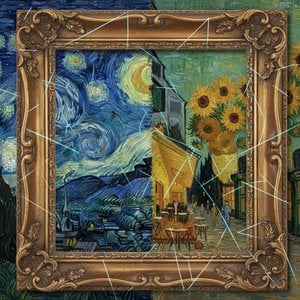
Vincent van Gogh's Top 25 Meesterwerken: Kunstprints voor een Unieke Woonstijl
Ontdek de 25 meest iconische schilderijen van Vincent van Gogh! Duik in zijn emotionele wereld vol sterrennachten, zonnebloemen & post-impressionisme. Museumkwaliteit kunstprints voor een unieke woonstijl op ArtsDot.com.

Top 10 Meesterwerken van de Vroege Nederlandse Renaissance | Kunst & Decoratie
Ontdek de 10 meesterwerken van de Vroege Nederlandse Renaissance! Van Jan van Eyck tot Rogier van der Weyden, leer over hun techniek & symboliek. Vind museumkwaliteit kunst reproducties en decoratie-inspiratie op ArtsDot.com.

Top 10 Meesterwerken van de Vroege Nederlandse Schilderkunst | ArtsDot
Ontdek de 10 meesterwerken van Jan van Eyck, Rogier van der Weyden & andere Vlaamse Primitieven. Duik in de rijke symboliek en olieverfschilderijen van de Vroege Nederlandse Schilderkunst. Vind museumkwaliteit reproducties op ArtsDot.com!

Rogier van der Weyden: Emotion, Innovation & the Early Netherlandish Renaissance
Explore the revolutionary art of Rogier van der Weyden, a pivotal figure of the Early Netherlandish Renaissance. Discover his emotional realism, innovative compositions, and lasting impact on painting history.



