

 Bekijk op ware grootte
 Verstuur
 Delen
Delen
 Details bekijken

 Download
 Vergelijkbare werken
 Röntgenonderzoek
 Diavoorstelling
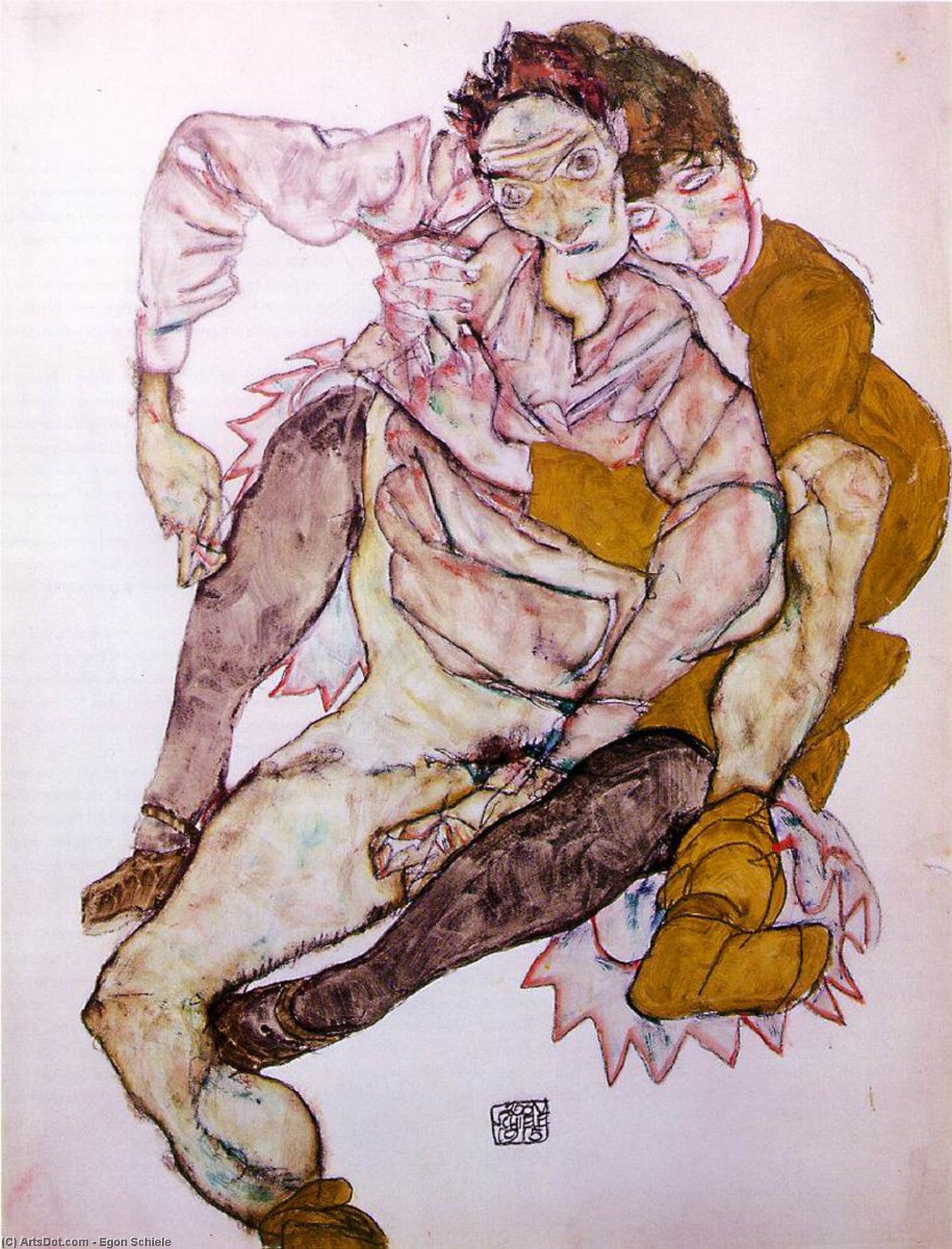
Gezellige koppel (Egon en Edith Schiele)

 Lees meer
Handgemaakte olieverfreproductie
Met de hand geschilderd in olieverf op canvas in uw gewenste maat en lijst, op bestelling gemaakt door onze kunstenaars. ( Bestel een print Naar afbeelding wisselen)




P118B $10

P118H $10

P118W $10

P438Z $10

P508JH $12

P508YH $12

P805H $10

P805Z $10

P919BZ $10

P919G $10

P919XJ $10

P959ZH $10

P968JZ $12

W106C $8

W218G $10

W218JH $8

W218Y $10

W307PJ $10

W316G $10

W316PJ $8

W316Y $10

W398PJ $8

W4111J $10

W500HY $15

W500JH $15

W692G $12

W849H $8

W940BG $15

W953PJ $8




Kies uit onze vooraf ingestelde maten die overeenkomen met de originele verhoudingen van het kunstwerk.

U kunt uw eigen afmetingen invoeren om in een specifieke lijst of ruimte te passen. Als de door u gekozen maat niet overeenkomt met de verhoudingen van het originele beeld, zullen we het kunstwerk bijsnijden of het schilderij uitbreiden met extra handgeschilderde elementen. Een digitale mockup wordt ter goedkeuring naar u verzonden voordat de productie begint.
Houd er rekening mee dat de preview op het scherm niet de werkelijke uitsnede of uitbreiding weergeeft. Alleen de mockup toont de uiteindelijke compositie nauwkeurig.
Hoewel aangepaste afmetingen mogelijk zijn, raden we aan een maat uit de vooraf gedefinieerde lijst te selecteren om de originele verhoudingen te behouden.
Na de bestelling zal het team van ArtsDot.com per e-mail contact opnemen met de klant voor instructies en een mockup-voorbeeld sturen.
Wereldwijde levering () binnen 3 tot 4 weken in plaats van de standaard 5 weken. (8 augustus). Zonder concessies aan de kwaliteit.

Gratis wereldwijde expressverzending

Hoogwaardig linnen canvas

Volledige verzendverzekering

Garantie op terugbetaling van invoerrechten

Garantie op exacte kleurweergave

60 dagen retourbeleid (alleen bij defecten)

100% Geld-terug-garantie

Korting bij meerdere afnames
 De optie voor glas is alleen beschikbaar bij een formaat kleiner dan 110 cm.

Gezellige koppel (Egon en Edith Schiele)
Medium reproductie
Formaat reproductie
-


Totaalprijs
$ 263
Beschrijving kunstwerk
De Intensiteit van het Moment: Egon Schieels ‘Gesitueerd Paar’
Egon Schieels ‘Gesitueerd Paar’ uit 1915 is meer dan een simpele afbeelding van twee mensen; het is een rauwe, onverbloemelijke weergave van intimiteit en de fragiliteit van het bestaan. De schilderij, dat zich afspeelt in een donkere, enigszins claustrofobische ruimte, toont een man die zijn vrouw omarmt, terwijl ze op een bank of bed zitten. De houding is nauwkeurig, bijna onnatuurlijk, en straalt een intense emotie uit die de kijker direct raakt. De figuren, gehuld in nette stropdasen – een detail dat een verrassende formaliteit toevoegt aan de scène – zijn niet idealistisch afgebeeld; hun vormen zijn gedrongen, hun gezichten expressief, en er is geen sprake van een romantische verfijning. In plaats daarvan zien we een eerlijke, soms ongemakkelijke, confrontatie met menselijkheid in al haar imperfectie.
Schiele was een kunstenaar die zich niet schuwde om de donkere kanten van het leven te onderzoeken. Zijn werk is doordrenkt van een gevoel van wanhoop, dood en obsessie – thema’s die nauw verbonden zijn met zijn eigen turbulente persoonlijke geschiedenis. De geboorte van Schiele in 1890 in Tulln an der Donau, Oostenrijk, werd getekend door ziekte, verlies en een gebrek aan stabiliteit. Het vroege overlijden van zijn vader, een spoorloos verdwenen man die lijdt aan schizofrenie, had een diepgaande invloed op Schiele’s artistieke visie. De obsessie met de dood, het leven en de seksualiteit die in zijn werk terugkeert, is direct voortvloeien uit deze traumatische ervaringen.
De Expressieve Techniek van een Getraumatiseerde Kunstenaar
Schiele’s schilderstijl was uniek en herkenbaar. Hij maakte gebruik van dunnere verflagen, waardoor de onderliggende structuur van het doek zichtbaar werd. Zijn lijnen zijn krachtig en expressief, vaak met een bijna obsessieve aandacht voor detail. De figuren worden niet in een realistische vertekening afgebeeld; ze zijn vervormd, bijna grotesk, maar dit dient om hun innerlijke emoties te versterken. De schaduwen zijn diep en dramatisch, waardoor de scène een gevoel van intensiteit en spanning creëert. De compositie is opzettelijk beperkt, wat de focus legt op de twee figuren in het centrum van de aandacht. Het gebruik van kleur is ingetoomd, met dominerende tonen van bruin, grijs en zwart, die bijdragen aan de melancholische sfeer.
- Techniek: Dunne verflagen, expressieve lijnen, dramatische schaduwen.
- Kleurpalet: Gedempt, met dominerende bruine en grijstinten.
- Compositie: Beperkt, gericht op de centrale figuren.
Symboliek en Interpretatie
‘Gesitueerd Paar’ is rijk aan symbolische betekenis. De nauwe fysieke nabijheid van de twee figuren suggereert intimiteit, maar ook een potentieel conflict of onbehagen. De stropdasen, hoewel formeel, kunnen worden gezien als een poging om orde en controle te creëren in een wereld die anders chaotisch en onvoorspelbaar is. Het gedeeltelijk zichtbare derde persoon op de achtergrond kan worden geïnterpreteerd als een herinnering aan het verleden, of als een representatie van de complexiteit van relaties. De donkere sfeer van het schilderij weerspiegelt de innerlijke strijd en onzekerheid die Schiele vaak in zijn werk uitdrukt. Het is een visuele expressie van de menselijke conditie – de zoektocht naar liefde, verbinding en betekenis in een wereld vol lijden en dood.
Een Spiegel van de Eerste Wereldoorlog
Het is belangrijk om te onthouden dat Schiele’s ‘Gesitueerd Paar’ werd geschilderd in 1915, midden in de hectische periode rond het begin van de Eerste Wereldoorlog. De angst voor de oorlog, de dood en de onzekerheid over de toekomst waren wijdverspreid. Schiele’s werk uit deze periode is doordrenkt van een gevoel van wanhoop en desillusie, en ‘Gesitueerd Paar’ is daar een krachtig voorbeeld van. De intense emoties die in het schilderij worden weergegeven, zijn een weerspiegeling van de psychologische impact van de oorlog op de bevolking.
Gerelateerde kunstwerken


Biografie van de kunstenaar
A Life Forged in Expression
Egon Schiele’s life, a turbulent and intensely personal journey, unfolded from 1890 to 1918 within the vibrant yet often unsettling landscape of Vienna. Born in Tulln an der Donau, Austria, his early years were shadowed by profound loss – the death of his father due to syphilis at just fourteen, followed tragically by the demise of his sister Elvira. Raised initially by his mother and later under the watchful eye of his uncle Leopold Czihaczek, Schiele’s childhood lacked the stability common to many, fostering within him a remarkable independence and an acute sensitivity. From a young age, he displayed a deep fascination with trains – a motif that would subtly reappear throughout his work, symbolizing both movement and perhaps, the relentless passage of time. Though initially discouraged by his father for pursuing drawing as a distraction from more “practical” endeavors, Schiele’s innate talent blossomed, laying the foundation for his future artistic expression. These formative experiences—illness, loss, and an unconventional upbringing—instilled within him a profound awareness of mortality and the fragility of human existence, themes that would become central to his art.The Crucible of Vienna: Artistic Development
Schiele’s formal artistic training began at the Kunstgewerbeschule in Vienna, but he quickly found himself stifled by its conservative approach. Seeking a more expressive outlet, he transferred to the Akademie der bildenden Künste, only to discover that even this institution's academic traditions felt restrictive. Dissatisfied with the rigid constraints of traditional art education, Schiele deliberately chose to forge his own path, rejecting formal training altogether – a bold decision reflecting his unwavering artistic conviction. Crucially, he found inspiration in the work of Gustav Klimt, deeply admiring Klimt’s decorative style and exploration of symbolism. Klimt's influence was significant, yet Schiele ultimately diverged from his mentor’s aesthetic, developing a distinctly individual voice characterized by stark honesty and psychological intensity. He became a founding member of the Neues Wiener Kunstgruppe (New Viennese Art Group) in 1909, alongside other progressive artists who challenged the prevailing artistic norms of the time. His early works—often unsettling portraits and self-portraits—began to emerge as powerful statements of emotional turmoil, featuring distorted figures and a palpable sense of vulnerability. These paintings weren’t merely representations of physical form; they were explorations of the inner landscape – the anxieties, desires, and fears that haunted the human psyche. He sought to depict not what he *saw*, but what he *felt*.Raw Emotion and Unflinching Truth
Egon Schiele's art is immediately recognizable for its raw honesty and psychological depth. He fearlessly confronted themes often considered taboo – sexuality, death, anxiety, isolation – with an unflinching gaze. His distinctive style features elongated figures, contorted poses, and expressive lines that convey a sense of unease and emotional intensity. The human form, particularly the nude, became his primary subject, not as an object of idealized beauty but as a vessel for exploring the complexities of human experience. Self-portraits constitute a significant portion of his oeuvre, offering intimate glimpses into his inner world—a world often marked by loneliness and self-doubt. He didn’t shy away from depicting himself in unflattering or vulnerable poses, revealing a profound level of self-awareness and introspection. Beyond self-portraiture, Schiele created numerous portraits of others, capturing their likenesses with an unsettling realism that seemed to penetrate beneath the surface. Recurring motifs like the *Physalis* plant – symbolizing death and transience with its delicate, papery husk – further underscore this preoccupation with mortality. His use of line is particularly striking; it’s not merely a tool for defining shape but an expressive force that conveys emotion and psychological tension.A Legacy Cut Short: Achievements & Significance
Despite facing censorship and legal challenges—including a brief imprisonment for allegedly corrupting minors with his art—Schiele gained recognition within Vienna’s avant-garde circles. His work challenged the conventions of the time, provoking both admiration and outrage. By the time of his untimely death during the Spanish flu pandemic in 1918 at the age of twenty-eight, he had established himself as a leading figure in Austrian Expressionism. Significant works such as *Self-Portrait with Physalis*, *Couple Embracing*, and *Field Landscape (Kreuzberg near Krumau)* stand as testaments to his artistic genius. His influence on subsequent generations of artists is undeniable, particularly those interested in exploring psychological themes and challenging conventional artistic norms. Schiele’s bold approach to form and subject matter continues to resonate with audiences today, making him one of the most important and influential figures in early 20th-century art. His paintings are now held in major museum collections worldwide, including the Leopold Museum in Vienna and the Egon Schiele Art Centrum in Český Krumlov, ensuring his artistic legacy endures. He left behind a body of work that is not merely aesthetically compelling but profoundly human—a testament to the power of art to confront the complexities of existence with honesty, courage, and unwavering vision.- Key Themes: Mortality, sexuality, isolation, psychological turmoil.
- Influences: Gustav Klimt, Viennese Secession, personal trauma.
- Style Characteristics: Elongated figures, contorted poses, expressive lines, raw emotion.

Egon Schiele
1890 - 1918 , Oostenrijk
Snelle feiten
- Artistic Movement Or Style: Expressionisme
- Artists Or Movements Influenced By This Artist: ['Expressionisme']
- Artists Who Influenced This Artist: ['Gustav Klimt']
- Date Of Birth: 12 juni 1890
- Date Of Death: 31 oktober 1918
- Full Name: Egon Schiele
- Nationality: Oostenrijks
- Notable Artworks:
- Self-Portrait
- Kouppel omhelzing
- Veldschilderij
- Place Of Birth: Tulln an der Donau, Oostenrijk
Gerelateerde artikelen
Figurative Expressionism: Emotional Intensity & Subjective Reality in 20th-Century Art
Explore the powerful world of Figurative Expressionism with ArtsDot. Discover key artists like Kirchner & Beckmann, understand its emotional depth, and learn how to collect this influential 20th-century art movement.

The Language of Closeness: Intimacy & Representation in Art History
Explore the rich history of intimacy in art, from Renaissance courts to contemporary portraits. Discover how artists evoke emotion & connection – and commission a unique artwork at ArtsDot.
Top 10 Expressionistische Meesterwerken: Kunst die Échte Emotie Spreekt | ArtsDot.nl
Ontdek de 10 meest iconische Expressionistische meesterwerken! Van Munch's 'De Schreeuw' tot Kandinsky's abstractie. Leer over de kunstenaars, technieken & emoties achter deze beweging. Museumkwaliteit reproducties op ArtsDot.com.

Egon Schiele: Expressionism, Anxiety & the Modern Condition – A Comprehensive Exploration
Explore the emotionally charged world of Egon Schiele (1890-1918). Discover his Expressionist masterpieces, psychological themes, and lasting impact on modern art. A comprehensive guide for collectors & enthusiasts.

Morris Louis: Pioneering Color Field Painting & Abstract Expressionism's Legacy
Explore the groundbreaking abstract expressionism of Morris Louis, a pioneer of Color Field painting. Discover his innovative techniques, influential series & lasting legacy in post-war American art. Learn more at ArtsDot.



