


 Bekijk op ware grootte
 Verstuur
 Delen
Delen
 Details bekijken
 Guide
Guide

 Download
 Vergelijkbare items
 Röntgenonderzoek
 Diavoorstelling
 Statistieken
"acid core alpha" -> "Zilverkern alfa"


 Lees meer
Handgemaakte olieverfreproductie
Met de hand geschilderd in olieverf op canvas in uw gewenste maat en lijst, op bestelling gemaakt door onze kunstenaars. ( Schakel over naar print Schakel over naar digitale afbeeldingen)




P118B $10

P118H $10

P118W $10

P438Z $10

P508JH $12

P508YH $12

P805H $10

P805Z $10

P919BZ $10

P919G $10

P919XJ $10

P959ZH $10

P968JZ $12

W106C $8

W218G $10

W218JH $8

W218Y $10

W307PJ $10

W316G $10

W316PJ $8

W316Y $10

W398PJ $8

W4111J $10

W500HY $15

W500JH $15

W692G $12

W849H $8

W940BG $15

W953PJ $8




Kies uit onze vooraf ingestelde maten die overeenkomen met de originele verhoudingen van het kunstwerk.

U kunt uw eigen afmetingen invoeren om in een specifieke lijst of ruimte te passen. Als de door u gekozen maat niet overeenkomt met de verhoudingen van het originele beeld, zullen we het kunstwerk bijsnijden of het schilderij uitbreiden met extra handgeschilderde elementen. Een digitale mockup wordt ter goedkeuring naar u verzonden voordat de productie begint.
Houd er rekening mee dat de preview op het scherm niet de werkelijke uitsnede of uitbreiding weergeeft. Alleen de mockup toont de uiteindelijke compositie nauwkeurig.
Hoewel aangepaste afmetingen mogelijk zijn, raden we aan een maat uit de vooraf gedefinieerde lijst te selecteren om de originele verhoudingen te behouden.
Na de bestelling zal het team van ArtsDot.com per e-mail contact opnemen met de klant voor instructies en een mockup-voorbeeld sturen.
Wereldwijde levering () binnen 3 tot 4 weken in plaats van de standaard 5 weken. (20 september). Zonder concessies aan de kwaliteit.

Gratis wereldwijde expressverzending

Hoogwaardig linnen canvas

Volledige verzendverzekering

Garantie op terugbetaling van invoerrechten

Garantie op exacte kleurweergave

Retourbeleid van 100 dagen (alleen bij defecten)

100% Geld-terug-garantie

Korting bij meerdere afnames
 De optie voor glas is alleen beschikbaar bij een formaat kleiner dan 110 cm.

"acid core alpha" -> "Zilverkern alfa"
Reproductiemethode
Formaat reproductie
-


Totaalprijs
$ 263
A Glimpse into Monet’s World: “acid core alpha”
Claude Monet, a name synonymous with Impressionism, wasn't merely a painter of landscapes; he was a chronicler of fleeting moments, a poet of light and color. Born in Paris on November 14, 1840, his early life took an unexpected turn when his family relocated to Le Havre, Normandy, at the age of five. While initially destined for a commercial career by his father, Claude Adolphe Monet, young Claude’s innate artistic talent quickly surfaced, manifesting first in charcoal caricatures sold locally — a testament to both his skill and entrepreneurial spirit. However, it was his encounter with Eugène Boudin that proved pivotal. Boudin didn't just teach Monet *how* to paint; he instilled within him the revolutionary idea of painting en plein air—directly from nature—a practice that would define his entire artistic journey.Monet’s formal training began in Paris, briefly at the Académie Suisse, and under the academic history painter Charles Gleyre, where he was a classmate of Auguste Renoir. His early works include landscapes, seascapes, and portraits, but attracted little attention. A key early influence was Eugène Boudin, who introduced him to the concept of plein air painting. From 1858, Monet lived in Le Havre, Normandy, where his father, Claude Adolphe Monet, wanted him to go into the family’s ship-chandling and grocery business, but Monet wanted to become an artist. His mother was a singer, and supported Monet's desire for a career in art.
Monet’s ambition to document the French countryside led to a method of painting the same scene many times so as to capture the changing of light and the passing of the seasons. Among the best-known examples are his series of haystacks (1890–1891), paintings of Rouen Cathedral (1892–1894), and the paintings of water lilies in his garden in Giverny, which occupied him for the last 20 years of his life. Frequently exhibited and successful during his lifetime, Monet's fame and popularity soared in the second half of the 20th century when he became one of the world’s most famous painters and a source of inspiration for a burgeoning group of artists.
Subject & Composition: Nature’s Serenity
“acid core alpha” captures the tranquil beauty of a pond scene, instantly recognizable as the work of Claude Monet – a master of Impressionism. The painting focuses on the delicate beauty of water lilies floating upon a still pond. The composition is predominantly horizontal, drawing the eye across the expanse of water and reflecting sky. Lily pads and blossoms densely populate the surface, creating a rich tapestry of organic forms. Monet doesn't present a panoramic view; instead, he offers an intimate, almost close-up perspective, inviting us to share in the quiet contemplation of this natural haven.Style & Technique: The Impressionist Touch
“acid core alpha” is a quintessential example of Impressionism. Loose, visible brushstrokes are paramount, eschewing precise detail for an emphasis on capturing the *impression* of light and movement. Monet’s technique involves layering thin washes of oil paint – a hallmark of his later work – to build up color and form, resulting in a luminous quality that seems to emanate from within the canvas. The lines are soft and flowing, mirroring the gentle ripples on the water's surface. This isn’t about photographic realism; it’s about conveying a fleeting moment, a sensory experience.Historical Context: A Revolutionary Approach
Born in 1840, Claude Monet was at the forefront of a radical shift in artistic thinking. Rejecting the academic traditions of his time, he and his contemporaries – Renoir, Degas, Pissarro – sought to capture the world as they *saw* it, prioritizing subjective perception over objective representation. Monet’s dedication to plein air painting (painting outdoors directly from nature), fostered by his early mentorship with Eugène Boudin, was crucial to this new approach. He wasn't interested in recreating a scene perfectly; he wanted to capture the ephemeral effects of light and movement – how they transformed color and form at different times of day.Symbolism & Emotional Impact: Purity and Transience
Water lilies, throughout art history, have often symbolized purity, serenity, and rebirth. In Monet’s hands, however, they take on a deeper resonance. The fleeting nature of the blossoms – their brief lifespan – speaks to the transient beauty of life itself. The diffused lighting suggests a quiet, contemplative mood, inviting viewers to find peace and tranquility within the scene. “acid core alpha” isn't just visually appealing; it evokes a sense of calm and wonder, reminding us of the restorative power of nature.Collecting & Interior Design
A reproduction of "acid core alpha" brings a touch of Impressionist elegance to any space. Its soft color palette and serene subject matter make it ideal for bedrooms, living rooms, or studies – spaces where tranquility is desired. The painting’s horizontal format lends itself well to larger walls, creating a focal point that draws the eye and invites contemplation. Whether you are an avid art collector or seeking inspiration for your interior design project, Monet's masterpiece offers timeless beauty and enduring appeal. Photo Description: --Overall Impression-- The artwork is a serene and atmospheric depiction of water lilies in a pond, characteristic of Claude Monet’s Impressionist style. It presents a shallow view of the water surface, densely populated with floating lily pads and blossoms. The composition is largely horizontal, emphasizing the expanse of the water and sky. The brushstrokes are loose and visible, creating a sense of movement and shimmering light – a hallmark of Impressionism. Color plays a crucial role, with subtle gradations and blending to evoke an ethereal quality. Lines are predominantly soft and flowing, mimicking the ripples on the water’s surface and the delicate forms of the flowers. Shapes are organic and loosely defined, avoiding sharp outlines. Texture is achieved through the layering of paint and the depiction of light reflecting off the water. Lighting appears diffused, suggesting a cloudy or overcast day, contributing to the overall mood of tranquility. Perspective is somewhat flattened, typical of Impressionist works which prioritize capturing an immediate impression rather than strict realism. Depth is created through variations in color and tone, with elements closer to the viewer appearing more detailed and vibrant. The subject matter focuses on the beauty of nature – specifically, a tranquil pond scene. Symbolically, the water lilies evoke themes of purity, serenity, and the fleeting nature of beauty. The style is undeniably Impressionist, employing broken brushstrokes, emphasis on light and color, and a focus on capturing a momentary experience. The technique involves layering thin washes of paint to build up color and form, creating a luminous effect. Materials used are oil paints on canvas. Size: Unknown Date: Unknown ARTIST INFORMATION: ================== Artist: Claude Monet Birth Year: 1840 Death Year: 1926 Birth City: Paris Birth Country: France Biography:A Life Immersed in Light: The World of Claude Monet
Oscar-Claude Monet, a name synonymous with Impressionism, wasn't merely a painter of landscapes; he was a chronicler of fleeting moments, a poet of light and color. Born in Paris on November 14, 1840, his early life took an unexpected turn when his family relocated to Le Havre, Normandy, at the age of five. While initially destined for a commercial career by his father, Claude Adolphe Monet, young Claude’s innate artistic talent quickly surfaced, manifesting first in charcoal caricatures sold locally — a testament to both his skill and entrepreneurial spirit. However, it was his encounter with Eugène Boudin that proved pivotal. Boudin didn't just teach Monet *how* to paint; he instilled within him the revolutionary idea of painting en plein air—directly from nature—a practice that would define his entire artistic journey.
Monet’s formal training began in Paris, briefly at the Académie Suisse, and under the academic history painter Charles Gleyre, where he was a classmate of Auguste Renoir. He was an apathetic student who, after showing skill in art from a young age, began drawing caricatures and portraits of acquaintances at age 15 for money. He began his first drawing lessons from Jacques-François Ochard, a former student of Jacques-Louis David. From 1857, his mother died. He lived with his father and aunt, Marie-Jeanne Lecadre; Lecadre would be a source of support for Monet in his early art career.
Monet’s ambition to document the French countryside led to a method of painting the same scene many times so as to capture the changing of light and the passing of the seasons. Among the best-known examples are his series of haystacks (1890–1891), paintings of Rouen Cathedral (1892–1894), and the paintings of water lilies in his garden in Giverny, which occupied him for the last 20 years of his life. Frequently exhibited and successful during his lifetime, Monet's fame and popularity
Gerelateerde kunstwerken


Biografie van de kunstenaar
Een Leven Gedompeld in Licht: De Wereld van Claude Monet
Oscar-Claude Monet, een naam die synoniem staat voor het Impressionisme, was meer dan slechts een schilder van landschappen; hij was een chroniqueur van vluchtige momenten, een dichter van licht en kleur. Geboren in Parijs op 14 november 1840, nam zijn vroege leven een onverwachte wending toen zijn familie zich op vijfjarige leeftijd vestigde in Le Havre, Normandië. Hoewel aanvankelijk voorbestemd voor een commerciële carrière door zijn vader, kwam het aangeboren artistieke talent van de jonge Claude al snel aan het licht, eerst in houtskoolkarikaturen die hij lokaal verkocht – een bewijs van zowel zijn vaardigheid als ondernemingsgeest. Toch was zijn ontmoeting met Eugène Boudin cruciaal. Boudin leerde Monet niet alleen hoe te schilderen; hij plantte het revolutionaire idee in hem om en plein air te schilderen – direct naar de natuur toe – een praktijk die zijn hele artistieke reis zou definiëren.
Monets formele opleiding begon in Parijs, kort aan de Académie Suisse en later onder Charles Gleyre. Hier sloot hij duurzame vriendschappen met medekunstenaars zoals Auguste Renoir, een band gebouwd op gedeelde artistieke frustraties en de wens om zich te bevrijden van de beperkingen van traditionele academische schilderkunst. Zijn vroege werken toonden technische bekwaamheid, maar misten de onderscheidende stem die zijn stijl weldra zou kenmerken. Een periode van onrust volgde – de Frans-Pruisische Oorlog dwong Monet om zijn toevlucht te zoeken in Londen, waar hij zich onderdompelde in het werk van Engelse landschapmeesters zoals J.M.W. Turner, en hun atmosferische effecten en innovatieve kleurgebruik absorbeerde.
De Geboorte van een Esthetische Revolutie
Bij zijn terugkeer naar Frankrijk werd Monet een centraal figuur in een opkomende artistieke rebellie. Ontevreden met de conservatieve normen van het Salon, sloot hij zich aan bij andere gelijkgestemde kunstenaars om onafhankelijke tentoonstellingen te organiseren. De tentoonstelling van 1874 bleek een keerpunt te zijn, niet alleen voor Monet maar voor de hele kunstwereld. Hier werd zijn schilderij “Impression, soleil levant” (Impression, Sunrise) – een vage weergave van de haven van Le Havre bij dageraad – getoond, en waaraan de spottende term "Impressionisme" zijn oorsprong ontleent. De naam bleef echter hangen en evolueerde tot een ereteken voor een beweging die streefde naar het vastleggen van de subjectieve *impressie* van een scène in plaats van haar exacte representatie.
Monets kenmerkende stijl bloeide tijdens deze periode op: losse, zichtbare penseelstreken, levendige en vaak ongemengde kleuren naast elkaar aangebracht (een techniek bekend als “broken color”), en een onwrikbare focus op het vastleggen van de vluchtige kwaliteiten van licht. Hij zette zich meedogenloos voort met zijn plein air-praktijk, waarbij hij snel werkte om zijn directe waarnemingen vast te leggen voordat de veranderende omstandigheden de scène veranderden. Deze toewijding ging niet alleen over het afbeelden van wat hij *zag*, maar eerder hoe hij *voelde* als reactie daarop – een radicale afwijking van artistieke conventies.
Giverny: Een Paradijs van Licht en Reflectie
In 1883 vestigde Monet zich in Giverny, ten noordwesten van Parijs, en stichtte hij een huis en tuin die zowel zijn toevluchtsoord als zijn grootste bron van inspiratie zouden worden. Hij transformeerde het landgoed minutieus tot een uitgebreid paradijs, compleet met exotische bloemen, treurwilgen en, beroemd genoeg, een vijver met waterlelies overspannen door een Japanse brug. Dit was niet alleen een decoratieve tuin; het was een levend laboratorium waar Monet de effecten van licht op water, bladeren en reflecties onder gecontroleerde omstandigheden kon bestuderen.
De laatste decennia van zijn leven waren bijna volledig gewijd aan het schilderen van de vijver met waterlelies in Giverny. Hij begon aan de monumentale Water Lilies-serie (Nymphéas), en creëerde enorme doeken die het oppervlak van de vijver afbeeldden als een voortdurend veranderend tapijt van kleur en licht. Dit waren niet simpelweg schilderijen van bloemen; het waren meeslepende ervaringen, ontworpen om de kijker te omhullen in een wereld van serene schoonheid en contemplatieve stilte. De schaal van deze werken is adembenemend, die de grenzen van traditioneel schilderen verlegt en abstract expressionisme anticipeert.
Erfenis: Een Blijvende Impact op de Kunstgeschiedenis
Claude Monets impact op de kunstgeschiedenis is onmeetbaar. Hij was niet alleen de grondlegger van het Impressionisme; hij heeft fundamenteel veranderd hoe kunstenaars de wereld om hen heen waarnamen en weergafden. Zijn nadruk op subjectieve ervaring, zijn acceptatie van plein air-schilderen en zijn innovatieve technieken baanden de weg voor de moderne kunsts exploratie van abstractie en niet-representationale vormen.
Monet behaalde aanzienlijk commercieel succes tijdens zijn leven – een zeldzaamheid voor avant-gardekunstenaars uit zijn tijd. Zijn werk blijft wereldwijd ontzag inboezemen en publiek boeien, waardoor zijn plaats als een van de belangrijkste figuren in de westerse kunst wordt verstevigd. Hij stierf op 5 december 1926 en liet een erfenis achter die door generaties kunstenaars en kunstliefhebbers heen resoneert. Significante collecties van zijn meesterwerken worden bewaard in prestigieuze instellingen zoals het Musée d'Orsay en het Musée Marmottan Monet in Parijs, waardoor zijn visie de wereld blijft verlichten.
Belangrijkste Artistieke Technieken
- Plein Air Schilderen: Centraal voor zijn ontwikkeling, waardoor directe observatie van licht en atmosfeer mogelijk was.
- Broken Color: Het aanbrengen van kleine streken pure kleur naast elkaar voor optische menging.
- Serieschilderij: Het afbeelden van hetzelfde onderwerp onder verschillende licht- en weersomstandigheden – het aantonen van de transformerende kracht van tijd en licht.

Claude Monet
1840 - 1926 , Frankrijk
Snelle feiten
- Artistic Movement Or Style: Impressionisme
- Artists Or Movements Influenced By This Artist: ['Moderne kunst']
- Artists Who Influenced This Artist:
- Eugène Boudin
- J.M.W. Turner
- Date Of Birth: 14 november 1840
- Date Of Death: 5 december 1926
- Full Name: Oscar-Claude Monet
- Nationality: Frans
- Notable Artworks:
- Zonsopgang
- Waterlelies
- Hooinstapels
- Place Of Birth: Parijs, Frankrijk
Gerelateerde artikelen

Top 25 Meesterwerken Musée d'Orsay: Kunst, Geschiedenis & Decor Inspiratie
Ontdek de top 25 meesterwerken van het Musée d'Orsay! Van Monet’s impressionisme tot Van Gogh’s emotionele kracht. Leer over kunst, geschiedenis & vind perfecte reproducties voor uw interieur op ArtsDot.com.

Top 10 Meesterwerken van het Impressionisme | Kunstreproducties & Decoratie
Ontdek de 10 meest iconische meesterwerken van het Impressionisme met Monet, Renoir & Manet. Leer over hun technieken en kleuren! Museumkwaliteit kunst reproducties voor uw interieur op .
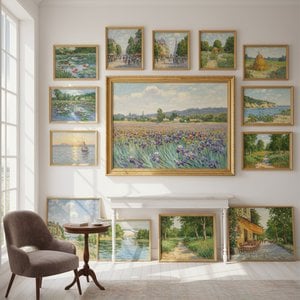
Top 10 Impressionistische Landschappen: Meesterwerken voor uw Interieur
Ontdek de 10 meest iconische impressionistische landschappen! Leer over Monet, Renoir & andere meesters. Prachtige schilderijen voor uw interieur. Museumkwaliteit reproducties op ArtsDot.com.

Top 10 Impressionistische Landschappen: Meesterwerken voor uw Interieur
Ontdek de 10 meest iconische impressionistische landschappen van Monet, Renoir & meer. Leer over hun technieken en betekenis. Vind museumkwaliteit kunst reproducties voor uw interieur op ArtsDot.com!

Claude Monet's Top 25 Meesterwerken: Kleur, Licht & Impressionisme | ArtsDot
Ontdek de 25 meest iconische werken van Claude Monet! Duik in de wereld van impressionisme, kleur en licht. Van Waterlelies tot Zonsopgang – bekijk de meesterwerken & vind perfecte kunst voor jouw interieur op ArtsDot.com.


