Bekijk op ware grootte
 Verstuur
 Delen
Delen
 Details bekijken
 Gids
Gids

 Download
 Vergelijkbare items
 Röntgenonderzoek
 Diavoorstelling
 Statistieken
De Visio Sancti Francesca Romana
 Olieverf op canvas
- Wanddecoratie
- Baroque Dramatic Light
 1615
1615- Vroegmoderne tijd
 Galleria Nazionale delle Marche
 Lees meer
Handgemaakte olieverfreproductie
Met de hand geschilderd in olieverf op canvas in uw gewenste maat en lijst, op bestelling gemaakt door onze kunstenaars. ( Schakel over naar print Schakel over naar digitale afbeeldingen)




P118B $10

P118H $10

P118W $10

P438Z $10

P508JH $12

P508YH $12

P805H $10

P805Z $10

P919BZ $10

P919G $10

P919XJ $10

P959ZH $10

P968JZ $12

W106C $8

W218G $10

W218JH $8

W218Y $10

W307PJ $10

W316G $10

W316PJ $8

W316Y $10

W398PJ $8

W4111J $10

W500HY $15

W500JH $15

W692G $12

W849H $8

W940BG $15

W953PJ $8




Kies uit onze vooraf ingestelde maten die overeenkomen met de originele verhoudingen van het kunstwerk.

U kunt uw eigen afmetingen invoeren om in een specifieke lijst of ruimte te passen. Als de door u gekozen maat niet overeenkomt met de verhoudingen van het originele beeld, zullen we het kunstwerk bijsnijden of het schilderij uitbreiden met extra handgeschilderde elementen. Een digitale mockup wordt ter goedkeuring naar u verzonden voordat de productie begint.
Houd er rekening mee dat de preview op het scherm niet de werkelijke uitsnede of uitbreiding weergeeft. Alleen de mockup toont de uiteindelijke compositie nauwkeurig.
Hoewel aangepaste afmetingen mogelijk zijn, raden we aan een maat uit de vooraf gedefinieerde lijst te selecteren om de originele verhoudingen te behouden.
Na de bestelling zal het team van ArtsDot.com per e-mail contact opnemen met de klant voor instructies en een mockup-voorbeeld sturen.
Wereldwijde levering () binnen 3 tot 4 weken in plaats van de standaard 5 weken. (21 september). Zonder concessies aan de kwaliteit.

Gratis wereldwijde expressverzending

Hoogwaardig linnen canvas

Volledige verzendverzekering

Garantie op terugbetaling van invoerrechten

Garantie op exacte kleurweergave

Retourbeleid van 100 dagen (alleen bij defecten)

100% Geld-terug-garantie

Korting bij meerdere afnames
 De optie voor glas is alleen beschikbaar bij een formaat kleiner dan 110 cm.

De Visio Sancti Francesca Romana
Reproductiemethode
Formaat reproductie
-


Totaalprijs
$ 263
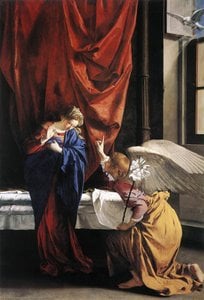
Een Visioen van St Francesca Romana door Orazio Gentileschi
De Italiaanse kunstenaar Orazio Gentileschi schilderde in 1615 "Het Visioen van St Francesca Romana", een werk dat zich nu bevindt in de Galleria Nazionale delle Marche in Urbino. Deze afbeelding, een prachtige illustratie van het Barok tijdperk, biedt een fascinerende kijk op zowel kunsttechniek als religieuze symboliek. Het is een schilderij dat niet alleen een historische gebeurtenis weergeeft maar ook een diepe emotionele resonans oproept bij wie het aanschouwt.Een Schitterende Illustratie van het Barok Stijl
Gentileschi’s stijl kenmerkte zich door een dramatische toepassing van licht en schaduw, een techniek die hij had geleerd van zijn mentor Caravaggio. Hij gebruikte warme kleuren om de aandacht te trekken naar het centrale figuur van St Francesca Romana, terwijl hij donkere tinten gebruikte om een gevoel van mysterie en grandeur aan het achtergrond te geven. De compositie is zorgvuldig gepland om beweging en emotie weer te geven, een kenmerk dat typerend is voor de Barok kunsttraditie. Het schilderij straalt een energie uit die voortkomt uit het gebruik van kleur en licht, waardoor het een bijna levensechte kwaliteit krijgt.Historische Context en Religieuze Betekenis
Het werk werd geschreven tijdens een periode waarin de katholieke kerk een dominante rol speelde in Europese samenlevingen. St Francesca Romana stond bekend om haar intense religieuze contemplatie en haar visioenen van Christus, waardoor het een belangrijk symbool werd van spirituele zuiverheid en vertrouwen. De drie figuren die afgebeeld zijn – St Francesca Romana zelf, een boekhouder en een derde persoon – vertegenwoordigen verschillende aspecten van de christelijke leer en praktijk. Het boekhouder staat voor kennis en Schriftuur, terwijl de derde figuur mogelijk een rol speelt bij het begeleiden van St Francesca Romana tijdens haar gebedsessies. De afbeelding is bedoeld om aanmoediging te bieden aan kijkers om hun eigen spirituele zoektocht voort te zetten.Symboliek en Emotionele Impact
De witte robe van St Francesca Romana symboliseert zuiverheid en nederigheid, terwijl de rode kleur van de boekhouder staat voor macht en autoriteit. De donkere kleuren van de derde figuur vertegenwoordigen mogelijk rouw en penitentie. Het gebruik van licht en schaduw creëert een dramatische scène die emotie oproept bij wie het aanschouwt. De kunstenaar heeft een prachtige balans gevonden tussen technische precisie en artistieke expressie, waardoor het werk een blijvende emotionele impact heeft op de kijker. Het schilderij nodigt uit tot contemplatie en biedt een prachtige manier om de schoonheid van religieuze kunst te ervaren.Een Inspirerende Reproduktie voor Uw Interieur
Een hoogwaardige reproductie van "Het Visioen van St Francesca Romana" kan een prachtige aanvulling zijn op elk interieur, waardoor het een gevoel van sereniteit en elegantie krijgt. Laat u inspireren door de grandeur van het Barok tijdperk en laat deze kunstwerk een centraal punt worden van uw woonkamer of slaapkamer. Een zorgvuldig gekozen reproductie kan een prachtige manier zijn om kunstgeschiedenis tot leven te brengen in uw huis.Gerelateerde kunstwerken


Biografie van de kunstenaar
A Tuscan Dawn: The Life and Art of Orazio Gentileschi
Born in 1563 amidst the rolling hills of Tuscany, Orazio Gentileschi embarked on a journey that would see him become a pivotal figure in the transition from Mannerism to Baroque painting. Initially known as Orazio Lomi, he gravitated towards Rome, then the epicenter of artistic innovation, where he honed his skills within the workshops of Cola dell’Amata and absorbed the architectural sensibilities of Francesco da Sangallo. These early influences instilled in him a meticulous attention to form and composition, characteristics that would remain hallmarks of his style even as it dramatically evolved. Gentileschi’s initial work often involved contributing figures to larger decorative schemes conceived by other artists – a formative experience that taught him collaboration and adaptability, yet also hinted at a burgeoning ambition for independent expression. He began his career assisting in the creation of elaborate frescoes and altarpieces, learning the fundamentals of perspective, color theory, and composition under the tutelage of established masters. This period served as a crucial apprenticeship, providing him with invaluable experience in executing complex scenes and understanding the demands of various patrons.Embracing the Shadow: Caravaggio's Influence and Artistic Development
The turn of the 17th century marked a turning point in Gentileschi’s artistic trajectory. The revolutionary naturalism of Caravaggio burst onto the Roman art scene, challenging established conventions with its dramatic use of light and shadow – *tenebrism* – and unflinching realism. Gentileschi was profoundly affected by this seismic shift, adopting elements of Caravaggio's style into his own work. However, he wasn’t merely an imitator; rather, he filtered Caravaggio’s innovations through his existing artistic sensibilities. While retaining the dramatic intensity, Gentileschi softened the harshness of Caravaggio’s *tenebrism*, introducing a lighter palette and a more refined approach to detail. This resulted in paintings that possessed both emotional power and elegant grace – a unique synthesis that distinguished him from his contemporaries. Biblical scenes and mythological narratives became frequent subjects, allowing Gentileschi to explore themes of faith, heroism, and human vulnerability with compelling visual storytelling. He skillfully employed Caravaggio’s techniques while maintaining a distinctly personal style, characterized by a sense of movement and dynamism rarely seen in the work of other artists influenced by the master.A Courtly Wanderer: From Paris to London
Gentileschi’s artistic reputation extended beyond Italy's borders. His talent attracted the patronage of powerful figures, leading him on a peripatetic journey through Europe. He spent time at the court of Marie de' Medici in Paris, where his refined style resonated with the Queen’s taste for elegance and sophistication. This period saw a further evolution in his work, characterized by increasingly elaborate compositions and a heightened sense of decorum. He became known for his ability to capture the nuances of aristocratic life, depicting portraits that were both flattering and revealing. However, it was his invitation to England in 1626 that would define the final chapter of his career. Appointed court painter to Charles I, Gentileschi became one of the first major exponents of Caravaggism in Britain, significantly influencing the development of English Baroque painting. He undertook ambitious projects, including a series of ceiling paintings for Greenwich Palace (now Marlborough House), showcasing his mastery of large-scale decorative schemes and solidifying his position as a leading artist of his time. His work in England reflected the prevailing tastes of the court, blending classical influences with dramatic realism.Key Works and Artistic Style
Gentileschi’s oeuvre encompasses a diverse range of subjects, reflecting both his artistic versatility and the varied demands of his patrons. Among his most celebrated works are “Danae,” a powerful depiction of mythological excess; "The Annunciation," showcasing his mastery of composition and color; and “The Virgin Mary,” demonstrating his ability to convey profound emotion through subtle gestures and expressions. His style is characterized by a masterful command of *chiaroscuro*, creating dramatic contrasts between light and shadow that heighten the emotional impact of his scenes. He employed a lighter palette than many of his contemporaries, favoring warm earth tones and vibrant reds and blues. Gentileschi’s figures are often depicted in dynamic poses, conveying a sense of movement and vitality. His compositions are meticulously balanced, reflecting a deep understanding of perspective and spatial relationships. Major Works: “Danae”, "The Annunciation", "The Virgin Mary". Key Influences: Mannerism, Caravaggio. Artistic Style: Baroque, Dramatic compositions, Bright colors.Legacy and Lasting Impact
Orazio Gentileschi’s contributions to the world of art are multifaceted. He bridged the gap between Mannerism and Baroque, absorbing the innovations of Caravaggio while forging his own distinctive style. His use of vibrant colors, dramatic compositions, and refined technique influenced a generation of artists across Europe. He was instrumental in introducing Caravaggism to England, leaving an indelible mark on the artistic landscape there. But perhaps his most enduring legacy lies in his daughter, Artemisia Gentileschi. Trained in her father’s studio, she emerged as one of the most celebrated female painters of the Baroque era, carrying forward the family's artistic tradition and achieving renown in her own right. Today, Gentileschi’s works are held in prestigious museums and galleries worldwide – from the Uffizi Gallery in Florence to the Accademia Gallery in Venice – testaments to his enduring brilliance and lasting impact on the history of art. His paintings continue to captivate viewers with their emotional depth, technical virtuosity, and timeless beauty.
Orazio Gentileschi
1563 - 1639 , Italië
Snelle feiten
- Artistic Movement Or Style: Barok, Caravaggisme
- Artists Or Movements Influenced By This Artist:
- Artemisia Gentileschi
- Barok kunst
- Artists Who Influenced This Artist:
- Caravaggio
- Francesco da Sangallo
- Date Of Birth: 1563
- Date Of Death: 1639
- Full Name: Orazio Gentileschi
- Nationality: Italiaans
- Notable Artworks:
- Danae
- De Aankondiging
- Het Maria Altar
- Place Of Birth: Tuscany, Italië
Gerelateerde artikelen

Theatricality & Triumph: Baroque Drama in Painting & Sculpture
Explore the dramatic world of Baroque art! Discover its history, defining characteristics, & lasting influence on painting & sculpture. Expert insights into Caravaggio, Zurbarán, and Bernini – plus high-quality reproductions at ArtsDot.

The Dramatic Flourish: Exploring the Baroque Movement's Enduring Legacy in Art History
Explore the dramatic world of Baroque art! Discover iconic artists like Caravaggio & Rubens, defining techniques, and its lasting impact on art history. Expert insights for collectors & enthusiasts at ArtsDot.

Top 10 Barok Meesterwerken: Kunstgeschiedenis voor uw Interieur | ArtsDot.nl
Ontdek de 10 meest iconische Barok meesterwerken van Caravaggio, Rembrandt & Rubens! Duik in de geschiedenis en passie achter deze klassieke schilderijen. Vind museumkwaliteit reproducties voor uw interieur op ArtsDot.com.

Barok Schilderwerk: Top 10 Meesterwerken die een Beweging Definieerden | ArtsDot
Ontdek de 10 meest invloedrijke meesterwerken van het Barok schilderwerk! Caravaggio, Rembrandt & Rubens – leer over hun techniek en passie. Vind museumkwaliteit reproducties & interieurinspiratie op ArtsDot.com.

The Visceral Stage: Exploring Dramatic Narratives & Emotional Intensity in Baroque Art
Explore the dramatic world of Baroque art! Discover iconic masters like Caravaggio & Rembrandt, their techniques, and the movement's lasting impact. Expert insights for collectors & enthusiasts at ArtsDot.