


 Voorvertoning
 Verstuur
 Delen
Delen
 Details bekijken
 Gids
Gids

 Download
 Vergelijkbare items
 Röntgenonderzoek
 Diavoorstelling
 Statistieken
Sint Jozef
 Olieverf op paneel
- Wanddecoratie
- Vroeg-Nederlandse Renaissance
 1445
1445- Renaissance
 21.0 x 18.0 cm
 Calouste Gulbenkian Museum
 Lees meer
Handgemaakte olieverfreproductie
Met de hand geschilderd in olieverf op canvas in uw gewenste maat en lijst, op bestelling gemaakt door onze kunstenaars. ( Schakel over naar print Schakel over naar digitale afbeeldingen)




P118B €10

P118H €10

P118W €10

P438Z €10

P508JH €12

P508YH €12

P805H €10

P805Z €10

P919BZ €10

P919G €10

P919XJ €10

P959ZH €10

P968JZ €12

W106C €8

W218G €10

W218JH €8

W218Y €10

W307PJ €10

W316G €10

W316PJ €8

W316Y €10

W398PJ €8

W4111J €10

W500HY €15

W500JH €15

W692G €12

W849H €8

W940BG €15

W953PJ €8




Kies uit onze vooraf ingestelde maten die overeenkomen met de originele verhoudingen van het kunstwerk.

Voer de breedte en hoogte in die u nodig heeft, passend bij uw lijst of uw muur. Omdat dit handgeschilderd is, kan de kunstenaar bij een afmeting met een andere beeldverhouding iets meer rondom het schilderij schilderen of juist iets meer weglaten — u kiest zelf. Wij sturen u een digitaal mockup ter goedkeuring voordat het schilderwerk begint. De afbeelding die op deze pagina wordt getoond, is niet het uiteindelijke resultaat — alleen de mockup geeft dit weer.
Na de bestelling zal het team van ArtsDot.com per e-mail contact opnemen met de klant voor instructies en een mockup-voorbeeld sturen.
Wereldwijde levering () binnen 3 tot 4 weken in plaats van de standaard 5 weken. (28 oktober). Zonder concessies aan de kwaliteit.

Gratis wereldwijde expressverzending

Hoogwaardig linnen canvas

Volledige verzendverzekering

Garantie op terugbetaling van invoerrechten

Garantie op exacte kleurweergave

Retourbeleid van 100 dagen (alleen bij defecten)

100% Geld-terug-garantie

Korting bij meerdere afnames
 De optie voor glas is alleen beschikbaar bij een formaat kleiner dan 110 cm.

Sint Jozef
Druktechniek
Afmetingen reproductie
-


Eindtotaal
€ 232
Een venster op devotie: De stille majesteit van Sint Jozef
In de verstilde atmosfeer van het midden van de 15e eeuw konden weinig kunstenaars de kruising tussen menselijke kwetsbaarheid en goddelijke genade zo meesterlijk vastleggen als Rogier van der Weyden. Zijn schilderij, Sint Jozef, voltooid rond 1445, is veel meer dan een louter religioneus portret; het is een diepgaande meditatie over introspectie en geloof. Wanneer men naar dit intieme werk kijkt, voelt men direct de drang om in een privémoment van contemplatie te worden getrokken. Het onderwerp, de vereerde vader van Jezus, wordt niet afgebeeld in een moment van groots spektakel, maar in een staat van stille waardigheid. Gekleed in een opvallende rode hoed en een diepblauwe robe met een zachte kap, kijkt Sint Jozef door een venster naar buiten; zijn blik suggereert een geest verloren in gebed, of misschien het observeren van de subtiele bewegingen van de wereld daarbuiten. Deze sensatie van stilstand is tastbaar en biedt een toevluchtsoord van rust dat verzamelaars en decorateurs nog steeds fascineert die op zoek zijn naar werken die een bezielde, contemplatieve energie brengen naar een modern interieur.De alchemie van licht en detail
De genialiteit van dit meesterwerk ligt in de buitengewone technische vaardigheid van Van der Weyden, een talent dat waarschijnlijk werd verfijnd tijdens zijn vroege jaren als goudsmid. Deze achtergrond in edelmetalen stelde hem in staat het canvas te benaderen met een ongeëvenaard oog voor textuur en lichtsterkte. Door de zorgvuldige toepassing van transparante glazuren bereikte hij een niveau van realisme dat revolutionair was voor de vroeg-Nederlandse periode. Men kan bijna het gewicht voelen van de zware stof van de blauwe robe en het subtiele spel van het licht op de verweerde gelaatstrekken van de heilige opmerken. Deze techniek repliceert niet enkel de werkelijkheid; het creëert een innerlijke straling, een spirituele gloed die uit de figuur zelf lijkt voort te komen. Voor het getrainde oog dient de minutieuze weergave van elke plooi en schaduw als een getuigenis van het vermogen van de kunstenaar om olie en pigment te transformeren tot een levende, ademende aanwezigheid.Symboliek en de geest van Vlaanderen
Naast de technische pracht is Sint Jozef diep geworteld in de culturele en religieuze vurigheid van het 15e-eeuwse Vlaanderen. Tijdens dit tijdperk was de regio een bloeiend centrum van handel en vroomheid, waar kunst diende als een brug tussen het aardse en het goddelijke. De compositie van het schilderij—met subtiele figuren op de achtergrond en een delicate vogel in de bovenhoek—voegt lagen van symbolische diepgang toe aan het verhaal. Het venster dient als een krachtige metafoor voor de drempel tussen de innerlijke wereld van de ziel en de externe wereld van de schepping. In een tijd waarin Sint Jozef de deugden van nederigheid, rechtvaardigheid en standvastige bescherming vertegenwoordigde, fungeert dit portret als een visuele preek over de schoonheid van een leven geleefd in stille devotie. Voor wie een ruimte wil verfraaien met kunst die verder gaat dan louter decoratie, biedt dit werk een tijdloze verbinding met de diepgaande emotionele en spirituele erfenis van de Noordelijke Renaissance.Veelgestelde vragen
Welk gevoel roept "Sint Jozef" door Rogier van der Weyden op?
"Sint Jozef" door Rogier van der Weyden roept een Reflectief gevoel op binnen een algeheel Rustgevend stemmigheid.
Wat voor soort kunstwerk is "Sint Jozef" door Rogier van der Weyden?
In de catalogus is "Sint Jozef" door Rogier van der Weyden geclassificeerd als Wanddecoratie. Deze categorie helpt bij het vinden van vergelijkbare werken.
Met welke techniek is "Sint Jozef" door Rogier van der Weyden vervaardigd?
Het medium van "Sint Jozef" door Rogier van der Weyden is Olieverf op paneel. Reproducties zijn bedoeld om de uitstraling van deze techniek weer te geven.
Vergelijkbare kunstwerken


![The Madonna Between St. John The Baptist And St. Sebastian [detail] — Pietro Perugino, Renaissance](/media/artworks/images-thumb/f0/3a/f03a20887bc1e56ffa9a705ad2276cb8.jpg)

Biografie kunstenaar
A Master of Emotion: The Life and Legacy of Rogier van der Weyden
Rogier van der Weyden, initially known as Roger de la Pasture, was born around 1400 in the bustling city of Tournai, nestled within what is now Belgium. His early life remains somewhat shrouded in mystery, though it’s believed he began his artistic journey not with brush and pigment, but as a skilled goldsmith. This formative training instilled within him an unwavering dedication to meticulous detail and a refined sensibility for craftsmanship – qualities that would become the very hallmarks of his distinctive style. The precision demanded by working with precious metals undoubtedly translated into the exquisite rendering of textures, fabrics, and expressions that define his most celebrated masterpieces. He wasn’t merely depicting reality; he was recreating it with painstaking accuracy, imbued with an almost reverent attention to detail.From Tournai to Brussels: A Rising Star
By 1427, van der Weyden had ascended to the rank of master within the Guild of Saint Luke in Tournai – a significant milestone that solidified his position as a professional artist and opened doors to prestigious commissions. His career truly gained momentum when he entered the service of Philip the Good, Duke of Burgundy, in 1435. This patronage proved transformative, providing him with not only financial security but also invaluable access to an elite circle of influence and exposure to some of the most discerning eyes of the era. During this period, van der Weyden’s artistic vision underwent a remarkable evolution, moving away from the somewhat rigid conventions prevalent in earlier Netherlandish painting towards a more emotionally resonant and naturalistic approach. He wasn't simply painting religious scenes; he was striving to evoke genuine feeling in the viewer – to create an experience that transcended mere observation. His work began to reflect a deeper understanding of human psychology, capturing not just appearances but also the subtle nuances of emotion.The Language of Feeling: Style and Technique
Rogier van der Weyden’s artistic signature is immediately recognizable through several defining characteristics. His palette was remarkably rich and diverse, a vibrant tapestry of colors carefully chosen to avoid repetition and create depth and complexity within his compositions. He possessed an extraordinary ability to convey profound emotion – *pathos* – particularly in depictions of religious subjects like the Lamentation, where grief and sorrow are palpably present. This emotional intensity wasn’t achieved through dramatic gestures or exaggerated expressions; rather, it was subtly woven into the very fabric of the painting, conveyed through delicate nuances of facial expression, body language, and composition. His figures, while adhering to the conventions of the time, demonstrate a growing interest in realistic representation – not just in anatomy and drapery, but also in capturing the psychological states of his subjects. They possess a dignified, almost sculptural quality, particularly evident in his grand triptychs, lending them an air of solemnity and reverence. He masterfully employed oil paint, building up layers of translucent glazes to achieve luminous effects and create a sense of depth and realism that was revolutionary for its time. The use of *chiaroscuro*, the dramatic interplay of light and shadow, further enhanced the emotional impact of his works.Notable Works and Enduring Masterpieces
Throughout his prolific career, van der Weyden produced numerous works that stand as testaments to his artistic prowess. St Luke Drawing a Portrait of the Madonna, housed in the Museum of Fine Arts, Boston, showcases his mastery of oil on panel and meticulous observation. The Lamentation, residing in the Musée des Beaux-Arts Tournai, Belgium, is perhaps his most celebrated work – a powerfully emotive depiction of Christ’s mourning, renowned for its dramatic use of *chiaroscuro* and its ability to evoke profound sorrow in the viewer. Multiple versions of The Deposition exist, each demonstrating his skill in conveying grief and drama with breathtaking sensitivity. The Annunciation, a masterpiece of refined style and attention to detail, exemplifies his ability to imbue even the most traditional subjects with a sense of freshness and vitality. And finally, the intricate and richly detailed Bladelin Triptych stands as a monumental achievement – a complex altarpiece that showcases the full range of van der Weyden’s artistic abilities. These works, and many others, continue to captivate audiences today, solidifying his position as one of the most important painters of the 15th century.Lasting Influence: A Legacy Forged in Paint
Van der Weyden’s influence extended far beyond the borders of his native Flanders. His works were highly sought after throughout Europe, particularly in Italy and Spain, where they introduced a new level of emotional depth and naturalism to local artistic traditions. Although his fame experienced a period of relative decline in the 17th century, a rediscovery during the 19th century cemented his place as one of the most important painters of the 15th century. He stands alongside Jan van Eyck and Robert Campin as one of the “three great” Early Flemish masters, each contributing uniquely to the development of Northern Renaissance art. His innovative techniques and emotionally charged compositions paved the way for future generations of artists, inspiring countless imitators and influencing the course of Western painting for centuries to come. He helped establish oil painting as the dominant medium and elevated the status of the artist within society, transforming them from skilled craftsmen into revered creators. Rogier van der Weyden’s legacy continues to resonate today, a testament to his enduring genius and his profound understanding of the human condition.
Rogier van der Weyden
1400 - 1464 , België
Belangrijkste feiten
- Artistic Movement Or Style: Vroege Nederlandse schilderkunst
- Artists Or Movements Influenced By This Artist:
- Italiaanse Renaissance
- Spaanse schilderkunst
- Artists Who Influenced This Artist:
- Robert Campin
- Jan van Eyck
- Date Of Birth: c. 1400
- Date Of Death: 1464
- Full Name: Rogier van der Weyden
- Nationality: Vlaams
- Notable Artworks:
- Lamentatie
- Aflegging
- Aanblik
- Place Of Birth: Tournai, België
Gerelateerde artikelen

Top 10 Meesterwerken gedomineerd door 'Slate Blue': Kunst voor uw interieur
Ontdek 10 beroemde schilderijen gedomineerd door de prachtige tint 'Slate Blue'. Van Monet tot Van Gogh, leer over kunstgeschiedenis & techniek. Museumkwaliteit reproducties voor uw interieur op ArtsDot.com! Ontdek de collectie online.

Serene Blue Backgrounds: Discover Soulful Art to Transform Your Space with Timeless Elegance
Transform your home with soulful blue art. From serene Monet impressions to modern textured sculptures, discover curated masterpieces designed to inspire calm. Explore expert art consultations and bespoke hand-painted reproductions to create your personal sanctuary.

El Greco's Top 25 Meesterwerken: Kunst, Geschiedenis & Decoratie voor Uw Huis
Ontdek de top 25 meesterwerken van El Greco! Duik in het leven en werk van deze renaissance schilder, zijn spirituele kunst & dramatische stijl. Vind museumkwaliteit reproducties voor uw interieur op ArtsDot.com.
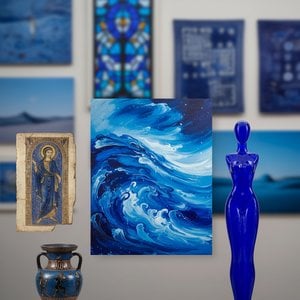
The Allure of Azure: Exploring the Symbolic & Aesthetic Depths of Blue in Art History
Explore the rich history of blue in art! Discover its symbolism, from ancient pigments to modern masterpieces by Kandinsky & Seurat. Uncover the psychological impact and cultural meanings behind this captivating hue.

Crimson Threads of Narrative: Exploring Symbolism & Representation in Artworks Featuring the Red Dress
Explore the rich symbolism of the red dress in art history! From ancient power displays to iconic portraits like Cézanne’s 'Madame Cezanne', discover the cultural and artistic significance behind this captivating color. Expert analysis & insights.


