


Het werk volgt uw keuzes: , .
Beschrijving verzamelobject
Experience the chaotic energy of Jackson Pollock's Echo, a 1951 Abstract Expressionist masterpiece featuring intricate monochrome drip patterns that invite you to explore the profound depths of modern art history.
 Lees meer
Biografie kunstenaar
Amerikaans abstract expressionist bekend om ritmische driptechnieken en all-over composities, waarbij hij stokken en messen gebruikt voor verf.
Bestel uw in vier eenvoudige stappen
Neem de tijd. U kunt elk antwoord nog wijzigen; de prijs in uw besteloverzicht wordt direct aangepast aan elke keuze.
1 Stap één van de vier
Op welk medium moet het worden afgedrukt?
Canvas wordt gedrukt met giclée-inkten en kan worden opgespannen of ingelijst als een schilderij; papier wordt plat geleverd, of ingelijst achter glas.
2 Stap twee van vier
Welke maat wilt u kiezen?
Deze formaten behouden de proporties van het originele schilderij. De tekening laat uw keuze zien op een muur, boven een bank van twee meter.
Of geef uw eigen afmetingen op
Kies uit onze vooraf ingestelde maten die overeenkomen met de originele verhoudingen van het kunstwerk.

Voer de gewenste breedte en hoogte in, passend bij uw lijst of muur. Een afdruk kan alleen worden ingekort en nooit groter worden gemaakt dan het origineel; een formaat met andere verhoudingen zal daarom een deel van de afbeelding verliezen. Wij sturen u een digitaal mockup ter goedkeuring voordat we tot drukwerk overgaan. De afbeelding op deze pagina toont niet de werkelijke uitsnede — dit is alleen te zien op het mockup.
3 Stap drie van vier
Hoe moet het worden geleverd: gerold, opgespannen of ingelijst?
De onderstaande prijzen zijn voor de maat die u in stap één heeft gekozen.
Kies de randen van het canvas
Kies uw lijst

Wit €1

Vervagende randen €1

Doorlopende rand €1

P118B €10

P118H €10

P118W €10

P438Z €10

P508JH €12

P508YH €12

P805H €10

P805Z €10

P919BZ €10

P919G €10

P919XJ €10

P959ZH €10

P968JZ €12

W106C €8

W218G €10

W218JH €8

W218Y €10

W307PJ €10

W316G €10

W316PJ €8

W316Y €10

W398PJ €8

W4111J €10

W500HY €15

W500JH €15

W692G €12

W849H €8

W940BG €15

W953PJ €8

H24-GOLD €30

H24-SILVER €30

H36-GOLD €45

H36-SILVER €45
Ingelijst
Lijstrand: . Totale afmetingen inclusief lijst: .
4 Stap vier van vier
Enkele afwerkingsopties
Ze zijn allemaal optioneel. De reeds geselecteerde antwoorden brengen geen extra kosten met zich mee.
Wereldwijde levering () binnen 2 weken in plaats van de standaard 4/5 weken. (23 november)
Een naambordje, zoals in een museum?
Details van de gegraveerde bronzen plaat
This elegant plaque features the artist's name and the title of the artwork, finely engraved for a timeless presentation.
It is made from bronze with a refined, elegant finish. The text is precisely laser-engraved for a sharp and permanent result. Measuring 9x2 cm, the plaque is compact yet easy to read. It's built to be durable and scratch-resistant, offering a professional, museum-quality look. Mounting is simple thanks to the included adhesive backing.
Details transparante acrylplaat
The plaque includes essential engraved details such as the artist's name, the title of the artwork, the date it was created, the type of media used-like oil on canvas or watercolor-a brief description of the piece, and a QR code that links to the complete artwork information.
It is crafted from clear acrylic, offering a sleek, modern appearance. The text is UV-engraved in black to ensure strong visual contrast. With a size of 10x15 cm, it ensures optimal readability. It comes equipped with two metal hooks for secure wall mounting. The plaque is designed to be weather-resistant, making it suitable for various environments, and it includes interactive features that work seamlessly with smartphone scanning.
Details zwarte acrylplaat
This elegant plaque includes engraved information such as the artist's name, the title of the artwork, the date it was created, the type of media used (like oil on canvas or watercolor), a short description of the artwork, and a QR code for quick access to more information.
The plaque itself is made from refined black acrylic with a premium finish. The text is laser-engraved in white for high contrast and readability. Its size is 10x15 cm, designed to be easy to read. It comes with two metal hooks for professional mounting. The design is sleek and fits any interior style. It is also weather-resistant and durable, with built-in digital integration for mobile compatibility.
Een beschermende vernis?
Wanneer heeft u het nodig?
✓ Controleren en bestellen
Uw print, zoals u deze heeft besteld

Echo
Druktechniek
Afmetingen reproductie
-

Lijst voor reproductie
-
-
Voor kunstwerken of reproducties die aan één zijde groter zijn dan 105 cm (ongeveer 41 inch), wordt de lijst als een losse set verzonden. Deze methode garandeert een veilige levering en voorkomt schade tijdens het transport.
Professionele montage vereist - dit is geen doe-het-zelfproduct.
De set moet worden gemonteerd en het canvas moet worden gespannen door een ervaren professionele lijstenmaker, met gebruik van houtlijm (niet inbegrepen), een doekspanter en klemmen om de sponningen recht te houden terwijl de lijm droogt. Onjuiste montage of een ongelijkmatige spanning op het canvas kan het kunstwerk permanent beschadigen en wordt niet gedekt door onze garantie.
 Voor kunstwerken of reproducties die aan één zijde groter zijn dan 105 cm (ongeveer 41 inch), wordt de lijst als een losse set verzonden. Deze methode garandeert een veilige levering en voorkomt schade tijdens het transport.
Alle massief houten onderdelen zijn inbegrepen, nauwkeurig op maat gesneden voor montage.
Te monteren met de meegeleverde schroeven, plus houtlijm voor de hoekverbindingen, die niet wordt meegeleverd en door uw lijstenmaker moet worden aangeschaft.
Professioneel gereedschap is vereist en niet inbegrepen: een spanner voor canvas en klemmen om de latten recht te houden terwijl de lijm droogt.
Belangrijk:
De hoekverbindingen vereisen houtlijm, de latten moeten met lijmklemmen worden vastgehouden tot de lijm volledig is opgedroogd, en het spannen van het canvas op het samengestelde frame vereist een doekspanter. Geen van deze artikelen is inbegrepen in de set. Wij adviseren u om een ervaren professionele lijstenmaker te raadplegen voordat u deze maat bestelt.

Naamplaatje
-
-

Beschermende vernislaag
Glanzende vernis (versterkt de kleuren en biedt bescherming tegen licht en vocht)
-

Spoedlevering
Wereldwijde levering () binnen 2 weken in plaats van de standaard 4/5 weken. (23 november)
-
Spoedlevering
Wereldwijde levering () binnen 4/5 weken. (30 november).
Inbegrepen
Eindtotaal
€ 56
De optie voor glas is alleen beschikbaar bij een formaat kleiner dan 110 cm.
Inbegrepen bij elke bestelling
- Gratis wereldwijde expressverzending
- Hoogwaardig linnen canvas
- Volledige verzendverzekering
- Garantie op terugbetaling van invoerrechten
- Garantie op exacte kleurweergave
- Retourbeleid van 100 dagen (alleen bij defecten)
- 100% Geld-terug-garantie
- Korting bij meerdere afnames


Echo: A Dance of Chaos and Control
Jackson Pollock’s “Echo,” Number 25, 1951, stands as a testament to the fervor of Abstract Expressionism—a movement that sought to liberate art from representational constraints and delve into the depths of human emotion. Captured in stark black and white photography, this drawing embodies the spirit of Pollock's innovative drip painting technique, prioritizing gesture and spontaneity over meticulous planning.
- Composition: The image focuses on a cropped section of the canvas, eschewing traditional perspective to emphasize visual complexity. Shapes intertwine and overlap, creating an arresting field where the eye wanders without predetermined destination—a deliberate disruption of conventional artistic conventions.
- Color Palette: Stripped bare of color, “Echo” utilizes grayscale tones with subtle gradations of grey, amplifying the artwork’s dramatic impact. This monochromatic choice underscores the painting's preoccupation with texture and form rather than visual illusion.
- Technique: Executed in ink or charcoal on paper, the drawing showcases Pollock’s signature drip method—a process where paint is flung onto the canvas from a height, resulting in unpredictable patterns and textures. The fluid lines convey immediacy and emotional intensity.
The photograph's careful lighting reveals the surface texture of the artwork, highlighting the layering of marks that contribute to its overall visual density. It’s as if Pollock himself invited us into his studio, capturing a moment of creative fervor.
Roots in Regionalism and Early Influences
Paul Jackson Pollock's artistic journey began amidst the expansive landscapes of Wyoming—a formative experience that instilled in him an appreciation for natural forms and textures. His studies at the Art Students League under Thomas Hart Benton exposed him to the tenets of Regionalism, a movement advocating for art rooted in American identity and imbued with emotional resonance. Benton’s emphasis on rhythmic composition undoubtedly influenced Pollock's approach to visual storytelling.
Symbolic Resonance: Chaos as Expression
"Echo" isn't merely an exercise in abstract form; it speaks to a deeper psychological exploration. The chaotic arrangement of lines and shapes mirrors the turbulent inner landscape of the artist, conveying feelings of anxiety and dynamism simultaneously. Like many Abstract Expressionist works, “Echo” resists literal interpretation, inviting viewers to engage with its emotional core.
A Legacy of Innovation
Pollock’s groundbreaking technique—the drip painting—revolutionized artistic practice, establishing a new paradigm for visual expression. "Echo," Number 25, 1951 exemplifies this legacy, securing Pollock's place as one of the most influential figures in modern art and inspiring generations of artists to push boundaries and embrace spontaneity.
Veelgestelde vragen
Welke kleur domineert de compositie van "Echo" door Jackson Pollock?
Espresso (#615b55) is de dominante kleur van "Echo" door Jackson Pollock.
Hoe kan ik de afbeelding van "Echo" door Jackson Pollock downloaden?
De afbeelding van "Echo" door Jackson Pollock is te downloaden op de Downloaden-pagina van het kunstwerk: een digitale afbeelding in hoge resolutie om te downloaden.
Waar bevindt "Echo" door Jackson Pollock zich binnen de kunstgeschiedenis?
De kunsthistorische classificatie van "Echo" door Jackson Pollock is Abstract Expressionism, uit de Modern-periode.
Meer over dit schilderij
 Voorvertoning
 Bestel handgeschilderde reproductie
 Verstuur
 Delen
Delen
 Details bekijken
 Gids
Gids

 Download
 Vergelijkbare items
 Röntgenonderzoek
 Diavoorstelling
 Vraag & antwoord
 Statistieken
Vergelijkbare kunstwerken


Jackson Pollock
1912 - 1956, Verenigde Staten
Biografie kunstenaar
Vroege jaren, familie en opleiding
Het verhaal van Paul Jackson Pollock begint in het ruige landschap van Cody, Wyoming, waar hij op 28 januari 1912 werd geboren. Hij was de jongste van vijf broers, geboren uit het huwelijk van Stella May McClure en LeRoy Pollock. Zijn vader werkte als landmeter, een beroep dat constante beweging vereiste door het uitgestrekte Amerikaanse Westen. Dit nomadische bestaan betekende dat de vroege jaren van de jonge jongen werden gekenmerkt door frequente verhuizingen, een rusteloosheid die de verschuivende horizonnen van het werk van zijn vader leek te weerspiegelen. Deze vroege reizen door het Westen boden hem een directe, onmiddellijke ontmoeting met de natuurlijke wereld en de spirituele resonantie van de inheemse Amerikaanse kunst; indrukken die zich lang voordat hij ooit een penseel vasthield, stil in zijn onderbewustzijn zouden nestelen.
Naarmate hij ouder werd, leidde de zoektocht naar een gevoel van thuishoren hem naar de stedelijke energie van de kust. Hij schreef zich in op de Manual Arts High School in Los Angeles, op zoek naar een formele structuur voor zijn ontluikende impulsen. De ware vorming van zijn techniek vond echter pas veel later plaats, toen hij naar New York City verhuisde. Het was daar, bij de Art Students League, dat hij begon aan een lange en transformerende studieperiode. Van 1929 tot 1942 werkte hij onder de begeleiding van Thomas Hart Benton. Terwijl Benton de nadruk legde op ritmische composities en het narratieve gewicht van het Amerikaanse leven, begon de jonge student al te dwalen naar zijn eigen, meer abstracte, innerlijke waarheden.
De Ontwikkeling van een Unieke Techniek
Tegen 1947 had er een diepgaande verschuiving plaatsgevonden in de manier waarop hij het canvas benaderde. Hij maakte afstand van de traditionele ezel en koos er in plaats daarvan voor om zijn doeken rechtstreeks op de vloer te leggen. Deze verandering stelde hem in staat om boven zijn werk te staan, waardoor hij een integraal onderdeel werd van de creatieve handeling zelf. Hij bracht de verf niet simpelweg aan; hij liet de verf druipen, spatten en wierp het van bovenaf op het doek, waarbij de vloeistof in onvoorspelbare patronen naar beneden viel. Deze methode transformeerde de handeling van het schilderen tot een fysieke performance, waarbij de zwaartekracht en de gebaren de uiteindelijke vorm dicteerden.
Zijn instrumenten waren even onconventioneel als zijn methoden. Hij greep naar stokken, messen en zelfs spuiten om het vloeibare medium te manipuleren. Soms gebruikte hij troffels of druppelende, verdunde verf om specifieke texturen te creëren. Hij krabde vaak in het oppervlak of gebruikte vreemde voorwerpen om een dikke korst van verf op te bouwen, wat het werk een tactiele, sculpturale kwaliteit gaf. Dit proces ging minder over gecontroleerd penseelwerk en meer over een ritmische, bijna primitieve ontlading van energie op het oppervlak.
Belangrijke Werken en Artistieke Expressies
Naarmate hij zich losmaakte van de beperkingen van de ezel, begonnen zijn doeken een meer instinctieve en viscerale omgang met het medium te weerspiegelen. In 1943 creëerde hij Mural, een monumentaal werk van circa 2,4 bij 6,1 meter, dat zijn vermogen demonstreerde om een enorm oppervlak te beheersen. Tijdens deze periode leidden zijn verkenningen van het onderbewuste en de handeling van het schilderen zelf tot werken als Eyes in the Heat, vervaardigd rond 1946. Deze stukken waren niet louter afbeeldingen, maar eerder verslagen van een fysieke aanwezigheid, waarbij de beweging van zijn gehele lichaam de plaatsing van elke spat en elke kleurvlek dicteerde.
De jaren die volgden, zagen hem de ritmische, 'all-over' composities perfectioneren die zijn reputatie zouden definiëren. Hij streefde ernaar een gevoel van grenzeloze ruimte te creëren, waarin geen enkel enkel punt de overhand had op de rest. Deze benadering is duidelijk zichtbaar in Number 1, 1949, een werk dat een rauwe uitbarsting van energie vastlegt, en in Lavender Mist, Number 1, 1950, wat een essentieel onderdeel van zijn oeuvre blijft. In deze werken creëert het samenspel tussen controle en toeval een delicaat evenwicht, alsof de verf werd losgelaten in plaats van aangebracht.
Zijn latere experimenten bleven de grenzen verleggen van hoe verf op een horizontaal oppervlak gemanipuleerd kon worden. Hij gebruikte vaak stokken, messen of zelfs de verfblikken zelf om pigment te smijten, wat resulteerde in complexe netwerken van lijnen. Deze methode is duidelijk te zien in Blue Poles, Number 11, 1952 en in het energieke Convergence. Door deze werken bereikte hij een staat waarin het schilderij een eigen leven leek te hebben, voortgekomen uit een diepe onderdompeling in zijn eigen verbeelding.
Mecenassen, Atelier en Opdrachten
Het pad van zijn carrière werd gevormd door zowel maatschappelijke noodzaak als de vrijgevigheid van enkele cruciale steunpilaren. Tussen 1938 en 1942 vond hij stabiel werk als schilder voor het WPA Federal Art Project, een periode die een noodzakelijk ritme bracht in zijn vormende jaren. Deze stabiliteit maakte plaats voor een meer persoonlijke en transformerende alliantie toen Peggy Guggenheim hem in juli 1943 een galeriecontract aanbood. Haar steun bleek meer dan louter professioneel; in 1945 verstrekte zij een aanbetaling van 2.000 dollar om hem te helpen een eigen woning te bemachtigen, een gebaar dat zijn persoonlijke leven diep verweefde met zijn artistieke overleving.
Zijn creatieve leven vond uiteindelijk zijn middelpunt in East Hampton, New York. Daar, in het Pollock-Krasner House and Studio, leefde en werkte hij zij aan zij met zijn echtgenote, Lee Krasner. Het atelier was een plek van intense fysieke beweging, waar de grenzen tussen de kunstenaar en het canvas vervaagden. Hij liet de traditionele ezel vaak achter zich en gaf de voorkeur aan het leggen van zijn doeken op de vloer, om zo de verf van alle kanten te kunnen benaderen. Deze werkruimte was niet louter een plek voor productie, maar een broedplaats van diepe, rusteloze energie waar zijn meest radicale experimenten tot leven kwamen.
Latere Jaren en Dood
Het persoonlijke leven van de kunstenaar was diep verweven met zijn creatieve strijd. In 1945 trouwde hij met de kunstenares Lee Krasner, een verbintenis die een betekenisvolle aanwezigheid vormde in zijn leven tijdens zijn meest transformatieve jaren. Toch bleef er, onder het oppervlak van zijn professionele opmars, een voortdurende schaduw aanwezig. Hij worstelde gedurende zijn hele leven met een alcoholverslaving, een strijd die zijn bestaan vaak bemoeilijkte en zijn vermogen om met de druk van zijn groeiende roem om te gaan, onder druk zette.
Deze interne en externe turbulentie bereikte een tragisch einde in East Hampton, New York, VS. Op 11 augustus 1956 werd zijn leven, op 44-jarige leeftijd, abrupt beëindigd door een plotseling, gewelddadig ongeval. Tijdens het rijden raakte hij betrokken bij een eenzijdig auto-ongeluk veroorzaakt door alcohol. De crash bleek fataal en liet een nalatenschap na die even tumultueus was als de verf die hij over zijn canvassen wierp.
Nalatenschap en invloed op de moderne kunst
De rimpelingen van zijn radicale methoden reikten veel verder dan de studioruimtes van East Hampton. Door de traditionele band tussen de penseel en de ezel te verbreken, werd Jackson Pollock een centrale figuur in de abstract expressionistische beweging, een verschuiving die het traject van de Amerikaanse creativiteit fundamenteel veranderde. Zijn aanwezigheid hielp de positie van New York City te consolideren als een wereldwijd centrum voor moderne kunst, waardoor het hart van de avant-garde verschoof van de Europese dominantie. Hij behoorde tot de eerste Amerikaanse schilders die werden erkend als gelijken van de grote Europese meesters uit de 20e eeuw, waarmee hij bewees dat een nieuwe, visceraal taalgebruik kon ontstaan uit de bodem van de Verenigde Staten.
Zijn invloed fungeerde als een katalysator voor vele daaropvolgende kunststromingen die in zijn kielzog verschenen. De manier waarop hij zich tot het canvas verhield—door het te behandelen als een arena voor fysieke actie in plaats van louter een oppervlak voor representatie—opende de deuren voor velen die het onderbewuste wilden uitdrukken door middel van gebaar. Deze nadruk op het proces van de creatie zelf heeft een blijvende stempel gedrukt op de geschiedenis van de moderne kunst, en verzekerde dat het spontane en het ongeplande voor altijd een plaats zullen behouden in het instrumentarium van de kunstenaar.
- Number 1, 1949
- Blue Poles: Number 11, 1952
- Convergence
- Autumn Rhythm. Number 30, 1950
Waar u zijn werken vandaag de dag kunt bewonderen
Om de fysieke sporen van zijn beweging werkelijk te ervaren, moet men reizen naar de grote instituten die zijn radicale energie hebben bewaard. In New York City herbergt het Museum of Modern Art verschillende van zijn doeken, waardoor toeschouwers voor de uitgestrekte, ongecentreerde composities kunnen staan die zijn tijdperk definieerden. De National Gallery of Art in Washington D.C. beheert eveneens zijn werken en biedt een ruimte om de ingewikkelde netwerken van kleur te bestuderen die hij met zijn unieke methoden wist te creëren. Aan de andere kant van de Atlantische Oceaan houdt de Tate Gallery in Londen zijn aanwezigheid levend binnen haar collecties, wat ervoor zorgt dat zijn invloed ver reikt tot voorbij de Amerikaanse kusten.
Voor wie op zoek is naar een intiemere verbinding met zijn proces, biedt het Pollock-Krasner House and Studio in East Hampton een diep gevoel van betekenisvolle plek. Deze locatie, een nationaal historisch monument, was de ruimte waar hij en zijn echtgenote, Lee Krasner, leefden en werkten. Het landgoed blijft een vitale schakel met zijn leven en bewaart de omgeving die zijn overgang van traditionele vormen naar de spontane, op de vloer gebaseerde methoden voedde die de koers van de moderne schilderkunst hebben veranderd. Een wandeling door deze ruimtes geeft een tastbaar besef van de schaal en de fysieke realiteit van zijn creatieve strijd.
- Number 1, 1949
- Blue Poles: Number 11, 1952
- Mural (1943)
- Convergence


Gerelateerde artikelen
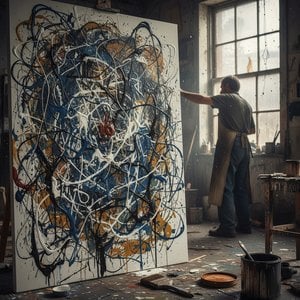
Paul Jackson Pollock: A Radical Departure – Exploring Abstract Expressionism's Pioneering Figure and His Enduring Legacy
Explore the revolutionary art of Jackson Pollock & Abstract Expressionism. Discover his iconic drip paintings, lasting impact, and considerations for collecting this pivotal American artist. Expert insights at ArtsDot.

Drie Perspectieven, Één Ziel: De Emotionele Impact van Keuze in Kunstreproducties
Ontdek de emotionele impact van kunst! Lees over de psychologie achter reproducties en hoe kleur onze gevoelens beïnvloedt. Hoogwaardige kunst voor uw interieur – met expert advies.

Paul Jenkins: Abstraction, Color Field Painting & the Pursuit of Lyrical Expression
Explore the captivating world of Paul Jenkins, a pioneer of abstract expressionism & color field painting. Discover his unique ‘Phenomena’ series and investment potential for art collectors. Expert insights at ArtsDot.