


Het werk volgt uw keuzes: , .
Beschrijving verzamelobject
Admire Franz Ehrlich’s architectural blueprint 'DEVELOPMENT SCHEMES,' showcasing meticulous detail and geometric precision—a testament to Bauhaus principles and communist ideals.
 Lees meer
Biografie kunstenaar
Ontdek de kunst van Franz Ehrlich: Duitse architect, kalligraaf & grafisch ontwerper. Ontdek Bauhaus-invloeden, communistische affilliaties & innovatieve ontwerpen.
Dit kunstwerk is auteursrechtelijk beschermd
De kunstwerken die op deze pagina worden weergegeven, zijn beschermd door de auteursrechtwetgeving, wat betekent dat het ons wettelijk niet is toegestaan om identieke reproducties te maken of te verkopen. Deze bescherming wordt gehandhaafd onder internationale overeenkomsten zoals de Conventie van Bern en door nationale wetgeving, waaronder de bepalingen van de Amerikaanse auteurswet - Titel 17. Alle rechten voorbehouden. Reproduceren of distribueren van afbeeldingen is niet toegestaan zonder uitdrukkelijke schriftelijke toestemming van WahooArt.com en de rechthebbenden.
Als een respectvol en legaal alternatief bieden wij op maat gemaakte, handgeschilderde kunstwerken aan die geïnspireerd zijn op het origineel. Onze bekwame en professionele kunstenaars bestuderen zorgvuldig de stijl, sfeer en artistieke essentie van het origineel om een nieuw, uniek werk te creëren dat dezelfde emotie oproept – terwijl het een op zichzelf staande, originele creatie blijft.
Deze methode voldoet volledig aan de auteursrechtwetgeving, omdat het niet gaat om het kopiëren of dupliceren van het beschermde kunstwerk. In plaats daarvan is er sprake van een creatieve herinterpretatie — een nieuw schilderij dat door het origineel wordt geïnspireerd, maar er niet identiek aan is.
Bestel uw in vier eenvoudige stappen
Neem de tijd. U kunt elk antwoord nog wijzigen; de prijs in uw besteloverzicht wordt direct aangepast aan elke keuze.
1 Stap één van de vier
On which medium should it be printed?
Canvas is printed with giclée inks and can be stretched or framed like a painting; paper comes flat, or framed behind glass.
2 Stap twee van vier
Welke maat wilt u kiezen?
Deze formaten behouden de proporties van het originele schilderij. De tekening laat uw keuze zien op een muur, boven een bank van twee meter.
Of geef uw eigen afmetingen op
Kies uit onze vooraf ingestelde maten die overeenkomen met de originele verhoudingen van het kunstwerk.

Voer de gewenste breedte en hoogte in, passend bij uw lijst of muur. Een afdruk kan alleen worden ingekort en nooit groter worden gemaakt dan het origineel; een formaat met andere verhoudingen zal daarom een deel van de afbeelding verliezen. Wij sturen u een digitaal mockup ter goedkeuring voordat we tot drukwerk overgaan. De afbeelding op deze pagina toont niet de werkelijke uitsnede — dit is alleen te zien op het mockup.
3 Stap drie van vier
Hoe moet het worden geleverd: gerold, opgespannen of ingelijst?
De onderstaande prijzen zijn voor de maat die u in stap één heeft gekozen.
Kies de randen van het canvas
Kies uw lijst

Wit €1

Vervagende randen €1

Doorlopende rand €1

P118B €10

P118H €10

P118W €10

P438Z €10

P508JH €12

P508YH €12

P805H €10

P805Z €10

P919BZ €10

P919G €10

P919XJ €10

P959ZH €10

P968JZ €12

W106C €8

W218G €10

W218JH €8

W218Y €10

W307PJ €10

W316G €10

W316PJ €8

W316Y €10

W398PJ €8

W4111J €10

W500HY €15

W500JH €15

W692G €12

W849H €8

W940BG €15

W953PJ €8

H24-GOLD €30

H24-SILVER €30

H36-GOLD €45

H36-SILVER €45
Ingelijst
Lijstrand: . Totale afmetingen inclusief lijst: .
4 Stap vier van vier
Enkele afwerkingsopties
Ze zijn allemaal optioneel. De reeds geselecteerde antwoorden brengen geen extra kosten met zich mee.
Wereldwijde levering () binnen 2 weken in plaats van de standaard 4/5 weken. (22 november)
Een naambordje, zoals in een museum?
Details van de gegraveerde bronzen plaat
This elegant plaque features the artist's name and the title of the artwork, finely engraved for a timeless presentation.
It is made from bronze with a refined, elegant finish. The text is precisely laser-engraved for a sharp and permanent result. Measuring 9x2 cm, the plaque is compact yet easy to read. It's built to be durable and scratch-resistant, offering a professional, museum-quality look. Mounting is simple thanks to the included adhesive backing.
Details transparante acrylplaat
The plaque includes essential engraved details such as the artist's name, the title of the artwork, the date it was created, the type of media used-like oil on canvas or watercolor-a brief description of the piece, and a QR code that links to the complete artwork information.
It is crafted from clear acrylic, offering a sleek, modern appearance. The text is UV-engraved in black to ensure strong visual contrast. With a size of 10x15 cm, it ensures optimal readability. It comes equipped with two metal hooks for secure wall mounting. The plaque is designed to be weather-resistant, making it suitable for various environments, and it includes interactive features that work seamlessly with smartphone scanning.
Details zwarte acrylplaat
This elegant plaque includes engraved information such as the artist's name, the title of the artwork, the date it was created, the type of media used (like oil on canvas or watercolor), a short description of the artwork, and a QR code for quick access to more information.
The plaque itself is made from refined black acrylic with a premium finish. The text is laser-engraved in white for high contrast and readability. Its size is 10x15 cm, designed to be easy to read. It comes with two metal hooks for professional mounting. The design is sleek and fits any interior style. It is also weather-resistant and durable, with built-in digital integration for mobile compatibility.
Een beschermende vernis?
Wanneer heeft u het nodig?
✓ Controleren en bestellen
Your print, as you ordered it

DEVELOPMENT SCHEMES. Existing buildings / development as currently intended / development as it should be intended
Druktechniek
Afmetingen reproductie
-

Lijst voor reproductie
-
-
Voor kunstwerken of reproducties die aan één zijde groter zijn dan 105 cm (ongeveer 41 inch), wordt de lijst als een losse set verzonden. Deze methode garandeert een veilige levering en voorkomt schade tijdens het transport.
Professionele montage vereist - dit is geen doe-het-zelfproduct.
De set moet worden gemonteerd en het canvas moet worden gespannen door een ervaren professionele lijstenmaker, met gebruik van houtlijm (niet inbegrepen), een doekspanter en klemmen om de sponningen recht te houden terwijl de lijm droogt. Onjuiste montage of een ongelijkmatige spanning op het canvas kan het kunstwerk permanent beschadigen en wordt niet gedekt door onze garantie.
 Voor kunstwerken of reproducties die aan één zijde groter zijn dan 105 cm (ongeveer 41 inch), wordt de lijst als een losse set verzonden. Deze methode garandeert een veilige levering en voorkomt schade tijdens het transport.
Alle massief houten onderdelen zijn inbegrepen, nauwkeurig op maat gesneden voor montage.
Te monteren met de meegeleverde schroeven, plus houtlijm voor de hoekverbindingen, die niet wordt meegeleverd en door uw lijstenmaker moet worden aangeschaft.
Professioneel gereedschap is vereist en niet inbegrepen: een spanner voor canvas en klemmen om de latten recht te houden terwijl de lijm droogt.
Belangrijk:
De hoekverbindingen vereisen houtlijm, de latten moeten met lijmklemmen worden vastgehouden tot de lijm volledig is opgedroogd, en het spannen van het canvas op het samengestelde frame vereist een doekspanter. Geen van deze artikelen is inbegrepen in de set. Wij adviseren u om een ervaren professionele lijstenmaker te raadplegen voordat u deze maat bestelt.

Naamplaatje
-
-

Beschermende vernislaag
Glanzende vernis (versterkt de kleuren en biedt bescherming tegen licht en vocht)
-

Spoedlevering
Wereldwijde levering () binnen 2 weken in plaats van de standaard 4/5 weken. (22 november)
-
Spoedlevering
Wereldwijde levering () binnen 4/5 weken. (29 november).
Inbegrepen
Eindtotaal
€ 56
De optie voor glas is alleen beschikbaar bij een formaat kleiner dan 110 cm.
Inbegrepen bij elke bestelling
- Gratis wereldwijde expressverzending
- Hoogwaardig linnen canvas
- Volledige verzendverzekering
- Garantie op terugbetaling van invoerrechten
- Garantie op exacte kleurweergave
- Retourbeleid van 100 dagen (alleen bij defecten)
- 100% Geld-terug-garantie
- Korting bij meerdere afnames


Franz Ehrlich’s Development Schemes: A Blueprint for Vision
This meticulously crafted architectural drawing by Franz Ehrlich, dated unknown but originating from the mid-20th century, transcends mere technical documentation; it embodies a profound reflection of modernist ideals and the ambition to reshape urban landscapes. Executed in black ink on paper—a testament to traditional drafting techniques—the artwork presents a striking visual narrative that speaks volumes about its creator’s artistic sensibilities and intellectual engagement with the burgeoning field of architectural planning.- Subject Matter: The drawing focuses squarely on urban development, depicting detailed plans for constructing new buildings alongside existing structures. It's not simply about construction; it’s about reimagining spaces and integrating them harmoniously into the broader cityscape.
- Style & Technique: Ehrlich adheres to a distinctly architectural drafting style—characterized by orthogonal projection and prioritizing dimensional accuracy over artistic embellishment. The use of hatching patterns subtly conveys depth and shading, lending an illusion of realism to the schematic representation. Precise lines delineate building outlines and structural elements, reflecting the meticulous attention to detail demanded by professional architects.
- Historical Context: Produced during a period marked by significant architectural experimentation—particularly influenced by the Bauhaus movement—the drawing embodies the modernist ethos of functionality, simplicity, and rational design. The Bauhaus’s emphasis on uniting art and craft aimed to liberate architecture from ornamentation and elevate it to a higher level of aesthetic expression.
- Composition & Visual Elements: The image is dominated by three horizontal rows of building designs arranged in a grid format—a deliberate choice that underscores the systematic planning inherent in urban development schemes. A rectangular border frames the artwork, reinforcing its formal character and conveying a sense of seriousness.
- Symbolism & Emotional Impact: Beyond its technical precision, the drawing evokes a powerful feeling of order, control, and optimism—reflecting the belief that architecture could contribute to creating more efficient and aesthetically pleasing environments. It’s a visual manifesto for shaping cities according to enlightened principles.
Detailed Examination of Drawing Techniques
Ehrlich's masterful use of hatching is particularly noteworthy. Rather than relying on shading gradients, he employs dense lines to simulate tonal variations within the building facades—a technique that maximizes clarity and minimizes visual distortion. The density of hatching corresponds directly to the perceived level of illumination, creating a convincing illusion of depth without resorting to perspective conventions. This deliberate stylistic choice underscores Ehrlich’s commitment to conveying spatial information accurately while maintaining an understated aesthetic sensibility.Exploring Connections to Bauhaus Ideals
The drawing's stylistic lineage can be traced directly back to the Bauhaus school in Dessau, where Ehrlich honed his artistic skills during a formative period of experimentation and innovation. Like other Bauhaus architects, Ehrlich championed the concept of “Gesamtkunstwerk”—a holistic approach to design that integrates various art forms into a unified aesthetic experience—rejecting the decorative excesses of Victorian architecture. This commitment to functionality and simplicity aligns perfectly with the drawing’s core message: architecture should serve humanity's needs while elevating its visual beauty.A Legacy of Precision and Vision
Franz Ehrlich’s “Development Schemes” remains a compelling exemplar of modernist architectural drafting—a testament to his artistic talent and intellectual curiosity. Its enduring appeal lies not only in its technical accuracy but also in its ability to communicate a powerful vision for shaping urban spaces—a vision rooted in the belief that architecture could contribute meaningfully to improving human life and fostering a more harmonious relationship between art and society.Veelgestelde vragen
Hoe kan ik de afbeelding van "DEVELOPMENT SCHEMES. Existing buildings / development as currently intended / development as it should be intended" door Franz Ehrlich downloaden?
De afbeelding van "DEVELOPMENT SCHEMES. Existing buildings / development as currently intended / development as it should be intended" door Franz Ehrlich is te downloaden op de Downloaden-pagina van het kunstwerk: een digitale afbeelding in hoge resolutie om te downloaden.
Uit welke fase van de carrière van Franz Ehrlich is "DEVELOPMENT SCHEMES. Existing buildings / development as currently intended / development as it should be intended"?
Binnen de carrière van Franz Ehrlich valt "DEVELOPMENT SCHEMES. Existing buildings / development as currently intended / development as it should be intended" in de Bauhaus Era. Deze fase helpt om het werk te vergelijken met andere werken van de kunstenaar.
Wat is de dominante kleur van "DEVELOPMENT SCHEMES. Existing buildings / development as currently intended / development as it should be intended" door Franz Ehrlich?
De dominante kleur van "DEVELOPMENT SCHEMES. Existing buildings / development as currently intended / development as it should be intended" door Franz Ehrlich is Putty (#c5bcad).
Meer over dit schilderij
 Voorvertoning
 Bestel handgeschilderde reproductie
 Verstuur
 Delen
Delen
 Details bekijken
 Gids
Gids

 Download
 Vergelijkbare items
 Röntgenonderzoek
 Diavoorstelling
 Vraag & antwoord
 Statistieken
Vergelijkbare kunstwerken


Franz Ehrlich
1907 - 1984, Duitsland
Biografie kunstenaar
vroege jaren en opleiding
Franz Ehrlich, een vooraanstaande Duitse architect, kalligraaf en grafisch ontwerper, werd geboren in 1907. Zijn vormende jaren werden gekenmerkt door een aangeboren aanleg voor de kunsten, wat hem ertoe bracht om van 1927 tot 1930 in te schrijven bij het Bauhaus in Dessau. Deze prestigieuze instelling speelde een cruciale rol in de vorming van Ehrlichs artistieke perspectief en introduceerde hem in de avant-garde bewegingen van die tijd.artistieke carrière en communistische verbondenheid
Ehrlichs band met de communistische partij had een diepgaande impact op zijn leven en carrière. In 1935 werd hij gearresteerd en gevangen gezet door het nazi-regime, een gebeurtenis die de koers van zijn artistieke ambities ingrijpend veranderde. Ondanks deze enorme uitdagingen bleef Ehrlich bijdragen aan de kunstwereld, waarmee hij een nalatenschap achterliet die zowel inspirerend als aangrijpend is.opmerkelijke werken
Enkele van Ehrlichs meest bijzondere werken omvatten:- 800 jaar. Das Buch [Het Boek]. Grondplan en aanzichten (expositie-displayrekken, Leipziger Messe), een getuigenis van zijn innovatieve benadering van ontwerp en architectuur.
- Uitvoering van het huis van prof. dr. Baumann (funderingplan), waarin zijn expertise in architectonische planning naar voren komt.
- 1933 (foto-sculpturaal advertentieproject), een unieke versmelting van fotografie en beeldhouwkunst die zijn experimentele aard onderstreept.
musea en collecties met het werk van Ehrlich
ArtsDot.com herbergt een uitgebreide collectie van Ehrlichs werken, waaronder de bovengenoemde stukken. Ook de Bauhaus Dessau Foundation (Dessau-Roßlau, Duitsland) vormt een belangrijk depot van zijn artistieke inspanningen.nalatenschap en impact
De bijdragen van Franz Ehrlich aan de kunstwereld zijn veelzijdig en weerspiegelen zijn brede scala aan interesses en talenten. Zijn ervaringen, zowel creatief als persoonlijk, bieden waardevolle inzichten in het snijvlak van kunst en politiek tijdens een cruciaal moment in de Duitse geschiedenis.- Bekijk meer van de werken van Ehrlich op https://ArtsDot.com/@/franz-ehrlich
- Ontdek de Bauhaus Dessau Foundation en haar collectie via Bauhaus Dessau Foundation (Dessau-Roßlau, Duitsland)


Gerelateerde artikelen

Voorbij Decoratie: Architectonische Resonantie van Fijne Kunst Reproducties in Interieurontwerp
Transformeer uw interieur met authentieke kunst reproducties. Expert advies voor hotels, spa's & woningen. Renaissance & Venetiaanse stijlen. Hoogwaardige kwaliteit gegarandeerd!

Mastering the Hatching Technique: How Layered Lines Create Depth and Texture in Art
Discover the secrets of hatching and cross-hatching. Explore how master artists use layered lines to create depth, texture, and volume, from Renaissance engravings to modern masterpieces. Perfect for art enthusiasts looking to deepen their appreciation for fine art techniques.
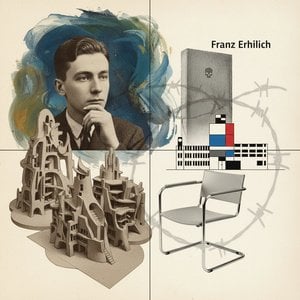
Franz Ehrlich: Bridging Expressionism, Bauhaus & the Shadows of History
Explore the life of Franz Ehrlich, a pivotal Bauhaus architect whose career spanned Expressionism, resistance during Nazi Germany, and GDR reconstruction. Discover his complex legacy & view museum-quality reproductions at ArtsDot.