Prančesko Aječas portretas

Your Guide to the 100 Most Famous Prančesko Aječas Paintings

Atnaujinta spalis 2026 · pagal mūsų populiarumumo koeficientą (paieškos, lankytojai ir užsakymai kiekvienam kūriniui) · 208 Prančesko Aječas darbai mūsų kataloge

In short

Prančesko Aječas's best-known piece is Deimulys (1859). You'll find it at the Pinacoteca di Brera in Milanas. Next on the list are Cunnilingus, or oral sex performed on a woman and Sicilian Vespers scene 3 (1846). We have 208 works by Prančesko Aječas in our catalogue; this guide picks out the 100 best known, with the year, the museum and the story of each piece.

1791 – 1882, Venecija Romanticism Daugiausia darbų: Pinacoteca di Brera

The 10 Prančesko Aječas paintings to know first

1
Deimulys (1859) aut. Prančesko Aječas

Deimulys

1859 · Aliejus · Pinacoteca di Brera, Milanas

Francesco Hayez's "The Kiss," painted in 1859, isn’t merely a depiction of a romantic embrace; it’s a potent distillation of the Italian Romantic movement and a poignant reflection of the Risorgimento – Italy’s struggle for unification. This iconic work transcends its immediate subject matter to become a symbol of passionate longing, patriotic fervor, and the enduring power of love amidst turmoil. Commissioned by Alfonso Maria Visconti di Saliceto, it quickly…

2
Cunnilingus, or oral sex performed on a woman aut. Prančesko Aječas

Cunnilingus, or oral sex performed on a woman

Lithograph

This black and white lithograph presents a close-up view of two figures engaged in an intimate sexual act. The scene is set within a bedroom, indicated by the presence of a bed or couch and a nightstand positioned to the right of the frame. The figures are arranged diagonally across the composition, creating a sense of physical tension. One figure is positioned above the other, focused on performing oral sex.…

3
Sicilian Vespers scene 3 (1846) aut. Prančesko Aječas

Sicilian Vespers scene 3

1846 · Oil On Canvas · Galleria Nazionale d'Arte Moderna, Roma

Francesco Hayez's "Sicilian Vespers" (1846) isn’t merely a historical painting; it’s a visceral eruption of conflict, a meticulously crafted tableau of political intrigue and simmering rebellion. The canvas explodes with the energy of a sudden uprising, capturing not just an event but the very essence of chaos and determination. It's a scene ripped from the annals of 13th-century Sicily, where dynastic ambitions collided with papal authority, resulting in a protracted…

4
Sexual intercourse aut. Prančesko Aječas

Sexual intercourse

Charcoal

In this intimate drawing titled Sexual intercourse, the Italian painter Francesco Hayez moves away from his grand historical narratives to explore the raw mechanics of human desire. The subject matter is overtly sexual, presenting a scene of figures engaged in profound intimacy. It is a work that confronts taboo subjects through a direct, unvarnished lens. Rather than focusing on the aftermath, the sketch captures the tension of the moment. Both…

5
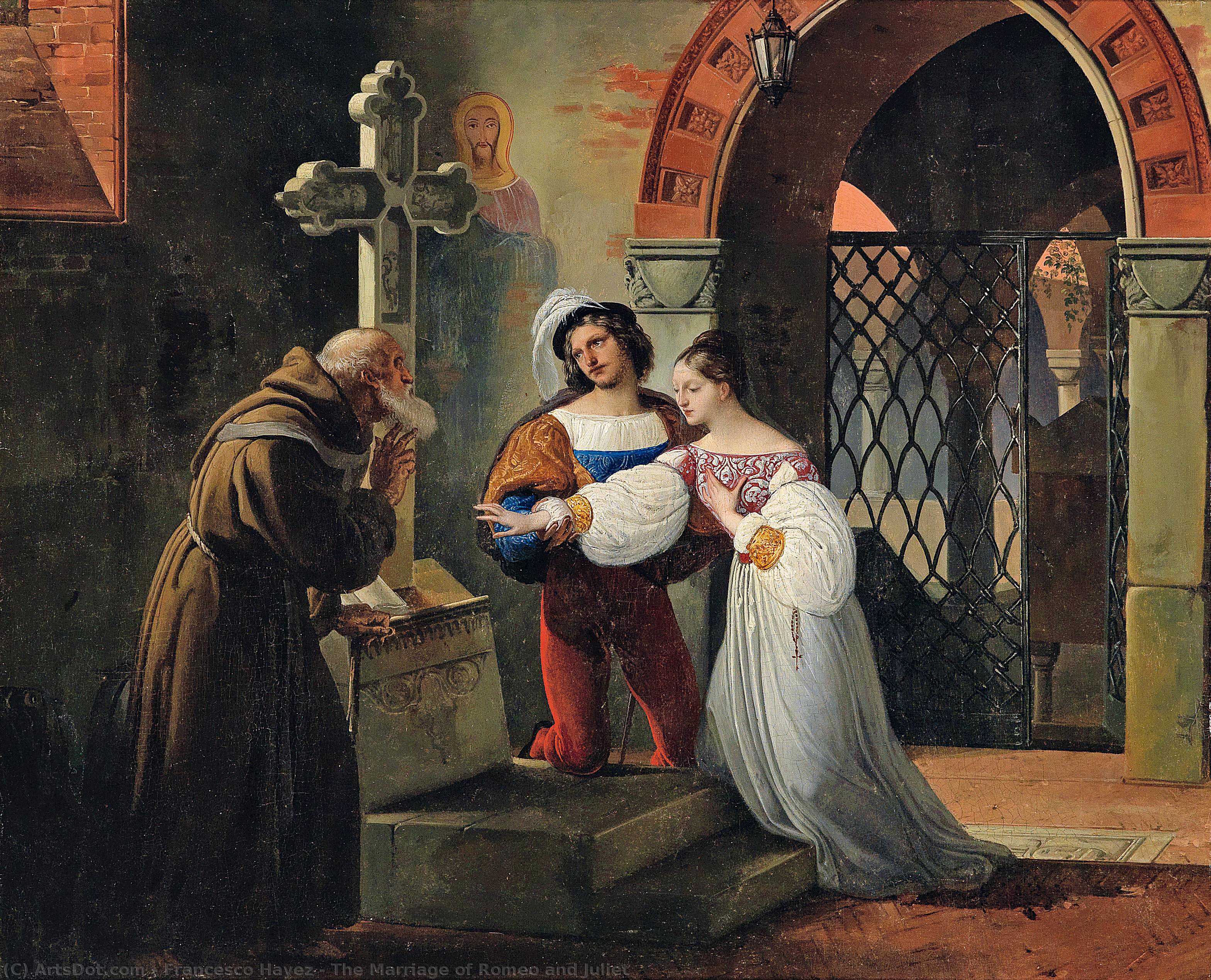
The Marriage of Romeo and Juliet (1830) aut. Prančesko Aječas

The Marriage of Romeo and Juliet

1830 · Oil On Canvas

Created in 1830, The Marriage of Romeo and Juliet by Francesco Hayez translates a pivotal scene from William Shakespeare's play into a visual narrative. The work captures the union of the two central figures, focusing on the emotional gravity of their clandestine wedding. Hayez utilizes his technical command to render the essence of the literary tale through a structured, historical lens.

6
Portrait, Matilde Juva-Branca (1851) aut. Prančesko Aječas

Portrait, Matilde Juva-Branca

1851 · Oil On Canvas · Civica Galleria d'Arte Moderna, Milanas

Portrait of Matilde Juva Branca – A Masterpiece of Romantic Dignity Francesco Hayez’s “Portrait of Matilde Juva Branca” (1851) stands as an emblem of Italian Romanticism, capturing a moment of quiet contemplation within the opulent setting of Milanese aristocratic society. Painted in oil on canvas, this artwork resides prominently in the Galleria d'Arte Moderna, offering visitors a chance to immerse themselves in Hayez’s masterful execution and profound artistic vision. The…

7
Wall Decoration (detail) (1817) aut. Prančesko Aječas

Wall Decoration (detail)

1817 · Oil On Canvas · Korero muziejus, Venecija

Within the serene halls of the Museo Correr in Venice, Italy, resides a captivating tableau – “Wall Decoration (detail),” a tempera painting masterfully crafted by the esteemed Italian artist Francesco Hayez in 1817. More than just a decorative element, this work offers a poignant window into the artistic sensibilities and historical currents of its time, blending elements of Romanticism with Neoclassical restraint. The piece immediately draws the eye with its…

8
Cunnilingus, or oral sex performed on a woman aut. Prančesko Aječas

Cunnilingus, or oral sex performed on a woman

Pencil

In this monochromatic sketch, we find ourselves in a private, unvarnished moment of human connection. The work is rendered with the raw immediacy of a preparatory study, utilizing the delicate, expressive language of pencil on paper. There is a certain honesty in the loose lines and the visible hatching that defines the forms, suggesting a scene captured in a moment of spontaneous observation rather than a polished, formal composition. The…

9
Self-Portrait in a Group of Friends (detail) (1824) aut. Prančesko Aječas

Self-Portrait in a Group of Friends (detail)

1824 · Acrylic On Canvas · Museo Poldi Pezzoli, Milanas

Francesco Hayez’s “Self-Portrait in a Group of Friends,” completed in 1827 and currently residing in the Museo Poldi Pezzoli in Milan, stands as an emblem of Italian Romanticism. More than just a depiction of a man gazing back at the viewer, it's a meticulously crafted tableau brimming with symbolism—a profound meditation on friendship, ambition, and the anxieties inherent in artistic endeavor.

10
Nude woman lying from the back (1860) aut. Prančesko Aječas

Nude woman lying from the back

1860 · Oil On Canvas · Pinacoteca di Brera, Milanas

In the quietude of Francesco Hayez’s “Nude Woman Lying From The Back,” created around 1860, we encounter a profound moment of stillness that transcends the boundaries of time. This masterpiece of Italian Romanticism invites the viewer into an intimate sanctuary, where the soft contours of the female form are captured in a state of absolute repose. As one gazes upon the canvas, there is an immediate sense of serene vulnerability;…

Numbers 11 to 100: more Prančesko Aječas paintings

11Self-portrait with Tiger and Lion (1830) aut. Prančesko AječasSelf-portrait with Tiger and Lion1830 · Museo Poldi Pezzoli 12The Kiss (1859) aut. Prančesko AječasThe Kiss1859 13Wall Decoration (detail) (1817) aut. Prančesko AječasWall Decoration (detail)1817 · Korero muziejus 14Pietro Rossi called to command the Venetian army (1820) aut. Prančesko AječasPietro Rossi called to command the Venetian army1820 · Pinacoteca di Brera 15Secret accusation (1847) aut. Prančesko AječasSecret accusation1847 · Musei Civici 16Portrait of a Venetian woman (1852) aut. Prančesko AječasPortrait of a Venetian woman1852 17The Kiss (1859) aut. Prančesko AječasThe Kiss1859 18Back view of a bather (1859) aut. Prančesko AječasBack view of a bather1859 19Portrait of Antoniet Vitali Sola (1823) aut. Prančesko AječasPortrait of Antoniet Vitali Sola1823 20Portrait of Carlo Della Bianca (1823) aut. Prančesko AječasPortrait of Carlo Della Bianca1823 · Pinacoteca di Brera 21Overlapping wife back position on the swing aut. Prančesko AječasOverlapping wife back position on the swing 22The meditation aut. Prančesko AječasThe meditation 23The last kiss of Romeo and Juliet (1823) aut. Prančesko AječasThe last kiss of Romeo and Juliet1823 24Valenza Gradenigo faints in front of her father, the Inquisitor (1832) aut. Prančesko AječasValenza Gradenigo faints in front of her father, the Inquisitor1832 · Villa Carlotta 25Ruth (1835) aut. Prančesko AječasRuth1835 26Ruth (1835) aut. Prančesko AječasRuth1835 · Museum of John Paul II Collection 27Christ and the woman taken in adultery (1841) aut. Prančesko AječasChrist and the woman taken in adultery1841 · Walters Art Museum 28The woman from Ciociaria (1842) aut. Prančesko AječasThe woman from Ciociaria1842 29Portrait of Gian Giacomo Poldi Pezzoli (detail) (1851) aut. Prančesko AječasPortrait of Gian Giacomo Poldi Pezzoli (detail)1851 · Museo Poldi Pezzoli 30Portrait of Countess Antonietta Negroni Prati Morosini aut. Prančesko AječasPortrait of Countess Antonietta Negroni Prati MorosiniGalleria d'Arte Moderna 31Portrait of Gian Giacomo Poldi Pezzoli (1851) aut. Prančesko AječasPortrait of Gian Giacomo Poldi Pezzoli1851 32Priest Orlando of Parma sent by Arrigo IV of Germany and defended by Gregory VII against the just indignation of the Roman synod (1857) aut. Prančesko AječasPriest Orlando of Parma sent by Arrigo IV of Germany and defended by Gregory VII against the just indignation of the Roman synod1857 33Odalisque with Book (1866) aut. Prančesko AječasOdalisque with Book1866 34Portrait of Antoniet Negroni Prati Morosini (1872) aut. Prančesko AječasPortrait of Antoniet Negroni Prati Morosini1872 35Girl with folded hands (1880) aut. Prančesko AječasGirl with folded hands1880 36Portrait of Giovanni Battista Birago (1823) aut. Prančesko AječasPortrait of Giovanni Battista Birago1823 · Ca’ Granda – Ospedale Maggiore Policlinico 37Ephraim (1843) aut. Prančesko AječasEphraim1843 38Portrait of Pietro Francesco Visconti Borromeo (1824) aut. Prančesko AječasPortrait of Pietro Francesco Visconti Borromeo1824 · Ca’ Granda – Ospedale Maggiore Policlinico 39Portrait of Pompeo Marchesi (1830) aut. Prančesko AječasPortrait of Pompeo Marchesi1830 40Portrait of Gian Giacomo Poldi Pezzoli (1851) aut. Prančesko AječasPortrait of Gian Giacomo Poldi Pezzoli1851 · Museo Poldi Pezzoli 41The Last Moments of Doge Marin Faliero (1867) aut. Prančesko AječasThe Last Moments of Doge Marin Faliero1867 · Pinacoteca di Brera 42Portrait of Carlo Calvi (1820) aut. Prančesko AječasPortrait of Carlo Calvi1820 · Ca’ Granda – Ospedale Maggiore Policlinico 43Venetian women (1853) aut. Prančesko AječasVenetian women1853 44Badende (1832) aut. Prančesko AječasBadende1832 45Portrait, Camillo Benso Conte of Cavour (1864) aut. Prančesko AječasPortrait, Camillo Benso Conte of Cavour1864 46The Refugees of Parga (1831) aut. Prančesko AječasThe Refugees of Parga1831 · Pinacoteca Civica 47Family portrait (1807) aut. Prančesko AječasFamily portrait1807 48Portrait of Don Giulio Vigoni as a child (1830) aut. Prančesko AječasPortrait of Don Giulio Vigoni as a child1830 49Woman from Ciociaria aut. Prančesko AječasWoman from Ciociaria 50Susanna in the bath aut. Prančesko AječasSusanna in the bath 51The last moments of the Doge Marin Faliero aut. Prančesko AječasThe last moments of the Doge Marin Faliero 52Count Camillo Cavour aut. Prančesko AječasCount Camillo Cavour 53Portrait of Princess Di Sant 'Antimo (1842) aut. Prančesko AječasPortrait of Princess Di Sant 'Antimo1842 54Portrait of Ferdinand I of Austria (1840) aut. Prančesko AječasPortrait of Ferdinand I of Austria1840 55Family portrait (1807) aut. Prančesko AječasFamily portrait1807 56Aristoteles (1811) aut. Prančesko AječasAristoteles1811 57Odalisque with Book (1866) aut. Prančesko AječasOdalisque with Book1866 58Portrait, Giuseppe Roberti (1819) aut. Prančesko AječasPortrait, Giuseppe Roberti1819 59Portrait of Familie Stampa di Soncino (1822) aut. Prančesko AječasPortrait of Familie Stampa di Soncino1822 60Last Kiss of Romeo and Juliet (1823) aut. Prančesko AječasLast Kiss of Romeo and Juliet1823 61Portrait, Conte Ninni (1825) aut. Prančesko AječasPortrait, Conte Ninni1825 62Giovanni David sulla scena de Gli arabi nelle Gallie'''' (1830) aut. Prančesko AječasGiovanni David sulla scena de Gli arabi nelle Gallie''''1830 63Carlotta Chabert come venere (1830) aut. Prančesko AječasCarlotta Chabert come venere1830 64Portrait, sculptor Pompeo Marchesi (1830) aut. Prančesko AječasPortrait, sculptor Pompeo Marchesi1830 · Civica Galleria d'Arte Moderna 65Portrait of Countess Luigia Douglas Scotti d'Adda (1830) aut. Prančesko AječasPortrait of Countess Luigia Douglas Scotti d'Adda1830 66Bathsheba (1827) aut. Prančesko AječasBathsheba1827 67Portrait of a man (1834) aut. Prančesko AječasPortrait of a man1834 68Portrait of Cristina di Belgiojoso Trivulzio (1832) aut. Prančesko AječasPortrait of Cristina di Belgiojoso Trivulzio1832 69Ritratto della contessa Teresa Zumali Marsili con il figlio Giuseppe (1833) aut. Prančesko AječasRitratto della contessa Teresa Zumali Marsili con il figlio Giuseppe1833 70Lot and His Daughters (1833) aut. Prančesko AječasLot and His Daughters1833 71The Seventh Crusade before Jerusalem (1838) aut. Prančesko AječasThe Seventh Crusade before Jerusalem1838 72Reclining Odalisque (1839) aut. Prančesko AječasReclining Odalisque1839 73Melancholic Thoughts (1842) aut. Prančesko AječasMelancholic Thoughts1842 74Un Pensiero Malinconico (1842) aut. Prančesko AječasUn Pensiero Malinconico1842 75Ephraim (1843) aut. Prančesko AječasEphraim1843 76Caterina Cornaro Deposed from the Throne of Cyprus (1842) aut. Prančesko AječasCaterina Cornaro Deposed from the Throne of Cyprus1842 77Portrait of Teresa Borri (1848) aut. Prančesko AječasPortrait of Teresa Borri1848 78Ritratto di Alessandro Manzoni (1841) aut. Prančesko AječasRitratto di Alessandro Manzoni1841 79Portrait, Felicina Caglio Perego di Cremnago (1842) aut. Prančesko AječasPortrait, Felicina Caglio Perego di Cremnago1842 80Portrait of Felicina Caglio Perego di Cremnago (1842) aut. Prančesko AječasPortrait of Felicina Caglio Perego di Cremnago1842 81Portrait of a Venetian woman (1852) aut. Prančesko AječasPortrait of a Venetian woman1852 82Portrait of Antoniet Tarsis Basilico (1851) aut. Prančesko AječasPortrait of Antoniet Tarsis Basilico1851 83The Two Foscari (1852) aut. Prančesko AječasThe Two Foscari1852 · Palazzo Pitti 84Nude Female (1859) aut. Prančesko AječasNude Female1859 85Portrait of Massimo d'Azeglio (1860) aut. Prančesko AječasPortrait of Massimo d'Azeglio1860 86Portrait of Conte Baglioni (1860) aut. Prančesko AječasPortrait of Conte Baglioni1860 87Female nude (1859) aut. Prančesko AječasFemale nude1859 · Pinacoteca di Brera 88Carolina Zucchi (La Malata) (1825) aut. Prančesko AječasCarolina Zucchi (La Malata)1825 89Portrait, Giacomo Rossini (1870) aut. Prančesko AječasPortrait, Giacomo Rossini1870 90Inside the Harem (1867) aut. Prančesko AječasInside the Harem1867 91Portrait of Gioacchino Rossini (1870) aut. Prančesko AječasPortrait of Gioacchino Rossini1870 92Odalisque (1867) aut. Prančesko AječasOdalisque1867 93Self Portrait (1878) aut. Prančesko AječasSelf Portrait1878 94Vengeance is Sworn (1851) aut. Prančesko AječasVengeance is Sworn1851 95Socrates discovers Alcibiades in a brothel aut. Prančesko AječasSocrates discovers Alcibiades in a brothel 96Mutual masturbation aut. Prančesko AječasMutual masturbation 97Self portrait aut. Prančesko AječasSelf portraitPinacoteca di Brera 98untitled (5969) aut. Prančesko Aječasuntitled (5969) 99The Portrait of Alessandro Manzoni aut. Prančesko AječasThe Portrait of Alessandro Manzoni 100Malinconia aut. Prančesko AječasMalinconia

Prančesko Aječas's paintings, period by period

What Prančesko Aječas painted most

The four subjects that come up most often in these pieces, each with its best-known example.

Where you can see Prančesko Aječas's paintings

8 muziejai, kuriuose saugoma daugiausia šioje pusėje esamų paveikslų.

Muzejaus Miestas Prančesko Aječas darbai Šiojo sąrašo paveikslai
Pinacoteca di Brera, MilanasPinacoteca di Brera Milanas 15 Deimulys, Nude woman lying from the back, Pietro Rossi called to command the Venetian army
Museo Poldi Pezzoli, MilanasMuseo Poldi Pezzoli Milanas 5 Self-Portrait in a Group of Friends (detail), Self-portrait with Tiger and Lion, Portrait of Gian Giacomo Poldi Pezzoli (detail)
Ca’ Granda – Ospedale Maggiore Policlinico, MilanasCa’ Granda – Ospedale Maggiore Policlinico Milanas 3 Portrait of Giovanni Battista Birago, Portrait of Pietro Francesco Visconti Borromeo, Portrait of Carlo Calvi
Korero muziejus, VenecijaKorero muziejus Venecija 4 Wall Decoration (detail), Wall Decoration (detail)
Civica Galleria d'Arte Moderna, MilanasCivica Galleria d'Arte Moderna Milanas 3 Portrait, Matilde Juva-Branca, Portrait, sculptor Pompeo Marchesi
Villa Carlotta, TremezzinaVilla Carlotta Tremezzina 2 Valenza Gradenigo faints in front of her father, the Inquisitor
Galleria Nazionale d'Arte Moderna, RomaGalleria Nazionale d'Arte Moderna Roma 1 Sicilian Vespers scene 3
Musei Civici, PaviaMusei Civici Pavia 1 Secret accusation

Decade by decade: the best-known Prančesko Aječas piece of each

Darbai pagal dešimtmečius

Pick a decade to see its standout piece.

Prančesko Aječas: quick answers about the paintings

What is Prančesko Aječas's best-known painting?See the answer

Top of the list is Deimulys (1859), Pinacoteca di Brera, Milanas. Right behind it: Cunnilingus, or oral sex performed on a woman and Sicilian Vespers scene 3 (1846).

What age was Prančesko Aječas when creating Deimulys?See the answer

68 years old. Prančesko Aječas was born in 1791, and Deimulys dates from 1859.

What are Prančesko Aječas's top 10 paintings?See the answer

Deimulys, Cunnilingus, or oral sex performed on a woman, Sicilian Vespers scene 3, Sexual intercourse, The Marriage of Romeo and Juliet, Portrait, Matilde Juva-Branca, Wall Decoration (detail), Cunnilingus, or oral sex performed on a woman, Self-Portrait in a Group of Friends (detail) ir Nude woman lying from the back. You'll find the year and the museum of each in the list above.

How many works by Prančesko Aječas are in your catalogue?See the answer

We have 208 works by Prančesko Aječas in our catalogue, dated 1807 to 1880.

In which museums can you see Prančesko Aječas's famous works?See the answer

You'll find most of them in Pinacoteca di Brera (Milanas), Museo Poldi Pezzoli (Milanas) ir Ca’ Granda – Ospedale Maggiore Policlinico (Milanas). The museum list above has the full breakdown.

When did Prančesko Aječas make the most famous pieces?See the answer

In 1830s, more than any other time: 19 of the 100 pieces on this page date from then, The Marriage of Romeo and Juliet among them.

What are Prančesko Aječas's first and last famous pieces?See the answer

The earliest piece here is Family portrait (1807); the most recent is Girl with folded hands (1880).

Which subjects did Prančesko Aječas paint most often?See the answer

Portraits (19), Women (13) ir Portrait (12), out of the 100 pieces on this page.

Which medium shows up most in Prančesko Aječas's paintings?See the answer

Oil On Canvas, used in 25 of the 100 pieces on this page.

What style or movement is Prančesko Aječas known for?See the answer

Romanticism, as you can see in the pieces on this page.

Which famous Prančesko Aječas paintings are at the Pinacoteca di Brera?See the answer

You can see 7 of the pieces on this page at the Pinacoteca di Brera, Milanas, including Deimulys, Nude woman lying from the back ir Pietro Rossi called to command the Venetian army.

Where can I order a Prančesko Aječas reproduction?See the answer

Yes. Every painting on this page is available as a hand-painted oil reproduction or a print, in the size that suits you. Just open the painting's page to order.

Prančesko Aječas's story

Ankstyvieji Metai, Šeima ir Mokslas

Venecijoje, kur šviesa žaidžia ant kanalių, 1791 metų vasario 10 dieną į pasaulį atėjo Prančesko Aječas. Jis buvo paskutinis iš penkių šeimos sūnaus, kilusios iš skurto, bet garbingo šeimos. Jo tėvas, Džovanis, nesė savyje prancūzų kraują, o motina, Kjara Torsela, buvo Murano salos dukra. Net ankstyvoje vaikystėje buvo akivaizdu, kad berniukas pasižymi natūraliu polinkiu piešti – tai dovana, kuri vėliau nukreipė jį nuo paprastos šeimos būtenybės link sudėtingo ir gausaus meno pasaulio.

Jo kelias į meno pasaulį prasidėjo ne didelėje akademijoje, o tylioje, kruopščiai dirbamoje savo dėdės, Giovannio Binasco, dirbtuvėje. Būdamas šio restauratoriaus mokiniu, jaunasis Prančesko mokėsi stebėjimo disciplinos ir kantrybės, reikalingos dirbtis su kitų kūriniais. Šis ankstyvasis darbas padėjo tvirtą techninių įgūdžių pagrindą, kuris vėliau tapo jo ambicijų pamatu. Iki 1806 metų jo talentas pakankamai išaugo, kad nukreiptų jį į Milaną, kur jis įstojo į naująją grožio menų akademiją. Ten jis ieškojo patarimų pas Teodoro Mateini – mokytojo, kuris padėjo pamatus ankstyvoji jo rankos judesiams ir stiliui.

Meno mokslas ir romos įtampa

Po ankstyvųjų metų Venecijoje jaunas menininkas siekė tobulinti savo talentą mokomasis iš tikrų meistrų. Jis sk𝘃irto laiko spalvų naudojimo mokslui Lattanzio Querena, Bergamo tapytojo, vedančiuose užsirašymuose. Šis techninis pagrindas paruošė jį dideliam konkursui, kurį jis galiausiai laimėjo 1809 metais. Ši pergalė suteikė jam metų studijų Accademia di San Luca akademijoje Romoje – laikotarpį, kuris iš esmės pakeitė jo kūrybinio vystymo kursą. Amžinojoje mieste jis sukliudė per didžių talentų ratus, siekdamas suprasti formos ir šviesos paslaptis.

Roma jam pasiūlė daugiau nei tik klasines pamokas; ji suteikė galimybę asmeniškai išgyventi didybę. Jis praleido daugybę valandų Vatiko kambariuose, studijuodamas Rafaelio darbus, kad išmoktų kurti sudėtingas naratyvines kompozicijas. Jis taip pat ieškojo skulptorių Antonio Canova dirbtuvės, stebėdamas, kaip meistras geba gyventi marmure. Šie susidūrimai su klasicizmu ir Renesansu padėjo pamesti jo vizijai. Jo oficialus išsilavinimas baigėsi lankydamas Venecijos Galleria Farsetti, kur jis galėjo dar kartą prisiminti savo gimtojo miesto didžiąsias tradicijas.

Technika ir meninis stilius

Savo brushio vedimą Prančesko Aječas išlaikė disciplinuoto žmogaus, net kai jo temos budino sielą. Nors jo pasirinktos temos dažnai linko į romantišką emocijų apyduotą, pati technika tvirtai laikytųsi mokslingos aiškumo. Jis teikė pirmenybę ryškioms kontūro linijoms, kurios priminė jo laiką Romoje, kur jis bendravo su Canova ir Ingreso mokslo mokytojais. Šis tikslumo ir precizumo meilė leido jam meistriškai naviguoti tarp griežtos neoklasicizmo elegancijos ir išraiškiausių jo laikotarpio romantizmo reikalavimų. Dirbdamas su aliejumi ir akvareliu, jis išmokė ne tik perteikti grandiozišką istorinių įvyknių mastą, bet ir subtiliausius, intymiausius veido detalus.

Jo kompozicijose visada jautama tam tikta įtampa, tylus troškimas, kurį jis pasiekia meistrišku šviesos ir šešėlio žaimyku. Naudodamas dramatišką chiaroscuro, jis ištraukia savo figūras iš tamsos, naudojdamas ekspresiškus brushio pataikymus, kad į savo scenas įpūstų gyvybę. Šis metodas buvo ypač veiksmingas jo didingiuose istoriniuose paveiksluose ir politinėse alegorijose, kuriose jis praeities kalba šnabždėnavo apie dabarties tiesas. Net ir jo portretuose, garsėjusių išskirtiniu meistriškumu, jis siekė daugiau nei tiesiog tikslumo atvaizduoti – jis stengėsi įamžinti pačios žmogaus esmės.

Žymūs darbai ir šedevrai

Meno kūrybos ranka savo galingiausią išraišką rado darbuose, kurie sukrėpė žiūrovų sielas per istorines ir romantiškas dramas. 1859 metais Prančesko Aječas sukūrė „Bučinį“ – paveikslą, kurį jo samtvikių laikui buvo suteikta didžiausia pagarba. Šis kūrinys užfiksuoja karštą hugstojimą tarp jaudinos pavyzdžio, vykstančio laiptais, už kurių atsivelo miesto peizažas; daugeliui tai scena, kurioje atsispindi pati to laikotarpio politinių kovų dvasia. Jo gebėjimas į vieną kadro įamžinti sudėtingą pasaką dar labiau išryškėja „Rinaldo ir Armidos“ paveiksyje, kurio įtampa kyla iš Torquato Tasso epinio šešilio „Išlaisvinta Jeruzalė“. Čia tapybinis meistriškumas pasireiškia per turbulentišką meilės istoriją tarp princo ir kerėtojos, vykstančią detalizuotos Venecijos girios šešelyje.

Be šių romantiškų susitikimų, menininkas savo dėmę nukreipė link istorijos svorio ir šventųjų istorijų rimtumo. 1853 metais jis aliejuje atvaizdavo biblijinę Ruth figūrą, perteikdamas Moabito moters esmę ir galybę. Jo gebėjimas kurti istorinius naratyvus itin akivaizdus „Popiežiaus Urbano II pamokslas Pirmame kryžiaus žygyje Klermono aikštėje“ – darbe, demonstruojančiame jo meistriškumą kuriančiuose, dramatiškuose kompozicijose. Vėliau, gyvenimo posmėtyje, apie 1867 metus, jis tapė „Dogo Marin Faliero paskutinės akimirkos“, kūriniu, kuri atspindi tamsų ir rimtą jo vėlesniųjų metų nuotaiką.

  • „Bučinys“ (1859)
  • Ruth (1853)
  • Rinaldo ir Armida
  • Popiežiaus Urbano II pamokslas Pirmame kryžiaus žygyje Klermono aikštėje
  • Dogo Marin Faliero paskutinės akimirkos (apie 1867 m.)

Profesinės vaidmenės ir rėmėjai

Beyond the quiet solitude of the studio, Hayez moved within the most influential circles of Milanese society. His talent and steady hand earned him a place of authority at the Brera Academy, where he served as a Professor of Painting. His devotion to the institution grew as the years passed, eventually leading to his appointment as the Director of the Brera Academy in 1860. Through these roles, he shaped the hands and minds of many who sought to master the art of his era.

The demand for his work came from those who sought to capture their own history and sentiment through his brush. Alfonso Maria Visconti di Saliceto commissioned the famous scene of a couple embracing, a work that would later find its home in the Pinacoteca di Brera. Other patrons sought his skill for more intimate or religious subjects, such as Severino Bonora of Bologna, who requested the depiction of Ruth. These commissions were not merely transactions but were deeply tied to the social and political currents of the time.

The popularity of his imagery even led to multiple versions of a single subject. While the first version of his most famous embrace was destined for a noble collection, the Mylius family commissioned a second version in 1861. Such requests demonstrate how his vision resonated with the families and collectors of the nineteenth century, securing his place in the private halls of the Italian elite.

Palikimas ir įtaka menui

Prančesko Aječas palikė neabejinamą žaros pėdsaką Italijos romantizme, tapdamas tikru tiltu tarp dviejų skirtingų epochų. Jis buvo svarbiausia figūra perėjant iš griežtos, struktūrizuotos neoklasicizmo aiškumo į emocinę romantizmo galybę italų tapyboje. Nors jo technika dažnai išlaikė aiškius kontūrus ir tikslumą, įgytus Romoje, jo širdis priklausė dramatiškoms pasakoms ir politinėms alegorijoms, kurios apibrėžė besikeičančią tautą. Jis puikiai suprato, kaip naudoti praangos kalbą, kad pasakotų apie dabarties aistras, dažnai slėpdamas karštus Risorgimento idėjus istorinėse scenose, kad išvengtų cenzūros akies.

Jo płasknos jau ilgą laiką yra meno istorikų ir entuziastų studijų objektas, siekiantys suprasti maištavusią XIX amžiaus Italijos sielą. Sujungdamas akademinę mokslą su nauja, išraiškoma jautrybe, jis sukūrė vizualią kalbą intensivačiam tautos pažadimui. Šis gebėjimas sujungti klasikinę discipliną su romantišku sentimentu užtikrino, kad jo kūryba ne tiesiog išnyktų istorijos šešelyje, bet ir toliau įkveptų naujas menininkų kartas, siekiant {__AIG_LINK_1__} užfiksuoti nuolatos besikeičančią žmogaus dvasią.

Kur galima pamatyti jo kūrinius šiandien

Lankantis Milanos salose, galima pajusti Prančesko Aječas dvasmę, pasireiškusi įvairiomis formomis. Pinacoteca di Brera išlieka pagrindine destinacija tiems, kurie nori išgyventi jo meistriškumą – čia saugomi darbai, atspindintys gilią menininko ryšę su miesto meno gyvenimu. Netoliese esanti Civica Galleria d'Arte Moderna taip pat saugo įspūdingą kolekciją, užtikrinančią, kad jo buvimas vietinėje meno aplinkoje išlieka stiprus. Jo brushas ir stilius galima aptikti ir Museo Poldi Pezzoli galerijoje, kur kelių jo paveikslų saugomi viešam eksponavimui.

Meno pelekas Prančesko Aječas pasiekia ne tik Milanos jas, bet ir pasiekia pačią Romas širdį. Ten, Accademia di San Luca, saugomas darbas Ulysses at the Court of Alcinous primena apie klasikinį mokymą, kurį jis gavo savo jaunystėje. Šios kolekcijos leidžia žiūrovui pamatyti, kaip jo stilius evoliucionavo iš akademinių mokymų tradicijų į emocingesnius, naratyvinius pasakojimus jo kūrybos brandos laikais.

Visi 208 Prančesko Aječas darbai →