New to Academic Realist? Start here

70 Famous Academic Realist Daigytojai You Should Know

If you remember one Academic Realist da Butas, make it Raja Ravi Varma (1848–1906), the name behind The Maharani of Travancore ir Shakuntala writing a love letter on a lotus leaf. After that come William Salter, Filipas Aleksas De László, Žanas-Žakas Henneras ir Hippolyte Flandrin. Our 70 picks go from Andrew Geddes (born 1783) to Hio Goldvinas Rivjera (born 1882), from 28 countries.

How we picked them. We list the artists our catalogue links to Academic Realist, from the most famous down. Artists born after 1955 that we cannot yet check on Wikidata are left out. The Wikipedia number shows in how many of our 32 languages Wikipedia writes about them.

  1. The Maharani of Travancore – Raja Ravi Varma kūrinys1Raja Ravi Varma
  2. Sir Henry Murray – William Salter kūrinys2William Salter
  3. Andrew W. Mellon – Filipas Aleksas De László kūrinys3Filipas Aleksas De László

Quick facts

Academic Realist in a nutshell

  • 70Autoriai
  • 1783–1882Gimimo metai
  • 28Gimimo šalys
  • 1Moterys
  • 3.921Darbai mūsų kataloge
Miestai su didžiačiu gimimų skaičiumi
Lionas (2), Amsterdam (2), Edinburgh (2), Kilimandžaras (1)
Muziejai, kuriuose saugoma daugiausia pagrindinių veikalų
Ermitažas (10), Museo del Prado (8), National Portrait Gallery (7), Royal Collection (5)
Šios sąrašo moterys
Thérèse Schwartze

Meet them one by one

The 70 famous Academic Realist daigos, from most famous down

1of 70

Raja Ravi Varma

From Kilimandžaras On Wikipedia in 22 of 32 languages

Raja Ravi Varma

Radža Ravio Varma, vardas, skambantis kaip meno naujovės simbolis Indijoje, iškilęs XIX amžiaus viduryje iš Kilimanooro rūmų Kerala valstijoje. Dar jaunystėje Ravio Varma parodė nepaprastą meno gabumą, puoselėjamą jo dėdės Radžos Radžos Varmos, kuris supažindino jį su piešimo ir tapybos pasauliu, visų pirma Tandžoro mokyklos tradicijoje.

Works to know · Their 100 best-known works · Raja Ravi Varma reproductions

2of 70

William Salter

Britų From Honiton Portretų tapyba

William Salter

In the heart of the nineteenth century, as Britain navigated the profound shifts of the Industrial Revolution and the expansion of its global influence, William Salter emerged as a painter capable of capturing the very soul of Victorian grandeur. Born in 1804 in the quiet town of Honiton, Devon, Salter’s early life was rooted in the traditional English landscape, yet his artistic spirit was destined for much larger stages.

Works to know · Their 100 best-known works · William Salter reproductions

3of 70

Filipas Aleksas De László

From Peštas On Wikipedia in 18 of 32 languages

Filipas Aleksas De László

Pradėjęs mokytis meną, jis pirmiausia dirbo fotografo mokinio, o vėliau įstojo į Budapešto Nacionalinę meno akademiją, kur mokėsi pas Bertalaną Székely ir Károly Lotz. Lemiamas lūžio momentas įvyko 1erdra 1900 m., kai jo portretas pirmininkui Lejui XIII jam atnešė Didžiojo aukso medą Paryžiaus tarptautinėje parodoje, užtvirtindamas jo tarptautinę reputaciją. Po sėkmės Paryzuje, 1903 m. de László persikėlė į Vieną, o 1907 m. įsikūrė Londone, kur gyveno likusį savo gyvenimą.

Works to know · Their 100 best-known works · Filipas Aleksas De László reproductions

4of 70

Žanas-Žakas Henneras

Prancūzų From Bernwiller Akademinis realizmas On Wikipedia in 16 of 32 languages

Žanas-Žakas Henneras

1829 metais ramioje Alsacijos kaime Bernwiller gimęs Jean-Jacques Henner tapo viena svarbiausių XIX amžiaus Prancūzijos tapininkystės figūra. Jo ankstyvasis išsilavinimas Altkircho koleģijoje atskleidė augantį piešimo polę, o tai paskatino tėvus remti tolesnes studijas Strasbūre su Gabriel-Christophe Guérin, prieš jam išvystant į Paryžių. 1848 m. įvyko lūžio taškas, kai Henner įstojo į prestižinę Paryžiaus École des Beaux-Arts, pasinerdamas į griežtą akademinę aplinką, kuri suformuodavo jo meninius pamatus.

Works to know · Their 100 best-known works · Žanas-Žakas Henneras reproductions

5of 70

Hippolyte Flandrin

Prancūzų From Lionas Neoklasicizmas On Wikipedia in 16 of 32 languages

Hippolyte Flandrin

Jean-Hippolyte Flandrin (1809–1864) išlieka šviesiausia figūra prancūziškojo neoklasicizmo panteone – menininkas, kurio šluostė sugebėjo įamžinti gilią dvasinę atsidavimą ir klasikinį elegancijos susiliejimą. Nors jo tėvai jam įsivaizdavo stabilų gyvenimą prekybos srityje, kūrybinė dvasia, kurią dalijosi su broliais Augusto ir Paulu, buvo nepriešlavina. Šis ankstyvas pasindulimas meninės siekių aplinkoje padėjo pagrindus karjerai, kuri vėliau peržengė privačių studijų ribas ir papuošė pati šventiausias architektūros erdvės Prancūją.

Works to know · Their 100 best-known works · Hippolyte Flandrin reproductions

6of 70

Eduardas Detajus

From Paryžius On Wikipedia in 15 of 32 languages

Eduardas Detajus

Gustave’as Caillebotte’as, gimęs Paryžiuje 1848 metais ir tragiškai miręs 1894-aisiais, išlieka svarbia figūra pereinant nuo realizmo prie impresionizmo prancūzų meno istorijoje. Dažnai užgožiamas ryškesnių bendraamžių, tokių kaip Monet ar Renoir, Caillebotte’o unikalus požiūris – kruopštinė kasdienio paryžiaus gyvenimo stebėjimas, filtruotas per išskirtinai modernią jautrumą – siūlo įtraukiantį langą į klestintį XIX amžiaus Prancūzijos urbanistinį kraštovaizdį. Nepaisant šios aplinkybės, Caillebotte’as buvo giliai paveiktas impresionistinio judėjimo, ypač Monet ir Pissarro menininkų.

Works to know · Their 100 best-known works · Eduardas Detajus reproductions

7of 70

Alfredas Émile Léopoldas Stevensas

From Brukselė

Alfredas Émile Léopoldas Stevensas

After his father's death in 1837, Stevens began his formal training at the Académie Royale des Beaux-Arts in Brussels. In 1843, he moved to Paris to join his brother Joseph and enrolled at the École des Beaux-Arts.

Works to know · Their 100 best-known works · Alfredas Émile Léopoldas Stevensas reproductions

8of 70

Francis Davis Millet

American From Mattapoisett Academic classical painting On Wikipedia in 17 of 32 languages

Francis Davis Millet

Born in Mattapoisett, Massachusetts, in either 1846 or 1848 – conflicting accounts exist, a diary suggesting the latter date – Millet’s journey from a young drummer boy in the Civil War to a celebrated artist and influential figure in American art circles is a testament to his multifaceted talent and unwavering dedication.

Works to know · Their 100 best-known works · Francis Davis Millet reproductions

9of 70

Karolis Frančiozas Jalabertas

French From Nimas Academic Painting

Karolis Frančiozas Jalabertas

Charles François Jalabert, iškilminga figūra meno pasaulyje, paliko neištrinamą pėdsaką tapinimo srityje. 1819 m. gimęs Prancūzijos Nime, Jalaberto meninė kelionė pasižymėjo sparčiu šlovės pasiekimu Parisiuje aukštosios visuomenės akyse XIX amžiaus drugiej pusėje. Vienas iš jo garsiausių veikalų, Tebų maras, yra tikras jo meistriškumo įrodymas. Šis aliejaus paveikslas ant drobės, įkvėptas Sofoklesio „Oidipas karлис“, demonstruoja Jalaberto gebėjimą įamžinti tragedijos ir dramos esmę.

Works to know · Their 100 best-known works · Karolis Frančiozas Jalabertas reproductions

10of 70

Thérèse Schwartze

Dutch From Amsterdam Portraiture On Wikipedia in 14 of 32 languages

Thérèse Schwartze

As the daughter of the painter Johan Georg Schwartze—a man whose own artistic journey spanned from Philadelphia to Düsseldorf—Thérèse was immersed in the language of light and shadow from her earliest years. Seeking to refine her brushwork, she traveled to Munich, where she studied under masters such as Gabriel Max and Franz von Lenbach.

Works to know · Their 100 best-known works · Thérèse Schwartze reproductions

11of 70

Heinrich von Angeli

Austrian From Sopron Neoclassical Romanticism On Wikipedia in 12 of 32 languages

Heinrich von Angeli

Heinrich Anton von Angeli stands as a luminous figure in the grand tapestry of nineteenth-century European art, a painter whose brush captured not just the likenesses of the powerful, but the very essence of an age caught between the fading echoes of Romanticism and the rising clarity of Realism.

Works to know · Their 100 best-known works · Heinrich von Angeli reproductions

12of 70

Federico De Madrazo Y Kuntz

From Roma On Wikipedia in 13 of 32 languages

Federico De Madrazo Y Kuntz

Beyond the easel, Federico de Madrazo y Kuntz occupied a position of immense power and prestige within the Spanish cultural landscape.

Works to know · Their 100 best-known works · Federico De Madrazo Y Kuntz reproductions

13of 70

Frano Flamengas

From former 12th arrondissement of Paris On Wikipedia in 11 of 32 languages

Frano Flamengas

François Léopold Flameng buvo garsiojo graveto Léopold Flameng sūnus. Šis šeimyninis ryšys jam suteikė ankstyvą ir kruopštų meninių technikos mokymą. Jis studijavo École Nationale Supérieure des Beaux-arts mokykloje, kur jo mokytoju buvo Alexandre Cabanel. Savo karjeros lūžį jis pažymėjo 1875 m., pirmą kartą eksponuodamas paveikslą „Katedros stalas“ (The Lectern) Salonų parodoje.

Works to know · Their 100 best-known works · Frano Flamengas reproductions

14of 70

Auguste Toulmouche

French From Nantes Academic Realism On Wikipedia in 12 of 32 languages

Auguste Toulmouche

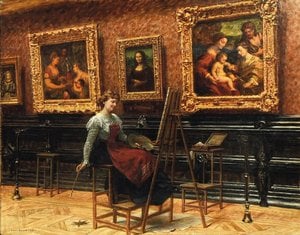
Auguste Toulmouche (1829-1890) stands as a luminous figure in the tapestry of 19th-century French art, a master whose brush captured the very essence of the Belle Époque. At the tender age of nineteen, he made his debut at the prestigious Paris Salon in 1848, an entrance that signaled the arrival of a formidable new voice in French genre painting.

Works to know · Their 100 best-known works · Auguste Toulmouche reproductions

15of 70

Džordžas Pitas Aleksandras Hilis

From Bostonas On Wikipedia in 8 of 32 languages

Džordžas Pitas Aleksandras Hilis

George’as Peteris Alexanderis Healy, vardas neatsiejamas nuo XIX amžiaus amerikiečių portretinės tapybos, buvo daugiau nei tik veidų dailininkas; jis buvo ištisos epochos kronikininkas. Jis panoro įsijungti į Paryžiaus ir Romos gyvybingas meno scenas, studijuodamas su tokiais meistrais kaip Antoine-Jean Gros ir Thomas Couture. Šios formacinis patirtys atvėrė jam akademinės tradicijos pasaulį, tobulino techniką ir praplėtė estetinį jautrumą.

Works to know · Their 100 best-known works · Džordžas Pitas Aleksandras Hilis reproductions

16of 70

Vitorio Reggianini

Itališkas From Modena Akademinis realizmas On Wikipedia in 4 of 32 languages

Vitorio Reggianini

Born in Modena, Italy, in 1858, Vittorio Reggianini emerged as a significant figure within the Italian art scene during the late 19th and early 20th centuries. Reggianini's formal training began at the prestigious Accademia di Belle Arti in Modena, where he honed his skills under established masters.

Works to know · Their 100 best-known works · Vitorio Reggianini reproductions

17of 70

Alexander Bell Middleton

British Portraiture, Genre scenes

Alexander Bell Middleton

Alexander Bell Middleton (1829-1892) emerges from the bustling, rapidly changing landscape of 19th-century British art as a quietly significant figure. While not commanding the same immediate fame as some of his contemporaries – say, John Everett Millais or Dante Gabriel Rossetti – Middleton’s meticulous approach to portraiture and genre scenes reveals a profound understanding of human psychology and a remarkable ability to capture fleeting moments of emotion and social commentary.

Works to know · Their 100 best-known works · Alexander Bell Middleton reproductions

18of 70

John Phillip

Škotijos From Aberdeen Viktorijos eரos žanrinis tapas; Pre-Rafaelitų stiliaus įtampa On Wikipedia in 7 of 32 languages

John Phillip

Born in the rugged landscape of Aberdeen, Scotland, in 1817, John Phillip would eventually transcend his humble beginnings to become one of the most evocative voices of the Victorian era. His early years were marked by a burgeoning talent that caught the eye of influential patrons, most notably Lord Panmure, whose generosity provided the essential bridge for Phillip to reach London’s Royal Academy of Arts in 1836.

Works to know · Their 100 best-known works · John Phillip reproductions

19of 70

James Santas

Britų From Londonas Viktorijos romantiškasis realizmas On Wikipedia in 8 of 32 languages

James Santas

James Sant (1820–1916) iškyla kaip milžiniška figūra viktorijos laikų portretistėje, garsėjantis nepakeičiamu gebėjimu įamžinti vaikystės esę ir savo plėslą prisigiminti gilią simbolinę prasmę.

Works to know · Their 100 best-known works · James Santas reproductions

20of 70

Władysław Czachórski

Polish From Lublin Academic Art Style On Wikipedia in 10 of 32 languages

Władysław Czachórski

Born in 1850 in Lublin, during a period when Poland resided under Russian dominion, Czachórski’s journey was one of profound movement and academic rigor. From his foundational training at the School of Fine Arts in Warsaw to the disciplined halls of the Dresden Academy, each step refined his ability to translate reality into something far more poetic.

Works to know · Their 100 best-known works · Władysław Czachórski reproductions

21of 70

Janas Van Beersas

From Lieras On Wikipedia in 10 of 32 languages

Janas Van Beersas

Janas Van Beersas gimė 1852 metais Belgijoje, Lierio mieste, augdamas poetiškos aplinkos šeime kaip poetui Janui Van Beersui Aukštesniam sūnus. Jo meninė kelionė prasidėjo Antverpio Karališkajame grožio mokslų akademijoje, kur jis tapo formuojamasi klasikinės mokslos ir kūrybinės laisvės sankraipos. Ši akademinė bazė tapo tvirtu pagrindu, leidžiančiu vėliau eksperimentuoti su įvairiais stiliais, nuo griežto realizmo iki dekadencijos nuotaivų.

Works to know · Their 100 best-known works · Janas Van Beersas reproductions

22of 70

Théobald Chartran

French From Besançon Academic painting On Wikipedia in 10 of 32 languages

Théobald Chartran

Théobald Chartran (1849–1907) remains a captivating figure in the tapestry of late 19th-century French art, an artist whose legacy is woven from the delicate threads of academic precision and the sharp wit of social caricature.

Works to know · Their 100 best-known works · Théobald Chartran reproductions

23of 70

Emile Eisman Semenovsky

French Orientalism

Emile Eisman Semenovsky

Émile Eisman-Semenowsky remains a captivating figure in the late nineteenth-century Parisian art scene, an artist whose work serves as a bridge between the rigorous discipline of academic realism and the fleeting, luminous qualities of Impressionism. Born in Poland around 1857, his early life is shrouded in much of the mystery that often surrounds artists of great talent but sparse documentation.

Works to know · Their 100 best-known works · Emile Eisman Semenovsky reproductions

24of 70

Louis Beroud

Prancūzų From Lionas Akademinis realizmas On Wikipedia in 10 of 32 languages

Louis Beroud

Louis Beroud (1852–1930) iškyla kaip iškilminga XIX amžiaus pabaigos ir XX amžiaus pradžios Prancūzijos meno veikėja, šlovėje dėl savo kruopštaus Paryžiaus interjerų ir lankytinų vietų – ypač Luvro muziejaus bei Opera Garnier – vaizdinimo. Gimęs Liūone, Prancūzijoje, Beroud kūrybinis kelias išskleidė savo pradinę plėstrą mažėjančio impresionizmo įtakos fone, taip tvirtai įtvirtindamas jį akademistų tradicijoje, tačiau kartu demonstruodamas subtilų modernaus gyvenimo suvokimą.

Works to know · Their 100 best-known works · Louis Beroud reproductions

25of 70

Arthur Stockdale Cope

Britų From South Kensington Portretas, akademinis realizmas On Wikipedia in 5 of 32 languages

Arthur Stockdale Cope

Arthur Stockdale Cope (1857-1940) stands as a significant, yet often underappreciated, figure in 19th and early 20th-century British portraiture. His career spanned nearly seven decades, encompassing a prolific output of paintings, teaching, and association with prominent artistic circles, ultimately establishing him as an Associate Royal Academician (ARA), Royal Academician (RA), and Knight Commander of the Royal Victorian Order.

Works to know · Their 100 best-known works · Arthur Stockdale Cope reproductions

26of 70

Sir Francis Grantas

From Pertas ir Kinrosas On Wikipedia in 8 of 32 languages

Sir Francis Grantas

Gimęs 1803 metais Skotijos Perthšire būsto dvarininkų šeimoje, jaunasis Francisas iš pradžių tarsi buvo paskirtas teisinės karjeros keliui. Nors didlargalė buvo savikurtis, jis trumpam studijavo Edinburo Alexanderio Nasmyth'o vadovavimu, taip padėjęs pagrindus prieš paties sukuriant savo išskirtinį kelią. Šis kelias iš pradžių nebuvo aiškus; pirmieji Granto sėkmingi darbai buvo susiję su sportinėmis scenomis, įtraukiančios kaimo gyvenimo energiją ir gyvybiškumą.

Works to know · Their 100 best-known works · Sir Francis Grantas reproductions

27of 70

Nicolaas Pieneman

Dutch From Amersfoort History painting, Portraiture On Wikipedia in 9 of 32 languages

Nicolaas Pieneman

Nicolaas Pieneman, born in Amersfoort on January 1st, 1809, entered a world already steeped in artistic tradition.

Works to know · Their 100 best-known works · Nicolaas Pieneman reproductions

28of 70

Henryk Rodakowski

From Lviv On Wikipedia in 9 of 32 languages

Henryk Rodakowski

Rodakowski came from a distinguished family of lawyers, initially following the family tradition by studying law at the University of Vienna between 1841 and 1845. He pursued formal artistic training under Joseph Danhauser and Franz Eybl in Vienna, laying the foundation for his future career.

Works to know · Their 100 best-known works · Henryk Rodakowski reproductions

29of 70

Tomas Benjamin Kenningtonas

Britų From Grimsbis Žanrinis realizmas ir viktoriniam laiko menas On Wikipedia in 6 of 32 languages

Tomas Benjamin Kenningtonas

Thomas Benjamin Kennington (1856–1916) yra viena iš svarbiausių figūrų britų meno istorijoje, ypač žanrinės tapybos ir socialinio realizmo srityje. Gimęs Grimsbyje, Lincolnshire, jis pradėjo savo meninę kelią, kurį pažymėjo griežta mokslėjimasis prestižinėse institucijose, tokiose kaip Liverpulio meno mokykla ir Karališkoji meno kolegija. Ši patirtis jam suteikė ryšius su įtakingais samties nariais, tokiais kaip Fordas Madoxas Brownas ir Williamas Holmanas Huntas.

Works to know · Their 100 best-known works · Tomas Benjamin Kenningtonas reproductions

30of 70

George De Forest Brush

Amerikos United States From Shelbyville H Hudsonos upės mokykla ir realizmas On Wikipedia in 7 of 32 languages

George De Forest Brush

George de Forest Brush (1855–1941) was an artist who possessed the rare ability to bridge two seemingly disparate worlds: the disciplined, classical elegance of the Italian Renaissance and the raw, spiritual vitality of Native American life.

Works to know · Their 100 best-known works · George De Forest Brush reproductions

31of 70

Jozefas Simleris

Polish From Varšuva French costume painting On Wikipedia in 8 of 32 languages

Jozefas Simleris

Józefas Simmleris, žinomas lenkų paintas, gimė 1823 m. kovo 14 d. Jis užaugo prabangiuose sąlygose, dėkingas savo turtai pasižymėjančiai vokiečių protestantų šeimai, o tai jam suteikė galimybę siekti meninių ambicijų tokiuose prestižiniuose miestuose kaip Dresdenas, Munichas ir Parisius.

Works to know · Their 100 best-known works · Jozefas Simleris reproductions

32of 70

Sergey Zaryanko

Russian From Liadai Realism, Portraiture On Wikipedia in 5 of 32 languages

Sergey Zaryanko

Early instruction from Vasily Avrorin provided a foundational skillset, but it was a pivotal recommendation by Alexey Venetsianov in 1834 that truly unlocked his potential, granting him access – as an auditor – to the prestigious Imperial Academy of Arts. Recognition came swiftly; a silver medal in 1836 heralded his emerging talent, followed by the title of “artist” in 1838 and another silver medal in 1841.

Works to know · Their 100 best-known works · Sergey Zaryanko reproductions

33of 70

Hio Goldvinas Rivjera

From Bromleio

Hio Goldvinas Rivjera

Hugh Goldwin Rivière (1869–1956) buvo britų portretininkas, kurio išskirtinis stilius sujungė realizmą su etere quite, atspindėdamas neblėstančią prerafaelitų įtaką. Gimęs Kent srityje, Bromley, jis kilme priskyrė hugenotams, pabėgusiems nuo persekiojimų Prancūzijoje Reformacijos metu – šis paveldas jam įsidiegė gilią dėmesio detalėms ir meninei vientisomybei vertinimą.

Works to know · Their 100 best-known works

34of 70

Gustave Léonard de Jonghe

Belgian From Kortrijk Realism; Belle Époque On Wikipedia in 5 of 32 languages

Gustave Léonard de Jonghe

Gustave Léonard de Jonghe (1829-1893) stands as a prominent figure in Belgian art history, celebrated for his masterful depictions of aristocratic society and intimate genre scenes that encapsulate the spirit of the Belle Époque. Early training at the Académie Royale des Beaux-Arts in Brussels, alongside luminaries like François - Joseph Navez and Louis Gallait, cemented his foundational artistic education and fostered connections with influential mentors who shaped his artistic vision.

Works to know · Their 100 best-known works · Gustave Léonard de Jonghe reproductions

35of 70

Danielas Macnevas

Škotijos From Fintry Romantizmas On Wikipedia in 4 of 32 languages

Danielas Macnevas

Danielas Macnevas (1806–1882) yra kreipinys, pelnęs svarbos Skalijos meno istorijoje, žinomas pirmiausia savo įkvepiamais Aukštlandio vaizdiniais bei indėliu į Karališkosios Škotijos akademijos įkūrimą. Jo ankstyvoji gyvenimo ir išsilavinimo etapa prasidėjo prestižiniame Eton College, o vėliau jis studijavo Christ's Hospital, nuolydamai meninius įgūdžius prieš pradėdamas išskirtinę jūros kariuomenės karjerą. Ši formavimo patirtis įsidiegsino jame discipliną ir stebėjimo gebėjimą – savybes, kurios vėliau tapo neįkainojamos jo tapybos praktikai.

Works to know · Their 100 best-known works · Danielas Macnevas reproductions

36of 70

Aleksejus Charłamovas

From Saratovas On Wikipedia in 6 of 32 languages

Aleksejus Charłamovas

Aleksiejus Aleksejevičius Charlamovas (rus. Алексей Алексеевич Харламов, dažnai rašomas lotyniškai kaip Harlamoff) gimė 1840 metų spalio 18 dieną Dyčevkos kaime netoli Saratovo prie Volgos upės, valstiečių šeimoje. Jo tėvai laisvę įgijo 1850 metais. 1854 metais jis tapo svečiuoju studentu Imperatoriškosios Meno Akademijos Sankt Peterburge.

Works to know · Their 100 best-known works · Aleksejus Charłamovas reproductions

37of 70

Gottfried Lindauer

Czech From Pilzenas Symbolist portraits On Wikipedia in 6 of 32 languages

Gottfried Lindauer

Gottfried Lindauer, čekų ir naujauslandiečių menininkas, gimė 1839 m. Jo kūrybinis kelias vėliau tapo neatsiejama Naujausiosios Zelandijos meno istorijos dalimi, ypač dėkingas jo sukurtiem māori žmonių portretams. Nors nėra specializuoto muziejaus, skirtų tik vienam Lindaueriui, jo paveikslai galima rasti įvairiose kolekcijose visoje Naujausojoje Zelandijoje.

Works to know · Their 100 best-known works · Gottfried Lindauer reproductions

38of 70

Ladislaus Bakalowicz

Lenkų-prancūzų kilmės From Chšanuvas Žanrinas tapybos, Portretas On Wikipedia in 7 of 32 languages

Ladislaus Bakalowicz

Chrzanów mieste, Lenkijoje, gimęs Ladislaus Bakalowicz (žinomas도 kaip Władysław Bakałowicz) tapo viena svarbiausių XIX amžiaus Europos meno figūra. Tačiau būtent persikėlimas į Prancūziją 1863 m. kruopščiai suformavo jo meninę trajektoriją. Šis posūkis sutapė su sukilimų prieš Rusijos valdžią pasažliu prancūzišką dramą, kuri privertė daugelį lenkų menininkų pasitraukti į tremtį. Jo susižavėjimas XVI–XVII amžiaus Prancūzijos istorija – ypač Henriko III ir Henriko IV valdžios laikais – tapo pagrindine jo kūrybos tema.

Works to know · Their 100 best-known works · Ladislaus Bakalowicz reproductions

39of 70

Emilio Sala

Spanish From Alcoy Portraiture, Genre On Wikipedia in 6 of 32 languages

Emilio Sala

Born in Alcoy, Spain, in 1850, Emilio Sala y Frances emerged as a significant figure in late 19th-century Spanish art. His life was inextricably linked to the vibrant artistic scene of Valencia and Madrid, where he honed his skills under the tutelage of his cousin, Plácido Francés y Pascual, and later benefited from studies at the prestigious Real Academia de Bellas Artes de San Carlos in Valencia.

Works to know · Their 100 best-known works · Emilio Sala reproductions

40of 70

Henry Inman

Amerikos Unitedos Valstijos gyventojas From Utika H Hudson River School (Hadosios upės mokykla) On Wikipedia in 5 of 32 languages

Henry Inman

Ankstyvoji gyvenimo dalis Utikos gyvenvietėje jam suteikė darbštumo pagrindą, tačiau būtent persikėlimas į gyvybingą, augantį Niujorko metropoliją 1812 m. tikrai uždegė jo meninę paskirtį. Dirbdamas su tokiais pripažintais meistrais kaip John Wesley Jarvis ir John Quidor, Inman tobulino techninį tikslumą, tapęs jo žyminiu ženklu, mokydamasis išlaikyti subtilų pusiausvyrą tarp realistiško vaizdavimo ir sielingo išraiškos, reikalingos aukštųjų sluoksnių portretams.

Works to know · Their 100 best-known works · Henry Inman reproductions

41of 70

John Pettie

British, Scottish From Edinburgh Victorian Art On Wikipedia in 6 of 32 languages

John Pettie

Born in the historic heart of Edinburgh in 1839, John Pettie emerged as one of the most captivating figures of the Victorian era. The formal shaping of Pettie’s genius took place at the prestigious Trustees Academy in Edinburgh under the guidance of Robert Scott Lauder. In 1862, seeking broader horizons, Pettie moved to London, where he became a central figure within a vibrant community of expatriate Scottish painters.

Works to know · Their 100 best-known works · John Pettie reproductions

42of 70

John Partridge

British From Glasgow Romanticism On Wikipedia in 3 of 32 languages

John Partridge

Born in Glasgow in 1789, Partridge emerged from a family steeped in intellectual and creative pursuits, carrying with him a lineage that would see his brother rise to prominence in the medical sciences and his nephew find fame in the theatrical arts.

Works to know · Their 100 best-known works · John Partridge reproductions

43of 70

Andrew Geddes

Škotijos From Edinburgas Portretų paveikslas ir aguota On Wikipedia in 2 of 32 languages

Andrew Geddes

United Kingdom, Edinburgas, kurioje gimė Andrew Geddes, pradžioje buvo lemia šeimelliškas pareiga, kuri nukreipė jo gyvenimo kelią nuo tikrosios meilės – meno. Būdamas mokesčių inspekto padalikinio sūnus, Geddes gavo klasikinį išsilavinimą „Royal High School“ mokykloje, o vėliau – Edinburgo universitete.

Works to know · Their 100 best-known works · Andrew Geddes reproductions

44of 70

William Page

Amerikos From Albany On Wikipedia in 5 of 32 languages

William Page

Gedęs Albany, J_{u}S_{a}n_{u}s_{a}s, William Page buvo universalus amerikiečių dailininkas ir portretistas. Jo ankstyvoji mokslas prasidėjo Frederick de Peyster biure, po to seko studijos James Herring studijoje. Po trumpo laikotenio studijuodamas teologiją Andoveros teologijos seminare ir Amherst koledže, jis grįžo į meno pasaulį.

Works to know · Their 100 best-known works · William Page reproductions

45of 70

Heywood Hardy

From Čičesteris On Wikipedia in 4 of 32 languages

Heywood Hardy

Heywood Hardy, gimęs 1842 metų lapkričio 25 dieną Chichester’yje, Sussex grafystėje Anglijoje, augo kūrybiškoje aplinkoje. Tėvo veikla – pagrindinio trimito grojimas karališkajame orkestre – ugdė discipliną ir scenos meną jaunojo Heywood’o sieloje. Šeimoje buvo ne vienas talentingas dailininkas: broliai James jaunesnysis ir David, sesuo Ada bei pusbroliai Frederick Daniel Hardy ir George Hardy visi prisidėjo prie šeimos meno tradicijų puoselėjimo.

Works to know · Their 100 best-known works · Heywood Hardy reproductions

46of 70

Stephenas Pirsas

From Čaring Krosas On Wikipedia in 2 of 32 languages

Stephenas Pirsas

Stephenas Pearce’as, gimęs Londono širdyje 1819 m. lapkričio 16 d., King's Mews gatvėje, Charing Cross rajone, įžengė į pasaulį, subtiliai susietą su Anglijos karališkaisiais audiniais.

Works to know · Their 100 best-known works · Stephenas Pirsas reproductions

47of 70

Joaquín Espalter y Rull

Spanish From Sitges Portrait & Historical scenes On Wikipedia in 4 of 32 languages

Joaquín Espalter y Rull

Joaquim Espalter i Rull, born in the picturesque coastal town of Sitges, Spain, in 1809, emerged as a significant figure within the landscape of 19th-century Spanish painting. Born into a merchant family temporarily residing in Sitges due to the turbulence of the Peninsular War, Espalter's early years were marked by a sense of displacement that perhaps fostered within him an observant eye for detail and a sensitivity to human character.

Works to know · Their 100 best-known works · Joaquín Espalter y Rull reproductions

48of 70

Džonas Kempbelis Longstafas

Australian From Viktorija Impressionism On Wikipedia in 4 of 32 languages

Džonas Kempbelis Longstafas

Sir Johnas Campbellis Longstaffas buvo neeilinis australinis paveikslasčių meistras, karo dailininkas ir penkis Archibald prizo portretavimo laureatas. Viktorijos valstybėje, Clunes mieste, Longstaffas mokėsi internato Miners Rest ir Clunes valstybinėje mokykloje. Savo meninį kelią jis pradėjo Melburno nacionalinės galerijos mokykloje tarp 1883 ir 1887 metų, kur jo talentą pastebėjo ir pripažino George Folingsby.

Works to know · Their 100 best-known works · Džonas Kempbelis Longstafas reproductions

49of 70

Jacob Spoel

Dutch From Rotterdam On Wikipedia in 3 of 32 languages

Jacob Spoel

Jacob Spoel was a Dutch artist born in the Netherlands in 1820. His life and work are documented within the history of famous artists from this period. He lived during the nineteenth century, passing away in 1868.

Works to know · Their 100 best-known works · Jacob Spoel reproductions

51of 70

Jan Portielje

Dutch/Belgian From Amsterdam Academic On Wikipedia in 3 of 32 languages

Jan Portielje

In the heart of the nineteenth century, a period defined by both rigid social structures and a burgeoning fascination with the exotic, the works of Jan Frederik Pieter Portielje emerged as a testament to refined beauty. Born in Amsterdam in 1829 to a family of booksellers, Portielje’s early life was steeped in the intellectual richness of Dutch culture.

Works to know · Their 100 best-known works · Jan Portielje reproductions

52of 70

Georg Koberwein

Austrian From Vienna Neoclassical On Wikipedia in 1 of 32 languages

Georg Koberwein

George Koberwein (1820–1876) stands as a prominent figure in 19th-century Austrian art, celebrated primarily for his meticulously crafted portraits of European royalty and nobility. Born in Vienna, Austria, Koberwein’s artistic journey began amidst the burgeoning Romantic movement, though he swiftly embraced Neoclassical principles, establishing himself as a steadfast champion of classical ideals within his era.

Works to know · Their 100 best-known works · Georg Koberwein reproductions

53of 70

Georg von Bothmann

Russian From Lübeck Portraiture On Wikipedia in 3 of 32 languages

Georg von Bothmann

Yegor Ivanovich Botman, a name often rendered as Georg von Bothmann, emerged from the vibrant artistic milieu of 19th-century Saint Petersburg, Russia.

Works to know · Their 100 best-known works · Georg von Bothmann reproductions

55of 70

George Frederick Harris

American From Birmingham California Modernism On Wikipedia in 1 of 32 languages

George Frederick Harris

Born in Birmingham, West Midlands, in 1856, Harris’s early years were rooted in the industrial heart of England, yet his spirit was destined for a much broader stage.

Works to know · Their 100 best-known works · George Frederick Harris reproductions

56of 70

Francisco Díaz Carreño

Spanish Academic Realism On Wikipedia in 2 of 32 languages

Francisco Díaz Carreño

To look at the work of Francisco Díaz Carreño is to confront the rigid discipline of nineteenth-century academicism. His training at the Real Academia de Bellas Artes de San Fernando provided the foundation for this clinical accuracy. Under the guidance of Federico de Madrazo, Carreño learned to navigate the complexities of formal portraiture.

Works to know · Their 100 best-known works · Francisco Díaz Carreño reproductions

58of 70

Robert Schwede

Baltic German From Mõisaküla On Wikipedia in 2 of 32 languages

Robert Schwede

Robert Schwede lived his life within the shifting landscapes of the Baltic region and the Russian Empire. Born in Mõisaküla on 6 December 1806, he was a man of German-Baltic roots who found his professional home in Saint Petersburg. His path was shaped by the rigorous halls of the Imperial Academy of Fine Arts, where he studied the formal traditions of the era.

Works to know · Their 100 best-known works · Robert Schwede reproductions

59of 70

John Bagnold Burgess

English From Chelsea Academic realism On Wikipedia in 1 of 32 languages

John Bagnold Burgess

The story of John Bagnold Burgess is one deeply rooted in the rich, artistic soil of nineteenth-century London. He emerged from a distinguished lineage of painters, most notably as the son of Henry William Burgess, a landscape artist who served the court of King William IV.

Works to know · Their 100 best-known works · John Bagnold Burgess reproductions

60of 70

George Henry Story

English From New Haven Pre-Raphaelites On Wikipedia in 1 of 32 languages

George Henry Story

Born in London on January 7, 1834, Storey was destined for a life steeped in culture and refinement. Though his early years were touched by the aesthetic fervor of the Pre-Raphaelite movement, Storey eventually moved toward a more restrained and psychologically nuanced approach, influenced significantly by the works of Charles Robert Leslie.

Works to know · Their 100 best-known works · George Henry Story reproductions

61of 70

Alexander Fedorovich Pershakov

Russian From Moscow On Wikipedia in 1 of 32 languages

Alexander Fedorovich Pershakov

Alexander Fedorovich Pershakov operated within the rigorous demands of Russian portraiture during the late nineteenth and early twentieth centuries. The historical weight of Pershakov’s oeuvre is anchored by his depictions of significant military and administrative figures. Notable examples of his technical execution include: Portrait of Admiral E.

Works to know · Their 100 best-known works · Alexander Fedorovich Pershakov reproductions

63of 70

Joaquín María Herrer y Rodríguez

Spanish Academic Realism On Wikipedia in 1 of 32 languages

Joaquín María Herrer y Rodríguez

Joaquín María Herrer y Rodríguez lived through a transformative era in Spain, a period that demanded a precise eye for the shifting textures of domestic and public existence. Born in 1840, his life spanned the decades of the nineteenth century, a time when the rigid structures of the past began to yield to a more nuanced observation of reality.

Works to know · Their 100 best-known works · Joaquín María Herrer y Rodríguez reproductions

64of 70

William Eyre Walker

Britų From Mančesteris Portretų tapyba, akademinis realizmas

William Eyre Walker

Gedęs jūros krantų žaros Saint Helier, Jersey, Walter William Ouless krito iš giliai įsišakinusios vizualioji meno linijos. Kaip jūros menininkio Philip John Ouless sūnaus, savo ankstyvojamis metų prabudimą jis skvėstė darbo studijos atmosferoje – tai tapo pamatais, kuris vėliau paskubins jį link Britanijos meno aukštumų šerdo. Baigęs mokslus Victoria College, Ouless 1864 metais išvyko į Londoną, siekdamas tobulinti savo augantys talentus prestižinėse Karališkosios akademijos mokyklose.

Works to know · Their 100 best-known works · William Eyre Walker reproductions

65of 70

Juan García Martínez

Spanish Academic Realism On Wikipedia in 1 of 32 languages

Juan García Martínez

Born in Calatayud, Juan García Martínez entered the Spanish art scene during a period of profound transition. His training began at the Escuela de Bellas Artes de San Fernando in Madrid, where he refined his technical foundations under the guidance of Antonio Maffei and Federico de Madrazo.

Works to know · Their 100 best-known works · Juan García Martínez reproductions

66of 70

Sydney Hodges

British From Worthing Academic Realism

Sydney Hodges

Born amidst the rugged, evocative landscapes of Truro, Cornwall, in 1828, Joseph Sydney Willis Hodges was a child of an era where landscape and legend were inextricably linked. The burgeoning Cornish art scene, revitalized by the dramatic rediscovery of Tintagel Castle and its deep associations with Arthurian myth, provided a backdrop of mythic grandeur that would forever color his artistic sensibilities.

Works to know · Their 100 best-known works · Sydney Hodges reproductions

67of 70

Antoine Piot

French From Dijon Classical Painting

Antoine Piot

In the vibrant, shifting landscape of nineteenth-century French art, few painters captured the quiet essence of grace as tenderly as Étienne Adolphe Piot. Born in 1831 in the historic city of Digoin, within the Bourgogne region, Piot emerged during an era defined by profound aesthetic transitions.

Works to know · Their 100 best-known works · Antoine Piot reproductions

69of 70

George Hall Neale

British Portrait painting

George Hall Neale

George Hall Neale (1863-1940) stands as a quietly distinguished figure in British portraiture, particularly renowned for his evocative depictions of prominent individuals within the thriving social and economic landscape of Merseyside.

Works to know · Their 100 best-known works · George Hall Neale reproductions

70of 70

Robert Hope

Scottish From Edinburgh Romanticism

Robert Hope

Robert Hope Moncrieff, born February 26, 1846, in Liverpool, England, was a Scottish artist whose prolific output cemented his place as one of Scotland’s most celebrated landscape painters. Despite this early loss, Robert’s life flourished, marked by marriage to Margaret Sutherland-Todd in 1873 and the birth of several children.

Works to know · Their 100 best-known works · Robert Hope reproductions

Pictures worth knowing

Famous Academic Realist works to recognise

  1. The Maharani of Travancore – Raja Ravi Varma kūrinys

    The Maharani of Travancore

    Raja Ravi Varma

    1887 · Royal Collection, Londonas

  2. Sir Henry Murray – William Salter kūrinys

    Sir Henry Murray

    William Salter

    1837 · National Portrait Gallery, Londras

  3. Andrew W. Mellon – Filipas Aleksas De László kūrinys

    Andrew W. Mellon

    Filipas Aleksas De László

    1932

  4. Melancholy – Žanas-Žakas Henneras kūrinys

    Melancholy

    Žanas-Žakas Henneras

  5. Young man sitting by the sea – Hippolyte Flandrin kūrinys

    Young man sitting by the sea

    Hippolyte Flandrin

  6. A Mounted Officer – Eduardas Detajus kūrinys

    A Mounted Officer

    Eduardas Detajus

    1877 · Art Institute of Chicago, Čikagos

  7. Eva Gonzales at the Piano – Alfredas Émile Léopoldas Stevensas kūrinys

    Eva Gonzales at the Piano

    Alfredas Émile Léopoldas Stevensas

    1879

  8. Lacing Up – Francis Davis Millet kūrinys

    Lacing Up

    Francis Davis Millet

When it happened

Academic Realist, step by step

  1. 1831
  2. 1837
  3. 1845
  4. 1847
  5. 1855
  6. 1856
  7. 1859
  8. 1859
  9. 1861
  10. 1867
  11. 1870
  12. 1870
  13. 1870
  14. 1873

Fun figures

The numbers behind the list

Just the names

List of 70 famous Academic Realist daigos to know

  1. 1Raja Ravi VarmaRaja Ravi Varma1848–1906
  2. 2William SalterWilliam SalterBritų · 1804–1875
  3. 3Filipas Aleksas De LászlóFilipas Aleksas De László1869–1937
  4. 4Žanas-Žakas HennerasŽanas-Žakas HennerasPrancūzų · 1829–1905
  5. 5Hippolyte FlandrinHippolyte FlandrinPrancūzų · 1809–1864
  6. 6Eduardas DetajusEduardas Detajus1848–1912
  7. 7Alfredas Émile Léopoldas StevensasAlfredas Émile Léopoldas Stevensas1823–1906
  8. 8Francis Davis MilletFrancis Davis MilletAmerican · 1848–1912
  9. 9Karolis Frančiozas JalabertasKarolis Frančiozas JalabertasFrench · 1819–1901
  10. 10Thérèse SchwartzeThérèse SchwartzeDutch · 1851–1918
  11. 11Heinrich von AngeliHeinrich von AngeliAustrian · 1840–1925
  12. 12Federico De Madrazo Y KuntzFederico De Madrazo Y Kuntz1815–1894
  13. 13Frano FlamengasFrano Flamengas1856–1923
  14. 14Auguste ToulmoucheAuguste ToulmoucheFrench · 1829–1890
  15. 15Džordžas Pitas Aleksandras HilisDžordžas Pitas Aleksandras Hilis1813–1894
  16. 16Vitorio ReggianiniVitorio ReggianiniItališkas · 1858–1938
  17. 17Alexander Bell MiddletonAlexander Bell MiddletonBritish · 1829–1892
  18. 18John PhillipJohn PhillipŠkotijos · 1817–1867
  19. 19James SantasJames SantasBritų · 1820–1916
  20. 20Władysław CzachórskiWładysław CzachórskiPolish · 1850–1911
  21. 21Janas Van BeersasJanas Van Beersas1852–1927
  22. 22Théobald ChartranThéobald ChartranFrench · 1849–1907
  23. 23Emile Eisman SemenovskyEmile Eisman SemenovskyFrench · 1859–1911
  24. 24Louis BeroudLouis BeroudPrancūzų · 1852–1930
  25. 25Arthur Stockdale CopeArthur Stockdale CopeBritų · 1857–1940
  26. 26Sir Francis GrantasSir Francis Grantas1803–1878
  27. 27Nicolaas PienemanNicolaas PienemanDutch · 1809–1860
  28. 28Henryk RodakowskiHenryk Rodakowski1823–1894
  29. 29Tomas Benjamin KenningtonasTomas Benjamin KenningtonasBritų · 1856–1916
  30. 30George De Forest BrushGeorge De Forest BrushAmerikos United States · 1855–1941
  31. 31Jozefas SimlerisJozefas SimlerisPolish · 1823–1868
  32. 32Sergey ZaryankoSergey ZaryankoRussian · 1818–1870
  33. 33Hio Goldvinas RivjeraHio Goldvinas Rivjera1882–1958
  34. 34Gustave Léonard de JongheGustave Léonard de JongheBelgian · 1829–1893
  35. 35Danielas MacnevasDanielas MacnevasŠkotijos · 1806–1882
  36. 36Aleksejus CharłamovasAleksejus Charłamovas1840–1925
  37. 37Gottfried LindauerGottfried LindauerCzech · 1839–1926
  38. 38Ladislaus BakalowiczLadislaus BakalowiczLenkų-prancūzų kilmės · 1831–1904
  39. 39Emilio SalaEmilio SalaSpanish · 1850–1910
  40. 40Henry InmanHenry InmanAmerikos Unitedos Valstijos gyventojas · 1801–1846
  41. 41John PettieJohn PettieBritish, Scottish · 1839–1893
  42. 42John PartridgeJohn PartridgeBritish · 1789–1872
  43. 43Andrew GeddesAndrew GeddesŠkotijos · 1783–1844
  44. 44William PageWilliam PageAmerikos · 1811–1885
  45. 45Heywood HardyHeywood Hardy1842–1933
  46. 46Stephenas PirsasStephenas Pirsas1819–1904
  47. 47Joaquín Espalter y RullJoaquín Espalter y RullSpanish · 1809–1880
  48. 48Džonas Kempbelis LongstafasDžonas Kempbelis LongstafasAustralian · 1861–1941
  49. 49Jacob SpoelJacob SpoelDutch · 1820–1868
  50. 50Pimen OrlovPimen Orlov1812–1865
  51. 51Jan PortieljeJan PortieljeDutch/Belgian · 1829–1908
  52. 52Georg KoberweinGeorg KoberweinAustrian · 1820–1876
  53. 53Georg von BothmannGeorg von BothmannRussian · 1810–1891
  54. 54José Martí y MonsóJosé Martí y MonsóSpanish · 1840–1912
  55. 55George Frederick HarrisGeorge Frederick HarrisAmerican · 1856–1924
  56. 56Francisco Díaz CarreñoFrancisco Díaz CarreñoSpanish · 1836–1903
  57. 57Gabriel Maureta AracilGabriel Maureta AracilSpanish · 1832–1912
  58. 58Robert SchwedeRobert SchwedeBaltic German · 1806–1870
  59. 59John Bagnold BurgessJohn Bagnold BurgessEnglish · 1829–1897
  60. 60George Henry StoryGeorge Henry StoryEnglish · 1835–1923
  61. 61Alexander Fedorovich PershakovAlexander Fedorovich PershakovRussian · 1843–1905
  62. 62Ivan TyurinIvan TyurinRussian · 1824–1904
  63. 63Joaquín María Herrer y RodríguezJoaquín María Herrer y RodríguezSpanish · 1840–1917
  64. 64William Eyre WalkerWilliam Eyre WalkerBritų · 1847–1930
  65. 65Juan García MartínezJuan García MartínezSpanish · 1828–1895
  66. 66Sydney HodgesSydney HodgesBritish · 1829–1900
  67. 67Antoine PiotAntoine PiotFrench · 1850–1910
  68. 68George Sheridan KnowlesGeorge Sheridan KnowlesBritish · 1863–1931
  69. 69George Hall NealeGeorge Hall NealeBritish · 1863–1940
  70. 70Robert HopeRobert HopeScottish · 1869–1936

Good questions

What people ask about Academic Realist

  • Who is the most famous Academic Realist da Butas?

    Raja Ravi Varma (#1) is first in this ranking, followed by William Salter (#2) and Filipas Aleksas De László (#3).

  • Who are the 5 most famous Academic Realist daigos?

  • Who are the great Academic Realist daigos of United Kingdom?

    The highest-ranked daigos born in United Kingdom are John Pettie (#41), John Partridge (#42), George Frederick Harris (#55), John Bagnold Burgess (#59) ir Sydney Hodges (#66).

  • Where are the great works of Academic Realist art today?

    The museums holding the most key works of this list are Ermitažas (10), Museo del Prado (8) ir National Portrait Gallery (7).

  • Which city produced the most Academic Realist daigos?

    Lionas: 2 of the daigos in this list were born there.

  • What techniques did Academic Realist daigos use?

    “Hennerio meistriškumas pasisakė ne tik techniniame įgūdžei – nors juo jis turėjo gausiai – bet ir gebėjime sukurti atmosferą bei emociją subtiliai manipuliuojant šviesa ir šešėliu, naudojant technikas, giliai įsišaknijusių sfumato ir chiaroscuro tradicijose.” — from our biography of Žanas-Žakas Henneras (#4).

  • Who are the great Academic Realist daigos of Jungtinė Karalystė?

    The highest-ranked daigos born in Jungtinė Karalystė are William Salter (#2), James Santas (#19), Sir Francis Grantas (#26), Tomas Benjamin Kenningtonas (#29) ir Hio Goldvinas Rivjera (#33).

  • Which women Academic Realist daigos are the most famous?

    1 women are in this ranking: Thérèse Schwartze (#10).

  • Which country produced the most Academic Realist daigos?

    Jungtinė Karalystė: 10 of the 70 daigos in this list were born there, then United Kingdom (7) ir Prancūzija (6).

  • When were most Academic Realist daigos born?

    Most daigos in this list were born in the 1820s (15 of 70), between 1783 and 1882 overall.

  • Who was the first Academic Realist da Butas?

    The earliest-born da Butas in this list is Andrew Geddes (#43), born in 1783.

  • Can I order a painting by a famous Academic Realist da Butas?

    Our catalogue holds 3,921 works by these daigos. Each one can be ordered as a hand-painted oil reproduction or a print.

Read more

More stories on ArtsDot.com

Other styles

Famous artists of other styles

Other eras

Famous artists of other eras

Keep exploring

Where to go next