


1


Atnaujinta spalis 2026 · pagal mūsų populiarumumo koeficientą (paieškos, lankytojai ir užsakymai kiekvienam kūriniui) · 9 Nicolas Froment darbai mūsų kataloge
Trumpai tariant
Jei žinote bent vieną Nicolas Froment paveikslą, tai tikriausiai yra The Burning Bush (detail) (1476), kurį Можно rasti Cathedrale Saint Sauveur, Aix-en-Provence. Matheron Diptych (1474) ir The Raising of Lazarus (1461) papildo tris kūrinius, kuriuos žmonės atpažįsta iš karto. Mūsų kataloge yra 9 darbų autoriaus Nicolas Froment. Žemiau pateikiame 9 labiausiai žinomus kūrinius su informacija apie jų metus, vietas, kuriose juos galima rasti, bei tai, kas padarė juos ypatingais.

The Matheron Diptych is a diptych painting by Nicolas Froment. It consists of two panels positioned side by side, creating a private window into the past. This work is a portrait of Jeanne de Laval (d.1498), who was the second wife of Rene I the 'Good' (1409-80). The artist, Nicolas Froment, captured her likeness within this intimate format. The piece is dated about 1475.

To stand before this depiction of The Raising of Lazarus is to witness not merely an event from scripture, but the very moment where divine power confronts the finality of death. Nicolas Froment’s masterful rendering captures a scene overflowing with dramatic tension and profound spiritual resonance. The composition draws the viewer immediately into the heart of the action: the luminous figure of Jesus ministering to Lazarus, surrounded by a gathering…

To gaze upon this magnificent altarpiece is to step directly into the charged atmosphere of late Quattrocento France. Dating to 1480, Nicolas Froment’s The Pérussis Altarpiece transcends mere religious depiction; it is a complex tapestry woven from profound spiritual devotion, burgeoning Renaissance naturalism, and the specific cultural anxieties of its time. The subject matter—the adoration of the empty cross on Golgatha—possesses an immediate, arresting power. It captures that pivotal moment…


The Nicolas Froment painting, The Burning Bush, is a remarkable example of medieval art, showcasing the artist's skill and attention to detail. Created in 1476, this wooden panel painting measures 410 x 305 cm and is currently housed in the Cathedrale Saint Sauveur in Aix-en-Provence, France. Artistic Style and Composition The painting features a realistic style typical of its time, with intricate details in the figures' clothing, facial expressions, and…

Behold this magnificent triptych, a profound meditation on the life of Jesus Christ, executed by the master hand of Nicolas Froment in 1461. This work is not merely a depiction; it is a devotional journey across three pivotal moments of Christian history—the serene beginnings, the agonizing sacrifice, and the triumphant dawn of resurrection. The sheer narrative scope contained within these panels invites the viewer into an intimate dialogue with sacred…

Keturios dažniausiai pasitaikančios šių kūrinių temos, kiekviena su savo žymiausiu pavyzdžiu.
4 muziejai, kuriuose saugoma daugiausia šioje pusėje esamų paveikslų.
| Muzejaus | Miestas | Nicolas Froment darbai | Šiojo sąrašo paveikslai |
|---|---|---|---|
 Cathedrale Saint Sauveur |
Aix-en-Provence | 2 | The Burning Bush (detail), The Burning Bush |
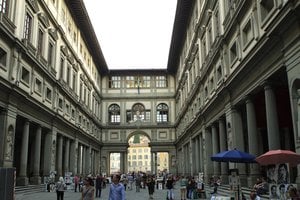 Galleria degli Uffizi |
Florencija | 2 | The Raising of Lazarus, Triptych |
 Liuvro muziejus |
Paryžius | 1 | Matheron Diptych |
 Metropolitano meno muziejus |
Niujorkas | 1 | The Pérussis Altarpiece |
Pasirinkite dešimtmetį, kad pamatytumėte jo išskirtinį kūrinį.
To stand before this depiction of The Raising of Lazarus is to witness not merely an event from scripture, but the very moment where divine power confronts the finality of death. Nicolas Froment’s masterful rendering captures a scene overflowing with dramatic tension and profound spiritual resonance. The composition draws the viewer immediately into the heart of the action: the luminous figure of Jesus ministering to Lazarus, surrounded by a gathering…
To gaze upon this magnificent altarpiece is to step directly into the charged atmosphere of late Quattrocento France. Dating to 1480, Nicolas Froment’s The Pérussis Altarpiece transcends mere religious depiction; it is a complex tapestry woven from profound spiritual devotion, burgeoning Renaissance naturalism, and the specific cultural anxieties of its time. The subject matter—the adoration of the empty cross on Golgatha—possesses an immediate, arresting power. It captures that pivotal moment…
Pirmoje vietoje yra The Burning Bush (detail) (1476), Cathedrale Saint Sauveur, Aix-en-Provence. Tuoj antras, Matheron Diptych (1474), o trečias – The Raising of Lazarus (1461).
46 mmet. Nicolas Froment gimė 1430, o The Burning Bush (detail) datuojama 1476 m.
Mūsų kataloge yra 9 Nicolas Froment darbų, datuojamų nuo 1461 iki 1480.
Daugumą jų rasite Cathedrale Saint Sauveur (Aix-en-Provence), Galleria degli Uffizi (Florencija) ir Liuvro muziejus (Paryžius). Viršuje pateiktame muziejų sąraše yra išsami informacija.
1470s laikotarpyje – daugiau nei bet kada kitais: 4 iš 9 šioje pusėje esamų darbų date iš to laiko, iš jų The Burning Bush (detail).
Seniausias čia esantis kūrinys yra The Raising of Lazarus (1461), o naujausias – The Pérussis Altarpiece (1480).
Religious art (2), Medieval art (2) ir Crucifixion (2) iš 9 darbų šiame puslapyje.
Oil On Canvas, naudojamas 2 iš 9 šioje pusėje esančių darbų.
Early renaissance, kaip matote šioje puslapio kolekcijoje.
Šioje pusėje laikinėje Cathedrale Saint Sauveur, Aix-en-Provence galima pamatyti 2 kūrinių, įskaitant The Burning Bush (detail) ir The Burning Bush.
Taip. Kiekvienas šioje pusėje esantis paveikslas galėto būti užsakytas kaip ranku dažytas aliejus reprodukcija arba spausdinys jums patinkaniu dydžiu. Norėdami užsakyti, tiesiog atidarykite paveikslą.


