
Pagrindinė informacija

  • Top 3 works: Portrait of J.A. Jooren ( -1938)
  • Museums on this site: Museum Catharijneconvent
  • Born: Kingdom of the Netherlands
  • Works on this site: 1

The Architect of Carnival

In the streets of Bergen op Zoom, the atmosphere shifts when the season of Vastenavond arrives. For decades, Louis Weijts provided the visual pulse for this celebration. He did not merely participate; he shaped the very identity of the festivities. His involvement began in 1946 when he was approached by Jan van der Kreek to design the Blauwe Schuit. At the time, Weijts was an outsider to the tradition, yet he quickly became the heartbeat of the post-war celebrations. His work transformed the local parades, moving them from simple gatherings into organized, visually distinct spectacles.

His influence extended far beyond the parade routes. He was a designer of immense scale and variety, working with a restless, creative energy that filled the spaces around him. His output was diverse, ranging from the intimate to the monumental:

Surrealism and the Private Canvas

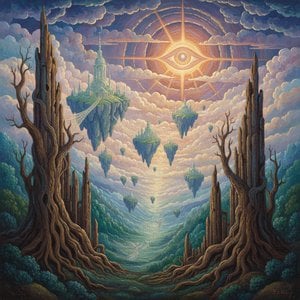
While the public saw his work in the grand movements of carnival floats and circus tents, his private studio held a different kind of vision. In the creative chaos of his upper floor, Weijts pursued a style he described as surrealist and magic realist. These works possessed a specific rhythm and a singular style that set them apart from his more functional designs. He worked with pastels for art dealers and maintained a constant output of sketches and paintings well into his later years.

The tension in his work lies in this duality. He was a man of the street and the circus, yet his paintings explored the subconscious through a lens of fantasy. He was a designer of the "meaningful absurdity," a term used to describe his contribution to the local culture. Even as the world around him changed, his commitment to the act of creation remained absolute. He viewed work not as a chore, but as a necessity, continuing to draw and paint with a fervor that defined his long life in Bergen op Zoom.
Trumpas testas

Kiekviename klausime yra tik vienas teisingas atsakymas.

Klausimas 1:
In which city was Louis Weijts born?
Klausimas 2:
Louis Weijts was known for designing what for the carnival?
Klausimas 3:
What style did Louis Weijts use to describe his own paintings?
Klausimas 4:
What large-scale items did Louis Weijts design that could be up to 40 meters wide?
Klausimas 5:
In which year was the portrait of J.A. Jooren created?

Klausimai ir atsakymai

Ar yra Louis Weijts kūrybos laiko linija?

Louis Weijts kūrybos laiko linija Kūrybos chronologija pateikia Louis Weijts darbus chronologine tvarka, metus po metų.

Kur galima rasti Louis Weijts kūrybą, suskirstytą pagal meno kryptis?

Louis Weijts kūrybą pagal stilių galima peržiūrėti puslapio Visi meno kryptys skiltyje.

Kokias nuota išreiškia Louis Weijts kūryba?

Louis Weijts kūrybą pagal nuotaikas galite peržiūrėti joje, kurioje kūriniai sugrupuoti pagal jų atspindžiamas nuotaikas: Nuotaudų kambarys

Iš kokios šalies yra Louis Weijts?

Louis Weijts gimė Kingdom of the Netherlands.

Ar galiu peržiūrėti Louis Weijts darbus pagal spalvų paletę?

Louis Weijts kūrybą spalvų paletėms sugrupuota galite rasti puslapyje Pagrinti pagal spalvų paletę.

Ar galiu pasimokyti apie Louis Weijts spalvų naudojimą visuose darbuose?

Louis Weijts darbų spalvų profilis galima rasti puslapyje Paletės genomas.

Kur galima rasti Louis Weijts kūrybos darbų grupavimą pagal techniką?

Louis Weijts darbus pagal technikas galima peržiūrėti jo/jos puslapio Visi mediai skiltyje.

Ar galiu ieškoti Louis Weijts kūrybos pagal spalvų spektrą?

Louis Weijts Spalvų indeksas – tai puslapis, kuriame kūriniai sugruoti pagal jų spalvas.

What style did Louis Weijts use to describe his own paintings?

Surrealist and Magic Realist