A Legacy of Light and Line: The Life of Isabel Codrington
In the vibrant, shifting landscape of early twentieth-century London, few artists possessed the quiet, enduring grace of Isabel Codrington. Born in 1874 in the picturesque village of Bydown, near Barnstaple, Devon, her life was an intricate tapestry woven from threads of literary depth and visual splendor. Raised by a father who embraced the theatricality of amateur playwriting and a mother who was herself a painter and writer, Codrington was immersed in a world where the boundaries between the written word and the painted image were perpetually blurred. This dual heritage of storytelling and observation would become the cornerstone of her creative identity, allowing her to infuse her works with a narrative soul that transcended mere representation.
Her formal journey into the heart of the British art establishment began at the tender age of fifteen when she entered the prestigious Royal Academy Schools. It was here, amidst the rigorous discipline of London’s finest instructors, that her raw talent blossomed into technical mastery. Her precocity was marked early by the receipt of two prestigious medals, accolades that signaled the arrival of a formidable new talent in the watercolor and oil mediums. These formative years did more than refine her brushwork; they embedded her within a community of peers that would shape the trajectory of British art for decades to come.
Artistic Symbiosis and the London Scene
The trajectory of Codrington’s life was profoundly altered in October 1901 by her marriage to the influential art critic P.G. Konody. This union was far more than a domestic arrangement; it was an intellectual partnership that placed her at the very epicenter of the Edwardian art world. As Konody navigated the influential corridors of art journalism and magazine editing, he became a tireless champion for his wife’s vision. Together, they curated a life surrounded by the era's most luminous minds—poets, writers, and fellow painters—creating a domestic crucible where creativity was both nurtured and celebrated.
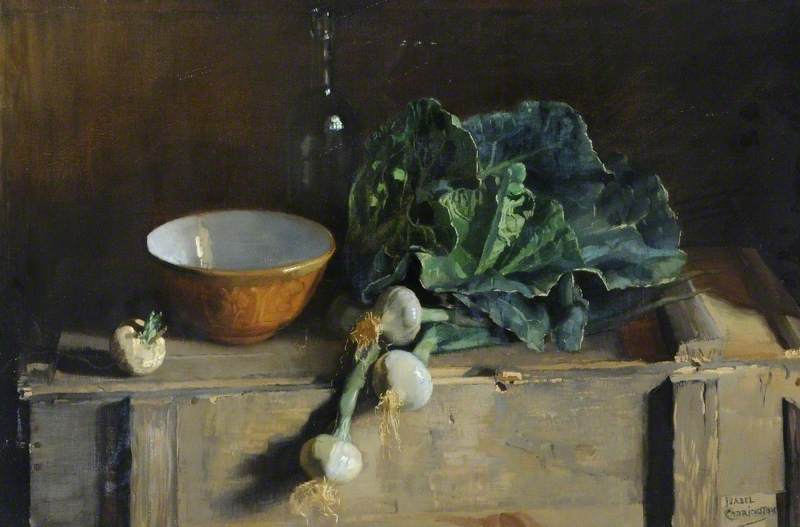
Even as her personal life underwent significant transitions, including her divorce from Konody in 1912 and her subsequent marriage to Gustavus Mayer, a partner at the renowned art dealers Colnaghi & Co., her artistic output remained steadfast. Her work during this period reflected a sophisticated command of both the intimate and the monumental. Whether she was capturing the delicate precision of a miniature or the sweeping emotional weight of an oil painting, Codrington possessed a unique ability to find the extraordinary within the ordinary. This period of her life saw her works traveling far beyond the London galleries, finding homes in the prestigious Paris Salon and the Knoedler Galleries, earning her international recognition.
Mastery of Medium and Historical Resonance
Codrington’s technical repertoire was as diverse as her experiences. She was particularly celebrated for her ability to manipulate watercolor to achieve a sense of luminous atmosphere, a skill that earned her a medal at the 1907 Exposition International d'Arte in Barcelona. Her paintings often focused on figures and domestic scenes, imbued with a sense of quietude and grace. Yet, she was equally capable of addressing the profound gravity of her era. A notable example is her large-scale oil painting, Cantine Franco-Britannique, Vitry-le-François, which was acquired by the Imperial War Museum. This work, depicting a World War I canteen for French troops, serves as a poignant testament to her ability to document the human element within the vast, often impersonal machinery of historical conflict.
Throughout the 1920s and 1930s, Codrington remained a consistent and respected presence in the British art circuit. Her exhibitions at the Royal Academy, the Fine Art Society, and various Scottish institutions like the Royal Scottish Academy demonstrated a lasting relevance that defied the fleeting trends of the era. Her legacy is defined by several key pillars:
- Technical Versatility: The seamless transition between the delicate intimacy of miniatures and the expansive drama of oil portraiture and historical scenes.
- Cultural Integration: Her role as a central figure in the intellectual circles of London, bridging the gap between the visual arts and the literary avant-garde.
- Enduring Recognition: A career marked by prestigious awards and inclusion in permanent museum collections, ensuring her voice remains part of the historical record.
Today, the works of Isabel Codrington stand as windows into a bygone era, offering much more than aesthetic pleasure. They are evocative chronicles of a woman who navigated the complexities of her time with a brush held high, leaving behind a body of work that continues to resonate with its quiet brilliance and profound humanity.