A wash is a term for a visual arts technique resulting in a semi-transparent layer of colour. A wash of diluted ink or watercolor paint applied in combination with drawing is called pen and wash, wash drawing, or ink and wash. Normally only one or tw...
To understand watercolor is to understand the behavior of light as it passes through a liquid medium. Unlike oil painting, which builds an opaque skin of pigment on top of a surface, watercolor relies on the white of the paper to act as a light source from beneath. A wash is essentially a semi-transparent layer of color, where pigments are suspended in a water-based solution—usually consisting of a binder like gum arabic and humectants such as glycerin. When you apply a wash, you are not just laying down color; you are creating a window. The light travels through the dispersed pigment particles, hits the paper, and reflects back to your eyes. This is why professional-grade watercolors, which boast higher pigment concentrations, allow for much deeper luminosity even when heavily diluted with water.
The magic of this transparency is found in how the binder interacts with the support. As the gum arabic is absorbed by the paper fibers, it leaves the pigment particles resting on the surface, allowing that characteristic shimmer to emerge. This process requires a delicate balance; if the paint is too thick, it becomes muddy and loses its clarity, but if it is too thin, the color may lack the strength to hold an image. Achieving the perfect "tea consistency"—where the paint flows easily and looks translucent—is the first step in mastering this medium.
Takeaway: Focus on achieving a transparent layer where light can reflect off the paper through the pigment.
The Artist’s Toolkit: Selecting Paper, Brushes, and Pigment Loads
Before a single drop of water touches the page, the foundation of your work is decided by your materials. The most critical choice you will make is the paper. Because watercolor involves significant moisture, the paper must be able to handle expansion without warping excessively. Cotton-based papers are preferred because they absorb much more water and minimize distortion. You must also consider the texture, or "tooth." Hot-pressed paper is smooth and ideal for fine, detailed work, while cold-pressed offers a subtle texture that holds more pigment, and rough paper provides a heavy grain for expressive, textured strokes.
Your brushes are the tools of control. Whether you use natural hair like squirrel and sable for their incredible water-holding capacity or synthetic nylon for more resilient, bouncy strokes, the shape matters immensely. A round brush is versatile for most tasks, but a mop brush is essential for large, soft washes, while a rigger brush allows for fine, precise lines. When preparing your wash, you must ensure your brush holds a small, even load of paint mixed with enough water to prevent streaking.
Takeaway: Prioritize high-quality cotton paper and select brush shapes based on the level of detail required.
Mastering Fluidity: Techniques for Soft Blends and Gradients
A History Painted in Light: The Evolution of Watercolor The Enduring Appeal of Watercolor: History, Techniques & Contemporary Practice Explore the captivating world of watercolor painting! Discover its rich history, essential techniques, influential ...
The wet-on-wet technique is where watercolor achieves its most ethereal qualities. By applying clean water to a dry surface to create an even sheen, you prepare a receptive ground for the pigment. When you drop concentrated paint into these damp areas, the color spreads organically, creating soft edges that are perfect for clouds, distant mountains, or the hazy atmosphere of a sunset. This method requires careful timing; if the paper stays wet too long, you may lose control and create unintended puddles, but if it dries too quickly, you will see harsh "tide lines" where the water evaporated at the edge of a pool.
For more structured transitions, such as a sky fading from deep blue to pale azure, the smooth gradient wash is essential. This involves using full, parallel strokes and pulling the color downward while the top edge remains wet. It is a test of rhythm and water control. You must move with enough speed to prevent the paper from drying mid-stroke, yet with enough precision to ensure the color remains uniform from top to bottom.
Takeaway: Use wet-on-wet for soft, atmospheric transitions and maintain consistent strokes for gradients.
Achieving Clarity: Precision through Wet-on-Dry and Dry Brush
While fluidity defines the medium's soul, precision defines its structure. The wet-on-dry technique is used when you need crisp edges, sharp details, or defined silhouettes. By applying wet paint to a completely dry surface, you prevent the pigment from bleeding into surrounding areas. This is how an artist renders the delicate vein of a leaf, the sharp edge of a shadow, or the intricate linework of a botanical study. It provides the necessary contrast to the soft washes used in the background.
Conversely, the dry brush technique offers a way to introduce texture and grit. By using a brush with very little water and a higher pigment load, you can drag the bristles across a textured paper, leaving broken, scratchy marks that mimic the appearance of rough stone, bark, or weathered wood. This technique relies on the "tooth" of the paper to catch the pigment only on the raised surfaces, creating a sense of physical depth.
Takeaway: Use wet-on-dry for sharp details and dry brush for textured, broken effects.
Experimental Textures: Using Salt, Alcohol, and Plastic Wrap for Organic Effects
A History Painted in Light: The Evolution of Watercolor The Enduring Appeal of Watercolor: History, Techniques & Contemporary Practice Explore the captivating world of watercolor painting! Discover its rich history, essential techniques, influential ...
For those looking to move beyond traditional methods, watercolor offers a playground of chemical and physical experiments. One of the most popular is the salt technique, where kosher salt is sprinkled onto wet paint. As the salt absorbs the water, it pulls the pigment toward itself, leaving behind star-like or spiderweb textures once dry. Similarly, applying droplets of alcohol or vodka to a wet wash can push the pigment away, creating soft-edged white spots that resemble cellular structures or tie-dye effects.
Physical interventions can also yield unexpected results. Laying crumpled plastic wrap over a wet wash can create irregular, organic veining that looks like cracked earth or ice. You might also use masking fluid—a liquid latex applied to dry paper—to protect specific white areas from being covered by paint. Once the painting is finished and dry, the fluid can be rubbed away, revealing the pristine white of the paper underneath. These methods allow an artist to embrace the unpredictability of the medium, turning "happy accidents" into intentional design elements.
Takeaway: Experiment with salt, alcohol, or plastic wrap to introduce organic, non-traditional textures.
Historical Foundations: The Renaissance and the Rise of Naturalism
Introduction Imagine a world painted with light itself – delicate washes blooming across paper, capturing fleeting moments and profound emotions with an intimacy few mediums can achieve. For centuries, watercolor was often relegated to the realm of s...
The history of watercolor is a long evolution from utility to high art. While its roots can be traced back to Paleolithic cave paintings and Egyptian papyrus illustrations, its continuous history as a formal medium began during the Renaissance. During this era, watercolor was often used for scientific inquiry and preparatory studies. The German Northern Renaissance artist Albrecht Dürer was a pioneer in this regard; his botanical and wildlife watercolors demonstrated an unprecedented level of naturalism and precision, using the medium to document the world with scientific accuracy.
As the centuries progressed, the medium moved away from purely instructional or religious uses toward more expressive ends. In East Asia, a different tradition flourished through ink wash painting, where varying levels of dilution in black ink were used to create vast, monochrome landscapes. This emphasized the essence and spirit of the subject rather than mere photographic replication, proving that watercolor could communicate profound philosophical ideas through simple, fluid strokes.
Takeaway: Recognize how early masters like Dürer transitioned watercolor from a sketching tool to a medium of detailed observation.
The English School: Atmospheric Landscapes and the Golden Age of Watercolor
a british painter's watercolor mastery william luker jr. , a prominent english painter, left an indelible mark on the art world with his captivating watercolor paintings. born in london in 1867 and passing away in 1951, luker jr.'s artistic journey i...
In the 18th and 19th centuries, England became the epicenter of watercolor innovation. This period saw the rise of the "picturesque" movement, where artists used watercolor to capture the beauty of the rural landscape and the changing light of the countryside. The medium moved from being known as "tinted drawings" to a respected, independent art form. Artists like J.M.W. Turner pushed the boundaries of what could be expressed, using incredibly loose washes to capture the raw power of storms and the ephemeral nature of light.
This era also saw the rise of professional societies, such as the Royal Watercolour Society, which provided a platform for artists to exhibit finished works rather than just sketches. The focus shifted toward atmospheric perspective—using lighter, cooler tones to suggest distance—and a celebration of natural beauty. This tradition of landscape mastery influenced generations of painters, establishing a standard for how light and moisture could be rendered on paper with profound sensitivity.
Takeaway: Study the English school to understand how watercolor was used to master atmospheric perspective and light.
Modern Legacies: From East Asian Ink Traditions to Contemporary Abstraction
A Celestial Symphony in Watercolor In the quiet, transformative era of the early 1920s, Paul Klee breathed life into a vision that transcended the boundaries of the physical world. His masterpiece, "The Firmament Above the Temple," is not merely a pa...
In the modern era, the boundaries of watercolor have expanded into the realm of abstraction and bold experimentation. The influence of East Asian brush painting continues to resonate in contemporary works that value minimalism and the power of a single, well-placed stroke. At the same time, the 20th century brought about radical shifts, with artists exploring "stain painting"—a technique where highly diluted paint is applied to large surfaces to create watercolor-like effects in oil or acrylic.
Today, the medium remains as versatile as ever. From the meticulous, memory-driven landscapes of artists like Agnes Cammock to the geometric, structured abstractions of Paul Klee, watercolor continues to be a primary tool for exploring both the physical and the spiritual. Whether it is used to capture the quiet stillness of a domestic scene or the complex textures of a modern cityscape, the medium’s ability to balance control with spontaneity ensures its place in the ongoing history of art.
Takeaway: Observe how contemporary artists blend traditional fluidity with modern abstraction and structural design.
Journey through the vibrant world of Paul Klee. Explore 25 iconic masterpieces of abstraction and color, from Bauhaus classics to surrealist gems. Find inspiration for your collection with museum-quality art reproductions at ArtsDot.com. Discover all masterpieces online.
Explore the technical mastery of acrylic on paper. From historical innovations to advanced texture and color theory, learn how modern artists manipulate pigment and substrate for profound expression. Discover expert insights into preserving contemporary masterpieces.
Atraskite 10 įspūdingiausių impresionizmo šedevrų! Claude Monet, Degas, Renoir ir kiti – meno istorijos perlas. Aliejiniai paveikslai jūsų interjerui. ArtsDot.com: aukštos kokybės reprodukcijos ir inspiracija namams.
Unlock your creative potential with this expert guide for art students. Master acrylic painting techniques, from fluid washes to textured impasto. Learn about essential brushes, surfaces, and advanced color theory to elevate your fine arts practice with professional precision.



 Wash (visual arts)
 Ephemeral Visions: Exploring the Artistic Legacy & Contemporary Practice of Watercolor Painting
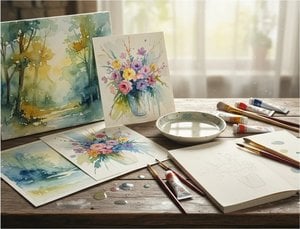 Ephemeral Visions: Exploring the Artistic Legacy & Nuances of Watercolor Painting
 Watercolor Wonders: 10 Masterpieces That Redefined Art History | ArtsDot
 William Luker Junior
 The Firmament Above the Temple


