
- Pradžia

- Straipsniai
- Exploring Emotional Depth in Art: A Cross-Historical Analysis of Affective Representation
Exploring Emotional Depth in Art: A Cross-Historical Analysis of Affective Representation

Turinio sąrašas
Introduction: The Enduring Power of Affect in Visual Art
From the earliest cave paintings to contemporary installations, art has always been inextricably linked with emotion. It is not merely a record of what *is*, but a potent expression of what it *feels* like to be human – joy, sorrow, fear, longing, and everything in between. This capacity to evoke affect, to stir something within the viewer, is arguably the most fundamental quality that distinguishes art from other forms of representation. Throughout history, artists have sought not simply to depict reality but to translate its emotional resonance onto canvas, into stone, or through any medium available. Understanding how this translation occurs—how artistic choices shape our experience and connect us to both the artist’s intent and a shared human condition—is at the heart of appreciating art's enduring power.
The Foundations of Emotional Expression: From Darwin to Early Psychology
An emotional expression is a behavior that communicates an emotional state or attitude. It can be verbal or nonverbal, and can occur with or without self-awareness. Emotional expressions include facial movements like smiling or scowling, simple behav...
While the intuitive connection between art and emotion is readily apparent, its scientific exploration began relatively recently. Charles Darwin’s groundbreaking work, The Expression of Emotions in Man and Animals (1872), laid crucial groundwork by positing that emotional expressions are not arbitrary but evolved mechanisms for communication and survival. He argued that certain facial movements and bodily gestures were universally recognizable, suggesting a biological basis for affect. This idea resonated with early psychologists who sought to categorize and understand the fundamental emotions—happiness, sadness, anger, fear, surprise, and disgust—and their corresponding physical manifestations. However, these initial attempts at categorization proved complex; cultural nuances and individual variations quickly revealed that emotional expression is far from simple or uniform. The field of psychology acknowledged that while core emotions might be innate, their outward display is heavily influenced by social context and learned behavior. This understanding paved the way for a more nuanced exploration of how artists manipulate these expressions to create specific effects.
Romanticism and the Cultivation of Feeling: Nature, Subjectivity, and Intense Emotion
The late 18th and early 19th centuries witnessed a seismic shift in artistic priorities with the rise of Romanticism. Reacting against the Enlightenment’s emphasis on reason and order, Romantics championed subjectivity, imagination, and the power of emotion as central to human experience. Nature, no longer viewed as a source of scientific study but as a sublime force capable of inspiring awe and terror, became a dominant motif. Artists like Caspar David Friedrich captured this sense of overwhelming grandeur in works that emphasized the individual’s smallness in the face of the infinite. This period saw an elevation of personal feeling—melancholy, passion, and even despair—as legitimate subjects for artistic exploration. The focus moved from idealized forms and classical narratives to raw, unfiltered emotion. The paintings weren't simply representations *of* something; they were attempts to convey a specific emotional state, often through dramatic compositions, turbulent brushwork, and evocative color palettes. This emphasis on the artist’s inner world marked a turning point in art history, paving the way for modern expressions of subjectivity.
Color as a Conduit for Emotion: A Historical Palette of Psychological Impact
 The Chromatic Spectrum of Feeling: Exploring Color & Emotion in Art History
Explore the fascinating relationship between color and emotion in art history. Discover how master artists used color to evoke feelings & cultural meanings, plus the psychology behind it all.
Beyond composition and subject matter, artists have long understood the profound psychological impact of color. From the vibrant reds associated with passion and anger to the calming blues evoking serenity and contemplation, color serves as a powerful conduit for emotion. The use of color is not arbitrary; it’s deeply rooted in cultural associations and even physiological responses. For example, warm colors—reds, oranges, and yellows—tend to be stimulating and energizing, while cool colors—blues, greens, and purples—are often perceived as calming and soothing. Throughout history, artists have strategically employed color symbolism to enhance the emotional impact of their work. The rich golds of religious iconography conveyed divinity and power, while the somber tones of Baroque paintings reflected themes of mortality and spiritual struggle. Understanding these historical palettes allows us to decode the subtle layers of meaning embedded within a painting and appreciate the artist’s deliberate choices in shaping our emotional response.
Goya's Portraits: Capturing Aristocratic Psyches and Societal Tensions
 The Duke of Osuna and his Family
Admire Francisco Goya’s ‘The Duke of Osuna and his Family,’ a Romantic masterpiece depicting the aristocratic Osuna family with exquisite detail and emotional depth. Explore a stunning reproduction at ArtsDot.
Francisco Goya, straddling the Enlightenment and Romantic periods, masterfully captured the complexities of human emotion in his portraits. His depictions of the Spanish aristocracy, such as The Duke of Osuna and his Family, are not merely flattering representations but penetrating psychological studies. Goya’s keen observation reveals a subtle undercurrent of tension beneath the veneer of aristocratic composure. The subjects' gazes, postures, and even their clothing convey a sense of unease and social anxiety. He wasn’t simply painting *what* they looked like; he was attempting to capture *who* they were—their inner lives, their ambitions, and their vulnerabilities. Goya’s use of color is equally significant. The muted tones and dramatic lighting create an atmosphere of intimacy and psychological depth, drawing the viewer into the subjects' world. His portraits reflect a society on the brink of upheaval, foreshadowing the political turmoil that would soon engulf Spain. They are powerful reminders that art can be both beautiful and unsettling, offering profound insights into the human condition.
Conclusion: The Ongoing Dialogue Between Art, Emotion, and the Viewer
The exploration of emotion in art is an ongoing dialogue—a conversation between artist, artwork, and viewer. From Darwin’s initial observations to the Romantic embrace of subjectivity and beyond, artists have continually sought new ways to translate their inner worlds onto canvas and connect with audiences on a visceral level. Understanding the historical context, psychological principles, and artistic techniques employed allows us to appreciate not only the technical skill involved but also the profound emotional resonance that makes art such a powerful and enduring force in human culture. At ArtsDot.com, we believe in making these masterpieces accessible to all, allowing you to experience firsthand the transformative power of emotion captured through the ages. Explore our collection today and discover artworks that speak to your soul.
Susiję straipsniai

Academic Portraiture: Tradition, Technique & the Evolution of Representational Art
Explore the rich history & masterful techniques of academic portraiture. Discover iconic artists, learn about collecting, and commission a bespoke oil painting reproduction with ArtsDot.


John Collier: Pre-Raphaelite Realism & Victorian Psychological Portraiture
Explore the captivating world of John Collier, a leading Pre-Raphaelite painter renowned for his psychologically insightful Victorian portraits. Discover his masterpieces and lasting artistic legacy.

Richard Westall: Romantic Visions & the Rise of British Landscape & Portraiture
Explore the life & art of Richard Westall (1765-1836), a key figure in British Romanticism. Discover his iconic portraits, literary illustrations, and landscapes – plus collecting insights.
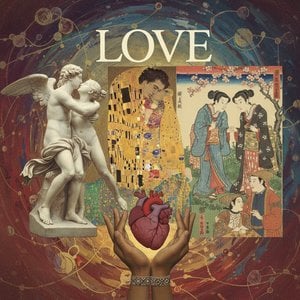
The Enduring Motif of Love in Art History: A Cross-Cultural Exploration of Representation and Emotion
Explore the rich history of love in art! Discover iconic masterpieces, artistic techniques & cultural symbolism from antiquity to modern times. Expert analysis for collectors.

