
- Pradžia

- Straipsniai
- Cubist Portraits: 10 Masterpieces That Revolutionized Art | ArtsDot
Cubist Portraits: 10 Masterpieces That Revolutionized Art | ArtsDot
Turinio sąrašas
Introduction
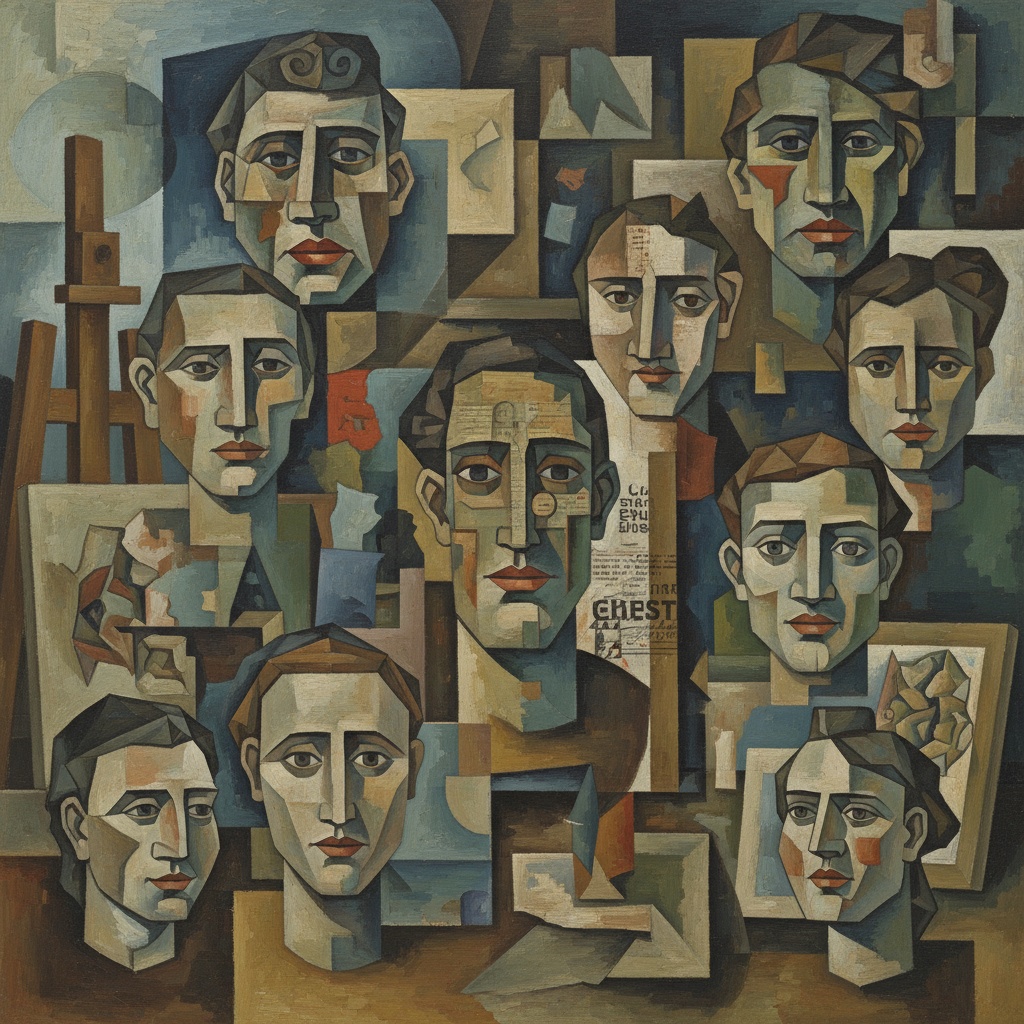
To gaze upon a Cubist portrait is to encounter not merely an image, but a fractured reality—a compelling interrogation of perception itself. These weren’t attempts to replicate likeness; they were bold explorations into how we see , how we understand form and space, and ultimately, how we define identity. The ten masterpieces presented here represent the pinnacle of this revolutionary movement, each a testament to the artists who dared to dismantle convention and rebuild it anew.
Born in the early 20th century, Cubism arose from a confluence of artistic and intellectual currents. Pablo Picasso and Georges Braque, disillusioned with traditional representation, began dissecting objects into geometric shapes, presenting multiple viewpoints simultaneously on a single canvas. This radical approach wasn’t simply about aesthetics; it reflected a broader cultural shift—a world grappling with the rapid advancements of technology, the theories of relativity, and a growing sense of fragmentation in modern life. Paris, at the turn of the century, served as the epicenter for this artistic upheaval, fostering an environment where experimentation was not only encouraged but celebrated.
The portrait became a particularly fertile ground for Cubist innovation. By breaking down the human face and body into its constituent parts, artists challenged the very notion of a fixed self. They sought to capture not just what someone looked like, but how they were perceived from different angles, at different moments in time—a holistic representation that transcended superficial appearances. The influence extended beyond painting, impacting sculpture, literature, and architecture.
These artworks continue to resonate today because they speak to the complexities of human experience. In a world saturated with images, where identity is often fluid and constructed, Cubist portraits remind us that there are multiple ways to see—and understand—ourselves and others. Prepare to embark on a journey through ten iconic works, each offering a unique window into the heart and soul of this groundbreaking movement. Each piece will reveal not only artistic brilliance but also a profound commentary on the human condition.
Untitled (D2WVXT) - Pablo Picasso
 Untitled (D2WVXT) - Pablo Picasso
Pablo Picasso’s “Untitled (D2WVXT),” more commonly known as “Head of a Woman” from 1903, isn't simply a portrait; it’s an echo of the Blue Period’s melancholic depths giving way to the seismic shifts that would define Cubism. This work, housed in the Metropolitan Museum of Art, feels less like observation and more like an excavation of inner emotion—a precursor to dismantling form itself.
Its inclusion in our Top 10 isn’t merely historical; it represents a pivotal moment where Picasso began fracturing reality on canvas. The woman's gaze, direct yet vulnerable, is rendered with planes of color and shadow that anticipate the geometric deconstruction of his later masterpieces. Notice how the deep indigo background doesn’t recede but actively presses forward, intensifying the emotional weight of the subject.
The subtle gradations in her flesh tones, coupled with the textured brushwork, create a sense of immediacy and materiality rarely seen in portraiture of the time. Today, we see echoes of this fragmented approach in contemporary design—the layering of textures, the use of bold color blocking, and an overall embrace of imperfection. “Head of a Woman” isn’t just a painting; it's a foundational piece that continues to inform our visual landscape, influencing everything from modern interiors to fashion’s exploration of abstract form. It reminds us that beauty often lies in the unconventional—in the deliberate disruption of expectation.
Melancholy Woman - Pablo Picasso
 Melancholy Woman - Pablo Picasso
A quiet sorrow hangs suspended in time within Pablo Picasso’s “Melancholy Woman,” a portrait painted between 1903 and 1904 that feels less like an observation of a subject and more like a communion with a state of being. Its place among the Top 10 masterpieces defining Cubist portraiture isn't solely due to its historical significance, but to its enduring ability to evoke empathy—a testament to Picasso’s burgeoning mastery of emotion.
Though nascent in its Cubist tendencies, the work already demonstrates a fracturing of traditional perspective. The woman’s downward gaze and muted palette of blues and browns create an atmosphere of profound stillness, inviting introspection. Notice how Picasso doesn't simply *show* sadness; he embodies it through simplified forms and diffused light, hinting at inner turmoil without resorting to melodrama.
The painting resonates today not as a relic of the past, but as a source of calm contemplation. Its harmonious composition—the subtle interplay of shadow and form—inspires a sense of quiet sophistication in modern interiors. The use of color, echoing the depths of the Blue Period, can transform a space into a sanctuary for reflection. “Melancholy Woman” reminds us that beauty isn’t always about vibrancy; it often resides in the delicate exploration of human vulnerability.
Rostro - Pablo Picasso
 Rostro - Pablo Picasso
Unveiling Pablo Picasso’s “Rostro” is akin to discovering a hidden facet of the artist's soul—a study in monochrome that belies an extraordinary depth of emotion. This graphite drawing, executed around 1920, earns its place among the Top 10 masterpieces not through flamboyant spectacle, but through a quiet intensity and masterful command of line.
Following his groundbreaking Cubist explorations, Picasso turned inward, seeking to distill human essence with minimal means. “Rostro” exemplifies this shift—a tightly cropped portrait focusing solely on the man’s face in profile. The dense hatching and cross-hatching aren't merely technical exercises; they sculpt light and shadow, revealing a palpable sense of melancholy within the contours of his features.
Today, “Rostro” resonates with those who appreciate refined aesthetics and understated elegance. Its monochromatic palette lends itself beautifully to modern luxury interiors—a subtle yet powerful statement piece that speaks volumes without demanding attention. The drawing’s textural quality evokes a sense of timelessness, reminding us that true beauty often lies in the simplicity of form and the profound exploration of human experience.
Silvia - Umberto Boccioni
 Silvia - Umberto Boccioni
There’s a quiet energy that emanates from Umberto Boccioni’s “Silvia,” a portrait not of likeness, but of sensation—a fleeting moment captured in dynamic lines and fragmented form. This 1915 work isn't simply representative of Futurism; it *is* the movement distilled onto paper, an assertion of speed, motion, and the rejection of traditional artistic constraints.
Its inclusion among our Top 10 masterpieces speaks to its enduring influence—a bold departure from academic art that paved the way for generations of artists. The monochromatic palette intensifies the drama, while the energetic lines pulsate with a life of their own, mirroring the industrial age’s relentless pace. Notice how Boccioni doesn't merely depict Silvia; he embodies her presence through fractured planes and suggestive forms.
At ArtsDot, we believe that such powerful artistry should be accessible to all. Our faithful reproductions capture not only the visual elements of “Silvia,” but also its underlying energy—the texture of the graphite, the dynamic interplay of light and shadow. Bring this fragment of modernity into your home, a testament to the enduring power of artistic innovation.
Portrait of Dr Pérez Costales - Pablo Picasso
 Portrait of Dr Pérez Costales - Pablo Picasso
To encounter Pablo Picasso’s “Portrait of Dr Pérez Costales” is to witness a pivotal moment—the genesis of Cubism itself. Completed around 1908, this deceptively simple black and white portrait transcends mere likeness, embodying the artist's revolutionary exploration of form and perception.
Its place among our Top 10 masterpieces isn’t solely due to its historical significance; it’s a testament to Picasso’s ability to synthesize realism with abstraction. The meticulous detail in Dr. Costales’ features is immediately undercut by the fragmentation—the dissection of his face into geometric planes that anticipate the radical deconstruction of later works.
The monochrome palette isn't an absence of color, but a deliberate focus on shape and texture, enhancing the painting’s intellectual weight. Today, “Portrait of Dr Pérez Costales” resonates with those who appreciate refined aesthetics—a subtle yet powerful statement piece that speaks to a legacy of innovation. Its quiet dignity and contemplative mood lend themselves beautifully to modern interiors, transforming any space into a sanctuary for thought.
Paloma Picasso - Pablo Picasso
 Paloma Picasso - Pablo Picasso
Before us lies a portrait not simply *of* a woman, but of a feeling—a quiet intimacy captured in fractured planes and muted tones. Pablo Picasso’s “Paloma,” painted in 1953, is a testament to his enduring mastery of Cubist principles and his profound connection to familial tenderness.
Its inclusion among the Top 10 masterpieces isn't merely historical; it represents a subtle yet powerful evolution of the movement. The fragmented depiction of Paloma—his daughter, Anne Ruiz-Picasso Gilot—isn’t about deconstruction for its own sake, but about capturing multiple perspectives simultaneously, mirroring the complexity of human connection.
Notice the earthy palette—the browns and greens that contribute to a melancholic atmosphere. The visible brushwork conveys a sense of movement despite the static arrangement, while the wine glass hints at shared moments and quiet contemplation. Today, “Paloma” reminds us that true artistry lies in capturing not just what we see, but how we *feel*—a legacy that continues to transform spaces and inspire generations.
Matador - Pablo Picasso
 Matador - Pablo Picasso
Unveiling Pablo Picasso’s “Matador” is to encounter a portrait steeped in courage, mystery, and psychological depth—a testament to the artist's enduring fascination with duality. Painted around 1957, this work earns its place among the Top 10 masterpieces not through spectacle, but through subtle symbolism and masterful execution.
The figure, draped in traditional Spanish attire, isn’t merely a depiction of a bullfighter; it's a self-portrait—a contemplation on masculinity, power, and mortality. Notice the fragmented planes characteristic of Cubism, softened by a muted palette of browns and blacks that create an atmosphere of solemn seriousness.
The presence of two birds—symbols of freedom and vigilance—and a clock—a poignant reminder of time’s passage—add layers of complexity to the composition. Today, “Matador” resonates with those who appreciate refined aesthetics and intellectual depth. Its timeless elegance transforms any space into a sanctuary for contemplation, inviting viewers to engage in their own dialogue with its enduring legacy.
Man in a Bowler Hat, Seated in an Armchair - Pablo Picasso
 Man in a Bowler Hat, Seated in an Armchair - Pablo Picasso
Before us lies a portrait not merely *of* a man, but of an era—a quiet intensity captured in fractured planes and muted tones. Pablo Picasso’s “Man in a Bowler Hat, Seated in an Armchair,” painted in 1915, is a testament to his enduring mastery of Cubist principles during a period of profound upheaval.
Its inclusion among the Top 10 masterpieces isn't simply historical; it represents a distillation of emotion and observation. The fragmented depiction—rendered in watercolor with layers of opaque hues—isn’t about deconstruction for its own sake, but about capturing multiple perspectives simultaneously, mirroring the instability of experience during wartime.
Notice the subtle interplay of light and shadow, the angular shards that define the bowler hat, and the dissolving forms of the armchair. Today, “Man in a Bowler Hat” reminds us that true artistry lies in conveying not just what we see, but how we *feel*—a legacy that continues to transform spaces and inspire contemplation.
Lola - Pablo Picasso
 Lola - Pablo Picasso
Before us lies a portrait not merely *of* a sister, but of a cherished memory—a quiet serenity captured in fractured planes and muted tones. Pablo Picasso’s “Lola,” painted during his formative years, is a testament to the artist's burgeoning mastery of Cubist principles and his profound connection to familial love.
Its inclusion among the Top 10 masterpieces isn't simply historical; it represents a distillation of emotion—a poignant tribute to Lola Ruiz Picasso, Pablo’s younger sister. The fragmented depiction—rendered in oil with layers of expressive brushwork—isn’t about deconstruction for its own sake, but about capturing multiple perspectives simultaneously, mirroring the complexity of human relationships.
Notice the bold palette dominated by blues and whites, conveying an atmosphere of quiet contemplation. Today, “Lola” reminds us that true artistry lies in preserving not just likenesses, but the enduring power of connection—a legacy that continues to enrich our spaces and inspire moments of serenity.
Portrait d'une jeune femme - Pablo Picasso
 Portrait d'une jeune femme - Pablo Picasso
Before us lies a portrait not merely *of* a young woman, but of an idea—a quiet revolution captured in fractured planes and muted tones. Pablo Picasso’s “Portrait d'une jeune femme,” painted during his formative years, is a testament to the artist's burgeoning mastery of Cubist principles and his profound exploration of perspective.
Its inclusion among the Top 10 masterpieces isn't simply historical; it represents a delicate balance of beauty, emotion, and innovation. The fragmented depiction—rendered with meticulous brushwork—isn’t about deconstruction for its own sake, but about capturing multiple viewpoints simultaneously, mirroring the complexity of human perception.
Notice the subtle interplay of light and shadow, the muted tones that convey a sense of contemplation, and the interlocking facets that define her features. Today, “Portrait d'une jeune femme” reminds us that true artistry lies in preserving not just likenesses, but the enduring power of emotion—a legacy that continues to inspire calm and sophistication in modern spaces.
Conclusion
As we conclude our journey through these ten defining portraits of Cubism, it’s clear that their power extends far beyond historical significance. These are not merely canvases and oils; they are echoes of human emotion—bold experiments in perception that continue to resonate with a profound sense of intimacy.
Each artwork—from Picasso’s introspective self-studies to Braque’s analytical explorations—offers a unique window into the complexities of identity, challenging us to see beyond surface appearances and embrace the fragmented beauty of reality. They remind us that true artistry lies not in perfect representation, but in capturing the essence of a moment, a feeling, a soul.
Today, these masterpieces live on—not just within museum walls, but within our homes, transforming spaces into sanctuaries of contemplation and inspiring creativity with every glance. At ArtsDot.com, we are honored to bring these timeless visions closer to you, allowing you to experience their enduring power firsthand. Explore our full collection and discover the artwork that speaks to your heart—a living presence ready to enrich your life for generations to come.
Susiję straipsniai

The Enduring Gaze: A Historical & Artistic Exploration of Portraiture Across Movements
Explore the rich history of portraiture with ArtsDot.com! Discover iconic masterpieces, influential artists & movements. Expert analysis for collectors and enthusiasts. Find your perfect artwork today.


The Enduring Gaze: A Historical & Artistic Exploration of Portrait Painting Across Cultures
Explore the rich history of portrait painting with expert insights into Renaissance masterpieces & modern innovations. Discover artists, movements & commission a custom oil painting at ArtsDot.
The Enduring Gaze: A Historical & Artistic Exploration of Portraiture Across Movements
Explore the rich history of portraiture with ArtsDot.com! Discover iconic masterpieces, influential artists & movements. Expert insights for collectors and enthusiasts – find your next treasured artwork.

Beyond Impressionism: Exploring the Emotional Depth of Post-Impressionist Painting
Explore the profound emotional depth & innovative techniques of Post-Impressionism with ArtsDot. Discover Cézanne, Van Gogh, Gauguin & more – and their lasting impact on modern art.

