
- Pradžia

- Straipsniai
- Anthony Vandyke Copley Fielding: Rediscovering a Master of Romantic Landscape
Anthony Vandyke Copley Fielding: Rediscovering a Master of Romantic Landscape
Turinio sąrašas
Early Life & Influences: The Foundations of Fielding’s Artistic Vision
Watercolor (American English) or watercolour (Commonwealth English; see spelling differences), also aquarelle (French: [akwaʁɛl]; from Italian diminutive of Latin aqua 'water'), is a painting method in which the paints are made of pigments suspended ...
Anthony Vandyke Copley Fielding, born in the Yorkshire countryside in 1787, emerged as a pivotal figure within the Romantic landscape tradition, though his story isn't one of immediate acclaim but rather a gradual blossoming nurtured by familial guidance and dedicated study. Unlike artists propelled into prominence through formal academy training, Fielding’s initial education was deeply rooted in domestic observation. His father, also a painter, served as his first mentor, instilling within him a love for the natural world and the fundamentals of landscape representation. This early apprenticeship involved meticulous copying – not merely replicating forms but absorbing the nuances of light, composition, and atmospheric perspective. However, it was his subsequent tutelage under John Varley, a leading figure in the Old Water-colour Society, that truly set Fielding on his path to becoming a celebrated watercolourist.
Varley’s influence extended beyond technical proficiency; he championed a more direct engagement with nature, encouraging artists to work *en plein air* and capture fleeting moments of beauty. This emphasis resonated deeply with the burgeoning Romantic sensibility – a rejection of rigid academic conventions in favour of emotional response and subjective experience. Fielding's early travels through North Wales at the tender age of twenty-one proved transformative, exposing him to dramatic scenery that would become a recurring motif throughout his career. These formative experiences laid the groundwork for a style characterized by serene compositions, delicate brushwork, and an evocative rendering of light and atmosphere.
A Prolific Watercolourist: Capturing the Serenity of the British Countryside
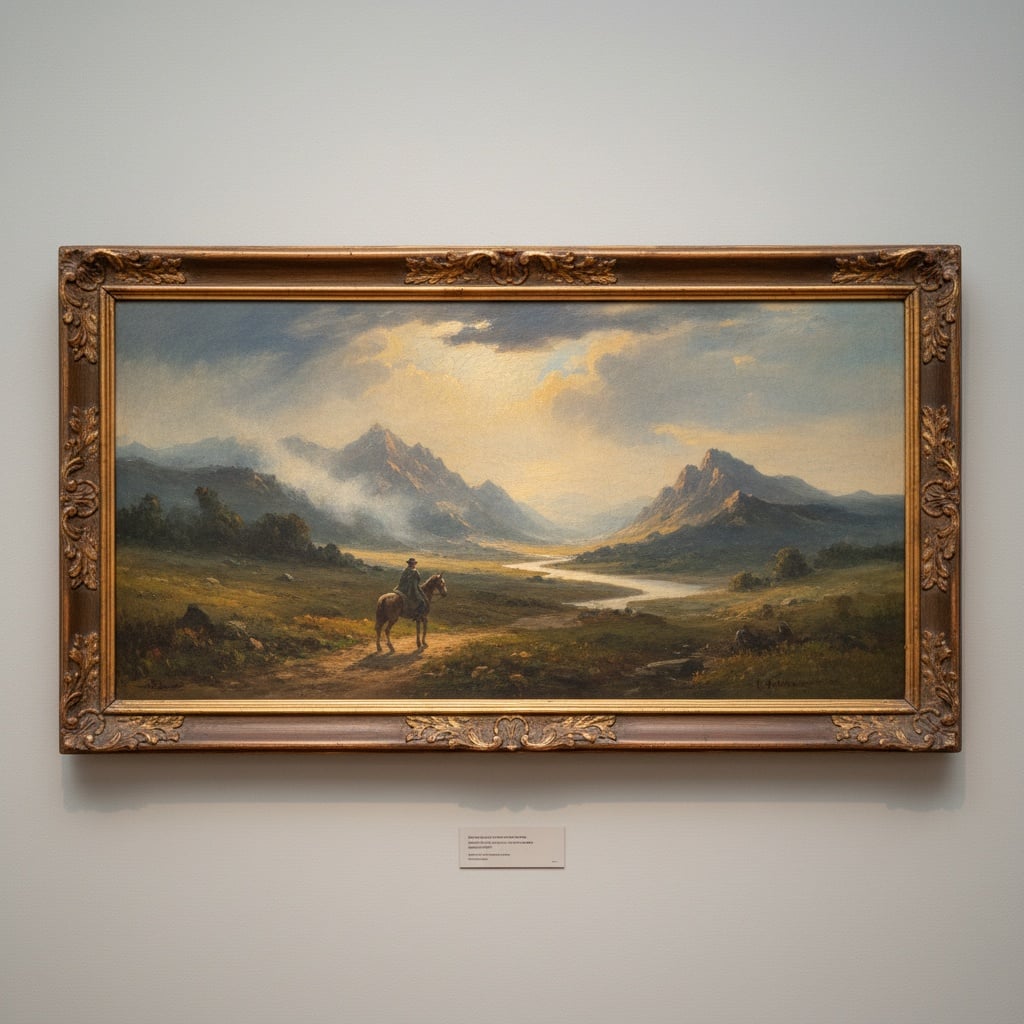
 A rest by the wayside, sunset
Discover 'A Rest by the Wayside, Sunset' by Anthony Vandyke Copley Fielding – a Romantic landscape painting of twilight ruins & river views. Explore its textured oil technique & melancholic beauty.
Fielding’s artistic output was remarkably prolific, particularly within the realm of watercolour. He wasn't merely a recorder of landscapes; he was an interpreter, imbuing his scenes with a sense of tranquility and poetic beauty. His move to London in 1810 marked a turning point, securing his association with the Old Water-colour Society – initially as an associate member, then full membership in 1813. This affiliation provided a platform for exhibiting his work and establishing himself within the artistic community. However, it was his relentless dedication to capturing the essence of the British countryside that truly defined his career.
He embarked on numerous journeys throughout England, revisiting Wales repeatedly, drawn back by its majestic mountains, shimmering lakes, and picturesque villages. Works like ‘Figures Conversing In A Highland Landscape’ exemplify this devotion – a serene depiction of rural life bathed in muted tones and atmospheric depth. Fielding wasn't interested in grand, dramatic vistas; instead, he focused on intimate scenes, capturing the quiet moments of everyday existence harmoniously integrated with nature. This focus resonated with a growing public appetite for landscapes that evoked feelings of nostalgia, peace, and spiritual connection.
Fielding's Technique and Style: Brushwork, Atmosphere, and Romantic Ideals
Anthony Vandyke Copley Fielding (22 November 1787 – 3 March 1855), commonly called Copley Fielding, was an English painter born in Sowerby, near Halifax, and famous for his watercolour landscapes. At an early age Fielding became a pupil of John Varl...
The hallmark of Fielding’s style lies in his masterful manipulation of watercolour – a medium demanding both precision and spontaneity. He possessed an exceptional ability to layer washes of colour, creating subtle gradations of light and shadow that conveyed depth and atmosphere. Unlike some contemporaries who favoured bold, impasto brushwork, Fielding employed a delicate touch, building up textures through meticulous layering and glazing. This technique resulted in paintings characterized by luminosity and a sense of ethereal beauty.
His oil paintings, though less numerous than his watercolours, demonstrate a similar sensitivity to light and colour, often featuring textured surfaces that echo the atmospheric effects achieved in his watercolour work – as seen in ‘A Rest by the Wayside, Sunset’. Fielding’s compositions are typically balanced and harmonious, eschewing dramatic contrasts in favour of subtle tonal variations. He skillfully employed compositional devices such as receding pathways and distant horizons to create a sense of depth and draw the viewer into the scene. More than technical skill, however, Fielding infused his work with the core tenets of Romanticism – an appreciation for nature’s sublime beauty, a celebration of emotional experience, and a yearning for tranquility.
Recognition and Legacy: From the Old Water-colour Society to Modern Appreciation
Fielding's dedication didn’t go unnoticed. His election as President of the Old Water-colour Society in 1831 – a position he held until his death – solidified his standing within the art world. This appointment reflected not only his artistic talent but also his administrative skills and commitment to promoting watercolour painting. A significant moment came with his gold medal win at the Paris Salon of 1824, shared alongside Richard Parkes Bonington and John Constable—a testament to his international recognition.
Despite critical voices occasionally dismissing his work as formulaic, Fielding enjoyed widespread popularity during his lifetime, catering to a growing market for landscape art. His paintings were admired for their technical proficiency, serene beauty, and accessibility. Today, Fielding’s legacy continues to resonate with collectors and art enthusiasts alike. His works are held in prestigious institutions such as the Victoria and Albert Museum, serving as enduring reminders of his contribution to British Romantic painting. The engravings based on his work further disseminated his style, influencing generations of artists.
Key Works & Themes: Exploring ‘Loch Katrine’, ‘A Rest by the Wayside’, and Beyond
Examining key works like ‘Loch Katrine’ reveals Fielding's ability to capture the majestic beauty of Scotland’s iconic loch. The painting is not simply a topographical representation; it’s an evocation of atmosphere, conveying the stillness of the water, the ruggedness of the surrounding mountains, and the sense of solitude that permeates the landscape. Similarly, ‘A Rest by the Wayside, Sunset’ offers a melancholic beauty – twilight ruins framing a tranquil river view, rendered with textured oil technique. These paintings are united by recurring themes: the harmony between humanity and nature, the passage of time, and the search for spiritual solace.
Fielding consistently returned to these motifs throughout his career, refining his technique and deepening his emotional connection to the landscape. His landscapes weren’t merely depictions of places; they were expressions of feeling – a yearning for peace, a celebration of beauty, and a profound respect for the natural world. Through works like these, Anthony Vandyke Copley Fielding secured his place as a master of Romantic landscape painting, offering viewers a glimpse into a world where tranquility reigns supreme.
Susiję straipsniai

George Goodwin Kilburne: Capturing Victorian Sentimentality Through Genre Painting
Explore the evocative Victorian paintings of George Goodwin Kilburne. Discover his detailed scenes of domestic life, masterful use of light, and lasting impact on British genre painting. Learn more at ArtsDot.


Thomas Girtin: Pioneering Atmospheric Landscapes & the Rise of Romantic Watercolour
Explore the captivating world of Thomas Girtin, a pioneer of Romantic watercolour painting. Discover his innovative techniques, key masterpieces & lasting influence on British art history. Learn about collecting Girtin's work today.

James Netherlands: Bridging Romanticism & Realism in 19th-Century Art
Explore the captivating art of James Netherlands (1799-1870). Discover his stunning Venetian scenes & landscapes, bridging Romanticism and Impressionism. Learn about his technique, legacy, and key works like 'Rotterdam' at ArtsDot.

James Baker Pyne: Navigating Victorian Topography & Sentiment Through Watercolour – A Reassessment
Explore the captivating landscapes of James Baker Pyne, a Victorian master influenced by Turner. Discover his serene river scenes, atmospheric paintings & artistic evolution. Learn about this rediscovered artist and find fine art reproductions at ArtsDot.

Albert Goodwin: Capturing Victorian Light & Atmosphere – A Study in Landscape Painting
Explore the captivating landscapes of Albert Goodwin (1845-1932), a celebrated Victorian watercolourist influenced by Turner & Ruskin. Discover his techniques, prolific collection, and lasting legacy in British art history.

