


 Peržiūrėti realybėje
 Pasidalinti
 Dalintis
 Išsamiau

 Atsisiųsti
 Panašūs eksponatai
 Rentgeno nuotrauka
 Automatinė diorama
Įmonės Ferdinando I


 Skaityti daugiau
Rankų darbo aliejinės reprodukcijos
Rankiniu būdu tapytas aliejus ant droblio jūsų pageidaujamame dydį ir rėmuose – mūsų menininkų darbas pagal užsakymą. ( Perejti prie spausdinimo Perjungti į vaizdą)




P118B $10

P118H $10

P118W $10

P438Z $10

P508JH $12

P508YH $12

P805H $10

P805Z $10

P919BZ $10

P919G $10

P919XJ $10

P959ZH $10

P968JZ $12

W106C $8

W218G $10

W218JH $8

W218Y $10

W307PJ $10

W316G $10

W316PJ $8

W316Y $10

W398PJ $8

W4111J $10

W500HY $15

W500JH $15

W692G $12

W849H $8

W940BG $15

W953PJ $8




Pasirinkite iš mūsų nustatytų dydžių, atitinkančių originalaus meno kūrinio proporcijas.

Galite įvesti savo matmenis, kad jie atitiktų konkretų rėmą ar erdvę. Jei pasirinktas dydis neatitinka originalaus paveikslėlio proporcijų, mes arba apkropsime meno kūrinį, arba papildysime tapybą rankomis dažytい elementais. Prieš pradėdami gamybą, jūsų patvirtinimui atsiųsime skaitmeninį maketą.
Atkreipkite dėmesį, kad ekrane rodomas vaizdas neatspindi tikrojo apkarpymo ar papildymo. Tik maketas tiksliai parodys galutinę kompoziciją.
Nors galima rinktis ir individualius dydžius, rekomenduojame pasirinkti matmenis iš nustatytos sąrašo, kad būtų išlaikytos originalios proporcijos.
Gavus užsakymą, ArtsDot.com komanda susisieks su klientu el. paštu dėl instrukcijų ir pateiks maketo pavyzdį.
Pristatymas visame pasaulyje () per 3–4 savaites, o ne įprastai – per 5 savaites. (8 rugpjūtis). Kokybė lieka nepakeičiama.

Nemokamas greitasis pristatymas visame pasaulyje

Aukštos kokybės lininis drobė

Pilnas siuntimo draudimas

Muitinės mokesčių grąžinimo garantija

Tikro spalvų atitikimo garantija

60 dienų grąžinimo politika (tik esant gamyklinėms defektams)

100% pinigų grąžinimo garantija

Nuolaida už kelias reprodukcijas
 Stiklo variantas prieinamas tik pasirinkus dydį iki 110 cm

Įmonės Ferdinando I
Reprodukcijos technika
Reprodukcijos matmenys
-


Galutinė kaina
$ 263
Kūrinio aprašymas
Emperor Ferdinand I – A Salzburg Renaissance Masterpiece
Hans the Elder Bocksberger (c. 1510 – before 1569), born in Salzburg, Austria, stands as a pivotal figure within Salzburg’s burgeoning artistic landscape during the High Renaissance and early Mannerism periods. Though overshadowed by his younger brother, Hans Holbein the Younger—a celebrated artist who achieved international renown—Hans Bocksberger nonetheless cemented his place in art history through commissions that adorned noble residences and churches across Bavaria and Austria. His familial legacy instilled a deep understanding of humanist ideals and stylistic conventions prevalent throughout Europe at the time – Salzburg’s Protestant Reformation fostering an environment where innovative ideas could flourish alongside established religious iconography.- Subject Matter: The portrait depicts Emperor Ferdinand I, capturing him in a dignified pose against a dark background that emphasizes his presence as the focal point of the artwork.
- Style & Technique: Executed in oil on paper mounted on wood, this piece embodies the Renaissance aesthetic—characterized by meticulous detail and realistic representation. Bocksberger’s masterful brushwork skillfully renders textures and contours, conveying a palpable sense of depth and luminosity.
Historical Context – Salzburg Under Reformation Influence
Salzburg's Protestant Reformation profoundly impacted artistic patronage, shifting away from opulent Catholic commissions towards projects reflecting humanist values and intellectual curiosity. This transformative period encouraged artists like Bocksberger to explore innovative approaches—particularly in portraying influential figures with nuanced psychological insight. The Habsburg dynasty’s commitment to sponsoring the arts ensured Salzburg remained a vibrant center of cultural production during this era.Symbolism & Composition – A Portrait of Power and Dignity
The dark background serves as a dramatic counterpoint to Ferdinand I's pale skin tone, highlighting his regal stature and reinforcing the portrait’s symbolic significance. The Emperor’s attire—a black hat adorned with a feather—represents nobility and authority, reflecting the social hierarchy prevalent in 16th-century Austria. Furthermore, the medals pinned to his chest symbolize military achievements and royal honors – tangible emblems of Ferdinand I's reign.Artist Recognition & Legacy
Signed “Hans The Elder Bocksberger” at the bottom right corner, this artwork testifies to Bocksberger’s professional reputation during his lifetime. His collaboration with Ludwig Refinger and Hermann Posthumus on monumental projects like Neuburg Castle and Landshut Residenz cemented his place as a cornerstone of Salzburg's artistic heritage—a testament to humanist ideals blended seamlessly with technical brilliance. The Kunsthistorisches Museum in Vienna houses this remarkable reproduction, ensuring its enduring presence within the global art canon.A Reproduction Worth Admiring
This high-quality giclee print captures the essence of Bocksberger’s artistic vision—a celebration of humanist ideals and masterful execution. Offered by ArtsDot.com, this reproduction allows you to bring a piece of Salzburg's Renaissance splendor into your home or office. Explore our curated collection today!panašūs kūriniai


Autoriaus biografija
The Salzburg Renaissance Visionary
In the heart of sixteenth-century Salzburg, amidst a landscape of profound cultural transition, lived an artist whose brush captured the very essence of the High Renaissance and the burgeoning Mannerist style. Hans the Elder Bocksberger, born around 1510, emerged from a lineage of significant artistic talent, inheriting both technical rigor and a deep-seated creative spirit from his father, Ulrich Bocksberger. While history occasionally casts a long shadow over his work through the international fame of his younger brother, Hans Holbein the Younger, the elder Bocksberger carved out a legacy that was uniquely his own, deeply rooted in the aristocratic and ecclesiastical landscapes of Bavaria and Austria.A Master of Detail and Humanist Expression
Bocksberger’s artistry was defined by an exquisite attention to detail and a seamless integration of humanist ideals into his compositions. His work often bridged the gap between the structured elegance of the High Renaissance and the more expressive, fluid grace of early Mannerism. This mastery is perhaps most strikingly evident in his portrait of Emperor Ferdinand I, executed circa 1550-55. In this piece, Bocksberger utilized oil on paper mounted on wood to achieve a breathtaking interplay of light and shadow. The meticulous rendering of the Emperor’s features—the furrowed brow and the piercing gaze—demonstrates a sophisticated grasp of psychological realism, while the opulent textures of fur-lined robes and feathered headwear speak to the grandeur and authority of his subject.Architectural Grandeur and Lasting Influence
Beyond individual portraits, Bocksberger was a master of decorative painting, possessing a rare ability to transform architectural interiors into immersive spiritual and worldly experiences. He excelled in creating spaces of grandeur, where his hand could be seen transforming cold stone into vibrant narratives. His most significant contributions include:- The Schlosskapelle Neuburg, where his frescoes captured the essence of humanist ideals through idealized figures and harmonious compositions;
- The Great Hall at Goldegg Castle near Radstatt, a space where his vision brought forth a breathtaking panorama of color and texture;
- The Residenz in Landshut, where he collaborated with contemporaries like Ludwig Refinger and Hermann Posthumus to create an impressive architectural ensemble.

hans the elder bocksberger
1510 - 1569 , Austria
Trumpa informacija
- Artistic Movement Or Style: Renaissance
- Artists Or Movements Influenced By This Artist: ['European Portraiture']
- Artists Who Influenced This Artist: ['Hans Holbein the Younger']
- Date Of Birth: ca. 1510
- Full Name: Hans the Elder Bocksberger
- Nationality: Austrian
- Notable Artworks: ['Emperor Ferdinand I']
- Place Of Birth: Salzburg, Austria
Susiję straipsniai

The Enduring Legacy of Oil Paint: Technique, History & Emotional Resonance in Western Art
Explore the rich history & techniques of oil painting! Discover Renaissance masters, scientific principles behind color, and emotional resonance in art. Learn about glazing, layering, and atmospheric perspective – a guide for enthusiasts & collectors.

Hans Holbein the Younger: A Renaissance Portraitist's Mastery of Realism & Psychological Insight
Explore the life & art of Hans Holbein the Younger, a Renaissance master renowned for his strikingly realistic portraits and psychological insight. Discover iconic works like 'The Ambassadors' and delve into his lasting legacy.

The Digital Portrait Renaissance: Transforming Personal Photography into Timeless Oil Paintings Through Artistic Reproduction
Transform your cherished photos into timeless oil paintings with ArtsDot's expert artists. Museum-quality reproductions & custom portraits, crafted to last a lifetime. Discover the art of personal legacy.

Oil on Canvas Masters: 10 Paintings That Redefined Art History |
Journey through art history with our guide to 10 legendary oil on canvas masterpieces! Explore iconic works by Van Gogh, Monet & Rembrandt. Find museum-quality reproductions and elevate your home decor at . Discover all masterpieces online.
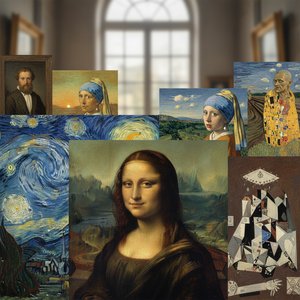
Top 10 Oil Paintings That Revolutionized Art History |
Journey through art history with our Top 10 oil paintings! Explore iconic works by Van Gogh, Monet & Rembrandt. Discover timeless masterpieces and find museum-quality reproductions for your home at .


