


 Peržiūrėti realaus dydžio版
 Siųsti
 Dalintis
 Išsamiau
 Gidas
Gidas

 Atsisiųsti
 Panašūs eksponatai
 Rentgeno spindulių nuotrauka
 Diaporama
 Statistika
"A Carnival Evening" - Švenčiausios nakties vakaras
 Aliejus ant drobės
- Sieninis menas
- Surrealist Expressionism
 1885
1885- XIX amžius
 117.0 x 90.0 cm
 Philadelphia Art Museum
 Rodyti daugiau
Rankų darbo aliejinės reprodukcijos
Rankiniu būdu tapytas aliejus ant droblio jūsų pageidaujamame dydį ir rėmuose – mūsų menininkų darbas pagal užsakymą. ( Perjungti į spausdinimą Perejti prie skaitmeninių vaizdų)




P118B $10

P118H $10

P118W $10

P438Z $10

P508JH $12

P508YH $12

P805H $10

P805Z $10

P919BZ $10

P919G $10

P919XJ $10

P959ZH $10

P968JZ $12

W106C $8

W218G $10

W218JH $8

W218Y $10

W307PJ $10

W316G $10

W316PJ $8

W316Y $10

W398PJ $8

W4111J $10

W500HY $15

W500JH $15

W692G $12

W849H $8

W940BG $15

W953PJ $8




Pasirinkite iš mūsų nustatytų dydžių, atitinkančių originalaus meno kūrinio proporcijas.

Galite įvesti savo matmenis, kad jie atitiktų konkretų rėmą ar erdvę. Jei pasirinktas dydis neatitinka originalaus paveikslėlio proporcijų, mes arba apkropsime meno kūrinį, arba papildysime tapybą rankomis dažytい elementais. Prieš pradėdami gamybą, jūsų patvirtinimui atsiųsime skaitmeninį maketą.
Atkreipkite dėmesį, kad ekrane rodomas vaizdas neatspindi tikrojo apkarpymo ar papildymo. Tik maketas tiksliai parodys galutinę kompoziciją.
Nors galima rinktis ir individualius dydžius, rekomenduojame pasirinkti matmenis iš nustatytos sąrašo, kad būtų išlaikytos originalios proporcijos.
Gavus užsakymą, ArtsDot.com komanda susisieks su klientu el. paštu dėl instrukcijų ir pateiks maketo pavyzdį
Pristatymas visame pasaulyje () per 3–4 savaites, o ne įprastai – per 5 savaites. (25 rugsėjis). Kokybė lieka nepakeičiama.

Nemokamas greitasis pristatymas visame pasaulyje

Aukštos kokybės lininis drobė

Pilnas siuntimo draudimas

Muitinės mokesčių grąžinimo garantija

Tikro spalvų atitikimo garantija

100 dienų grąžinimo politika (tik esant įtaigoms)

100% pinigų grąžinimo garantija

Nuolaida dideliems užsakymams
 Stiklo variantas prieinamas tik pasirinkus dydį iki 110 cm

"A Carnival Evening" - Švenčiausios nakties vakaras
Reprodukcijos technika
Reprodukcijos dydis
-


Visų pasirinktų variantų kaina
$ 263
Henri Rousseau: A Vision of Untouched Paradise
Henri Emile Rousseau (1875 – 1933) remains one iš France’s most distinctive painters—a figure who defied the conventions of Impressionism and Post-Impressionism to forge a singular artistic path. His canvases depict fantastical landscapes populated by animals and humans rendered with childlike simplicity and vibrant color palettes, transporting viewers into dreamlike realms brimming with symbolic resonance. Rousseau's upbringing in Lyon instilled in him a deep appreciation for the natural world and folklore—influences that would profoundly shape his visual language. Despite facing considerable skepticism from critics of his time—who dismissed his style as amateurish—Rousseau persevered, establishing himself as one of France’s most celebrated Naïve artists and securing a place among the pioneers of Modern Art.The Enchanting Style of Primitivism
Rousseau's artistic approach was radically different from that of his contemporaries. Rejecting formal academic training, he developed a highly personal visual language characterized by meticulous detail—particularly in rendering foliage and fabric—combined with flattened perspective and an almost childlike simplicity. This deliberate departure from convention wasn’t a lack of skill; rather, it was a conscious choice—a profound affirmation of the untamed beauty of nature and a rejection of artificiality. His canvases capture not merely what he sees but how he *feels*, conveying emotion through stylized forms and evocative imagery that transcends literal representation. This distinctive style—known as Primitivism or Naïve Art—became his trademark, distinguishing him from the polished surfaces and intellectual concerns of Impressionism.“A Carnival Evening”: Decoding Symbolism
Rousseau’s masterpiece, “A Carnival Evening,” painted in 1885, exemplifies this artistic ethos perfectly. Currently housed at the Philadelphia Museum of Art, the painting depicts a nocturnal scene featuring two figures strolling along a path through a dense forest under a luminous moon—a composition that immediately draws viewers into an atmosphere of mystery and contemplation. The inclusion of a hot air balloon populated by shadowy figures adds to the unsettling beauty of the piece—symbolizing aspiration, escape from earthly constraints, or perhaps a detachment from reality itself. Conversely, the dark forest represents the unknown, the subconscious, and potentially, isolation—themes that resonate deeply within Rousseau’s oeuvre. Furthermore, the moon casts its gentle glow upon the scene, amplifying the painting's enigmatic aura and inviting viewers to ponder the complexities of human experience.Oil Paint Technique & Texture
Rousseau’s technique—primarily oil paint on canvas—contributes significantly to the artwork’s emotional impact. He employed a layering process that created rich colors and detailed rendering—a masterful demonstration of artistic skill despite Rousseau's lack of formal training. Notably, he achieved remarkable textural effects through careful brushwork—creating surfaces that appear both luminous and tactile. This meticulous attention to detail underscores Rousseau’s unwavering commitment to capturing the essence of his subjects—translating visual observation into a profound expression of feeling. The resulting artwork embodies the spirit of Primitivism—a celebration of raw beauty and an uncompromising rejection of academic conventions.Henri Rousseau: Legacy & Influence
Rousseau's influence extends far beyond his own lifetime, shaping subsequent generations of artists who embraced Naïve Art and Surrealism. His pioneering vision challenged established artistic norms—demonstrating that genuine creativity could flourish outside the confines of formal training. Artists like Marc Chagall and Yves Klein drew inspiration from Rousseau’s stylistic innovations—continuing to explore dreamlike landscapes and symbolic imagery with unwavering conviction. Henri Rousseau's enduring legacy serves as a testament to the transformative power of artistic intuition—a reminder that beauty can be found in simplicity, sincerity, and an uninhibited engagement with the natural world.Susiję kūriniai


Autoriaus biografija
Henri Emile Rousseau (1875 – 1933): The Enchanted Vision of Primitive Beauty
Henri Emile Rousseau, born in Lyon, France, in 1875, defied the conventions of Impressionism and Post-Impressionism to forge a singular artistic path—one characterized by an uncompromising embrace of Naïve Art. His canvases depict fantastical landscapes populated by animals and humans rendered with childlike simplicity and vibrant color palettes, transporting viewers into dreamlike realms brimming with symbolic resonance. Rousseau’s upbringing in a working-class family instilled in him a deep appreciation for the natural world and folklore, influences that would profoundly shape his artistic vision. Despite facing considerable skepticism from critics of his time—who dismissed his style as amateurish—Rousseau persevered, establishing himself as one of France's most distinctive painters and securing a place among the pioneers of Modern Art.- Early Life & Artistic Beginnings: Rousseau’s formal artistic training was minimal; he largely self-taught, honing his skills through sketching outdoors and studying prints. He initially pursued commercial illustration work to support himself, but his passion for painting remained unwavering.
- The Influence of Primitive Art: Rousseau's fascination with African masks and tribal art—particularly those collected by Alexandre Cabanel—served as a catalyst for his stylistic evolution. These artworks captivated him with their bold colors, stylized forms, and rejection of academic realism, inspiring him to abandon traditional techniques in favor of a more direct and expressive approach.
- Key Paintings & Artistic Style: Rousseau’s oeuvre is dominated by monumental landscapes infused with mythological elements and populated by animals imbued with spiritual significance. Notable works include “The Sleeping Venus” (1890), “The Promised Land” (1893), “The Concert” (1897), and “The Shepherdess,” which exemplifies his signature style—characterized by flattened perspectives, luminous colors, and a deliberate blurring of outlines.
- Recognition & Legacy: Despite initial rejection by the Parisian avant-garde, Rousseau gained recognition in 1905 thanks to the patronage of Ambroise Vollard, who championed his work and secured exhibitions at Galerie Bernheim-Jeune. His paintings gradually attracted admirers among artists like Picasso and Matisse, cementing his reputation as a visionary artist whose uncompromising vision anticipated Surrealism.
- Death & Enduring Influence: Rousseau died in Étampes in 1933, leaving behind a legacy of approximately 800 paintings—a remarkable achievement considering his unconventional methods. His distinctive Naïve Art style continues to inspire artists today, demonstrating the enduring power of imagination and the beauty found in unfiltered observation.
Exploring Rousseau’s Palette & Technique
Rousseau's artistic technique was remarkably simple yet profoundly effective. He eschewed meticulous detail, opting instead for bold brushstrokes and vibrant hues—often achieved through layering thin glazes of color onto a toned ground. This method allowed him to capture the essence of his subjects with remarkable immediacy and luminosity, conveying emotion and atmosphere as much as visual representation. His use of complementary colors—such as reds and greens—created striking contrasts that heightened the dramatic impact of his compositions. Furthermore, Rousseau’s deliberate flattening of perspective—a technique borrowed from African art—reinforced the dreamlike quality of his landscapes and contributed to their captivating allure.
henri emilien rousseau
1875 - 1933
Trumpa informacija apie kūrėją
- Artistic Movement Or Style: Naive Art
- Artists Or Movements Influenced By This Artist: ['Symbolism']
- Artists Who Influenced This Artist:
- Gustave Moreau
- Pierre Puvis de Chavannes
- Date Of Birth: 1875
- Full Name: Henri Émile Rousseau
- Nationality: French
- Notable Artworks:
- A Carnival Evening
- War or The Ride of Discord
- Fantasia de mariage
- Place Of Birth: Nancy, France
Susiję straipsniai
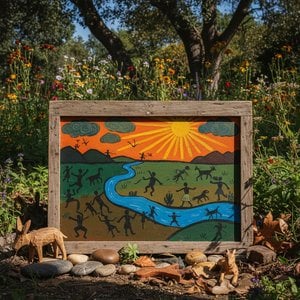
The Untamed Vision: Exploring Naïve Art & Primitivism's Rejection of Convention
Explore the revolutionary world of Naïve Art & Primitivism! Discover how artists challenged academic traditions with raw emotion & unique styles. Learn about Picasso, Rousseau & more at ArtsDot.

Henri Matisse: 25 Šedevrai, Apipinti Spalvomis | ArtsDot.lt
Atraskite 25 įspūdingiausius Henri Matisse šedevrus! Sužinokite apie Fauvizmą, spalvų magiją ir prancūzų dailininko kūrybos istorijas. Meno reprodukcijos jūsų interjerui – ArtsDot.com
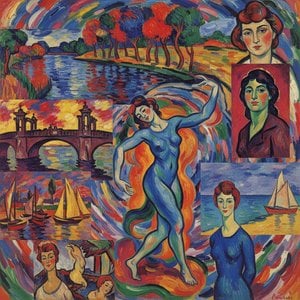
Fauvism's Boldest Visions: 10 Masterpieces That Revolutionized Modern Art | ArtsDot
Explore 10 Fauvist masterpieces by Matisse, Derain & Vlaminck that ignited Modern Art! Discover bold colors, expressionist landscapes & the history of this revolutionary movement. Find museum-quality prints at ArtsDot.com.

The Unconventional Vision: Exploring the Characteristics, History & Enduring Appeal of Naïve Art
Explore the captivating world of naïve art! Discover its history, characteristics, key artists & collecting tips from ArtsDot's experts. Find your perfect piece today.

Henri Rousseau: Primitivism, Paradox & Subversion of Academic Tradition
Explore the captivating world of Henri Rousseau, the celebrated Naïve artist who challenged academic traditions with his unique jungle scenes & dreamlike symbolism. Discover his lasting influence on modern art and collecting today.

