


 Peržiūrėti realaus dydžio版
 Siųsti
 Dalintis
 Išsamiau
 Vadovas

 Atsisiųsti
 Panašūs eksponatai
 Rentgeno spindulių nuotrauka
 Diaporama
 Statistika
schiele.four-trees

 Rodyti daugiau
Rankų darbo aliejinės reprodukcijos
Rankiniu būdu tapytas aliejus ant droblio jūsų pageidaujamame dydį ir rėmuose – mūsų menininkų darbas pagal užsakymą. ( Perjungti į spausdinimą Perejti prie skaitmeninių vaizdų)




P118B €10

P118H €10

P118W €10

P438Z €10

P508JH €12

P508YH €12

P805H €10

P805Z €10

P919BZ €10

P919G €10

P919XJ €10

P959ZH €10

P968JZ €12

W106C €8

W218G €10

W218JH €8

W218Y €10

W307PJ €10

W316G €10

W316PJ €8

W316Y €10

W398PJ €8

W4111J €10

W500HY €15

W500JH €15

W692G €12

W849H €8

W940BG €15

W953PJ €8




Pasirinkite iš mūsų nustatytų dydžių, atitinkančių originalaus meno kūrinio proporcijas.

Įveskite jums reikiamą plotį ir aukštį, kad paveikslas atitiktų jūsų rėmą ar sieną. Kadangi šis darbas yra rankinio darbo, siekiant išgauti kitokio formos dydį, paveikslas gali būti šiek tiek didesnis (nuo kraštų bus palikta daugiau erdvės) arba mažesnis – pasirinkite jums patogiausią variantą. Prieš pradedant tapyti, atsiųsime jums skaitmeninį maketą patvirtinimui. Šioje puslapio nuotraukoje matomas vaizdas nėra galutinis rezultatas – jį parodys tik sukurtas maketas.
Gavus užsakymą, ArtsDot.com komanda susisieks su klientu el. paštu dėl instrukcijų ir pateiks maketo pavyzdį
Pristatymas visame pasaulyje () per 3–4 savaites, o ne įprastai – per 5 savaites. (23 spalis). Kokybė lieka nepakeičiama.

Nemokamas greitasis pristatymas visame pasaulyje

Aukštos kokybės lininis drobė

Pilnas siuntimo draudimas

Muitinės mokesčių grąžinimo garantija

Tikro spalvų atitikimo garantija

100 dienų grąžinimo politika (tik esant įtaigoms)

100% pinigų grąžinimo garantija

Nuolaida dideliems užsakymams
 Stiklo variantas prieinamas tik pasirinkus dydį iki 110 cm

schiele.four-trees
Reprodukcijos technika
Reprodukcijos dydis
-


Visų pasirinktų variantų kaina
€ 231
A Study in Twilight: Egon Schiele’s ‘Four Trees’
Egon Schiele (1890 – 1918), a titan of Expressionism, relentlessly pursued an artistic vision defined by visceral emotion and unsettling beauty. Born in Tulln an der Donau amidst profound personal tragedy—the untimely death of his father due to syphilis—Schiele's formative years instilled within him a preoccupation with mortality that would permeate throughout his oeuvre. Raised initially under the watchful eye of his mother, followed by guardianship from Leopold Czihaczek, his childhood lacked conventional stability yet nurtured an unwavering independence and a burgeoning talent for drawing, despite initial disapproval from his father who viewed it as a distraction from more pragmatic pursuits. The devastating loss of his sister Elvira further solidified Schiele’s artistic trajectory, propelling him toward explorations of vulnerability and psychological depth.The Painting's Essence: Expressionist Lineage
‘Four Trees,’ painted in 1917 during a period marked by significant upheaval—the looming shadow of World War I—exemplifies Schiele’s signature style. Rooted firmly within the Expressionist movement, this artwork abandons representational accuracy for emotive intensity. Gustav Klimt, Schiele's mentor and fellow innovator, championed a bold approach to painting that prioritized conveying inner feelings over depicting external reality. Like Klimt, Schiele utilized thick impasto—a technique involving applying paint in heavy layers—creating textured surfaces that amplify the visual drama of the scene. The artist’s distinctive line work – characterized by jagged contours and restless energy – dominates the composition, capturing not just the form of the trees but also their underlying tension and vulnerability.Visual Narrative: Trees Against a Crimson Sky
The painting depicts four trees silhouetted against a fiery sunset sky ablaze with shades of crimson and orange. Schiele’s meticulous attention to detail—particularly in rendering the branches and foliage—contrasts sharply with the simplified forms of the birds perched amongst them. These avian figures, positioned strategically at the top left and right corners, serve as focal points, drawing the viewer's gaze upwards into the expansive expanse of color. The stark juxtaposition between the dark trunks of the trees and the luminous sky underscores Schiele’s preoccupation with duality—life versus death, strength versus fragility—themes that recur throughout his artistic output.Symbolism and Emotional Resonance
Beyond its formal qualities, ‘Four Trees’ resonates deeply with symbolic meaning. The tree itself is a potent emblem of resilience and endurance, yet Schiele presents it in a state of precariousness, mirroring the anxieties of the era. The sunset—often associated with endings and transitions—further amplifies this sense of melancholy. The birds represent freedom and aspiration, albeit viewed from a position of confinement within the branches. Taken together, these elements evoke a profound contemplation on existence itself – a confrontation with mortality and an acknowledgement of beauty amidst suffering.A Legacy of Intensity
‘Four Trees’ stands as a testament to Schiele's unwavering commitment to expressing raw emotion through uncompromising artistic vision. Its enduring appeal lies in its ability to capture the unsettling grandeur of nature alongside the pervasive awareness of human vulnerability. A reproduction of this masterpiece offers not merely an image but an invitation into Schiele’s world—a realm where beauty and terror coexist, prompting viewers to confront fundamental questions about life, death, and the sublime.问答 (or more naturally for a website heading): Klausimai ir atsakymai
Iš kokios šalies kilęs Expressionism kūrinys „schiele.four-trees“?
Expressionism stiliaus kūrinys „schiele.four-trees“ sukurtas menininko, gimęs Austrija.
Ką „schiele.four-trees“ turi bendro su kitais Egon Šylė kūriniais?
„schiele.four-trees“ kartu su kitais Egon Šylė kūriniais pasižymi Expressionism stiliumi ir toms pačioms temoms: austrian expressionist style, symbolic representation, grief, personal trauma, mortality, schiele’s recurring motif, psychological intensity.
Kokia yra „schiele.four-trees“, autorius – Egon Šylė švytėjimo intensyvumas?
Įrašytas kūrinio „schiele.four-trees“, autorius – Egon Šylė šviesumas yra Soft Shadow.
Susiję kūriniai


Autoriaus biografija
Egon Schiele
Austrijos pozicija dviejų pasaulinio karo horizonte buvo labai abejojanti: vienu metu ji buvo šiek tiek iš Šiaurės į rytus, lengvai įsitikinusi veiksmų vyrai. Mažėjęs šalis po 1918 m., beveik visiškai neišplitusi tarptautiniu pasauliu buvo lengvai įvykdinta Hitlerio Reichui 1938 m.; meno srityje tai reiškė kad modernizmo istorija buvo išvykstanti nuo Šiaurės iki pietų, su pagrindiniu dėmesiu į formą. Vokelių šiek tiek pripažino ekspresionizmą kaip svarbų meno srovę; jis buvo vienas iš žymiausius austrių artistas XX amžiaus pradžioje – kartu su Gustavu Klimtu ir Oskar Kokoschka išvykę į Vieną buvo laikomas vienu iš Žyduvo šimtmečio svarbiausių vizualinių menininkų.
Gyvenimas
Egonas Šylė gimė 1890 m. vasario 3 d. Tulne, Austrijoje. Jo tėvas Adolfas Šylė buvo Tulno geležinkelio stoties direktorius ir gimė 1851 m. Vienoje Adolfo Šyly tevai turėjo tris jaunesnes seseris: Elvirą, Melaniją ir Gertrūdą. Elvira mirė vaikyste dėl gimtinių sifiliso. Jo tėvas buvo užsikrėtęs sifiliu įsimėlynėje savo jaunystės metais po vienos jo naujosios žmonos išėjimo iš kambario.
Meno vystymasis
Šylė mokytojo Christian Griepenkerl įtaką išgyveno Vienoje 1907 m. ir G. Klimtas tapo jo svarbiu rėmėju. Šylė paliko akademiją 1906 m., nes jos mokymo metodai buvo labai konservatyvus, ir įkūrė Naują austrių dailės grupę 1909 m. Grupėje vyravo ekspresionistinė estetika, kuri iššūkiant šiuolaikinėms kultūros normas.
Žymūs kūriniai
Šylė buvo vienas iš žymiausius austrių artistas XX amžiaus pradžioje – kartu su Gustavu Klimtu ir Oskar Kokoschka išvykę į Vieną buvo laikomas vienu iš Žyduvo šimtmečio svarbiausių vizualinių menininkų. Šylė buvo ekspresionizmo meno srovės atstovas.
Žymūs veiksniai
Šylė buvo žinomas dėl savo iššūkiantį įžiūrą į pasaulio problemas ir šiuolaikinę estetika, kuri iššūkiant šiuolaikinėms kultūros normas. Šylė buvo ekspresionizmo meno srovės atstovas.

Egon Šylė
1890 - 1918 , Austrija
Trumpa informacija apie kūrėją
- Artistic Movement Or Style: Ekspresionizmas
- Artists Who Influenced This Artist: ['Gustavas Klimtas']
- Date Of Birth: 1890 m.
- Date Of Death: 1918 m.
- Full Name: Egon Schiele
- Nationality: Austras
- Notable Artworks:
- Savęs portretas su fizižalis
- Porą įemčianti
- Žemės apėjimų kraštovaizdis
- Place Of Birth: Tulnas, Austrija
Susiję straipsniai

Džono Konsteblio Šedevrai: 25 Išskirtiniai Darbai Jūsų Interjerui | ArtsDot
Atraskite 25 įspūdingiausius Džono Konsteblio paveikslus! Romantizmo meistro gamtos vaizdai, Dedham Vale peizažai ir meno istorijos šedevrai. Meno reprodukcijos jūsų interjerui – ArtsDot.com

Evocations of Place: A Historical Journey Through Landscape Art
Explore the rich history of landscape art with ArtsDot. Discover renowned artists, movements like Impressionism & Romanticism, and expert guidance for collecting timeless pieces. Find your perfect serene escape today!
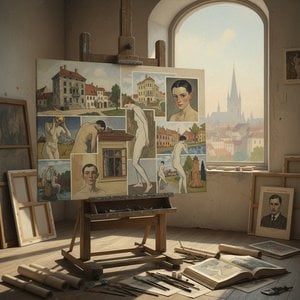
Egon Schiele: 25 Šedevrai, Atspindintys Menininko Sielą | ArtsDot.lt
Atraskite 25 įspūdingiausius Egon Schiele šedevrus! Gilinkitės į ekspresionizmo pasaulį, portretų istorijas ir unikalią menininko spalvų paletę. Aukštos kokybės reprodukcijos interjerui – ArtsDot.lt

Egon Schiele: Expressionism, Anxiety & the Modern Condition – A Comprehensive Exploration
Explore the emotionally charged world of Egon Schiele (1890-1918). Discover his Expressionist masterpieces, psychological themes, and lasting impact on modern art. A comprehensive guide for collectors & enthusiasts.

10 Romantinių Peizažų Simbolių: Tapybos Majestatės Viršūnės
Atraskite 10 legendinių romantinio peizažo kūrinių! Pasinerkite į Claude Lorrain, Caspar David Friedrich ir J.M.W. Turner genijaus pasaulį. Išmokite apie tapybos meistriškumą bei gamtos grožį. Aukščiausios kokybės meno reprodukcijos – ArtsDot.com. Tyrinėkite kolekciją!


