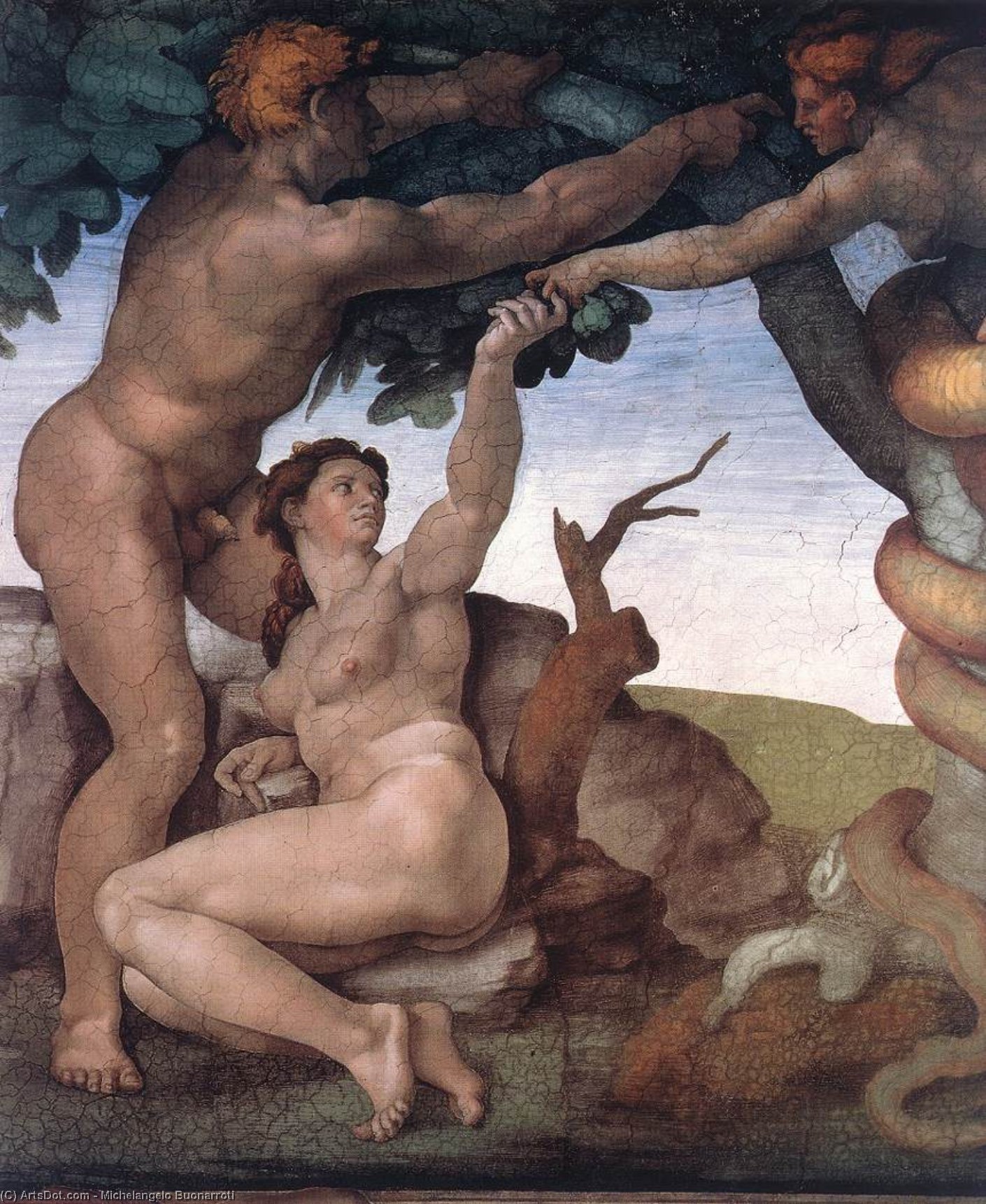
A Moment of Transformation: Michelangelo’s “The Fall”
Michelangelo Buonarroti's "The Fall," a pivotal fresco within the breathtaking panorama of the Sistine Chapel ceiling (Vatican City, Italy), encapsulates one of the most dramatic and enduring narratives in Western art. Painted between 1508 and 1512 as part of a larger series illustrating scenes from the Book of Genesis, this work transcends mere biblical illustration; it is a profound exploration of human nature, temptation, and consequence.
Artistic Context & Renaissance Ideals
“The Fall” exists within the High Renaissance’s fervent embrace of classical ideals and humanist thought. Michelangelo, alongside contemporaries like Leonardo da Vinci and Raphael, sought to depict the human form with unprecedented anatomical accuracy and emotional depth. The Sistine Chapel project itself was a monumental undertaking, commissioned by Pope Julius II, intended to visually proclaim the power and glory of the Church – yet Michelangelo infused it with a deeply personal and psychologically complex vision. This fresco isn’t simply *about* the biblical story; it's an investigation into the very essence of humanity.
Composition & Masterful Technique
The composition is dynamically charged, radiating tension through the intertwined figures of Adam and Eve, and the serpentine form of the tempter. Michelangelo’s mastery of *contrapposto* – a classical technique depicting the human figure in a naturalistic pose with weight shifted to one leg – is evident in both protagonists, lending them a sculptural quality despite being rendered in paint. The vibrant color palette, though somewhat muted by centuries of accumulated grime (and subsequent restoration), originally possessed an intensity that would have dramatically illuminated the chapel’s interior. Michelangelo employed *buon fresco* technique, applying pigment to wet plaster, demanding swift and precise execution – a testament to his extraordinary skill.
Symbolism & Layers of Meaning
Every element within “The Fall” carries symbolic weight. The apple, offered by the serpent, represents forbidden knowledge and temptation. The tree itself can be interpreted as the Tree of Knowledge of Good and Evil, but also alludes to the classical *axis mundi* – a central point connecting heaven and earth. Adam and Eve’s poses—Eve reaching for the fruit, Adam poised to receive it—speak volumes about agency, desire, and the fateful decision that alters the course of human history. The subtle expressions on their faces hint at both anticipation and apprehension, capturing the psychological turmoil of the moment. A fascinating theory suggests the shape surrounding God in “The Creation of Adam” (a neighboring fresco) resembles a human brain, implying Michelangelo linked divine inspiration with intellect – a concept potentially echoed in the consequences of seeking knowledge depicted here.
Emotional Resonance & Lasting Influence
“The Fall” evokes a powerful emotional response. It’s not merely a depiction of sin; it's a poignant portrayal of vulnerability, loss of innocence, and the burden of free will. The painting’s enduring appeal lies in its ability to tap into universal human experiences – temptation, regret, and the search for meaning. Michelangelo’s work profoundly influenced generations of artists, shaping the course of Western art through Mannerism and beyond. His emphasis on anatomical accuracy, dramatic composition, and psychological realism continues to inspire awe and admiration today.
Collecting & Reproductions
- ArtsDot.com offers meticulously crafted, handmade oil painting reproductions of Michelangelo’s “The Fall,” allowing you to bring the power and beauty of this Renaissance masterpiece into your home or office.
- These reproductions capture the intricate details and emotional depth of the original, ensuring a lasting tribute to Michelangelo's genius.
- Ideal for art collectors, interior designers seeking statement pieces, or anyone captivated by the timeless allure of Renaissance art.