„ArtsDot“ logotipas
Parduokite savo kūrybą
      Meniu
      NEMOKAMA MENO KONSULTACIJA
      Apie mus Susisiekite su mumis
          • Pirkti
            Individualūs tapybos užsakymai Personalizuoti meno spausdinai Karo aukcionai Kolekcioneros vadovas: kaip išsirinkti pirmąjį šedevrą な 如何使用艺术复制品装饰家居:指南 Dovanojimų paslaugos Verslo meno dovanų gidas Paverskite savo nuotrauką į paveikslą
            Rinktis pagal kambarį Dekoravimo pagalbininkas: svetainė Dekoravimo pagalbininkas: Miegamasis kambarys Prekės pagal progą Gaukite nemokamų meno rekomendacijų Mano krepšelis Mano duomenys, Favoritai, Užsakymai
          • Menininkai
            Visi autoriai Visi meno rūšiai Pagal meno epochas Pagrimuose kūrybos spalvų tonuose Alphabetine pagal vardą Pag根据 gimimo metais Visi meno rūšiai Visi nuotaudų stiliai Pagal emocinį toną
            Visi pagal gimimo šalis Pagal spalvų intensyvumą Pagal kūrybos periodus Moterų menininkų kilimas Renesanso meistrai Užsakykite kūrybinį darbą šiandien Kaip mes dirbame su privačiais kolekcionieriais Kaip kurti menininko portfofolį įmonėms
          • Kūriniai
            Visi kūriniai Pagal meno kryptis Visi technikos tipai Skaitmeninė technika ir medžiagos Paieška pagal spalvą Išplėstinė spalvų paieška
            Pagal spalvų paletę Visi nuotaudžiai Dovanų pagal progą Pagrimu laikotarpiu Skirstyta pagal temas Tinkamo drobės dydžio parinkimas
          • Technikos ir stiliai
            Visi stiliai Abstraktusis menas Impresionizmas Renesansas Barokas Ekspresionizmas Menas pagal stilių pasirinkimas
            Impresionizmo istorija Nuo baroko iki modernizmo Privatūs stiliaus konsultavimai Visi meno rūšiai Kaip spalva formuoja nuotaiką meno kūriniuose Rinktis meną pagal spalvą Karo judėjimų laiko linija
          • Muziejai
            Visi muziejai Muziejų eksponatai iš viso pasaulis Virtualūs turai: muziejai internete Privatūs muziejų apsilankimai VIP klientams
            Skirstyti pagal šalis Skirstant pagal miestus Pagal meno rūšis
          • Straipsniai
            Visi straipsniai Pagrįsta raktažodžiais Pagal kategorijas Pagal rašymo stilių Pas pagal stilių
            Menų kolekcionavimo prad beginnings Meno kryptių suvokimas Menas namuose: kaip jį eksponuoti Menas kaip investicija
          • Paslaugos
            Apie mus Prenumeruokite mūsų naujienlaiškį DUK / Dažniausiai užduodami klausimai Atsiliepimai Tapybos eksponuoti darbai Tapybos procesas Menų konsultacijų paslauga
            Kūrybos vertinimas Parduokite savo kūrybą Kodėl verta turėti aliejinių paveikslų reprodukcijas Privatūs VIP užsakymai Klientų istorijos Susisiekite su mumis
          • Pradžia
          • Menininkai
          • Donatelo
          • Populiariausi tapiniai
          kolekcineris folio

          Donatelo Populiariausi tapiniai

          Enkystos 25, kurių pagrindą sudaro Donatelo darbai, yra dažniausiai prašomi mūsų lankytojų; jos pateikiamos pagal populiarumą, kartu su kiekvienos rankų darbo reprodukcijos specifikacija ir kaina.

          Leidimas 2026 · 25 kūriniai Kiekvienas vaizdas painkuostas pagal užsakymą
          Lino drobė · Autentiškumo sertifikatas · Siunčiama visai pasaulyje Donatelo · 1386 – 1466

          Madonna and Child between St Francis and St Anthony, 1448, Donatelo

          1448 · Sant'Antonio bazilika, Paduva

          A bronze sculpture of Mary cradling Christ, flanked by two saints under a slender cross, rendered with realistic textures through lost wax casting.

          Peržiūrėti populiariausią Donatelo kūrinį, užimantį 1 vietą: Madonna and Child between St Francis and St Anthony
          Kūrybos kierūnas
          Early Renaissance
          Spalvų paletė
          Earthy
          Peržiūrėti kūrinį

          Cantoria (1439)

          1439 · Museo dell'Opera del Duomo, Firenka · originalinė 348 x 570 cm

          Dancing angels in marble relief leap with rhythmic joy, their limbs intertwined in a celestial celebration of divine energy and movement.

          Peržiūrėti populiariausią Donatelo kūrinį, užimantį 2 vietą: Cantoria
          Kūrybos kierūnas
          Early Renaissance
          Spalvų paletė
          Earthy
          Peržiūrėti kūrinį

          Donatelo: Entombment

          1447 · Sant'Antonio bazilika, Paduva · originalinė 139 x 188 cm

          Experience the emotional intensity of Donatello's Entombment scene from 1447, showcasing early Renaissance drama; bring this masterpiece home today.

          Peržiūrėti populiariausią Donatelo kūrinį, užimantį 3 vietą: Entombment
          Kūrybos kierūnas
          Early Renaissance
          Spalvų paletė
          Earthy
          Technika
          Ranku dažytas aliejus ant lino drobos
          Gaminta
          Užsakyti gali profesionalus dailininkas
          Populiariumas
          3 iš 148 kūrinių autoriaus Donatelo
          Pristatymas
          Visame pasaulyje, apie 5 weeks
          nuo$17528 × 36 cm Užsisakyti šį kūrinį
          Pusė kaip originalas$906139 × 188 cm Užsakyti originalaus dydžio formatu

          Miracle of the Repentant Son (1447), autorius Donatelo

          1447 · Sant'Antonio bazilika, Paduva · originalinė 57 x 123 cm

          Witness Donatello's poignant depiction of the Repentant Son – a bronze masterpiece by Renaissance sculptor Donatello. Explore its symbolism, technique & historical context within this stunning artwork.

          Peržiūrėti populiariausią Donatelo kūrinį, užimantį 4 vietą: Miracle of the Repentant Son
          Kūrybos kierūnas
          Early Renaissance
          Technika
          Ranku dažytas aliejus ant lino drobos
          Gaminta
          Užsakyti gali profesionalus dailininkas
          Populiariumas
          4 iš 148 kūrinių autoriaus Donatelo
          Pristatymas
          Visame pasaulyje, apie 5 weeks
          nuo$17523 × 43 cm Užsisakyti šį kūrinį
          Pusė kaip originalas$35257 × 123 cm Užsakyti originalaus dydžio formatu

          Donatelo kūrinys „Crucifix“, 1412

          1412 · Santa Croce, Florencija · originalinė 168 x 173 cm

          Explore Donatello’s iconic ‘Crucifix’ (1412) – a stunning stained-glass masterpiece showcasing realism & dramatic light. A pivotal Early Renaissance work.

          Peržiūrėti populiariausią Donatelo kūrinį, užimantį 5 vietą: Crucifix
          Kūrybos kierūnas
          Early Renaissance
          Technika
          Ranku dažytas aliejus ant lino drobos
          Gaminta
          Užsakyti gali profesionalus dailininkas
          Populiariumas
          5 iš 148 kūrinių autoriaus Donatelo
          Pristatymas
          Visame pasaulyje, apie 5 weeks
          nuo$22526 × 38 cm Užsisakyti šį kūrinį
          Pusė kaip originalas$1041168 × 173 cm Užsakyti originalaus dydžio formatu

          Annunciation (1435), autorius Donatelo

          1435 · Santa Croce, Florencija · originalinė 218 x 168 cm

          Donatello's "Annunciation" (1435) depicts the pivotal moment of Mary’s conception, showcasing his mastery of classical forms and expressive realism within a richly detailed Renaissance setting.

          Peržiūrėti populiariausią Donatelo kūrinį, užimantį 6 vietą: Annunciation
          Kūrybos kierūnas
          Early Renaissance
          Spalvų paletė
          Earthy
          Technika
          Ranku dažytas aliejus ant lino drobos
          Gaminta
          Užsakyti gali profesionalus dailininkas
          Populiariumas
          6 iš 148 kūrinių autoriaus Donatelo
          Pristatymas
          Visame pasaulyje, apie 5 weeks
          nuo$17526 × 39 cm Užsisakyti šį kūrinį
          Pusė kaip originalas$1209168 × 218 cm Užsakyti originalaus dydžio formatu

          St George (detail), Donatelo

          1416 · Museo Nazionale del Bargello, Firenka

          Marvel at Donatello's iconic 'St. George' sculpture – a dynamic marble masterpiece capturing the saint’s bravery & artistry from Renaissance Florence. Explore its details & legacy!

          Peržiūrėti populiariausią Donatelo kūrinį, užimantį 7 vietą: St George (detail)
          Kūrybos kierūnas
          Early Renaissance
          Spalvų paletė
          Earthy
          Peržiūrėti kūrinį

          Donatelo, Herod's Banquet (1427)

          1427 · Sienos krikščytojų namai, Siena · originalinė 60 x 60 cm

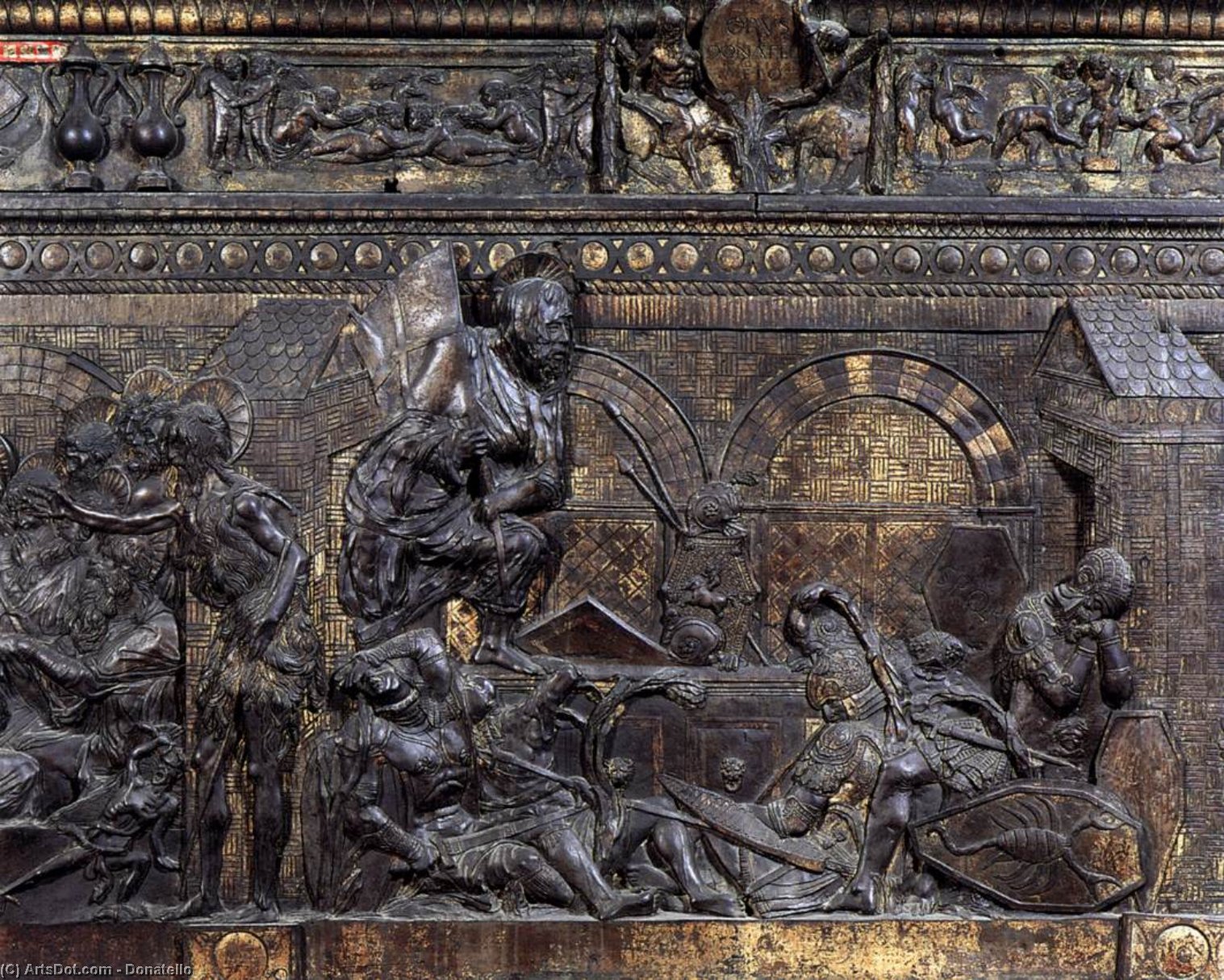
          Donatello's 'Feast of Herod' (1427) is a dramatic bronze relief depicting John the Baptist’s execution. Explore its innovative perspective, emotional intensity & Renaissance artistry.

          Peržiūrėti populiariausią Donatelo kūrinį, užimantį 8 vietą: Herod's Banquet
          Kūrybos kierūnas
          Early Renaissance
          Spalvų paletė
          Earthy
          Peržiūrėti kūrinį

          Donatelo kūrinys „Bearded Prophet“

          1418 · Museo dell'Opera del Duomo, Firenka

          Donatello’s ‘Bearded Prophet,’ created in 1418-20, showcases his revolutionary approach to sculpting nude male figures—a pivotal moment in Renaissance art history. This monumental bronze statue exemplifies classical ideals of beauty and intellect, reflecting Donatello's mastery of technique and artistic vision.

          Peržiūrėti populiariausią Donatelo kūrinį, užimantį 9 vietą: Bearded Prophet
          Kūrybos kierūnas
          Early Renaissance
          Spalvų paletė
          Neutrals
          Peržiūrėti kūrinį

          Donatelo kūrinys „St. John the Evangelist“, 1415

          1415

          This solemn marble sculpture by Donatello captures divine contemplation. Discover the power of this Renaissance masterpiece today.

          Peržiūrėti populiariausią Donatelo kūrinį, užimantį 10 vietą: St. John the Evangelist
          Kūrybos kierūnas
          Renaissance
          Spalvų paletė
          Earthy
          Peržiūrėti kūrinį

          St Mark, 1411, Donatelo

          1411 · Orsanmichele, Florencija

          Donatello's iconic marble sculpture of St. Mark embodies Renaissance artistry & faith. Witness the saint’s contemplative pose within Orsanmichele’s grand Gothic archway – a masterpiece of detail and symbolism.

          Peržiūrėti populiariausią Donatelo kūrinį, užimantį 11 vietą: St Mark
          Kūrybos kierūnas
          Early Renaissance
          Spalvų paletė
          Earthy
          Peržiūrėti kūrinį

          Prophet with Scroll (detail) – Donatelo

          1418 · Museo dell'Opera del Duomo, Firenka

          Donatello's Prophet with Scroll is an iconic Early Renaissance sculpture crafted between 1415-1418. Located within Giotto's Campanile, this monumental marble statue depicts a prophet gesturing towards a scroll of prophecies, showcasing exceptional anatomical accuracy and expressive emotion. Its serene posture and melancholic gaze exemplify Donatello’s mastery of humanist ideals.

          Peržiūrėti populiariausią Donatelo kūrinį, užimantį 12 vietą: Prophet with Scroll (detail)
          Kūrybos kierūnas
          Early Renaissance
          Spalvų paletė
          Neutrals
          Peržiūrėti kūrinį

          Donatelo kūrinys „St John on Patmos“, 1428

          1428 · originalinė 215 x 215 cm

          Donatello's 'St John on Patmos' (1428) is a Renaissance masterpiece depicting the saint in contemplation. Explore this stunning fresco & view high-quality reproductions.

          Peržiūrėti populiariausią Donatelo kūrinį, užimantį 13 vietą: St John on Patmos
          Kūrybos kierūnas
          Renaissance
          Spalvų paletė
          Earthy
          Peržiūrėti kūrinį

          David (detail) (1409)

          1409 · Museo Nazionale del Bargello, Firenka

          Witness Donatello's masterpiece! This iconic bronze sculpture of David, by Renaissance master Donatello, embodies strength & triumph. Explore its classical beauty and historical significance.

          Peržiūrėti populiariausią Donatelo kūrinį, užimantį 14 vietą: David (detail)
          Kūrybos kierūnas
          Early Renaissance
          Spalvų paletė
          Earthy
          Peržiūrėti kūrinį

          Pietà (1447)

          1447 · Sant'Antonio bazilika, Paduva · originalinė 58 x 56 cm

          Experience Donatello's poignant Early Renaissance Pietà sculpture; discover profound grief art today.

          Peržiūrėti populiariausią Donatelo kūrinį, užimantį 15 vietą: Pietà
          Kūrybos kierūnas
          Early Renaissance
          Spalvų paletė
          Earthy
          Peržiūrėti kūrinį

          Pulpit (on the right) (1465), autorius Donatelo

          1465 · San Lorenzo, Florencija · originalinė 123 x 292 cm

          Donatello’s Resurrection Pulpit, completed in 1465 AD, stands as his final artistic achievement. Collaborating with Bertoldo and Bellano, it showcases the artist's signature style—characterized by elongated figures and refined craftsmanship—depicting pivotal biblical narratives like Christ’s Ascension and Pentecost.

          Peržiūrėti populiariausią Donatelo kūrinį, užimantį 16 vietą: Pulpit (on the right)
          Kūrybos kierūnas
          Renaissance
          Spalvų paletė
          Earthy
          Peržiūrėti kūrinį

          Donatelo kūrinys „Prophet Jeremiah“, 1423

          1423 · Museo dell'Opera del Duomo, Firenka

          Witness Donatello's profound 'Prophet Jeremiah,' a masterful marble sculpture embodying Renaissance realism and spiritual depth. Explore its composition, symbolism, and artistic techniques – a timeless masterpiece.

          Peržiūrėti populiariausią Donatelo kūrinį, užimantį 17 vietą: Prophet Jeremiah
          Kūrybos kierūnas
          Renaissance
          Peržiūrėti kūrinį

          Donatelo kūrinys „Prophet Habakkuk“

          1427 · Museo dell'Opera del Duomo, Firenka

          Experience Donatello's Renaissance mastery with Prophet Habakkuk, a stunning marble study of human emotion and classical grace; discover this timeless piece today.

          Peržiūrėti populiariausią Donatelo kūrinį, užimantį 18 vietą: Prophet Habakkuk
          Kūrybos kierūnas
          Early Renaissance
          Peržiūrėti kūrinį

          Donatelo kūrinys „Pulpit“, 1438

          1438 · Museum of the Cathedral, Prato · originalinė 73 x 79 cm

          Donatello's Renaissance pulpit features intricate carvings and rhythmic putti reliefs. Explore this masterpiece of marble sculpture today.

          Peržiūrėti populiariausią Donatelo kūrinį, užimantį 19 vietą: Pulpit
          Kūrybos kierūnas
          Renaissance
          Spalvų paletė
          Earthy
          Peržiūrėti kūrinį

          Miracle of the New-born Child (detail), 1447, Donatelo

          1447 · Sant'Antonio bazilika, Paduva

          Donatello’s ‘Miracle of the New-born Child,’ a Renaissance bronze sculpture depicting an aged figure with profound wisdom and reverence, captures a moment of timeless grace. Admire this iconic masterpiece and bring its beauty into your home.

          Peržiūrėti populiariausią Donatelo kūrinį, užimantį 20 vietą: Miracle of the New-born Child (detail)
          Kūrybos kierūnas
          Early Renaissance
          Peržiūrėti kūrinį

          Miracle of the Ass (1447)

          1447 · Sant'Antonio bazilika, Paduva · originalinė 57 x 123 cm

          Donatello’s "Miracle of the Ass" bronze relief captures a pivotal moment in Renaissance art with its stunning realism and masterful detail. This 1447 sculpture, showcasing St. Anthony's miracle, is a timeless testament to humanism and Donatello’s innovative style – discover this iconic piece.

          Peržiūrėti populiariausią Donatelo kūrinį, užimantį 21 vietą: Miracle of the Ass
          Kūrybos kierūnas
          Renaissance
          Peržiūrėti kūrinį

          Donatelo kūrinys „Cantoria (detail)“, 1439

          1439 · Museo dell'Opera del Duomo, Firenka

          Explore Donatello’s "Cantoria" detail – a dynamic neoclassical relief sculpture showcasing masterful carving & dramatic lighting. A captivating piece of Renaissance art.

          Peržiūrėti populiariausią Donatelo kūrinį, užimantį 22 vietą: Cantoria (detail)
          Kūrybos kierūnas
          Early Renaissance
          Spalvų paletė
          Neutrals
          Peržiūrėti kūrinį

          Evangelist Luke (1428), autorius Donatelo

          1428 · originalinė 215 x 215 cm

          Donatello's 'Evangelist Luke' (1428) is a stunning stucco relief showcasing Renaissance realism and serene contemplation. Admire the intricate details of this masterpiece.

          Peržiūrėti populiariausią Donatelo kūrinį, užimantį 23 vietą: Evangelist Luke
          Kūrybos kierūnas
          Italian Renaissance
          Technika
          Ranku dažytas aliejus ant lino drobos
          Gaminta
          Užsakyti gali profesionalus dailininkas
          Populiariumas
          23 iš 148 kūrinių autoriaus Donatelo
          Pristatymas
          Visame pasaulyje, apie 5 weeks
          nuo$20032 × 31 cm Užsisakyti šį kūrinį
          Pusė kaip originalas$1509215 × 215 cm Užsakyti originalaus dydžio formatu

          Donatelo, Pulpit (detail) (1438)

          1438 · Museo dell'Opera del Duomo, Prato · originalinė 73 x 79 cm

          Intricate marble figures emerge from this Renaissance masterpiece by Donatello, showcasing profound expressive realism and classical depth that invites you to explore the timeless beauty of Early Renaissance sculpture.

          Peržiūrėti populiariausią Donatelo kūrinį, užimantį 24 vietą: Pulpit (detail)
          Kūrybos kierūnas
          Early Renaissance
          Spalvų paletė
          Earthy
          Peržiūrėti kūrinį

          Christ before Pilate and Caiaphas – Donatelo

          1460 · San Lorenzo, Florencija

          Explore Donatello's masterpiece, 'Christ before Pilate and Caiaphas,' a monumental bronze sculpture depicting Jesus’s trial before Roman authorities and Jewish leaders—a pivotal moment in Christian history.

          Peržiūrėti populiariausią Donatelo kūrinį, užimantį 25 vietą: Christ before Pilate and Caiaphas
          Kūrybos kierūnas
          Early Renaissance
          Spalvų paletė
          Earthy
          Peržiūrėti kūrinį
          Autorius

          Donatelo

          1386 – 1466

          Donatelo portretas
          Pagrindinė informacija
          • Movementsearly renaissance
          • Viberamybė
          • NationalityItalija
          • Room fitpopieriaus svetainė
          • Died1466
          • Top-ranked workMadonna and Child between St Francis and St Anthony
          • Also known asDonato Di Niccolò Di Betto Bardi, Donato Di Niccolò, Donato, Donato di Niccolo di Betto Bardi, Donatello Donato
          • Lifespan80 years
          Biografija

          The Life and Identity of Donatello

          Born as Donato di Niccolò di Betto Bardi, the man known to history as Donatello spent his life within the walls of Florence, Italy. He arrived in the world around 1386, a time when the city was beginning to reshape its own image through stone and bronze. His presence in the Florentine landscape was constant, marked by a steady hand and a focus on the physical reality of his subjects. He was an Italian Renaissance sculptor who understood the weight of the materials he handled, from the hardness of marble to the fluidity of wax.

          His work was not a solitary pursuit of perfection but a series of responses to the needs of his time. He moved through the streets of Florence, working in various mediums and leaving behind a trail of figures that captured a specific, human presence. While he was known to be amiable and well-liked by those around him, he struggled with the practicalities of running a business. He often took on more work than his hands could finish in a timely manner, sometimes leaving the final touches to others or delivering pieces later than expected. This tendency toward over-commitment suggests a man more concerned with the act of creation than the management of a workshop.

          Donatello died in Florence on December 13, 1466. He left behind a body of work that changed how sculptors approached the human form, moving away from the rigid traditions of the past toward something more grounded and expressive. His life was tied to the city, and his identity remains inseparable from the Florentine soil where he lived and worked.

          Early Life and Artistic Training

          Born in Florence, Italy, Donatello grew up in a city that acted as the primary epicenter for the burgeoning Renaissance. This environment provided the essential cultural energy for his development. He spent his early years immersed in the local atmosphere, where the shift away from rigid medieval traditions was already taking hold. His connection to the Florentine landscape was deep, as the city's evolving values shaped his early approach to form and figure.

          His training involved a close study of classical sculpture. This focus on antiquity helped him move toward a new style that prioritized realism and humanism. Before finding his own voice, he learned the International Gothic style from Lorenzo Ghiberti. This period of learning allowed him to master the technical skills of his craft before he began to deviate from those established traditions. He worked with various materials, including stone, bronze, wood, clay, stucco, and wax, often using glass in inventive ways to achieve specific effects.

          Patrons, Workshop and Commissions

          Donatello’s hands were often full. He had a habit of accepting more work than his schedule could hold, a tendency that sometimes meant projects were finished late or handed off to others to complete. This heavy workload required a steady presence in his workshop, where he worked alongside several assistants. A group of four was a typical number for his studio, helping him manage the physical demands of stone, bronze, and clay.

          The Medici family provided steady support, offering the kind of patronage that allowed him to work through different phases of his life. His reach extended far beyond the streets of Florence; he traveled to work on commissions in Rome, Padua, and Siena. This movement between cities meant his practice was never confined to a single place, as he carried his methods and his assistants to various centers of activity.

          • Equestrian Statue of Gattamelata (1447)
          • David (1409)
          • St. Mark (1411)
          • Saint George (1416)

          Innovative Techniques and Artistic Style

          Donatello’s approach to sculpture moved away from the rigid traditions of the International Gothic style. He developed an Early Renaissance style that favored a new kind of realism. This was often achieved through a deep understanding of the human form and the way light hits a surface. He was not limited to a single medium, working instead with stone, bronze, wood, clay, stucco, and wax. He even found ways to use glass in inventive ways to add detail to his figures.

          One of his most specific technical contributions was the development of rilievo stiacciato. This is a very shallow type of bas-relief where the carving is so slight that it creates an illusion of depth through subtle shifts in thickness. By using this method, he could suggest perspective and distance on a nearly flat surface. His work often shows a tension between the physical weight of the material and the expressive movement of the subject. He could make marble appear as soft as skin or bronze carry a sense of heavy, muscular energy.

          • David (bronze)
          • Equestrian Monument of Gattamelata
          • Saint George (marble)

          Key Sculptural Masterpieces

          In 1416, he finished Saint George, a marble figure that captures a sense of resolute courage. The sculpture depicts the knight in armor, balancing on the balls of his feet rather than standing in a traditional contrapposto. There is a palpable sense of the muscular body working beneath the surface of the stone. This work was one of many commissioned by the guilds of Florence to decorate the external niches of the Orsanmichele Church.

          His bronze David remains a significant point in the history of sculpture. It is the first freestanding nude male sculpture produced since antiquity. The figure is depicted with an enigmatic smile, standing with a foot placed upon the severed head of Goliath. While the marble version of this subject was an early commission, the bronze version is noted for its delicate, androgynous physique and the way it uses the youth's nakedness to contrast with the heavy sword in hand.

          Later in his career, he moved toward different materials and scales. The Equestrian Monument of Gattamelata, created in 1453, is a massive bronze work located in Padua. Around 1440, he produced the Penitent Magdalene, a wooden sculpture carved from white poplar. This figure is gaunt and emaciated, departing from the typical depictions of a beautiful young woman. The carving is stark and highly detailed, showing a different side of his technical skill.

          • Saint George, 1416
          • David (bronze), c. 1440
          • Penitent Magdalene, c. 1440
          • Equestrian Monument of Gattamelata, 1453

          Legacy and Artistic Influence

          Donatello's approach to form did not find immediate acceptance within his community. His work moved through distinct phases, starting with a focus on classical monumentality and a growing sense of expressiveness. As his career progressed, this style gained traction, eventually becoming the most popular way of working in the region. His influence reached far beyond the borders of Florence, spreading to other Italian courts and affecting artists across Europe.

          The way he handled materials allowed for a range of emotional depths. He moved from the heavy, solid presence of his early marble figures to more stark, even brutal works in his later years. This shift showed a willingness to explore the human condition through varied textures, from the smooth surfaces of stone to the textured, emaciated wood of his later religious carvings. His ability to capture a sense of movement and psychological weight changed how sculptors approached the human figure.

          • David (bronze)
          • Equestrian Statue of Gattamelata
          • Saint George
          • Penitent Magdalene

          Klausimai ir atsakymai

          Kaip rasti Donatelo darbus konkrečia spalvų paletė?

          Donatelo kūrybą spalvų paletėms sugrupuota galite rasti puslapyje Pagrinti pagal spalvų paletę.

          Ar galiu peržiūrėti Donatelo kūrybą pagal meno kryptis?

          Meno kryptis, kuriomis dirbo Donatelo, galima rasti puslapio Visi meno kryptys, kuriame kūriniai sugrupuoti pagal meno kryptis.

          Kiek Donatelo kūrinių galima peržiūrėti?

          Visi kūriniai puslapio kataloge galite peržiūrėti 148 kūriniai kūrinius, autoriaus: Donatelo.

          ArtsDot.com redakcijos komanda Atnaujinta: 2026 m. spalio 15 d.
          Kolekcinerio quizas
          1. Miestas, kuriame gimė Donatelo?

          2. Kuri šeima užsakė bronzinį Davidą?

          3. Koks buvo pirmasis Donatelo laisvai stovi nakvyto vyro skulptūrinis kūrinys nuo antikos laikų?

          4. Kuriame muziejuje eksponuojamas marmuro Davidas?

          5. Kokia medžiaga buvo naudojama skulptūrai „Pietaus Madona“ (arba „Atgirdusioji Magdalene“)?

          Tąsmgiau ieškoti

          Atraskite Donatelo

          • Biografija ir darbai
          • Visi kūriniai
          • 3D muziejus
          • Statistika
          • Paletės genoma
          • Chronika
          • Raktažodžiais
          • Spektro indeksas
          • Visi judėjimai
          • Tematų atlasas
          • Visi technikos būdai
          • Populiariausi tapai
          • Pagrindo pagal spalvų paletes
          • Nuotaudų kambarys
          • Kūrybos istorija
          viena Pasirinkite dydį

          Standartiniai formatai arba bet kokios kiti dimensijos, atitinkant originalaus proporcijomis.

          du Mes atspalvame ir išsiunčiame peržiūros vaizdą

          Nuotrauka atlikto drobkalio, kurią pateiksime patyrimui prieš siuntimą.

          tryji Pristatoma, sertifikuota

          Sukaustytas, išštęstus į rėmą ar su rėmu, apdraudintas, su autentiškumo sertifikatu.

          Užsisakykite savo Donatelo

          Kiekvieną Donatelo kūrinį mūsų kataloge galima užsakyti pagal individualų užsakymą, pritaikinus jį kambariui

          Visi Donatelo darbai
          ArtsDot

          Ta tuščia siena nusipelno kažko, ką mėgstantis žiūrėti kasdien. „ArtsDot“ padeda tai rasti lengvai – be sudėtingų terminų, be spaudimo, tiesiog su menu, suorganizuotu taip, kaip jūs iš tikrųjų mąstate: pagal spalvą, nuotaiką ir atmosferą. Kuriate naują kambario erdvę ar ieškote asmeniškos dovanos? Vadovaukitės instinktu. Atraskite meną, kuris su jumis kalba, ir namams pasiimkite kūrinį, kuris idealiai derėtų jūsų erdvėje.

          El. paštas WhatsApp Telegram Viber
          Facebook Twitter Pinterest Instagram
          Atraskite
          • Visi kūrėjai
          • Menininkai pagal technikas
          • Visi meno kūriniai
          • Karo aukciai
          • Kūriniai pagal temas
          • Muziejai pagal šalis
          • Visi muziejai
          • Muziejai pagal miestus
          Įkvėpimas
          • Klientų istorijos ir atsiliepimai
          • Dekoravimo vadovai pagal kambario tipą
          • Spalva ir emocijos meno kūriniuose
          • Visi straipsniai
          • Vestuvėms ir jubiliejams skirtos dovanos
          Paslaugos
          • Mano duomenų panelė, Favoritai, Užsakymai
          • Personalizuotų paveikslų kūrimas pagal individualų užsakymą
          • Personalizuotų meno spausdinimų kūrimas
          • Gaukite nemokamas meno rekomendacijas
          • Nemokamas meno kūrinių įvertinimas
          • Prisijunkite kaip menininkas
          • Naujienlaiškio prenumerata
          • Susisiekite su mumis
          • Tapybos procesas
          Apie mus
          • Apie mus
          • DUK / Dažniausiai užduodami klausimai
          • Atsiliepimai
          • Pasaulinės statistikos duomenys
          • Privatumo politika
          • Prekių grąžinimo politika
          • Naudojimo taisyklės ir sąlygos
          Nemokamas pristatymas visame pasaulyje · Rankiniu būdu dažyta pagal užsakymą · 100 dienų grąžinimo garantija
          © 2026 ArtsDot.com
          Complete collection index
          A Studijos asistentas Į ligne · atsako per minutę
          Labas! Galėčiau padėti išsirinkti kūrinį, sekti užsakymą arba atsakyti į garantijos klausimus. Kuo galėčiau jums padėti?
          Norėtumėte susisiekti su žmogumi? Rašyti mums el. laišku WhatsApp Viber
          „ArtsDot“ studijos asistentas