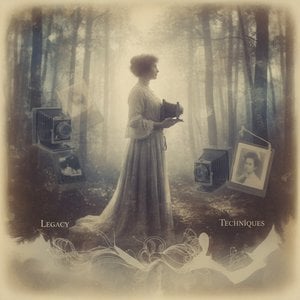
Pascal Sébah: A Pioneer of Ottoman Photography
Early Life and Origins
- Born: Istanbul, Turkey in 1823.
- Parentage: Pascal Sébah’s father was Syrian, and his mother was Armenian, reflecting the diverse cultural landscape of the Ottoman Empire.
- Early influences remain somewhat obscure, but growing up in a cosmopolitan city like Istanbul undoubtedly exposed him to various artistic traditions.
Career Beginnings and Collaboration with Henri Bechard
- Sébah began his photographic career around 1860, initially working in collaboration with the French photographer Henri Bechard.
- This partnership was crucial for Sébah’s early technical development and exposure to European photographic techniques.
- Their work gained recognition at the International Exhibition in Paris, providing a platform for Sébah's emerging talent.
Establishing “El Chark” (The Orient)
- Following their success, Sébah decided to establish his own studio in 1857, named “El Chark” (The Orient).
- Located on Grande Rue de Pera in Istanbul, the studio quickly became a hub for both locals and tourists seeking photographic portraits and views of the city.
- Strategic Location: Its proximity to embassies and hotels made it easily accessible to foreign visitors.
Photographic Style and Subject Matter
- Sébah’s style was characterized by his use of large-format cameras, allowing for exceptional detail and clarity.
- Architectural Photography: He became renowned for capturing the grandeur of Istanbul's architecture, including palaces like Çırağan Palace and mosques.
- Portraiture: Sébah also excelled in portrait photography, documenting the diverse people of the Ottoman Empire.
- His work extended beyond Istanbul to include scenes from Egypt and Anatolia.
Major Achievements and Recognition
- International Exhibition Success: Early recognition at international exhibitions boosted his reputation.
- Expansion to Cairo: In 1873, Sébah opened a second studio in Cairo, capitalizing on the growing demand for photographs from tourists visiting Egypt.
- Collaboration with Osman Hamdi Bey: He formed a valuable working relationship with Turkish painter and archaeologist Osman Hamdi Bey, providing photographic documentation for his artistic projects.
Legacy and Historical Significance
- After Sébah’s death in 1886, the studio continued to operate under the management of his brother Cosmi and later with Polycarpe Joaillier, becoming known as Sebah & Joaillier.
- Pioneering Ottoman Photography: Sébah is considered a pioneer in documenting the Ottoman Empire through photography, providing invaluable visual records of 19th-century life and culture.
- His work offers insights into the architecture, people, and landscapes of Istanbul, Egypt, and Anatolia.
- Museum Collections: His photographs are now held in prestigious museums such as the Pera Museum in Istanbul.
질의응답
Pascal Sébah 작가의 출신 국가는 어디인가요?
Pascal Sébah은(는) Turkey에서 태어났습니다.
Pascal Sébah의 출생 도시와 국가는 어디인가요?
Pascal Sébah은(는) Turkey의 Istanbul에서 태어났습니다.
Pascal Sébah은(는) 어느 시대에 활동했나요?
Pascal Sébah은(는) 19th Century 시대에 활동했습니다. 이 시기는 역사적 맥락에서 작가의 활동 위치를 보여줍니다.