A Life Captured in Paint
Nikolai Kummits lived through a period of profound change, leaving behind a body of work that reflects the quiet, often heavy atmosphere of his era. Born in 1897, this Estonian painter and printmaker spent his years documenting both the external world and his own presence within it. His life, which came to an end in 1944, was marked by the same gravity found in his canvases.
His hands were skilled in many forms, working with oil on canvas, plywood, and cardboard, as well as tempera on paper. There is a sense of intimacy in how he approached his materials, often choosing surfaces like plywood or even simple cardboard to ground his visions. These choices suggest an artist focused on the immediate reality of his surroundings rather than grand, sweeping gestures.
The Quiet Observations
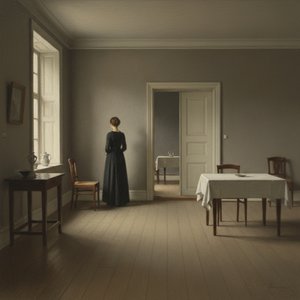
Much of Kummits' work focuses on the stillness of everyday life and the solitary nature of existence. He had a particular interest in capturing light and shadow in urban settings, as seen in works like Tänav õhtul from 1940. In these pieces, the evening streets become more than just locations; they are spaces filled with a specific, palpable mood.
He also turned his gaze inward. His self-portraits offer a rare glimpse into his own identity, presenting himself to the viewer without unnecessary pretense. Whether he was painting a scene In the Kitchen during the 1930s or depicting a figure with an axe, his subjects were treated with a steady, honest hand. He did not look for drama, but rather for the truth held within a moment of stillness.
A Lasting Presence in Estonian Art
Though his life was cut short, Kummits' contributions to the Estonian art landscape remain preserved in significant collections. His work provides a window into the aesthetic sensibilities of the early twentieth century, particularly through the following institutions:
- Tartu Art Museum, which holds many of his oil paintings on canvas and plywood.
- Art Museum of Estonia, where several of his works from the late 1930s and early 1940s are kept.
The survival of these pieces allows us to see the technical range he achieved, from large-scale oil paintings to smaller, more delicate works on paper. His ability to navigate different mediums helped ensure that his perspective on Estonian life remained accessible to those who study the era long after his passing.