Jacques Bellange의 초상화

가장 유명한 Jacques Bellange 작품 17선 가이드

10월 2026 업데이트 · 인기 점수 기준 순위 (각 작품의 검색, 방문 및 주문 수) · 17점의 Jacques Bellange 작품 (당사 카탈로그 기준)

요약하자면

Jacques Bellange의 대표작은 The Three Marys at the Tomb (1620)입니다. 이 작품은 런던에 있는 대영박물관에서 만나보실 수 있습니다. 다음 순서는 Amazon on horseback (1606)와 Annunciation of Mary입니다. 저희 카탈로그에는 Jacques Bellange의 작품이 17점 수록되어 있습니다. 이 가이드에서는 가장 잘 알려진 17점을 선정하여 각 작품의 제작 연도, 소장 미술관 및 작품에 담긴 이야기를 소개합니다.

1575 – 1616, Bassigny Northern mannerism 최다 소장처: 대영박물관

가장 먼저 알아야 할 Jacques Bellange의 작품 10선

1
The Three Marys at the Tomb (1620) 의 Jacques Bellange

The Three Marys at the Tomb

1620 · Engraving · 대영박물관, 런던

Jacques Bellange’s “The Three Marys at the Tomb,” painted around 1620, is not merely a depiction of a biblical scene; it's a profound meditation on grief, faith, and the mysteries surrounding Christ’s death and resurrection. This arresting engraving, now housed within the walls of the Art Institute of Chicago, offers a rare glimpse into the intensely personal style of a Northern Mannerist artist largely obscured by history – Jacques Bellange…

Hand-painted oil reproduction from $300 26 × 39 cm
나만의 작품으로 소장하기 자세히 알아보기
2
Amazon on horseback (1606) 의 Jacques Bellange

Amazon on horseback

1606 · Etching · Château de Chantilly, 샹티이

In the delicate yet commanding lines of Jacques Bellange’s Amazon on horseback, we encounter a window into the enigmatic world of Northern Mannerism. Created in 1606, this evocative work transcends mere illustration, offering instead a dramatic tableau of power and myth. The subject—a woman clad in regal, flowing attire—perches atop her steed with an air of sovereign authority. As she grips her sword, the viewer is immediately drawn into a…

Hand-painted oil reproduction from $175 28 × 36 cm
이 작품 주문하기 이 작품에 대해 더 알아보기

11~17번: Jacques Bellange의 작품 더 보기

Jacques Bellange의 시대별 작품

Jacques Bellange의 주요 작품

이 작품들에서 가장 자주 등장하는 네 가지 주제와 각 주제를 대표하는 대표작입니다.

Jacques Bellange의 작품을 감상할 수 있는 곳

이 페이지에 있는 작품을 가장 많이 소장하고 있는 5개의 미술관

소장 미술관 도시 Jacques Bellange의 작품 이 목록의 작품들
대영박물관, 런던대영박물관 런던 2 The Three Marys at the Tomb, The Annunciation
Château de Chantilly, 샹티이Château de Chantilly 샹티이 2 Amazon on horseback, Gentleman in ancient costume
Staatliche Kunsthalle Karlsruhe, 카를스루에Staatliche Kunsthalle Karlsruhe 카를스루에 2 Annunciation of Mary, Angel of the Annunciation
Royal Library, 윈저Royal Library 윈저 1 Hurdy-Gurdy Player
에르미타주 박물관, 상트페테르부르크에르미타주 박물관 상트페테르부르크 1 Lamentation

연도별: 가장 유명한 Jacques Bellange 작품들

Jacques Bellange의 지난 10년은 대략 이렇습니다: 1606년부터 1615년까지 10년의 세월을 가장 잘 알려진 작품들과 함께 연도별로 선보입니다.

연도별 작품 수

연도를 선택하여 작품을 확인해 보세요.

Jacques Bellange: 작품에 관한 빠른 답변

Jacques Bellange의 가장 유명한 작품은 무엇인가요?정답 확인하기

리스트의 정점은 대영박물관, 런던의 The Three Marys at the Tomb (1620)입니다. 그 뒤를 이어 Amazon on horseback (1606), Annunciation of Mary가 차지했습니다.

Jacques Bellange의 대표작 10선은 무엇인가요?정답 확인하기

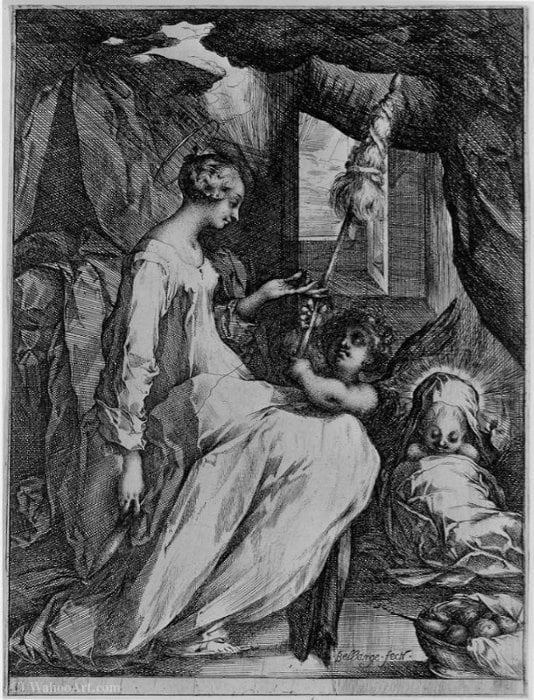
The Three Marys at the Tomb, Amazon on horseback, Annunciation of Mary, Angel of the Annunciation, Gardener with basket, a sequence of four teachers, The Virgin with a Spindle, he Virgin and Child with the Magdalen and Saint Anne, Military figures outside a city, Balthasar 및 Melchior, seen from behind, wearing a mantle trimmed with fur and a hat adorned with feathers. 위 목록에서 각 작품의 제작 연도와 소장 미술관을 확인하실 수 있습니다.

Jacques Bellange의 작품이 카탈로그에 몇 점 있나요?정답 확인하기

저희 카탈로그에는 1606년부터 1615년 사이에 제작된 Jacques Bellange의 작품 17점이 있습니다.

Jacques Bellange의 유명 작품은 어느 박물관에서 감상할 수 있나요?정답 확인하기

대부분의 작품은 대영박물관 (런던), Château de Chantilly (샹티이) 및 Staatliche Kunsthalle Karlsruhe (카를스루에)에서 만나보실 수 있습니다. 자세한 목록은 상단의 박물관 목록을 확인해 주세요.

Jacques Bellange의 가장 유명한 작품들은 언제 제작되었나요?정답 확인하기

1606 기간은 그 어느 때보다도 많은 작품이 포함되어 있습니다. 이 페이지의 총 17점 중 2점이 해당 시기의 작품이며, 그중 Amazon on horseback점이 포함되어 있습니다.

Jacques Bellange의 대표작 중 가장 처음과 마지막 작품은 무엇인가요?정답 확인하기

가장 오래된 작품은 Amazon on horseback (1606)이며, 가장 최근 작품은 Lamentation (1615)입니다.

Jacques Bellange 작가가 가장 자주 그린 주제는 무엇인가요?정답 확인하기

이 페이지의 총 17점 중 Mourning (2), Virgin (2) 및 Portrait (2)점

Jacques Bellange의 작품에서 가장 많이 나타나는 재료는 무엇인가요?정답 확인하기

이 페이지의 총 17점 중 2점에 Engraving이(가) 사용되었습니다.

Jacques Bellange은(는) 어떤 화풍이나 예술 사조로 알려져 있나요?정답 확인하기

이 페이지의 작품들에서 볼 수 있듯이 Northern mannerism입니다.

대영박물관에는 어떤 유명한 Jacques Bellange의 작품들이 있나요?정답 확인하기

대영박물관, 런던에 있는 The Three Marys at the Tomb 및 The Annunciation을(를) 포함하여 이 페이지에서 2점의 작품을 확인하실 수 있습니다.

Jacques Bellange 복제화는 어디에서 주문할 수 있나요?정답 확인하기

네, 이 페이지에 있는 모든 작품은 원하시는 사이즈의 수작업 유화 복제화 또는 프린트로 구매하실 수 있습니다. 작품 상세 페이지에서 바로 주문해 보세요.

Jacques Bellange의 이야기

A Shadowy Master of the Northern Mannerist Spirit

Jacques Bellange remains one of the most enigmatic and captivating figures in the history of European printmaking. A master of the Northern Mannerist style, his life was lived in the twilight of the late Renaissance, a period defined by elongated forms, theatrical tension, and an almost feverish psychological intensity. Though much of his personal biography remains shrouded in the mists of the early 17th century, his artistic legacy is vibrantly clear through the intricate lines of his etchings. Born around 1575 in the Bâse-les-Vosges region of France, Bellange emerged from a landscape of shifting borders and intense religious fervor, eventually finding his creative home within the sophisticated courtly circles of Nancy.

The traces of his early life are as delicate and elusive as his etchings. While historical records regarding his family origins are sparse, scholars often point to his rapid ascent within the Duchy of Lorraine as evidence of a significant, perhaps even noble, connection. There is much speculation that he may have been the illegitimate son of a high-ranking patron, a theory supported by the prestigious title of "knight" attributed to him and his seamless integration into the court of the Dukes of Lorraine. By 1595, he was already established in La Mothe, honing a craft that would soon transform the medium of printmaking into a vehicle for profound emotional expression.

The Elegance of the Lorraine Court

Bellange’s career reached its zenith under the patronage of Henri II and Philippe III, the Dukes of Lorraine. This period of courtly stability provided him with the luxury of time and resources, allowing him to refine a technique that was uniquely his own. Unlike many of his contemporaries who focused on the clarity of the High Renaissance, Bellange embraced the complexities of Mannerism. His work is characterized by a restless energy, where figures seem to twist and writhe with an almost supernatural grace. In the halls of Nancy, he developed a visual language that blended the sacred with the profane, creating works that were as much about the human psyche as they were about religious devotion.

His mastery of the etching needle allowed him to manipulate light and shadow with unprecedented drama. Through the meticulous use of hatching and cross-hatching, he could conjure textures ranging from the heavy folds of ancient drapery to the weathered skin of a street performer. This technical prowess is perhaps most evident in his ability to imbue even the simplest subject with a sense of profound mystery. Whether depicting a noble figure or a common musician, Bellange’s hand is unmistakable, leaving behind a trail of silvery, luminous lines that seem to vibrate with life.

A Legacy Etched in Light and Shadow

The true significance of Jacques Bellange lies in his ability to capture the ephemeral. His oeuvre serves as a window into a world of intense spiritual struggle and theatrical beauty. Some of his most enduring works demonstrate this range:

  • The Three Marys at the Tomb: A striking example of his religious gravity, where dramatic figures and intricate details converge to create a moment of profound biblical tension.
  • Hurdy-Gurdy Player: A masterpiece of character study, showcasing his ability to use complex linework to capture the hunched, weary essence of a street musician, imbuing a common subject with deep psychological depth.
  • Gentleman in Ancient Costume: An exploration of the Mannerist obsession with historical fantasy and stylized elegance, featuring a warrior adorned in attire that evokes a sense of mythic grandeur.

Though his life was cut short in 1616, Bellange’s influence endured far beyond the borders of Lorraine. His rediscovery in the 20th century brought a renewed appreciation for the expressive potential of the etched line and the enduring power of the Mannerist aesthetic. Today, he is celebrated not merely as a court artist, but as a pioneer who pushed the boundaries of printmaking, leaving an indelible mark on the history of Western art through his hauntingly beautiful, shadow-drenched visions.