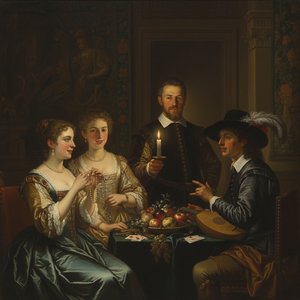
Gerrit van Vucht: A Master of Dutch Still Life and Symbolic Reflection
Gerrit van Vucht (circa 1658 – present) stands as a significant figure within the vibrant tapestry of seventeenth-century Dutch art, specifically recognized for his masterful depictions of still lifes—particularly those imbued with the profound symbolism of *vanitas*. Unlike many artists of his era preoccupied with grand narratives and mythological subjects, Van Vucht focused intently on capturing the mundane realities of domestic life, transforming commonplace objects into vehicles for contemplation on mortality and the fleeting nature of earthly existence. His work offers a unique window into the intellectual climate of the Dutch Golden Age, reflecting humanist ideals alongside deeply rooted religious convictions.
Early Life and Training:
Career Highlights:
Style and Technique:
Influence and Legacy:
Early Life and Training
Information regarding Gerrit van Vucht’s formative years remains somewhat elusive, contributing to the enduring fascination surrounding his artistic output. Born around 1658 in Haarlem—a city renowned for its flourishing art scene—he apprenticed under Nicolaes Berckhuyt, a celebrated painter known for his portraits and landscapes. This apprenticeship instilled in Van Vucht a foundational understanding of compositional principles and meticulous observation – skills that would prove invaluable throughout his career. The influence of Berckhuyt’s artistic vision extended beyond mere technical proficiency; it fostered an appreciation for capturing the subtle nuances of light and texture, characteristics that define much of Van Vucht's distinctive style.
Notable Mentors:
Academic Training:
Career Highlights
Van Vucht’s artistic trajectory unfolded primarily in Haarlem, where he established himself as a respected artist and teacher. He gained considerable renown for his ability to execute commissions with grace and precision, catering to both aristocratic patrons and wealthy merchants. His prolific output encompassed portraits, landscapes, and—most notably—still lifes that cemented his reputation as one of the foremost practitioners of *vanitas* painting during his lifetime. These compositions weren’t merely aesthetically pleasing; they served as didactic reminders of human vulnerability against the backdrop of divine judgment – a theme prevalent in Dutch Baroque art. Among his most celebrated works are depictions of kitchen cabinets laden with symbolic objects—a genre that allowed him to explore complex philosophical ideas within a deceptively simple visual framework.
Major Commissions:
Teaching Positions:
Style and Technique
Van Vucht’s artistic style is characterized by remarkable detail and realism, achieved through painstaking observation and meticulous brushwork. He employed a technique rooted in chiaroscuro—the dramatic interplay of light and shadow—to sculpt forms with breathtaking accuracy and convey an atmosphere of solemn contemplation. Like many artists of his era, he adhered to the conventions of academic painting, prioritizing anatomical correctness and idealized beauty. However, Van Vucht distinguished himself through his profound understanding of symbolism – a hallmark of *vanitas* art. He skillfully arranged objects within his canvases—such as skulls, decaying fruit, hourglasses, and extinguished candles—to represent the inevitable passage of time and the futility of earthly pursuits. These symbols resonated deeply with viewers of the period, prompting reflection on mortality and spiritual redemption.
Chiaroscuro Mastery:
Symbolic Arrangement:
Influence and Legacy
Gerrit van Vucht’s contribution to Dutch art extends beyond his individual masterpieces; he exerted considerable influence on subsequent generations of painters. His meticulous technique and unwavering commitment to capturing the essence of everyday life served as a model for artists seeking to elevate realism while simultaneously conveying moral lessons. Although Van Vucht's work may not command the same level of fame as Rembrandt or Vermeer, it remains an invaluable testament to the intellectual and artistic fervor of the Dutch Golden Age—a period defined by humanist thought and religious piety. His enduring legacy resides in his ability to transform ordinary objects into instruments of profound philosophical contemplation, ensuring that his art continues to inspire viewers centuries after its creation.
Explore the Dutch Golden Age of painting (1600-1700) with ArtsDot. Discover Rembrandt, Vermeer & other masters. Learn about techniques, history & find museum-quality reproductions.
Explore the captivating world of Gerard van Honthorst, a Dutch Golden Age master renowned for his dramatic chiaroscuro & courtly portraits. Discover his life, art, and lasting influence on Baroque painting.