

Philip de László: A Portrait of Aristocratic Society & the Cosmopolitan Painter's Evolution

목차
The Rise of a Cosmopolitan Portraitist: László's Early Life and Artistic Training
 Wikipedia: Philip de László
Philip Alexius László de Lombos (born Fülöp Laub; Hungarian: László Fülöp Elek; 30 April 1869 – 22 November 1937), known professionally as Philip de László, was an Anglo-Hungarian painter known particularly for his portraits of royal and aristocrat...
Philip Alexius de László, a name synonymous with the gilded age of European aristocracy, wasn’t born into privilege but forged his path to prominence through sheer talent and relentless ambition. Born Fülöp Laub in Pest (now part of Budapest) in 1869, his origins were decidedly modest – his father a tailor, his mother a seamstress. This early exposure to craftsmanship, however, instilled within him a deep respect for skill and meticulous detail that would become hallmarks of his artistic style. The initial foray into photography served as an invaluable apprenticeship, honing his eye for composition and light before he formally enrolled at the National Academy of Art in Budapest. There, under the tutelage of Bertalan Székely and Károly Lotz, László’s natural aptitude blossomed, quickly surpassing expectations.
His studies weren't confined to Hungary; a period in Munich broadened his horizons, followed by immersion in the vibrant Parisian art scene. It was in Paris that he achieved early recognition with a Grand Gold Medal for his portrait of Pope Leo XIII – a pivotal moment that signaled his burgeoning talent and foreshadowed the illustrious career ahead. This wasn’t merely technical proficiency; László possessed an innate ability to capture not just likeness, but *character*, imbuing each subject with a sense of dignity and presence. The seeds of his future success were sown in these formative years, fueled by a desire to transcend mere representation and create enduring portraits that spoke volumes about the individuals they depicted.
Capturing an Era: De László and the Belle Époque Aristocracy
The Belle Époque (French pronunciation: [bɛlepɔk]) or La Belle Époque (French for 'The Beautiful Era') was a period of French and European history that began after the end of the Franco-Prussian War in 1871 and continued until the outbreak of World W...
The turn of the 20th century found Europe bathed in the optimism and prosperity of the Belle Époque, a period characterized by romanticism, technological innovation, and a flourishing of the arts. It was within this intoxicating atmosphere that Philip de László truly came into his own. He recognized an opportunity – a demand for portraits that not only documented wealth and status but also embodied the elegance and sophistication of the age. Moving to Vienna in 1903 proved strategic, placing him at the heart of a powerful network of noble families and influential patrons.
However, it was his relocation to London in 1907 that cemented his position as *the* portraitist of the aristocracy. The city’s vast empire, its financial power, and its vibrant social scene provided fertile ground for his artistic endeavors. De László wasn't simply painting portraits; he was capturing a world – a world of lavish balls, grand estates, and inherited privilege. His ability to portray these figures with both accuracy and admiration quickly garnered him the attention of royalty and high society. He understood their desire for immortality on canvas, and he delivered it with unparalleled skill.
Royal Commissions & International Acclaim: Building a Transnational Reputation
 H.M. King Constantine I of the Hellenes
Admire H.M. King Constantine I by Philip de László – a stunning 1914 oil painting of the Hellenic monarch. Explore royal portraiture & historical art.
De László’s ascent was meteoric. His initial success in London stemmed from securing commissions from the British Royal Family – a testament to his growing reputation and the influence of key patrons like Sir Ernest Cassel, financial advisor to the Prince of Wales. Portraits of Princess Victoria, followed by Edward VII and Queen Alexandra themselves, established him as a favored artist within the royal circle. This patronage wasn’t merely about artistic merit; it was a validation of his social standing and an endorsement that opened doors to commissions across Europe.
He became a sought-after portraitist for monarchs and nobility from Greece (H.M. King Constantine I), Romania (Queen Marie), and beyond. His studio transformed into a cosmopolitan hub, welcoming sitters from diverse backgrounds and nationalities. De László wasn’t confined to a single style; he adapted his technique to suit each subject, blending realism with elements of Impressionism to create portraits that were both striking and intimate. This versatility, coupled with his charismatic personality and relentless self-promotion, allowed him to build a truly transnational reputation – a painter whose work graced the walls of palaces and estates across the continent.
Beyond Society Portraits: Exploring the Breadth of De László’s Oeuvre
 philip alexius de lászló
Philip de László (1869-1937): Explore portraits of royalty & aristocracy by this Anglo-Hungarian master. Discover realism, society art & his legacy.
While de László is best known for his portraits of royalty and aristocracy, limiting his artistic scope to these subjects would be a disservice. He wasn't solely focused on documenting the elite; he also painted industrialists, scientists, politicians, and fellow artists – individuals who represented the intellectual and cultural currents of his time. These lesser-known works reveal a broader range of interests and demonstrate his ability to capture diverse personalities with equal skill.
Furthermore, de László explored various genres beyond portraiture, including landscapes and genre scenes, though these remain less celebrated. His commitment to realism extended beyond the human form; he meticulously rendered fabrics, interiors, and natural settings, showcasing a mastery of light and shadow. This dedication to technical excellence, regardless of subject matter, is a defining characteristic of his artistic practice. He wasn’t simply a portraitist; he was a highly skilled painter who applied his talents to a variety of subjects, driven by a desire for perfection and a deep appreciation for the beauty of the world around him.
De László's Technique and Style: Realism, Impressionism, and the Pursuit of Elegance
The hallmark of de László’s style lies in his masterful blend of realism and Impressionistic techniques. He wasn’t a strict adherent to either movement but rather synthesized elements from both to create portraits that were both accurate and evocative. His brushwork, while precise enough to capture likeness, possessed a fluidity and vibrancy reminiscent of the Impressionists. He employed a layered approach, building up color and texture to create a sense of depth and luminosity.
His use of light was particularly noteworthy – he skillfully manipulated it to highlight his subjects’ features and convey their personality. De László also paid meticulous attention to detail, rendering fabrics, jewelry, and interiors with astonishing accuracy. This dedication to realism wasn't merely about technical proficiency; it was a means of conveying the wealth, status, and refinement of his sitters. He understood that portraits were not simply representations of individuals but symbols of their social standing and cultural identity. His pursuit of elegance extended beyond the canvas – he insisted on luxurious materials and impeccable presentation, ensuring that each portrait was a work of art in its own right.
Legacy and Influence: The Enduring Appeal of Philip de László
Philip de László’s legacy extends far beyond the hundreds of portraits he created. He captured an era – the Belle Époque – with unparalleled skill and sensitivity, providing a visual record of European aristocracy at its zenith. His work continues to captivate audiences today, offering a glimpse into a world of opulence, elegance, and privilege.
While often categorized as a society portraitist, his technical mastery and artistic versatility deserve greater recognition. He was a painter who understood the power of representation – the ability to capture not just likeness but also character, personality, and social standing. His influence can be seen in the work of subsequent portrait painters, who continue to admire his skill and attention to detail. Today, ArtsDot.com offers a unique opportunity to experience the beauty and elegance of de László’s art through high-quality reproductions, allowing collectors and enthusiasts alike to bring a touch of the Belle Époque into their own homes. Explore our collection and discover the enduring appeal of Philip de László – a master portraitist whose work continues to inspire and delight.
관련 기사 더 보기

역사 애호가를 위한 시대별 미술품 수집 가이드: 맥락 이해 및 시작하기
역사 애호가를 위한 미술품 수집 완벽 가이드! 시대별 사조 이해부터 작품 선택, 진정성 확인까지 전문가의 조언을 담았습니다. ArtsDot에서 맞춤형 그림 제작 및 컨설팅 서비스를 만나보세요.

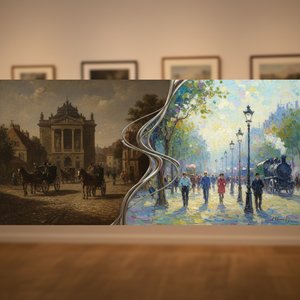
Echoes of 1873: Transition & Innovation in European Painting
Explore the pivotal year of 1873 in European painting! Discover Realism's final flourish & Impressionism’s rise with expert insights from ArtsDot.com. High-quality reproductions & art consultation.

