

Herbert James Draper: Symbolism, Sensuality & the Aesthetic Movement
목차
The Rise of Aestheticism: A Cultural Context
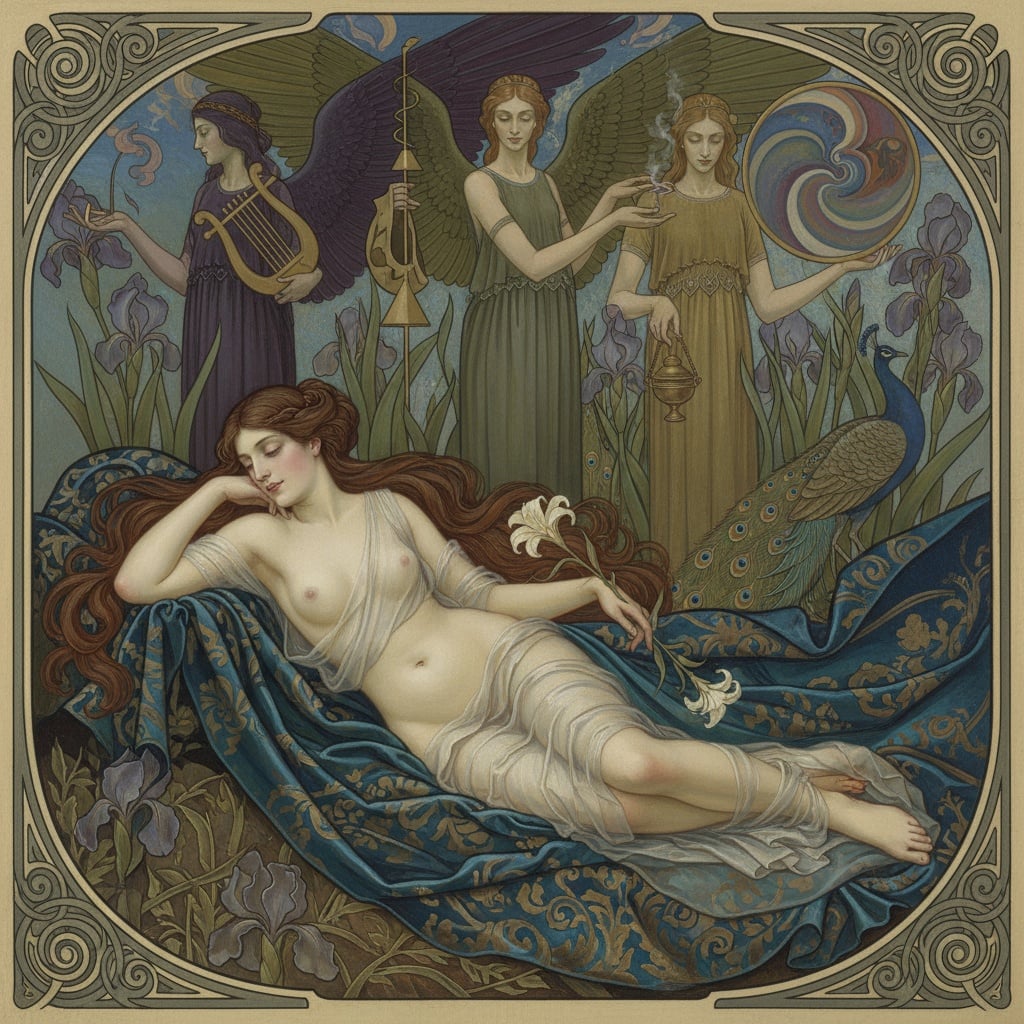
Aestheticism (also known as the aesthetic movement) was an art movement in the late 19th century that valued the appearance of literature, music, fonts, and the arts over their functions. According to Aestheticism, art should be produced to be beauti...
The late Victorian era, a period often associated with strict moral codes and industrial progress, paradoxically birthed a powerful counter-movement known as Aestheticism. This philosophical and artistic rebellion championed the pursuit of beauty for its own sake – “art for art’s sake,” as Oscar Wilde famously proclaimed. Rejecting the didactic function traditionally assigned to art—the need to teach, to moralize, or to reflect social realities—Aestheticism prioritized sensory experience, refined taste, and the creation of works that existed purely for their aesthetic qualities. It was a reaction against the perceived ugliness of industrialization and the increasingly utilitarian nature of society, finding solace in classical forms, exotic imagery, and an almost decadent appreciation for beauty in all its manifestations. This intellectual climate provided fertile ground for artists like Herbert James Draper, whose work embodies the movement’s core tenets with striking grace and sensuality.
Draper's Early Life & Academic Foundations
 Wikipedia: Herbert James Draper
Herbert James Draper ((1863-11-26)26 November 1863 – (1920-09-22)22 September 1920) was an English Neoclassicist painter whose career began in the Victorian era and extended through the first two decades of the 20th century. == Life == Born in Cove...
Born in Covent Garden, London, in 1863, Herbert James Draper received a traditional artistic education. His early training at Bruce Castle School instilled discipline, but it was his acceptance into the Royal Academy Schools that truly shaped his trajectory. Winning the coveted Royal Academy Gold Medal and Travelling Studentship in 1889 afforded him invaluable opportunities to study firsthand the masterpieces of classical art in Rome and Paris. These journeys were pivotal; Draper absorbed the techniques and ideals of Renaissance masters, particularly their emphasis on anatomical accuracy, idealized forms, and narrative composition. However, he wasn’t merely a copyist. He synthesized these influences with a distinctly Victorian sensibility, creating a style that was both rooted in tradition and uniquely his own.
Mythological Narratives & Sensuous Forms: Key Themes in Draper’s Art
 Herbert James Draper
Discover Herbert James Draper (1863-1920), a British Neoclassical painter famed for his evocative mythological scenes & sensual portraits, like 'The Lament for Icarus'. Explore his art!
Draper's most celebrated works center around mythological subjects – tales of gods, nymphs, and heroes reimagined with an exquisite attention to detail and a palpable sense of emotion. Paintings like The Lament for Icarus (1898) are not simply illustrations of ancient myths; they are explorations of human vulnerability, loss, and the fleeting nature of beauty. Ulysses and the Sirens, A Water Baby, and Art and the Jade demonstrate his mastery of composition and dramatic lighting. Draper’s figures—often female—are not merely beautiful; they are imbued with a captivating sensuality, a quality that both captivated and occasionally scandalized Victorian audiences. He possessed an extraordinary ability to depict the human form with anatomical precision while simultaneously conveying a sense of ethereal grace and emotional depth. His mermaids aren't monstrous creatures but alluring figures embodying longing and mystery.
Color, Light, and Symbolism: Deconstructing Draper’s Visual Language
Color symbolism in art, literature, and anthropology is the use of color as a symbol in various cultures and in storytelling. There is great diversity in the use of colors and their associations between cultures and even within the same culture in di...
A closer examination of Draper’s paintings reveals a sophisticated understanding of color symbolism and the power of light to evoke mood and meaning. He frequently employed a rich palette of jewel tones—deep blues, vibrant reds, and shimmering golds—to create an atmosphere of opulence and enchantment. The use of impasto texture, particularly evident in works like Oil Study, adds another layer of visual richness, drawing the viewer’s eye to specific details and enhancing the sense of tactile reality. Beyond mere aesthetics, Draper subtly infused his work with symbolic elements. Water often represents transformation and rebirth, while roses signify passion and fleeting beauty. The careful arrangement of figures and objects within his compositions is rarely accidental; each element contributes to a larger narrative or emotional resonance. For example, in Art and the Jade, the dramatic interplay of light and shadow emphasizes the connection between music, art, and the allure of classical ideals.
The Decline of Popularity & Modern Reassessment
As the Victorian era gave way to the modern age, Draper’s style—with its emphasis on academic draftsmanship and mythological subject matter—began to fall out of favor. The rise of abstraction and other avant-garde movements prioritized experimentation over traditional techniques, leaving artists like Draper seemingly relegated to the past. However, in recent decades, there has been a growing reassessment of his work. Scholars and collectors alike have recognized the unique qualities that set him apart—his masterful technique, his sensuous portrayals of the human form, and his ability to capture a sense of emotional depth rarely seen in Victorian art. The rediscovery of Draper’s paintings demonstrates a renewed appreciation for beauty, craftsmanship, and the enduring power of classical ideals.
Draper's Legacy: Influence and Continued Appeal
Herbert James Draper’s influence extends beyond his immediate contemporaries. His work continues to inspire artists today, particularly those interested in exploring themes of mythology, sensuality, and the human form. While he may not be a household name like some of his Pre-Raphaelite peers, his paintings offer a compelling glimpse into the complexities of Victorian society and the enduring allure of classical art. His ability to blend academic precision with emotional resonance ensures that his work remains captivating for modern audiences. At ArtsDot, we are proud to offer high-quality reproductions of Draper’s masterpieces, allowing you to experience the beauty and sensuality of his art firsthand. Explore our collection today and discover the timeless appeal of Herbert James Draper.
관련 기사 더 보기
The Allure of Elegance: Exploring Artistic Representations of Refinement Across Movements
Explore the captivating history of elegance in art, from Rococo's grace to Romanticism’s passion. Discover investment-worthy masterpieces & expert guidance for building your collection with ArtsDot.


The Enduring Allure of Idealized Beauty in Art: A Historical Perspective
Explore the captivating history of idealized beauty in art! Discover Renaissance masterpieces, classical influences & contemporary interpretations. Expert insights for collectors & enthusiasts at ArtsDot.

