
- მთავარი გვერდი

- სტატიები
- Charting Unknown Territories: A Visual Exploration of Human Discovery in Art History
Charting Unknown Territories: A Visual Exploration of Human Discovery in Art History
სარჩევი
The Allure of the Unmapped: Early Representations of Exploration
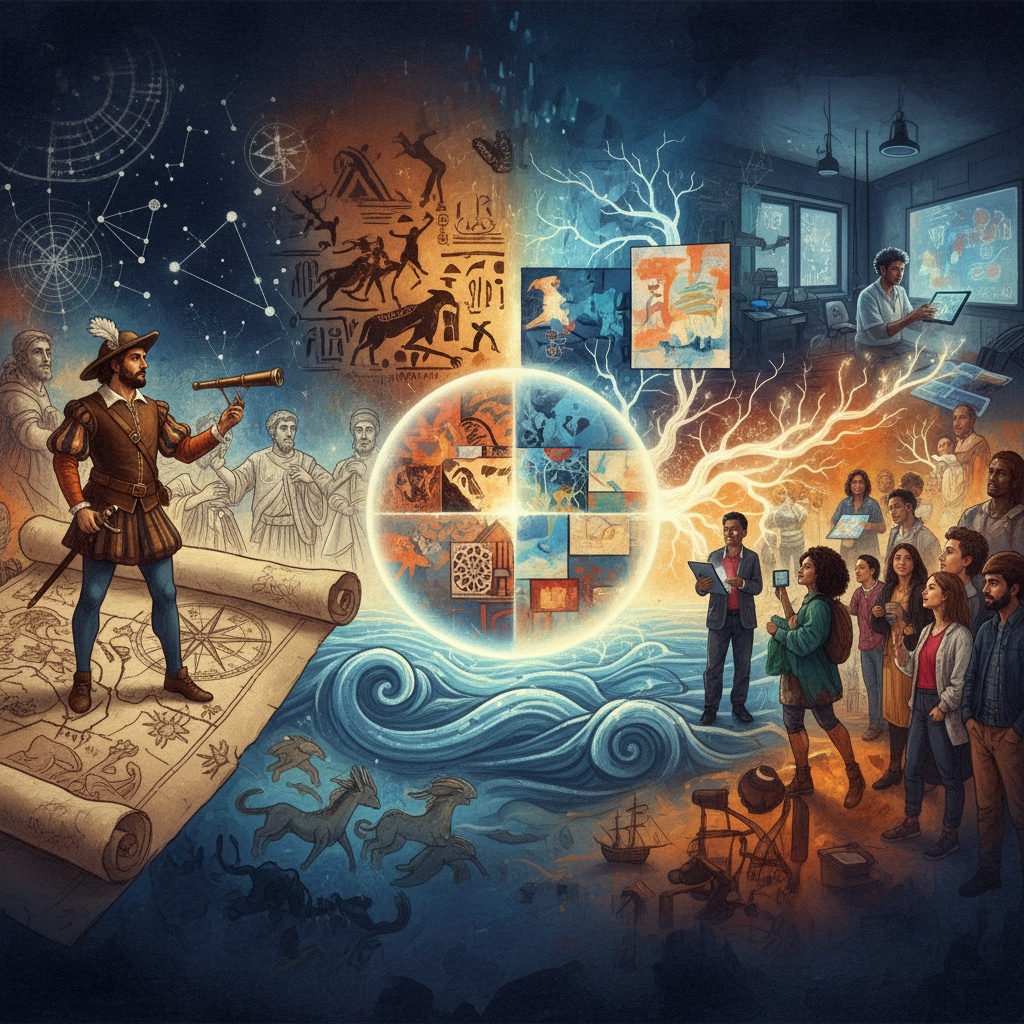
From the earliest cave paintings depicting hunts and migrations to the meticulous cartography of the Renaissance, humanity has always been driven by a desire to understand – and visually represent – the unknown. These initial forays into mapping weren’t merely about documenting geography; they were acts of claiming space, asserting dominance, and constructing narratives around the world as it was perceived. Consider the medieval mappae mundi, often centered on Jerusalem, reflecting a theological worldview rather than empirical observation. These early maps reveal less about the physical landscape and more about the cultural anxieties and spiritual beliefs of their creators. The impulse to chart territory wasn’t solely practical; it was fundamentally an artistic endeavor, shaping understanding through selective representation and symbolic language. This foundational urge—to visualize what lies beyond the horizon—forms the bedrock upon which centuries of exploration art would be built.
Romantic Visions of the West: The Hudson River School and American Expansion
 Among the Sierra Nevada Mountains, California
Experience Albert Bierstadt’s "Among the Sierra Nevada Mountains." A breathtaking 1868 landscape painting of the American West. Luminism, dramatic detail & timeless beauty.
The 19th century witnessed a dramatic shift in how landscapes were depicted, particularly in America. The Hudson River School painters, such as Albert Bierstadt, weren’t simply recording scenes; they were crafting mythologies of the American West. Among the Sierra Nevada Mountains, California, for example, isn't just a breathtaking vista—it’s an idealized vision of untamed wilderness, imbued with a sense of divine grandeur and national promise. Luminism, characterized by its dramatic play of light and shadow, served to elevate these landscapes beyond mere topography, transforming them into spiritual experiences. These paintings weren’t neutral observations; they actively participated in the ideology of Manifest Destiny, romanticizing westward expansion and often glossing over the displacement of Indigenous populations. The scale of Bierstadt's canvases demanded awe, mirroring the vastness of the continent itself and reinforcing a sense of national pride. This movement wasn’t just about aesthetics; it was deeply intertwined with political ambition and the construction of American identity.
Fragmenting Reality: Cubism and the Depiction of Modern Landscapes
 untitled (8613)
Explore Georges Braque’s "untitled (8613)", a Cubist harbor scene of fragmented forms & warm tones. Discover this dynamic, layered oil painting – a key work by a 20th-century master.
By the early 20th century, artists began to question traditional modes of representation altogether. Cubism, pioneered by artists like Georges Braque, shattered the illusionistic space of classical painting, presenting fragmented perspectives and multiple viewpoints simultaneously. Untitled (8613), a Cubist harbor scene, exemplifies this radical departure. The landscape is no longer viewed as a unified whole but rather dissected into geometric forms, reassembled in a dynamic composition that reflects the complexities of modern life. This wasn’t about accurately depicting a specific place; it was about exploring the very nature of perception and representation itself. The warm tones and layered planes suggest a sense of depth and movement, yet the overall effect is one of ambiguity and intellectual challenge. Cubism reflected a world increasingly fractured by industrialization, urbanization, and the anxieties of a rapidly changing society. It moved away from depicting *what* was seen to exploring *how* it was seen.
Outsider Perspectives: Joseph Yoakum’s Imaginary Worlds
 joseph elmer yoakum
Discover Joseph Yoakum (1891-1972), an American self-taught artist known for vibrant, imaginative landscape paintings in the outsider art style. Explore his unique vision and significant contribution to American art.
While many artists sought to capture external realities, others turned inward, creating landscapes born entirely from their imagination. Joseph Yoakum, a self-taught American artist, stands as a remarkable example of this phenomenon. His vibrant paintings, often described as “outsider art,” depict fantastical terrains populated by stylized figures and geometric forms. Yoakum never traveled extensively; his landscapes were meticulously constructed from postcards, magazines, and memories, transformed into unique visions that defy categorization. He employed a distinctive technique—using colored pencils and ink on paper—to create richly detailed compositions filled with symbolic meaning. His work challenges conventional notions of artistic training and representation, offering a powerful testament to the power of individual creativity and the subjective experience of place. Yoakum’s landscapes aren't about replicating reality; they are expressions of an inner world, imbued with personal mythology and spiritual resonance.
Contemporary Explorations: Landscape as a Site for Healing and Abstraction
 mark thompson
Explore the work of British artist Mark Thompson (b. 1957). Known for vibrant paintings & featured in prestigious collections like the McNay Art Museum, his art captures Colorado landscapes and more. View artwork now!
Today, artists continue to explore the landscape in diverse and innovative ways. Mark Thompson, for instance, captures the beauty of Colorado landscapes with vibrant paintings that evoke a sense of tranquility and connection to nature. Similarly, Tremain Smith creates abstract mixed media paintings that utilize layered collages and healing landscapes as a means of emotional expression. These contemporary artists often engage with themes of environmentalism, identity, and spirituality, using landscape as a site for personal reflection and social commentary. Figure in a Landscape 2, by Francis Bacon, though starkly different in style, also represents an exploration of the human condition *within* the landscape—a haunting depiction of vulnerability and isolation. The expressive brushwork and dark realism convey a sense of existential angst, reminding us that landscapes can be both beautiful and unsettling.
The Enduring Legacy: How Artists Continue to Chart New Territories
Throughout history, artists have served as cartographers of the human experience, charting not only physical territories but also emotional, spiritual, and intellectual realms. From the earliest maps to contemporary abstractions, the impulse to visualize the unknown remains a powerful force in art. The legacy of these explorations continues to inspire new generations of artists who seek to understand their place in the world and express their unique perspectives through the enduring medium of landscape painting. At ArtsDot, we celebrate this rich artistic tradition, offering high-quality reproductions that allow you to bring these iconic works—and discover new favorites—into your own home. Explore our extensive collection today and embark on your own visual journey.
დაკავშირებული სტატიები

Evoking Nature's Sublime: A Comprehensive Exploration of 19th-Century Landscape Painting
Explore the captivating world of 19th-century landscape painting! Discover renowned artists like Friedrich & Monet, key movements, and find the perfect artwork to bring nature's serenity into your home. Expert insights at ArtsDot.


The Evocative Brushstroke: Exploring Emotion, Individuality & the Sublime in Romanticism's Artistic Landscape
Explore the passionate world of Romanticism! Discover masterpieces by Friedrich & Goya, delve into the sublime, and understand the movement's lasting impact on art history. Expert analysis & insights at ArtsDot.

American Regionalism: A Crucible of Identity – Exploring Themes of Place, Labor & Social Commentary
Explore American Regionalism's powerful depiction of the American heartland during the Great Depression. Discover Grant Wood, Thomas Hart Benton & more. Expert analysis & high-quality art reproductions at ArtsDot.
Atmospheric Visions: Exploring Tonalism in American Painting
Explore the captivating world of American Tonalism! Discover its history, key artists like Whistler & Inness, techniques, and lasting influence on art. Expert insights for collectors & enthusiasts.

ჰადსონის դպրոցի լավագույն 10 шеდევры: արվեստը, որ ձեւավորեց Ամերիկայի տեսարժան վայրերը
გაეცանի ჰადსონის դպրոցի լավագույն 10 шеդևրին! Thomas Cole-ից մինչև Albert Bierstadt, բացահայտեք ամերիկյան արվեստի պատմությունը և հասարակության գեղեցիկ տեսարանները: ArtsDot.com-ում գտնեք թանգարանի որակի վերարձկված նկարներ և ձևավորման ազդեցություն: ուսումնասիրեք ամբողջական հավաքածուն առցանց:

