Early Life & Artistic Foundations: Norwich Roots and Initial Training
Anthony Frederick Augustus Sandys, born Antonio Frederic Augustus Sands in 1829, emerged from a lineage steeped in artistic tradition. His father, Anthony Sands, a painter himself, provided the foundational lessons that would ignite a lifelong passion within his son. The early years spent in Norwich proved pivotal; the city’s vibrant art scene, though somewhat removed from the major metropolitan centers of London, fostered a unique sensibility. Sandys initially absorbed the principles of the Norwich School of Painters, a group celebrated for its dedication to capturing the rural idyll and Dutch landscape traditions. This early training instilled in him a meticulous attention to detail and a love for naturalistic representation – qualities that would remain hallmarks of his style even as he ventured into more complex and symbolic territories. However, it was not merely technical skill that defined Sandys’s beginnings; an inherent talent for drawing, coupled with a discerning eye, quickly set him apart. His formal education at the Norwich School of Design in 1846 provided further refinement, earning recognition from the Royal Society of Arts by 1847 and signaling a promising trajectory for the young artist.
Embracing Pre-Raphaelite Ideals: A Shift in Style and Subject Matter
 Wikipedia: Pre-Raphaelite Brotherhood
The Pre-Raphaelite Brotherhood (PRB), later known as the Pre-Raphaelites, was a group of English painters, poets, and art critics, founded in 1848 by William Holman Hunt, John Everett Millais, Dante Gabriel Rossetti, William Michael Rossetti, James ...
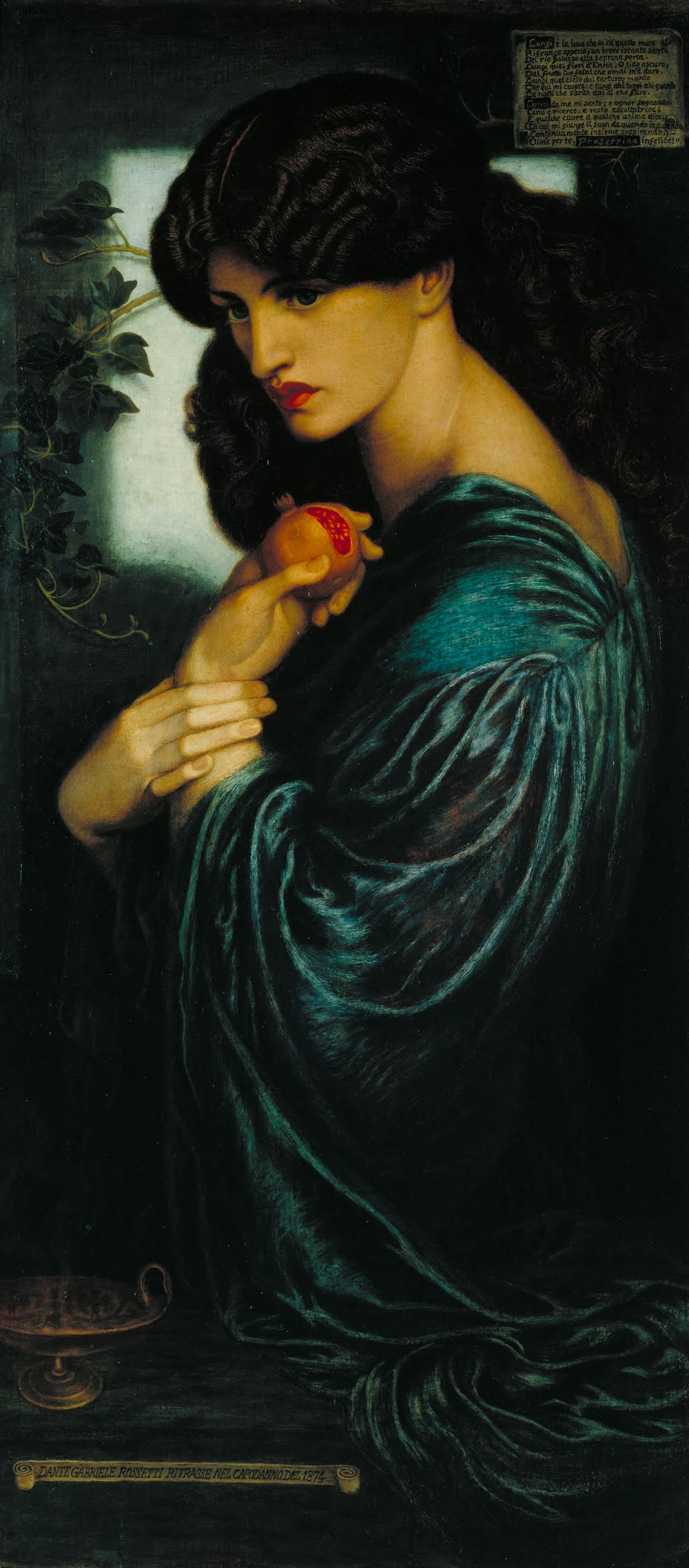
While Sandys initially flourished within the Norwich School’s orbit, his artistic path underwent a significant transformation upon encountering the burgeoning Pre-Raphaelite Brotherhood. Founded in 1848, this group of artists – including William Holman Hunt, John Everett Millais, and Dante Gabriel Rossetti – championed a return to the perceived purity and sincerity of art before Raphael. Their rejection of academic conventions and embrace of vibrant color, detailed realism, and often literary or mythological subject matter resonated deeply with Sandys. Though not an official member, he became increasingly aligned with their principles, particularly their emphasis on truth to nature and emotional intensity. This shift manifested in his work through a growing interest in allegorical themes and a more refined approach to portraiture. He began to move away from purely landscape-based compositions, seeking instead to imbue his paintings with narrative depth and symbolic meaning. The influence of the Pre-Raphaelites wasn’t simply stylistic; it represented a broader philosophical alignment – a desire to create art that was both beautiful and intellectually stimulating.
Mythological Narratives & Symbolic Portraits: Recurring Themes in Sandys’s Oeuvre
Sandys carved a distinctive niche for himself through his captivating depictions of mythological narratives and symbolic portraits. His canvases frequently drew inspiration from classical literature, Shakespearean tragedies, and the poetry of Keats, transforming these stories into visually arresting scenes imbued with Victorian sensibilities. Works like “Queen Eleanor” and “Vivien” demonstrate his ability to capture moments of dramatic tension and psychological complexity. Gentle Spring, for example, showcases a delicate balance between idyllic beauty and underlying melancholy. Beyond mythology, Sandys excelled in portraiture, but even these works were rarely straightforward representations. He imbued his subjects with an air of mystery and introspection, often employing symbolic objects or settings to hint at their inner lives. The recurring presence of figures like Mary Magdalene reflects a fascination with themes of redemption and female spirituality. His paintings weren’t merely portraits; they were explorations of character, emotion, and the human condition.
The Influence of Keomi Gray & the Depiction of Feminine Beauty
Sandys’s personal life profoundly influenced his artistic output, most notably through his long-term relationship with Keomi Gray, a Romany woman who served as his muse and model. Their connection was unconventional for the Victorian era, yet it proved creatively fertile. Gray became the embodiment of Sandys’s ideal feminine beauty – a captivating blend of exotic allure and spiritual depth. She sat for him and Dante Gabriel Rossetti (inspiring Rossetti's “The Beloved”), and her presence is palpable in many of his most celebrated works. Sandys’s depictions of women were often characterized by long, flowing hair, expressive eyes, and an ethereal quality that set them apart from the more conventional portraits of the time. His relationship with Gray challenged societal norms and allowed him to explore themes of love, desire, and female agency in a way that was both daring and deeply personal. The numerous children Sandys fathered with Mary Emma Jones (Miss Clive), another long-term companion, further enriched his understanding of family life and contributed to the intimate quality of his later works.
Sandys's Legacy & Victorian Reception: A Lasting Impact on Art History
Anthony Frederick Sandys enjoyed considerable success during his lifetime, though his reputation has undergone periods of re-evaluation. Initially celebrated for his technical skill and evocative compositions, he was later sometimes overshadowed by the more prominent figures of the Pre-Raphaelite Brotherhood. However, recent scholarship has recognized his unique contributions to Victorian art. His mastery of realism, combined with his symbolic depth and psychological insight, set him apart from many of his contemporaries. Sandys’s influence can be seen in the work of later artists who sought to combine beauty with intellectual rigor. Today, his paintings are held in major museum collections worldwide, including the Lady Lever Art Gallery, which boasts a significant number of his works. His enduring appeal lies in his ability to capture the complexities of human emotion and to imbue his art with a timeless quality that continues to resonate with audiences.
Exploring Sandys’s Technique: Realism, Detail, and the Pursuit of Aesthetic Perfection
Sandys was renowned for his meticulous technique, characterized by an unwavering commitment to realism and detail. He employed traditional oil painting methods – sketching, layering, careful drying times – to achieve a level of precision that was remarkable for its time. His brushstrokes were often visible, adding texture and depth to his compositions, yet they never detract from the overall sense of refinement. He paid particular attention to the rendering of fabrics, jewelry, and skin tones, creating surfaces that appear almost tactile. This dedication to realism wasn’t merely a matter of technical skill; it was integral to his artistic philosophy – a belief that art should accurately reflect the beauty and complexity of the natural world. Sandys's pursuit of aesthetic perfection extended beyond technique to encompass composition, color palette, and symbolic meaning, resulting in works that are both visually stunning and intellectually engaging.