


 წინასწარი ნახვა
 გაგზავნა
 გაზიარება
 დეტალები
 გზამკვლევი

 ჩამოტვირთვა
 მსგავსები
 რენტგენოგრაფიული კვლევა
 სლაიდშოუ
 სტატისტიკა
ტაფელი 7 - ეპიბულია სისფონოფორები.


 გადასართად დაწვრილებით ნახეთ
ხელით ნაკვეთი ზეთის ტილოს რეპროდუქცია
ტილოზე შესრულებული ფერწერიანი ზეთប្រდათი, თქვენთვის სასურველი ზომისა და ჩარჩოსთვის, ჩვენი ხელოვანების მიერ შეკვეთის საფუძველზე დამზადებული. ( გადართვა ბეჭდზე გადასვლა ციფრულ გამოსახულებაზე)




P118B $10

P118H $10

P118W $10

P438Z $10

P508JH $12

P508YH $12

P805H $10

P805Z $10

P919BZ $10

P919G $10

P919XJ $10

P959ZH $10

P968JZ $12

W106C $8

W218G $10

W218JH $8

W218Y $10

W307PJ $10

W316G $10

W316PJ $8

W316Y $10

W398PJ $8

W4111J $10

W500HY $15

W500JH $15

W692G $12

W849H $8

W940BG $15

W953PJ $8




აირჩიეთ ჩვენს მიერ წინასწარ განსაზღვრული ზომებიდან, რომლებიც ნაწარმოების ორიგინალურ პროპორციებს შეესაბამება.

თქვენ შეგიძლიათ მიუთითოთ თქვენთვის სასურველი ზომები კონკრეტული ჩარჩოს ან სივრცის შესაბამისად. თუ თქვენ მიერ არჩეული ზომა არ შეესაბამება ორიგინალი გამოსახულების პროპორციებს, ჩვენ ან შევაჭრებთ ნაწარმოებს, ან ტილოზე დავამატებთ ხელით მოხატულ ელემენტებს. წარმოების დაწყებამდე, დამტკიცებისთვის გამოგეგზავნებათ ციფრული მაკეტი.
გთხოვთ, გაითვალისწინოთ, რომ ეკრანზე ნაჩვენები წინასწარი შეხედულება არ ასახავს რეალურ შეჭრას ან გაფართოებას. საბოლოო კომპოზიციას ზუსტად მხოლოდ მაკეტი წარმოაჩენს.
მიუხედავად იმისა, რომ შესაძლებელია ინდივიდუალური ზომების შერჩევა, ორიგინალური პროპორციების შენარჩუნებისათვის გირჩევთ, გამოიყენოთ წინასწარ განსაზღვრული სიის ზომები.
შეკვეთის შემდეგ, ArtsDot.com გუნდი დაგიკავშირდებათ ელექტრონული ფოსტით ინსტრუქციებისთვის და გამოგიგზავნით წინასწარ ნახაზს (mockup).
მიწოდება მსოფლიო მასშტაბით -ში 3/4 კვირაში, სტანდარტული 5 კვირის ნაცვლად. (23 სექტემბერი). ხარისხზე კომპრომისის გაკეთება არ მოხდება.

უფასო ექსპრეს მიწოდება მთელ მსოფლიოში

საბამად მაღალი ხარისხის ტილო

სრული ტრანსპორტირების დაზღვევა

საბაჟო გადასახადების დაბრუნების გარანტია

ფერების სრული შესაბამისობის გარანტია

დაბრუნების 100-დღიანი პოლიტიკა (მხოლოდ დეფექტის შემთხვევაში)

100% თანხის დაბრუნების გარანტია

ფასდაკლება დიდი რაოდენობით შეკვეთისას
 მინის ჩარჩოს არჩევანი ხელმისაწვდომია მხოლოდ 110 სმ-ზე ნაკლები ზომისთვის

ტაფელი 7 - ეპიბულია სისფონოფორები.
რეკლამაციის ტექნიკა
რეკლამაციის ზომა
-


საბოლოო ფასი
$ 263
Tafel 7 - Epibulia. Siphonophorae.: A Window Into Haeckel's Vision of Marine Biodiversity
Ernst Heinrich Philipp August Haeckel’s “Tafel 7 – Epibulia. Siphonophorae.” isn’t merely a depiction of marine organisms; it’s a testament to Haeckel’s groundbreaking approach to scientific illustration and his profound influence on the Art Nouveau movement. Created in 1904, this watercolor painting exemplifies Haeckel's dedication to capturing the intricate beauty and interconnectedness of life beneath the waves—a pursuit that cemented his place as one of the most visionary biologists of his time.- Subject Matter: The artwork showcases a stunning array of marine invertebrates, primarily siphonophores – colonial organisms resembling jellyfish but possessing complex branching structures. Haeckel meticulously documented these creatures with unparalleled detail, presenting them not just as specimens for scientific study but as embodiments of evolutionary principles.
- Style & Technique: Haeckel’s artistic style aligns perfectly with the tenets of Art Nouveau, prioritizing organic forms and flowing lines to convey dynamism and elegance. The watercolor medium lends itself beautifully to capturing subtle tonal variations and textural nuances, allowing Haeckel to reproduce the delicate beauty of these marine organisms with remarkable accuracy.
- Historical Context: Produced during a period of fervent scientific exploration and intellectual ferment—the late Victorian era—“Tafel 7” reflects Haeckel’s conviction that biology could illuminate fundamental questions about the universe's origins and its ongoing evolution. His work directly challenged prevailing dogma, advocating for Darwinian principles and fostering a new appreciation for the diversity of life on Earth.
- Symbolism & Interpretation: Beyond its scientific merit, “Tafel 7” carries symbolic weight. Haeckel’s depiction emphasizes interconnectedness—the siphonophores demonstrate how individual organisms contribute to the larger ecosystem—a concept central to his pioneering work in ecology. The painting serves as a visual metaphor for Haeckel's belief that understanding nature is crucial to comprehending humanity’s place within it.
- Emotional Impact: Viewing this artwork evokes a sense of wonder and fascination, mirroring Haeckel’s own enthusiasm for the natural world. It invites contemplation on the scale and complexity of life—a reminder that even seemingly insignificant creatures play vital roles in maintaining ecological balance.
A Pioneer of Biological Illustration: Haeckel's Legacy
Ernst Haeckel’s contribution to both biology and art is undeniable. He revolutionized zoological taxonomy, establishing a hierarchical system based on evolutionary relationships—a framework that continues to inform scientific research today. Simultaneously, his artistic vision captivated audiences worldwide, inspiring artists like Alphonse Mucha and Gustav Klimt to embrace organic forms and vibrant colors in their own creations. “Tafel 7 – Epibulia. Siphonophorae.” stands as a cornerstone of Haeckel’s oeuvre—a masterpiece that embodies his unwavering commitment to scientific observation combined with artistic expression. Its enduring beauty testifies to the power of art to communicate complex ideas and foster appreciation for the natural world.Reproducing Haeckel's Vision: Bringing “Tafel 7” to Life
ArtsDot offers exceptional reproductions of “Tafel 7 – Epibulia. Siphonophorae.” utilizing archival-quality pigments and printing techniques to faithfully capture the original watercolor’s luminosity and detail. Each print is meticulously crafted by skilled artisans, ensuring that you receive a stunning piece of art that honors Haeckel's legacy—a timeless reminder of the beauty and intricacy of marine biodiversity. Explore our selection today!დაკავშირებული ნამუშევრები


მხატვრის ბიოგრაფია
Ernst Haeckel: A Pioneer of Biology and Artistic Vision
Ernst Heinrich Philipp August Haeckel (1834-1919) stands as a monumental figure in the annals of science and art, a man whose relentless curiosity and profound insights reshaped our understanding of life itself. Born into a family steeped in legal tradition in Potsdam, Prussia – a lineage that included prominent lawyers – Haeckel’s early fascination with the natural world quickly eclipsed any inherited legal aspirations. He possessed an innate drive to observe, classify, and ultimately, comprehend the intricate tapestry of existence, a passion nurtured by his mother's love for botany and a childhood spent collecting specimens. This formative period laid the groundwork for a career that would span decades, yielding groundbreaking discoveries in zoology, marine biology, philosophy, and, crucially, a uniquely compelling visual language. Haeckel’s legacy isn’t solely rooted in scientific advancement; it’s inextricably linked to his extraordinary artistic talent, particularly evident in his meticulously rendered illustrations – works that profoundly influenced the burgeoning Art Nouveau movement.Early Life and Scientific Foundations
Haeckel's formal education began at the Domgymnasium, a prestigious cathedral school in Merseburg, where he demonstrated an exceptional aptitude for learning and a remarkable independence of thought. He then pursued studies in medicine at Berlin and Würzburg, immersing himself in the rigorous disciplines of anatomy and physiology under esteemed mentors like Albert von Kölliker, Franz Leydig, Rudolf Virchow, and Johannes Peter Müller. These formative years instilled within him a deep respect for scientific methodology and a fascination with the underlying principles governing the natural world. Crucially, his encounter with Charles Darwin’s *On the Origin of Species* in 1860 served as a catalyst, igniting a fervent commitment to evolutionary theory and shaping his subsequent research trajectory. Haeckel quickly recognized the transformative potential of Darwin's ideas and dedicated himself to popularizing and expanding upon them within Germany – a role that would both elevate him to prominence and ultimately lead to controversy.Revolutionary Discoveries and the Recapitulation Theory
Haeckel’s scientific career blossomed during his tenure as professor of zoology at the University of Jena, beginning in 1861. He embarked on extensive expeditions – traversing the Canary Islands, Mediterranean Sea, Norway, Croatia, Egypt, Turkey, and Greece – meticulously documenting thousands of previously unknown species, primarily within the realms of radiolaria and medusae. His systematic approach to classification resulted in the naming of nearly seven hundred new marine invertebrates, solidifying his reputation as a leading authority in his field. Perhaps Haeckel’s most enduring contribution lies in his development of the “recapitulation theory,” often referred to as “ontogeny recapitulates phylogeny.” This provocative concept posited that an organism's embryonic development mirrors its evolutionary history – essentially suggesting that a creature briefly embodies all stages of its lineage. While now largely discredited due to subsequent discoveries in genetics, this theory, powerfully illustrated through his stunning artistic renderings, captivated the public imagination and profoundly influenced scientific thought at the time. His detailed illustrations, particularly those found in *Kunstformen der Natur* (Art Forms of Nature), weren’t merely depictions of marine life; they were visual arguments for his evolutionary theories, showcasing a remarkable synthesis of science and art.Artistic Influence and ‘Kunstformen der Natur’
Beyond his scientific achievements, Haeckel was a gifted artist whose illustrations transcended the boundaries of mere documentation. *Kunstformen der Natur* (1897), a monumental work comprising over 100 meticulously rendered plates, stands as a testament to his artistic vision and scientific rigor. These images – depicting everything from jellyfish and sea urchins to insects and plants – are not simply beautiful; they’re imbued with a sense of dynamism and evolutionary narrative. Haeckel's ability to capture the essence of each organism through precise detail and evocative composition profoundly influenced the Art Nouveau movement, which embraced organic forms, flowing lines, and a celebration of nature’s beauty. His work demonstrated that scientific observation could be elevated to an art form, creating a powerful bridge between the natural world and artistic expression. The influence can still be seen in contemporary design and illustration today.Controversies and Lasting Legacy
Despite his significant contributions to science and art, Haeckel’s career was not without controversy. His fervent advocacy for Darwinism often clashed with religious dogma, and he became embroiled in heated debates regarding the origins of humanity. Furthermore, Haeckel embraced ideas rooted in scientific racism – a disturbing aspect of his legacy that demands careful consideration. He promoted the concept of “racial hygiene,” advocating for selective breeding to improve the perceived genetic quality of populations. These views are unequivocally reprehensible and should not be excused or minimized. However, it’s crucial to acknowledge that Haeckel's work was produced within a specific historical context – a time when scientific ideas were rapidly evolving, often influenced by prevailing social biases. Despite these troubling aspects, Ernst Haeckel remains a pivotal figure in the history of science, an artist whose illustrations continue to inspire awe and wonder, and a complex individual whose life and work warrant continued scrutiny and critical engagement. His legacy is one of both remarkable achievement and profound ethical challenges, reminding us that scientific progress must always be tempered by moral responsibility.
ernst heinrich philipp august haeckel
1834 - 1919 , Germany
მოკლე ინფორმაცია
- Artistic Movement Or Style: Art Nouveau influence
- Artists Or Movements Influenced By This Artist: ['Art Nouveau']
- Artists Who Influenced This Artist: ['Charles Darwin']
- Date Of Birth: February 16, 1834
- Date Of Death: August 9, 1919
- Full Name: Ernst Heinrich Philipp August Haeckel
- Nationality: German
- Notable Artworks:
- Kunstformen der Natur
- Tafel 7 - Epibulia. Siphonophorae
- Place Of Birth: Potsdam, Germany
დაკავშირებული სტატიები

Echoes of Time: Exploring the Enduring Appeal & Historical Context of Vintage Art Prints
Explore the captivating world of vintage art prints! Discover their history, collecting tips & enduring appeal. Expert insights on chromolithography and building a legacy collection with ArtsDot.

Kay Rasmus Nielsen: A Golden Age Illustrator's Enchanting Legacy of Symbolism & Narrative
Explore the captivating world of Kay Rasmus Nielsen, a celebrated Golden Age illustrator renowned for his Art Nouveau fairy tale art & Disney contributions. Discover his unique style, enduring legacy, and how to collect his enchanting works.
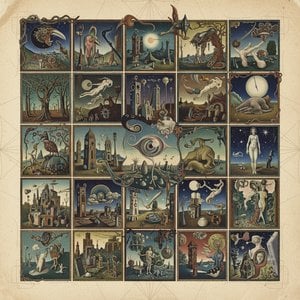
მაქს ერნსტის 25 საუკეთესო შედევრი: სიურრეალიზმის გენიალური სამყარო | ArtsDot
გამოიკვლიეთ მაქს ერნსტის 25 საუკეთესო შედევრი – სიურრეალიზმის გენიალური სამყარო. ნახატების ისტორია, ტექნიკა და შთაგონება ArtsDot-ზე. შეიძინეთ ხარისხიანი რეკონსტრუქციები და შექმნით თქვენი სახლისთვის ხელოვნების უნიკალური ინტერიერი! აღმოაჩინეთ სრული კოლექცია ონლაინ.

The Enduring Legacy of Fine Art Prints: Technique, History & Aesthetic Impact
Explore the rich history & techniques of fine art prints. Discover investment potential, assess authenticity, and learn how to preserve your collection with expert guidance. Trusted insights for discerning collectors.

Giclée Prints: Archival Quality & Aesthetic Nuances for the Discerning Collector
Explore the world of giclée prints with ArtsDot. Learn about archival quality, aesthetic nuances & investment potential. Expert guidance for discerning art collectors seeking museum-quality reproductions and lasting value.
