A Baroque Sanctuary: The Soul of Santa Bibiana
In the bustling heart of Rome, just a stone's throw from the frantic energy of Termini Station, lies a sanctuary of profound stillness and theatrical beauty. Santa Bibiana is not merely a church; it is a masterclass in the High Baroque, a hidden jewel that rewards the wandering soul with an intimate encounter with the divine. While the city’s grander basilicas command attention through sheer scale, Santa Bibiana captivates through its concentrated brilliance, offering a space where the boundaries between architecture, sculpture, and painting dissolve into a singular, emotive experience. For the art lover or the discerning collector, stepping across its threshold feels like discovering a private gallery of the seventeenth century, preserved in a state of breathless, sacred drama.
The architectural narrative of Santa Bibiana is defined by a rare and powerful synergy between two titans of the Roman Baroque: Gian Lorenzo Bernini and Pietro da Cortona. The church's facade, a work of masterful restraint and elegance designed by Bernini himself between 1624 and 1626, serves as a prelude to the splendor within. This period marked a pivotal moment in art history, as the exuberant energy of the Baroque began to find its most sophisticated expression. Inside, the space unfolds with a dramatic sense of movement. The soaring ceilings and expansive windows are designed to manipulate light, creating a celestial atmosphere that breathes life into the intricate stucco decorations. It is an environment where every shadow is intentional, and every beam of sunlight serves to highlight the spiritual tension held within the walls.
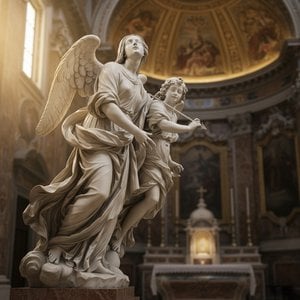
The true heart of the church’s collection lies in its ability to embody the triumph of faith through physical form. The high altar holds one of Bernini's most significant early triumphs: a breathtaking sculpture of Saint Bibiana. Captured in a moment of profound spiritual resolve, the saint stands holding the palm leaf of martyrs, her pose embodying the dynamic grace that would become Bernini's hallmark. This sculptural masterpiece is complemented by the vibrant, sweeping frescoes of Pietro da Cortona and Agostino Ciampelli. Da Cortona’s work, in particular, utilizes a masterful command of color and chiaroscuro to transform the walls into windows onto biblical narratives. The interplay of light and shadow across these painted surfaces creates a sense of depth and realism that pulls the viewer into the very heart of the sacred story.
Beyond its artistic merits, Santa Bibiana serves as a living chronicle of Roman history and devotion. The site itself is steeped in legend, believed to be built upon the very house where the martyr Bibiana and her family suffered during the persecutions of the fourth century. This layer of historical sanctity provides a poignant backdrop to the Baroque renovations, making the art feel less like decoration and more like an essential response to the site's spiritual weight. For interior designers and lovers of classical aesthetics, the church offers an unparalleled study in how texture, light, and narrative can be woven together to create a space that is both intellectually stimulating and emotionally resonant. It remains a testament to an era when art was used not just to decorate, but to illuminate the human spirit.