フランソワ・ブーシェの肖像画

Your Guide to the 100 Most Famous フランソワ・ブーシェ Paintings

10月 2026 更新 · 当サイトの人気スコア(各作品の検索数、閲覧数、注文数)に基づくランキング · 377点の フランソワ・ブーシェの作品がカタログにあります

In short

フランソワ・ブーシェ's best-known piece is Diana getting out of her bath (1742). Next on the list are Bouguereau Song of the Angels and Madame de Pompadour (Jeanne-Antoinette Poisson, 1721 - 1764) (1758). We have 377 works by フランソワ・ブーシェ in our catalogue; this guide picks out the 100 best known, with the year, the museum and the story of each piece.

1703 – 1770, パリ ロココ 最多収蔵館: エルミタージュ美術館

The 10 フランソワ・ブーシェ paintings to know first

1
Diana getting out of her bath (1742) による フランソワ・ブーシェ

Diana getting out of her bath

1742 · Oil On Canvas

François Boucher created Diana getting out of her bath in 1742. The work centers on the Roman goddess Diana, portrayed in a state of nudity. She is situated within a dense forest setting, a natural environment that provides the backdrop for her emergence from the water.

2
Bouguereau Song of the Angels による フランソワ・ブーシェ

Bouguereau Song of the Angels

Oil On Canvas

The air in this 18th-century French Rococo scene vibrates with an invisible melody. At the center, the quiet devotion of Mary and the infant Jesus anchors the composition. Around them, a choir of heavenly beings gathers to perform. One angel rests on the left, another occupies the middle, while two more flank the right side. They hold lyres, flutes, and strings, their movements precise and graceful. The music of the…

3
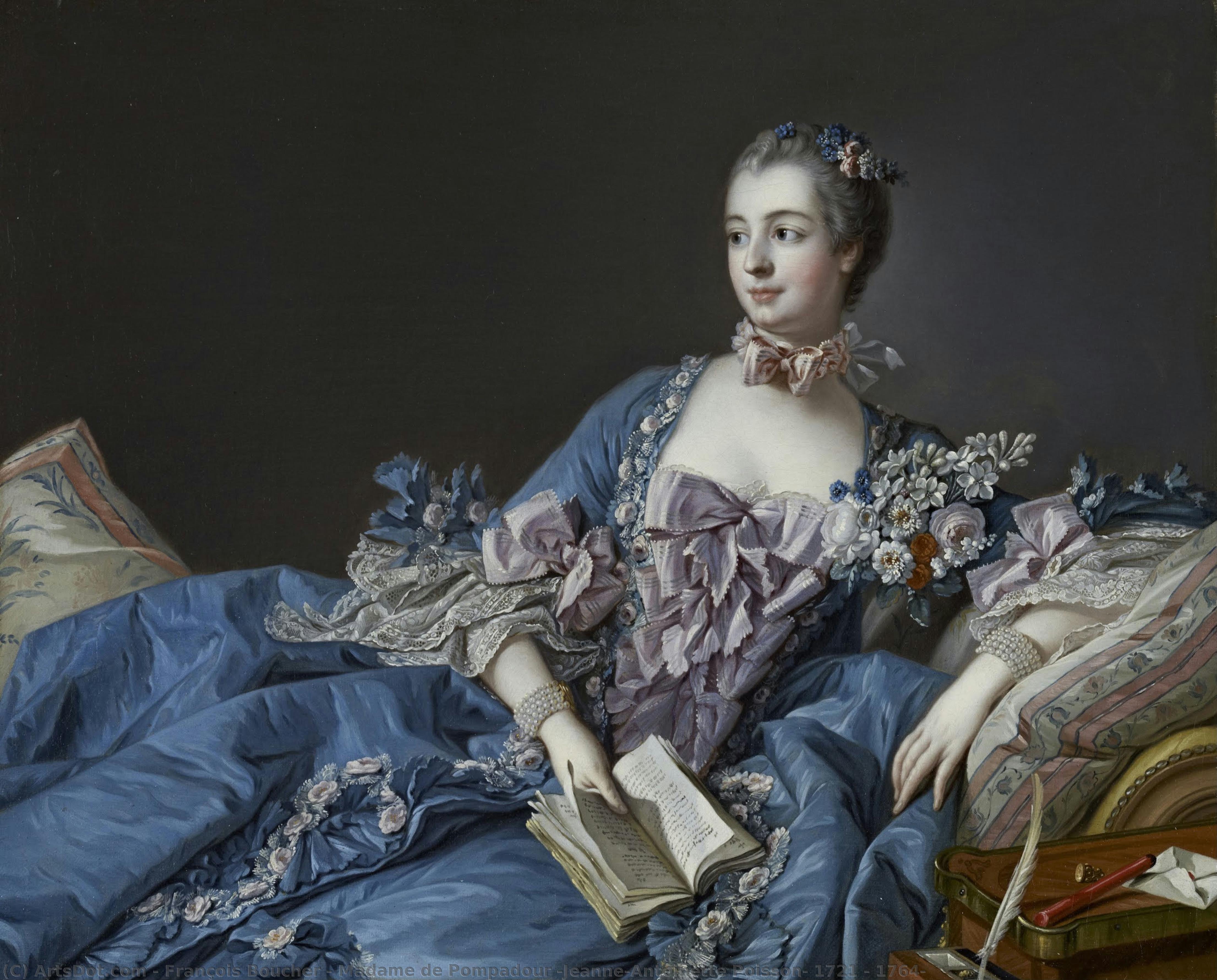
Madame de Pompadour (Jeanne-Antoinette Poisson, 1721 - 1764) (1758) による フランソワ・ブーシェ

Madame de Pompadour (Jeanne-Antoinette Poisson, 1721 - 1764)

1758 · Oil On Canvas · スコットランド国立美術館, エディンバラ

To gaze upon this portrait of Madame de Pompadour is to step directly into the gilded salons of 18th-century France, a world steeped in exquisite taste and whispered intrigue. Painted around 1758 by the master hand of François Boucher, this work transcends mere likeness; it captures an ephemeral moment of cultivated grace. The subject, Jeanne-Antoinette Poisson, is presented not just as a woman of high standing, but as an embodiment…

4
Madame Bergeret (1766) による フランソワ・ブーシェ

Madame Bergeret

1766 · Oil On Canvas · ナショナル・ギャラリー・オブ・アート, ワシントン

François Boucher’s “Madame Bergeret,” completed in 1766, stands as a quintessential exemplar of Rococo artistry—a style synonymous with aristocratic refinement and sensual beauty. More than just a depiction of a woman, it's an immersive experience into the opulent aesthetic sensibilities of Louis XV’s court, capturing not merely likeness but also an idealized vision of feminine grace.

5
The Interrupted Sleep (1750) による フランソワ・ブーシェ

The Interrupted Sleep

1750 · 油彩 キャンバス · メトロポリタン美術館, ニューヨーク

In the heart of the French Rococo era, few works capture the ephemeral magic of a summer afternoon as tenderly as François Boucher’s The Interrupted Sleep. Created in 1750, this masterpiece serves as a window into an idealized world where the rigors of reality are replaced by a soft, melodic dreamscape. The painting invites the viewer to step into a lush, sun-drenched woodland, where the boundaries between music, nature, and…

6
The Setting of the Sun による フランソワ・ブーシェ

The Setting of the Sun

Oil On Canvas

In the luminous realm of 18th-century French artistry, few works capture the ephemeral magic of twilight as profoundly as François Boucher’s The Setting of the Sun. This masterpiece serves as a breathtaking window into the Rococo era, an age defined by its pursuit of elegance, pleasure, and a certain dreamlike sensuality. As the sun descends, the canvas erupts into a dramatic and opulent spectacle, where the boundaries between the earthly…

7
Pastoral Scene (1745) による フランソワ・ブーシェ

Pastoral Scene

1745 · Calouste Gulbenkian Foundation, リスボン

François Boucher’s “Pastoral Scene,” painted in 1745, isn't merely a depiction of a rural landscape; it’s a carefully constructed invitation into an idealized world—a sanctuary of innocence and leisure nestled within the heart of France. The painting immediately draws the viewer in with its soft palette of browns, beiges, and muted greens, evoking a sense of gentle warmth and timeless serenity. Two young figures – a boy and girl –…

8
Venus at Vulcan (1769) による フランソワ・ブーシェ

Venus at Vulcan

1769 · Oil On Canvas · キンベール美術館, フォートワース

François Boucher’s “Venus at Vulcan’s Forge,” painted in 1769, isn't merely a depiction of mythological figures; it’s a vibrant embodiment of reconciliation and the potent dance between opposing forces. Rooted firmly within the opulent Rococo style that defined late 18th-century France, the painting transports us to a dramatic tableau inspired by Virgil’s *Aeneid*. Here, Venus, goddess of love and beauty, and Vulcan, god of fire and craftsmanship, find themselves caught…

9
The Toilette (1742) による フランソワ・ブーシェ

The Toilette

1742 · Oil On Canvas · ティッセン・ボルネミッサ美術館, マドリード

In the soft, luminous atmosphere of François Boucher’s 1742 masterpiece, La Toilette, we are invited to step into a world of refined grace and quiet domesticity. This exquisite oil on canvas serves as a quintessential window into the Rococo era—a period defined by its celebration of pleasure, light, and the delicate nuances of everyday life. The scene unfolds within a richly appointed room, where the warmth of a fireplace anchors…

10
Boreas Abducting Oreithyia (1769) による フランソワ・ブーシェ

Boreas Abducting Oreithyia

1769 · Oil On Canvas · キンベール美術館, フォートワース

François Boucher’s “Boreas Abducting Oreithyia,” completed in 1769, is a captivating distillation of classical mythology rendered with the characteristic exuberance and sensual grace that defined the Rococo style. This painting, measuring an impressive 273 x 205 cm, transports us to a moment of violent disruption – a dramatic retelling of Ovid’s tale from the *Metamorphoses*, where the icy North Wind god, Boreas, forcibly claims the Athenian princess Oreithyia.

Numbers 11 to 100: more フランソワ・ブーシェ paintings

11Juno Asking Aeolus to Release the Winds (1769) による フランソワ・ブーシェJuno Asking Aeolus to Release the Winds1769 · キンベール美術館 12Study for The Bath of Venus (1751) による フランソワ・ブーシェStudy for The Bath of Venus1751 · エルミタージュ美術館 13Painter in his Studio による フランソワ・ブーシェPainter in his Studioルーブル美術館 14The Setting of the Sun (1752) による フランソワ・ブーシェThe Setting of the Sun1752 · ウォレス・コレクション 15Young Woman Sleeping (1760) による フランソワ・ブーシェYoung Woman Sleeping1760 · エルミタージュ美術館 16The Forest (1740) による フランソワ・ブーシェThe Forest1740 · ルーブル美術館 17Vertumnus and Pomona による フランソワ・ブーシェVertumnus and Pomonaバイエルン州立絵画コレクション 18Madame de Pompadour (1754) による フランソワ・ブーシェMadame de Pompadour1754 · 国立ギャラリー・オブ・ビクトリア 19Mill at Charenton (1758) による フランソワ・ブーシェMill at Charenton1758 · Toledo Museum of Art 20Madame de Pompadour (1758) による フランソワ・ブーシェMadame de Pompadour1758 · ヴィクトリア&アルバート博物館 21Young Country Girl Dancing (1770) による フランソワ・ブーシェYoung Country Girl Dancing1770 · オンタリオ美術館 22Blond Odalisque (L'Odalisque Blonde) (1752) による フランソワ・ブーシェBlond Odalisque (L'Odalisque Blonde)1752 · アルテ・ピナコテーク 23The Mill (1751) による フランソワ・ブーシェThe Mill1751 · ルーブル美術館 24The Afternoon Meal (1739) による フランソワ・ブーシェThe Afternoon Meal1739 · ルーブル美術館 25Imaginary Landscape with the Palatine Hill from Campo Vaccino (1730) による フランソワ・ブーシェImaginary Landscape with the Palatine Hill from Campo Vaccino1730 · メトロポリタン美術館 26Pastorale (1760) による フランソワ・ブーシェPastorale1760 · シュタットリッヒェ・クンストハレ・カールスルーエ 27Vertumnus and Pomona (1757) による フランソワ・ブーシェVertumnus and Pomona1757 · サンフランシスコ美術館 28Death of Meleager (1727) による フランソワ・ブーシェDeath of Meleager1727 · ロサンゼルス・カウンティ・ミュージアム・オブ・アート 29Venus in the Workshop of Vulcan (1757) による フランソワ・ブーシェVenus in the Workshop of Vulcan1757 · Yale University Art Gallery 30Standing Nude Girl による フランソワ・ブーシェStanding Nude Girlアルベリナ美術館 31Arcadian Nymphs Making Music (1770) による フランソワ・ブーシェArcadian Nymphs Making Music1770 · ヴィクトリア&アルバート博物館 32Triumph of Venus による フランソワ・ブーシェTriumph of Venusエルミタージュ美術館 33Landscape with a Pond (1746) による フランソワ・ブーシェLandscape with a Pond1746 · エルミタージュ美術館 34Washerwomen (1768) による フランソワ・ブーシェWasherwomen1768 · メトロポリタン美術館 35The Billet-Doux による フランソワ・ブーシェThe Billet-Doux 36Venus and Mercury Instructing Cupid (1738) による フランソワ・ブーシェVenus and Mercury Instructing Cupid1738 · ロサンゼルス・カウンティ・ミュージアム・オブ・アート 37Monument to Mignard (1735) による フランソワ・ブーシェMonument to Mignard1735 · ロサンゼルス・カウンティ・ミュージアム・オブ・アート 38Venus Demanding Arms from Vulcan for Aeneas (1732) による フランソワ・ブーシェVenus Demanding Arms from Vulcan for Aeneas1732 · ルーブル美術館 39Young Girl and Eros (1750) による フランソワ・ブーシェYoung Girl and Eros1750 · デトロイト美術館 40The Rising of the Sun (1750) による フランソワ・ブーシェThe Rising of the Sun1750 · プランタン=モルトゥス博物館 41Hercules and Omphale (1735) による フランソワ・ブーシェHercules and Omphale1735 · プーシキン美術館 42Project for a Cartouche: An Allegory of Minerva, Fame, History and Faith Overcoming Ignorance and Time (1727) による フランソワ・ブーシェProject for a Cartouche: An Allegory of Minerva, Fame, History and Faith Overcoming Ignorance and Time1727 · ロサンゼルス・カウンティ・ミュージアム・オブ・アート 43A young lady holding a pug dog (1745) による フランソワ・ブーシェA young lady holding a pug dog1745 · アートギャラリー・オブ・ニューサウスウェルス 44Saint John the Baptist (1755) による フランソワ・ブーシェSaint John the Baptist1755 · Minneapolis Institute of Art 45Bathing Nymph (1747) による フランソワ・ブーシェBathing Nymph1747 · シカゴ美術館 46River Landscape with an Antique Temple (1762) による フランソワ・ブーシェRiver Landscape with an Antique Temple1762 · ティッセン・ボルネミッサ美術館 47The Modiste (1746) による フランソワ・ブーシェThe Modiste1746 · ウォレス・コレクション 48Head of a Young Girl (1750) による フランソワ・ブーシェHead of a Young Girl1750 · エルミタージュ美術館 49The Beautiful Country Woman (1732) による フランソワ・ブーシェThe Beautiful Country Woman1732 · ノートン・サイモン美術館 50The Distorted Child (1742) による フランソワ・ブーシェThe Distorted Child1742 · シュタットリッヒェ・クンストハレ・カールスルーエ 51Breakfast による フランソワ・ブーシェBreakfast 52Diana and Callisto (1760) による フランソワ・ブーシェDiana and Callisto1760 · Slovak National Gallery 53Cupids. Allegory of Painting (1760) による フランソワ・ブーシェCupids. Allegory of Painting1760 · エルミタージュ美術館 54Pastoral (1730) による フランソワ・ブーシェPastoral1730 · Walters Art Museum 55A Pastoral Scene ('La Jardiniere Endormie') (1762) による フランソワ・ブーシェA Pastoral Scene ('La Jardiniere Endormie')1762 · スコットランド国立美術館 56Virgin and Child with the Young Saint John the Baptist and Angels (1765) による フランソワ・ブーシェVirgin and Child with the Young Saint John the Baptist and Angels1765 · メトロポリタン美術館 57The Cherry Gatherers (1768) による フランソワ・ブーシェThe Cherry Gatherers1768 · ケンウッド・ハウス 58A Pastoral Scene ('L'Offrande a la Villageoise') (1761) による フランソワ・ブーシェA Pastoral Scene ('L'Offrande a la Villageoise')1761 · スコットランド国立美術館 59Allegory of Autumn (1753) による フランソワ・ブーシェAllegory of Autumn1753 · メトロポリタン美術館 60The Education of Cupid (1742) による フランソワ・ブーシェThe Education of Cupid1742 · シャルロッテンブルク宮殿 61The Birth of Venus (1740) による フランソワ・ブーシェThe Birth of Venus1740 · 国立美術館 62The Judgement of Susannah (1720) による フランソワ・ブーシェThe Judgement of Susannah1720 · カナダ国立美術館 63The Sleep of Loves (1725) による フランソワ・ブーシェThe Sleep of Loves1725 64Rebecca Receiving from the Hands of Eliezer the Gifts of Abraham (1728) による フランソワ・ブーシェRebecca Receiving from the Hands of Eliezer the Gifts of Abraham1728 65The Sacrifice of Gideon (1728) による フランソワ・ブーシェThe Sacrifice of Gideon1728 66Rest at the Fountain (1730) による フランソワ・ブーシェRest at the Fountain1730 · バイエルン州立絵画コレクション 67The Hunting Breakfast, Sketch. (1733) による フランソワ・ブーシェThe Hunting Breakfast, Sketch.1733 68"La Fontaine", Rococo Scene at the Fountain (1728) による フランソワ・ブーシェ"La Fontaine", Rococo Scene at the Fountain1728 69Rebecca receives Abraham's gifts from Eliezer (1725) による フランソワ・ブーシェRebecca receives Abraham's gifts from Eliezer1725 · ストラスブール美術館 70Mercury Confiding the Infant Bacchus to the Nymphs (1733) による フランソワ・ブーシェMercury Confiding the Infant Bacchus to the Nymphs1733 · ウォレス・コレクション 71Bacchus and Erigone (1745) による フランソワ・ブーシェBacchus and Erigone1745 · ウォレス・コレクション 72Bird-Catching Cherubs (1732) による フランソワ・ブーシェBird-Catching Cherubs1732 · Rhode Island School of Design Museum of Art 73Head of a Young Woman (1732) による フランソワ・ブーシェHead of a Young Woman1732 · クリーブランド美術館 74'La vie champêtre' (1728) による フランソワ・ブーシェ'La vie champêtre'1728 · Belton House 75La Femme au Chat: Les caresses dangereuses (1731) による フランソワ・ブーシェLa Femme au Chat: Les caresses dangereuses1731 · サンフランシスコ美術館 76The Bird Catchers (1748) による フランソワ・ブーシェThe Bird Catchers1748 · J・ポール・ゲティ美術館 77Putti with Birds (1730) による フランソワ・ブーシェPutti with Birds1730 · Honolulu Museum of Art 78sleeping Amor (1728) による フランソワ・ブーシェsleeping Amor1728 79boy playing with a dog (1728) による フランソワ・ブーシェboy playing with a dog1728 · Musée d'Art et d'Histoire de Cholet Native Name 80Allegory of Autumn: Putti Playing with a Goat (1730) による フランソワ・ブーシェAllegory of Autumn: Putti Playing with a Goat1730 81Five Naked Children Playing by a Rocky Pool (1732) による フランソワ・ブーシェFive Naked Children Playing by a Rocky Pool1732 · ナショナル・トラスト 82The Forges of Vulcan (1737) による フランソワ・ブーシェThe Forges of Vulcan1737 83Pastoral Subject. The Sleeping Shepherdess (1743) による フランソワ・ブーシェPastoral Subject. The Sleeping Shepherdess1743 · Palais Bourbon 84The Marriage of Cupid and Psyche (1744) による フランソワ・ブーシェThe Marriage of Cupid and Psyche1744 · ルーアン美術館 85Stable interior with amorous scene (1735) による フランソワ・ブーシェStable interior with amorous scene1735 · Musée Cognacq-Jay 86Air: Three Putti with Birds (1741) による フランソワ・ブーシェAir: Three Putti with Birds1741 · ヴィクトリア&アルバート博物館 87The Egg Seller (1734) による フランソワ・ブーシェThe Egg Seller1734 · Wadsworth Atheneum 88Cupid and the Three Graces (1738) による フランソワ・ブーシェCupid and the Three Graces1738 · Calouste Gulbenkian Museum 89Cupids in Conspiracy (1740) による フランソワ・ブーシェCupids in Conspiracy1740 · クリーブランド美術館 90Music and Dance (1740) による フランソワ・ブーシェMusic and Dance1740 · クリーブランド美術館 91Mercury Entrusting the Infant Bacchus to the Nymphs of Nysa (1734) による フランソワ・ブーシェMercury Entrusting the Infant Bacchus to the Nymphs of Nysa1734 · シンシナティ美術館 92Rural idyll (1735) による フランソワ・ブーシェRural idyll1735 · バイエルン州立絵画コレクション 93The Nest, also known as the Berger Present (1737) による フランソワ・ブーシェThe Nest, also known as the Berger Present1737 94Young Lady with a Muff (1737) による フランソワ・ブーシェYoung Lady with a Muff1737 95Putti as Fisherman (1744) による フランソワ・ブーシェPutti as Fisherman1744 · ヒューストン美術館 96Cupid Wounding Psyche (1741) による フランソワ・ブーシェCupid Wounding Psyche1741 · ロサンゼルス・カウンティ・ミュージアム・オブ・アート 97Young Woman with Flowers in Her Hair (1734) による フランソワ・ブーシェYoung Woman with Flowers in Her Hair1734 · ボストン美術館 98The Rest of the Holy Family during the Flight into Egypt (1744) による フランソワ・ブーシェThe Rest of the Holy Family during the Flight into Egypt1744 · Statens Museum For Kunst 99Leopard hunt (1736) による フランソワ・ブーシェLeopard hunt1736 · Musée de Picardie 100Crocodile hunt (1739) による フランソワ・ブーシェCrocodile hunt1739 · Musée de Picardie

フランソワ・ブーシェ's paintings, period by period

What フランソワ・ブーシェ painted most

The four subjects that come up most often in these pieces, each with its best-known example.

Where you can see フランソワ・ブーシェ's paintings

このページに掲載されている絵画を最も多く所蔵している 8 の美術館

美術館 都市 フランソワ・ブーシェの作品 このリストの絵画
エルミタージュ美術館, サンクトペテルブルクエルミタージュ美術館 サンクトペテルブルク 12 Study for The Bath of Venus, Young Woman Sleeping, Triumph of Venus
メトロポリタン美術館, ニューヨークメトロポリタン美術館 ニューヨーク 13 The Interrupted Sleep, Imaginary Landscape with the Palatine Hill from Campo Vaccino, Washerwomen
ルーブル美術館, パリルーブル美術館 パリ 8 Painter in his Studio, The Forest, The Mill
ロサンゼルス・カウンティ・ミュージアム・オブ・アート, ロサンゼルスロサンゼルス・カウンティ・ミュージアム・オブ・アート ロサンゼルス 6 Death of Meleager, Venus and Mercury Instructing Cupid, Monument to Mignard
ウォレス・コレクション, ロンドンウォレス・コレクション ロンドン 21 The Setting of the Sun, The Modiste, Mercury Confiding the Infant Bacchus to the Nymphs
スコットランド国立美術館, エディンバラスコットランド国立美術館 エディンバラ 5 Madame de Pompadour (Jeanne-Antoinette Poisson, 1721 - 1764), A Pastoral Scene ('La Jardiniere Endormie'), A Pastoral Scene ('L'Offrande a la Villageoise')
クリーブランド美術館, クリーブランドクリーブランド美術館 クリーブランド 5 Head of a Young Woman, Cupids in Conspiracy, Music and Dance
キンベール美術館, フォートワースキンベール美術館 フォートワース 4 Venus at Vulcan, Boreas Abducting Oreithyia, Juno Asking Aeolus to Release the Winds

Decade by decade: the best-known フランソワ・ブーシェ piece of each

年代別作品数

Pick a decade to see its standout piece.

フランソワ・ブーシェ: quick answers about the paintings

What is フランソワ・ブーシェ's best-known painting?See the answer

Top of the list is Diana getting out of her bath (1742). Right behind it: Bouguereau Song of the Angels and Madame de Pompadour (Jeanne-Antoinette Poisson, 1721 - 1764) (1758).

What age was フランソワ・ブーシェ when creating Diana getting out of her bath?See the answer

39 years old. フランソワ・ブーシェ was born in 1703, and Diana getting out of her bath dates from 1742.

What are フランソワ・ブーシェ's top 10 paintings?See the answer

Diana getting out of her bath, Bouguereau Song of the Angels, Madame de Pompadour (Jeanne-Antoinette Poisson, 1721 - 1764), Madame Bergeret, The Interrupted Sleep, The Setting of the Sun, Pastoral Scene, Venus at Vulcan, The Toilette と Boreas Abducting Oreithyia. You'll find the year and the museum of each in the list above.

How many works by フランソワ・ブーシェ are in your catalogue?See the answer

We have 377 works by フランソワ・ブーシェ in our catalogue, dated 1720 to 1770.

In which museums can you see フランソワ・ブーシェ's famous works?See the answer

You'll find most of them in エルミタージュ美術館 (サンクトペテルブルク), メトロポリタン美術館 (ニューヨーク) と ルーブル美術館 (パリ). The museum list above has the full breakdown.

When did フランソワ・ブーシェ make the most famous pieces?See the answer

In 1730s, more than any other time: 28 of the 100 pieces on this page date from then, The Afternoon Meal among them.

What are フランソワ・ブーシェ's first and last famous pieces?See the answer

The earliest piece here is The Judgement of Susannah (1720); the most recent is Young Country Girl Dancing (1770).

Which subjects did フランソワ・ブーシェ paint most often?See the answer

Woman (21), Trees (14) と Man (10), out of the 100 pieces on this page.

Which medium shows up most in フランソワ・ブーシェ's paintings?See the answer

Oil On Canvas, used in 45 of the 100 pieces on this page.

What style or movement is フランソワ・ブーシェ known for?See the answer

ロココ, as you can see in the pieces on this page.

Which famous フランソワ・ブーシェ paintings are at the エルミタージュ美術館?See the answer

You can see 6 of the pieces on this page at the エルミタージュ美術館, サンクトペテルブルク, including Study for The Bath of Venus, Young Woman Sleeping と Triumph of Venus.

Where can I order a フランソワ・ブーシェ reproduction?See the answer

Yes. Every painting on this page is available as a hand-painted oil reproduction or a print, in the size that suits you. Just open the painting's page to order.

フランソワ・ブーシェ's story

幼少期、家族、そして修業時代

活気あふれるフランス、パリの喧騒の中で、フランソワ・ブーシェの物語は1703年9月29日に幕を開けました。彼は、視覚芸術がすでに生活の一部となっていた家庭に生まれました。父ニコラ・ブーシェはレースデザイナーとして生計を立てており、その環境下で育った彼は、幼い頃から模様やデザインの複雑な機微に触れてきました。こうした経験は、彼がまだキャンバスに筆を置くずっと前から、細部に対する鋭い審美眼を養うことにつながったのでしょう。父から授けられた最初の教えは、競争の激しいパリの芸術界を生き抜くために不可欠な、基礎的な技術を彼の中に深く刻み込みました。

少年が成長するにつれ、その類まれな才能は、すでにその道で名を馳せていた人々を惹きつけてやみませんでした。17歳の時、フランソワ・ブーシェは高名な画家フランソワ・ルモワーヌに師事することになります。しかし、この修業期間は短いものでした。若き芸術家の運命は、わずか3ヶ月で劇的な転換を迎えることになります。彼はルモワーヌの指導のもとを離れ、版画家ジャン=フランソワ・カルスの門を叩きました。この転身こそが、彼に線の精密さと版画のメカニズムを極めさせることになったのです。

野心と才能が交差したとき、それは大きな勝利の瞬間として訪れました。1720年、フランソワ・ブーシェは自らの人生を決定づける偉業を成し遂げます。それは、芸術家にとって最高の名誉とされる「グラン・プリ・ド・ローマ」の受賞でした。この勝利は決して容易なものではなく、彼が同世代の中で台頭する存在であることを世に知らしめると同時に、パリの工房という枠を超え、ヨーロッパ芸術のより壮大な舞台へと踏み出すための力強い推進力を彼に与えたのです。

芸術的発展とイタリアの影響

栄誉あるグラン・プリ・ド・ローマを手にした若き芸術家は、その視線をイタリアへと向けました。1728年、彼はフランス・アカデミーで学ぶべくローマに降り立ちます。この時期は、彼の芸術的感性を根本から形作る重要な歳月となりました。イタリアの柔らかな光の中で出会った古典的な理想や巨匠たちの傑作は、単に技法を教え込んだだけではありません。それは、彼の中に「新しいものの見方」を植え付けたのです。フランソワ・ブーシェは、バロックの巨匠たちが持つ表情豊かな筆致や、素朴で絵画的なアプローチに強く惹かれていきました。この独自の好みこそが、後に同時代の画家たちが守り続けていた厳格なアカデミックな伝統とは一線を画す、彼独自のスタイルを確立させることになったのです。

フランスへの帰国後、芸術界における彼の躍進は目覚ましいものでした。1731年にはアカデミー・ロワイヤル・ド・ペイントゥール・エ・スカルプチュール(王立絵画彫刻アカデミー)への入会を果たし、1734年には歴史画家の地位を確立します。この公的な承認は、静謐な古典形式の研究から、華やかで喧騒に満ちたフランス宮廷の生活へと、彼のキャリアを大きく転換させる礎となりました。初期の成功は、厳格な修業時代に培った基礎と、イタリアでの歳月を通じて得た情熱的で表現豊かな教訓が、見事な調和を成したことによってもたらされたものだったのです。

パトロン、工房、そして数々の依頼

フランス宮廷における成功は、単なる才能だけでは成し遂げられないものでした。そこでは、王室の審美眼を左右する権力者たちの寵愛が不可欠だったのです。フランソワ・ブーシェは、ルイ15世の寵愛を受け、絶大な影響力を誇ったマダム・ド・ポンパドゥールという、これ以上ない強力な盟友を見出しました。二人の絆は極めて深いものであり、彼女はブーシェの最も重要なパトロンとして、当時の視覚文化を定義づけるような多種多様な作品を数多く依頼しました。彼女の熱烈な支持を通じて、ブーシェの名は単なる「熟練した画家」という枠を超え、フランス宮廷のアイデンティティそのものを象徴する存在へと昇華していったのです。

彼の芸術的影響力は、やがてフランス美術を統べる公的な機関にまで浸透していきます。1755年、彼は王立ゴブラン織物製作所のディレクターに任命され、その卓越したヴィジョンは絵画の枠を越え、装飾芸術の領域へと広がっていきました。また、ボーヴェの工房においてもその手腕を振るい、彼のデザインは美しい織物へと姿を変えていきました。ブーシェの創造性はキャンバスの中に留まることはありませんでした。彼は演劇の世界にも足を踏み入れ、舞台を彩る豪華な衣装から、劇的なスペクタクルを現実のものとする舞台装置に至るまで、そのデザインを手がけたのです。こうした多才さゆえに、彼の美学は宮殿の壁面から劇場の舞台に至るまで、貴族社会のあらゆる隅々にまで浸透していきました。

フランソワ・ブーシェの公的な栄誉が最高潮に達したのは、1765年に「王室首席画家(Premier Peintre du Roi)」の称号を授けられた時でした。この称号は、彼が芸術家として頂点に登り詰めたことを示す決定的な証となりました。彼の名はもはや一つの時代そのものと同義となり、その作品は国家の最高権力者たちが切望するものとなったのです。アカデミーの教授から学長へと昇り詰め、最終的には王室の直属として仕えるに至ったその歩みは、まさに芸術家としての栄光に満ちた、揺るぎない昇華のプロセスであったと言えるでしょう。

技法とロココ様式

フランソワ・ブーシェは、過去の重々しい陰影に背を向け、光と愛らしさを愛する独自の感性とともに、芸術の世界を軽やかに渡り歩きました。その筆致は、光り輝く色彩と柔らかなパステル調のパレットを好む、繊細なものでした。彼は悦びと優雅さを描き出すことを追求し、しばしば非対称な構図を用いることで、動きとゆとりを感じさせる空間を生み出しました。このアプローチによって、たとえ厳粛な神話の物語であっても、情熱的で親密なエロティシズムを湛えた情景へと変貌を遂げたのです。そこでは、神々は遠い存在の神としてではなく、まるで遊び心にあふれた恋人たちのように描かれていました。

自然界に対する彼の眼差しには、ある種の拒絶とも言える独自の美学が宿っていました。彼はかつて、自然は「trop verte et mal éclairée」(緑が強すぎ、光が不十分である)と語ったことで知られています。これは、ありのままの未加工な世界には、彼が提供しようとした洗練が欠けていることを示唆していました。彼は屋外の剥き出しの現実を描く代わりに、理想化された牧歌的な領域を構築することを好んだのです。彼の筆によって、風景は享楽と美のための舞台へと昇華されました。そこでは、光は常に、描かれる主題の肌を最も美しく見せるように、完璧な角度から降り注いでいるのです。

彼の卓越した技術は、キャンバスの枠を超え、描かれる対象の質感にまで及びました。特に、上質な布地の光沢や、人間の肌の柔らかさを表現する際に見せる細部への細やかなこだわりは、目を見張るものがあります。こうした技術的な精密さは、フランス・ロココの視覚言語を定義づけるものとなり、宮廷の嗜好を反映した贅沢で洗練された世界を創り上げました。彼の作品は、単なる情景の描写にとどまりません。それは、優雅さと洗練された歓喜に満ちた「空気感」そのものを創造することだったのです。

主要作品と傑作の数々

アカデミーの回廊でその才能が花開くにつれ、フランソワ・ブーシェは古代の壮大な物語を通じて自らの価値を証明しようと試みました。1734年、彼は呈作品(morceau de réception)としてリナルドとアルミダを披露し、それがこの時代の巨匠としての彼の到来を告げる記念碑的な作品となりました。この一作によって、彼は神話的なドラマを自在に操る手腕を世に示し、優雅さの追求と理想化された美の描写によって定義される、その後の輝かしいキャリアの舞台を整えたのです。

彼の筆が最も頻繁に捉えた主題は、神聖なるもの、そして官能的なものでした。1740年頃、彼は海の花から女神が姿を現す瞬間を鮮やかに描き出したヴィーナスの誕生を完成させます。女性性や神話へのこの情熱は1750年代にかけても衰えることはありませんでした。1751年には、ヴィーナスの化粧や愛を慰めるヴィーナスといった作品を生み出し、肌の柔らかな質感や、遊び心に満ちた親密な構図を強調しました。これらの絵画は、神々でさえも洗練された享楽の中に生きているかのような、夢幻的な世界を映し出しています。

神話の世界を越えて、フランソワ・ブーシェの手は、フランスの権力を掌握する重要人物たちの肖像を描き出すためにも頻繁に求められました。1756年のポンパドゥール夫人の肖像は、彼の最も重要なパトロンを記録した極めて重要な作品として今も語り継がれています。こうした肖像画を通じて、彼は宮廷の優雅さを、パステルカラーの色彩と洗練された佇まいという視覚的な言語へと昇華させたのです。

  • リナルドとアルミダ (1734年)
  • ヴィーナスの誕生 (1740年頃)
  • ヴィーナスの化粧 (1751年)
  • 愛を慰めるヴィーナス (1751年)
  • ポンパドゥール夫人の肖像 (1756年)

今日、その作品を訪ねて

フランソワ・ブーシェが遺した輝かしい足跡を辿るには、フランスの国境を越え、世界各地へと旅をすることになるでしょう。彼の筆致は、当時の宮廷文化の精神を鮮やかに描き出し、海を越えて遠い地へとまで届いたからです。パリでは、ルーヴル美術館が数々のキャンバスを大切に守り、彼が丹念に描き出した優雅な宮廷生活の息吹を今に伝えています。また、アメリカ大陸で彼の芸術に触れたいと願う人々は、ニューヨークのメトロポリタン美術館を訪れることでしょう。そこでは、彼が描いた享楽的な情景や神話の世界が、今もなお人々の目を楽しませるために公開されています。彼の芸術は、その洗練された筆使いを愛した多くの人々によって、世界中の美術館のホールにその存在感を示しています。

彼の才能の及ぶ範囲は、東洋と西洋の偉大なコレクションにまで広がっています。サンクトペテルブルクのエルミタージュ美術館には彼の作品が収められており、広大なギャラリーを歩く人々に向けて、その独創的なヴィジョンを生き生きと伝え続けています。一方、フォートワースのキンベル美術館にも彼の作品が展示されており、現代の鑑賞者が、彼のキャリアを象徴する柔らかな色彩や神話的なテーマを間近に感じることができます。彼の絵画は、こうした多様な聖域の中に静かに佇み、好奇心旺盛な眼差しがそれらを見出す時を待っているのです。

フランソワ・ブーシェによる全 377点の作品 →