

1



10月 2026 更新 · 当サイトの人気スコア(各作品の検索数、閲覧数、注文数)に基づくランキング · 2点の Samuel Rosenbergの作品がカタログにあります
要約すると
Samuel Rosenbergの代表作はLower Fifth Avenue (1936)です。ピッツバーグにあるSenator John Heinz History Centerで鑑賞いただけます。 当カタログにはSamuel Rosenbergによる作品が2点収められています。本ガイドでは、その中から最も有名な2作品を厳選し、制作年、所蔵美術館、そして各作品にまつわる物語とともにご紹介します。
このページに掲載されている絵画を最も多く所蔵している 2 の美術館
| 美術館 | 都市 | Samuel Rosenbergの作品 | このリストの絵画 |
|---|---|---|---|
 Senator John Heinz History Center |
ピッツバーグ | 1 | Lower Fifth Avenue |
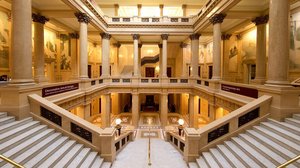 カーネギー美術館 (Carnegie Museum of Art) |
ピッツバーグ | 1 | Untitled |
このページに掲載されているSamuel Rosenbergの作品はすべて1936年に制作されたものです。知名度の高い順にご紹介します。
年を選択して作品を見る
リストのトップはLower Fifth Avenue (1936)です。
40歳。Samuel Rosenbergは1896に生まれ、Lower Fifth Avenueは1936年の作品です。
カタログにはSamuel Rosenbergによる作品が2点あります。
その多くはSenator John Heinz History Center (ピッツバーグ) と カーネギー美術館 (Carnegie Museum of Art) (ピッツバーグ)で見ることができます。上記の美術館リストに詳細が記載されています。
In the heart of Pittsburgh, amidst the steep hills and the heavy, industrial atmosphere of a changing century, lived an artist whose work served as a profound mirror to his community. Samuel Rosenberg was not merely a painter but a chronicler of the human condition, capturing the shifting tides of life in the Hill District through decades of social and economic upheaval. Born in 1896, his roots were deeply embedded in the immigrant experience, as his parents arrived from Austria-Hungary. This connection to the multiethnic, layered populations of his home city provided the emotional foundation for a career that would span nearly six decades, during which he transformed from a traditional portraitist into a master of light and abstraction.
His early years were marked by a burgeoning passion for the visual arts, nurtured within the local settlement houses and under the guidance of mentors like Jacob R. Coblens. During this formative period, Rosenberg developed a disciplined ability to draw from memory, a skill that would later underpin his more complex compositions. His initial foray into the art world was defined by the intimacy of portraiture, where he utilized chiaroscuro and a confident command of light to capture the essence of his subjects. As he matured, his gaze turned outward toward the urban landscape, finding beauty in the very grit and gloom that others might overlook—the uneven houses, the polluted air, and the resilient spirit of the neighborhoods around him.
The trajectory of Rosenberg’s style was as dynamic as the era he inhabited. During the 1930s, his work became deeply entwined with the American Regionalist movement. He turned his brush toward the social realities of the Great Depression, creating poignant, socially conscious depictions of life in Pittsburgh's Hill District. Works such as Eviction served as powerful testimonies to the hardships faced by residents during this era of economic struggle. He did not shy away from the "dirty air" or the industrial shadows; instead, he found a way to imbue these scenes with an emotional weight that ensured Pittsburgh’s place in the broader narrative of American art.
As the world descended into the darkness of World War II, Rosenberg’s artistic language underwent another profound metamorphosis. His subjects shifted from the literal to the allegorical, using Jewish iconography and universal symbols to process the horrors of the Holocaust and the widespread human misery of the conflict. This period of allegory bridged the gap between his representational roots and a burgeoning interest in abstraction. By the late 1940s and into the 1950s, he began to explore Abstract Expressionism, moving away from recognizable forms toward a focus on pure emotion, color, and shape. His technique became increasingly sophisticated, employing sequential layers of translucent color and transparent glazes that allowed his canvases to appear as if they were emitting light rather than merely reflecting it, much like the luminous quality of stained glass.
Beyond the canvas, Rosenberg’s impact was felt most deeply through his devotion to teaching. As a professor at Carnegie Mellon University and a leader in various community art programs, he became a revered figure for generations of artists. He possessed a rare ability to foster freedom of expression, encouraging his students to find their own voices within the "adventure" of art. His pedagogical influence is perhaps most famously noted by the caliber of his pupils, which included luminaries such as:
Throughout his life, Rosenberg’s work was recognized on the national stage, with exhibitions at prestigious institutions such as the Museum of Modern Art, the Whitney Museum of American Art, and the Corcoran Gallery. Despite this international reach, he remained steadfastly loyal to Pittsburgh, believing that an artist should find something meaningful to say about their own surroundings. He left behind a monumental body of work—over 500 paintings, hundreds of sketches, and numerous collages—that stands as a testament to a life spent observing, interpreting, and ultimately illuminating the complexities of the twentieth century.
