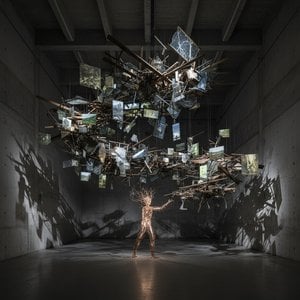
A Visionary of Slow Time: The Life and Art of Robert Wilson
Robert Wilson, born October 4, 1941, in Waco, Texas, and passing on July 31, 2025, was not merely a theater director; he was an architect of experience, a sculptor of time itself. His upbringing within a conservative Texan family presented early challenges – navigating a burgeoning artistic sensibility alongside the constraints of societal expectation, compounded by a childhood stutter. This initial struggle proved formative, leading him to dance instruction with Bird “Baby” Hoffman, a method that unlocked not just speech but also a profound understanding of body and movement as expressive forces. Wilson’s academic path initially led him toward business administration at the University of Texas (1959-1962), yet the pull of artistic exploration proved irresistible. A move to Brooklyn in 1963 marked a decisive shift, culminating in a BFA in architecture from the Pratt Institute in 1965. This architectural foundation would become deeply embedded within his aesthetic – a concern for space, structure, and the deliberate framing of perception. His studies were enriched by encounters with influential figures like Sibyl Moholy-Nagy, widow of László Moholy-Nagy, and painter George McNeil, alongside explorations in Arizona under architect Paolo Soleri, all contributing to a uniquely interdisciplinary approach.Deconstructing Narrative: The Evolution of a Style
Wilson’s early artistic endeavors took shape with the founding of the Byrd Hoffman School of Byrds in 1968 – an experimental performance company that served as a crucible for his developing vision. Works like *The King of Spain* (1969) and *The Life and Times of Sigmund Freud* were not conventional plays, but rather investigations into form, duration, and the very nature of storytelling. A pivotal moment arrived with his collaboration with composer Philip Glass on *Einstein on the Beach* (1976). This groundbreaking opera was a seismic event in contemporary performance art, eschewing traditional narrative structure for a series of interconnected tableaux, minimalist music, and repetitive actions. It established Wilson as a major force, demonstrating his ability to create hypnotic, immersive experiences that bypassed conventional dramatic expectations. His signature style began to coalesce: slow movement, austere aesthetics, innovative lighting design, and an almost sculptural use of space. He wasn’t interested in telling stories so much as creating environments for contemplation, allowing audiences to construct their own meanings within the carefully orchestrated framework he provided. This deliberate pacing, often perceived as radical at the time, became a hallmark of his work, inviting viewers into a different relationship with time and perception.Expanding Boundaries: Collaboration and Innovation
Throughout the 1980s and beyond, Wilson continued to push artistic boundaries. *CIVIL warS* (1984), an ambitious multi-part performance exploring themes of conflict and societal breakdown, was nominated for a Pulitzer Prize despite facing resistance from conservative elements. This demonstrated his willingness to tackle complex and challenging subject matter, even in the face of controversy. He embraced collaboration as a core principle, working with diverse artists such as Tom Waits and William S. Burroughs on *The Black Rider* (1990), a darkly humorous blend of music, poetry, and visual art. This collaborative spirit extended to literary adaptations, reimagining classics through his unique lens. In 1991, he established The Watermill Center on Long Island, New York – a “laboratory for performance” dedicated to fostering collaboration among artists from various disciplines. It became a vital space for experimentation, nurturing new ideas and pushing the boundaries of interdisciplinary art-making. His work consistently blurred the lines between theater, opera, visual art, and performance art, influencing generations of artists working across these fields.A Legacy of Influence: Minimalism, Repetition, and Beyond
Wilson’s artistic lineage is rich with influences – from pioneering choreographers like George Balanchine, Merce Cunningham, and Martha Graham to the surrealist poets and artists who challenged conventional modes of representation. He stands as a leading figure in avant-garde theater, renowned for his experimental approach and willingness to dismantle theatrical norms. His use of minimalism, repetition, and slow movement created a unique aesthetic that has been widely imitated and celebrated. The hypnotic quality of his productions stems from this deliberate manipulation of time and space, creating an immersive experience that transcends traditional narrative structures. He wasn’t simply presenting a play or an opera; he was constructing an environment – a world unto itself – where the audience became active participants in the creation of meaning. His cross-cultural collaborations demonstrated a commitment to artistic exchange and innovation, recognizing the power of diverse perspectives to enrich creative expression. Works like *Lecture on Nothing* (2012), commissioned for the John Cage centenary celebration, showcased his continued exploration of minimalist aesthetics and conceptual themes, solidifying his position as a visionary artist who consistently challenged expectations. His impact resonates not only within the realm of performance art but also across visual arts, music, and contemporary culture.Enduring Echoes: The Final Years and Lasting Impact
Even in his later years, Robert Wilson remained a prolific creator, continuing to collaborate with emerging artists and explore new artistic territories. *The Old Woman* (2013), featuring Mikhail Baryshnikov and Willem Dafoe, exemplified his ongoing interest in adapting literary classics for the stage, demonstrating his ability to breathe new life into familiar narratives. His death on July 31, 2025, marked the loss of a true original, but his legacy endures through a vast body of work that continues to inspire and challenge audiences worldwide. Wilson’s groundbreaking approach to performance art, innovative use of technology, and unwavering commitment to artistic experimentation have left an indelible mark on the cultural landscape. He redefined what theater could be – not as a vehicle for storytelling, but as a space for contemplation, a laboratory for perception, and a testament to the power of slow time.- His influence extends far beyond the stage, shaping contemporary visual art, music, and performance practices.
- The Watermill Center remains a vital hub for artistic innovation, fostering collaboration and experimentation.
- Wilson’s work continues to be studied and celebrated by artists and scholars around the world.
Q&A
Robert Wilsonの作品を、ムード別に探すにはどこへ行けばよいですか?
Robert Wilsonのムード別ルームは、アーティストの作品をムード別にまとめたページです。
Robert Wilsonの作品に関する統計情報はどこで確認できますか?
Robert Wilsonの統計情報ページでは、当サイトに掲載されているアーティストの作品から算出された統計データをご覧いただけます。
Robert Wilsonの出身国はどこですか?
Robert WilsonはUnited States of Americaで生まれました。