The Quiet Revolution of Wooden Automata
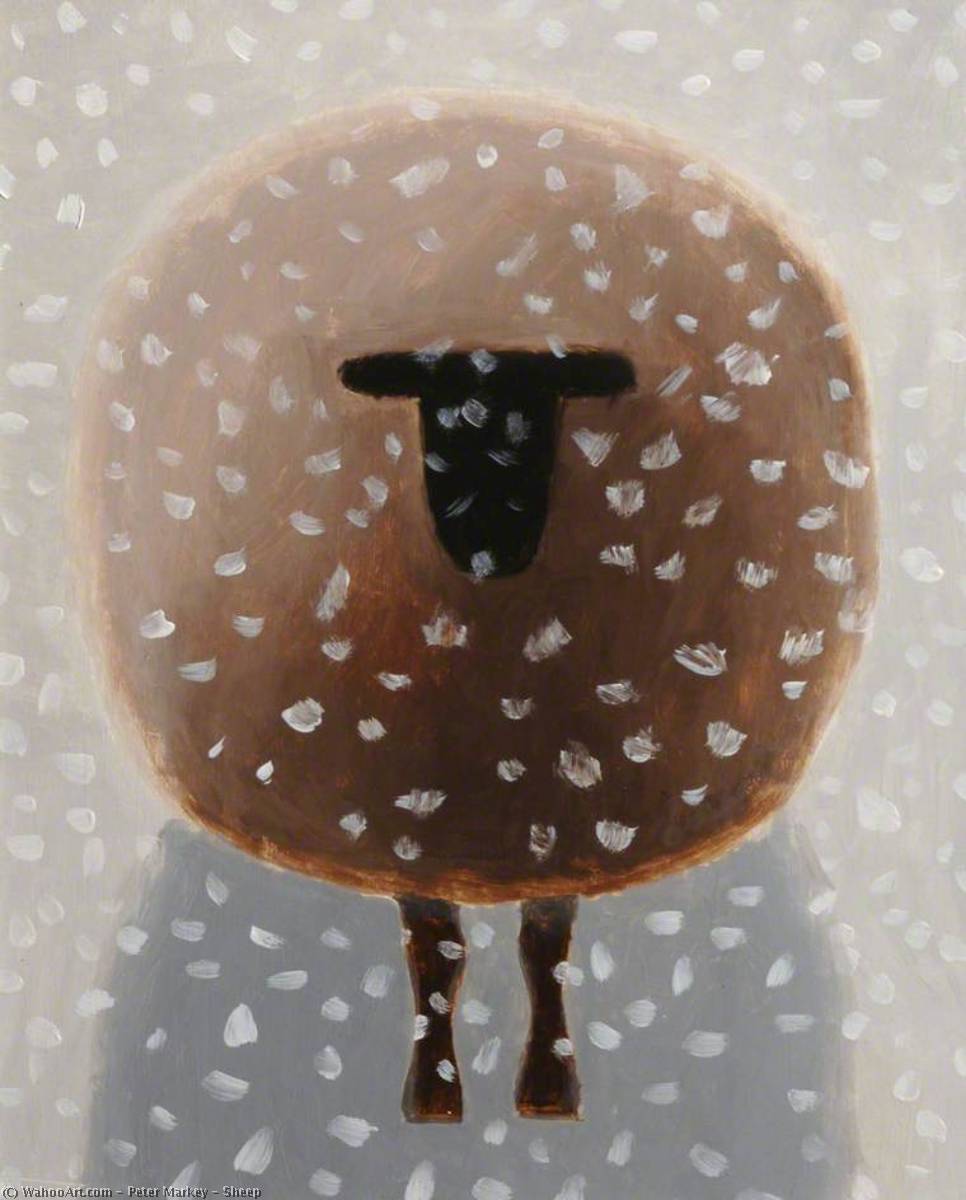
Peter Markey (1930–2016) occupied a singular space in the landscape of British art, a creator who breathed life into the inanimate through the delicate marriage of mechanics and whimsy. While many of his contemporaries sought to capture the world through static pigment, Markey looked toward movement, becoming renowned for his charming automata, kinetic sculptures, and mesmerizing wave machines. As both a painter and a teacher, he possessed a unique ability to translate the rhythms of everyday life—the spirited energy of footballers, the tenderness of couples, or the structured chaos of classroom scenes—into deceptively simple wooden forms. His work was never merely about the spectacle of motion; it was a profound exploration of how small, seemingly insignificant mechanisms could generate complex behaviors and evoke deep, resonant emotions.
The seeds of this fascination were sown in the rugged landscapes of his youth. Born in Swansea, Wales, Markey’s early years were shaped by the natural cadences of the Cornish coastline, where he would eventually establish his studio. This environment, rich with the ebb and flow of the sea, instilled in him a lifelong appreciation for natural patterns and rhythms. His formal education at the Swansea School of Art provided him with a rigorous foundation in the classical disciplines of painting and drawing, yet his true artistic metamorphosis was sparked by a moment of familial serendipity. It was a suggestion from his twin brother, Danny Markey, that he attempt to introduce movement into his existing footballer sculptures that forever altered his trajectory. This pivotal encounter transformed his practice from traditional sculpture toward the mechanical art of automata, marking the beginning of a lifelong pursuit to imbende wood with life-like qualities.
Simplicity as a Philosophical Statement
In an era where much of the sculptural world moved toward hyper-realism or dense abstraction, Markey chose a path of elegant restraint. His technique was remarkably distinctive, characterized by a deliberate avoidance of meticulous detail in favor of exploring fundamental concepts like cause and effect. He did not seek to replicate the human form with anatomical precision; instead, he prioritized the essence of interaction. As noted by his kin in historical accounts of the Cabaret Mechanical Theatre, Markey made little attempt at realistic representation and famously never carved the wood he used, working instead with the inherent shapes available to him. This approach allowed the viewer to focus on the poetry of the movement itself—the way a wooden limb swings or a wave crests—rather than being distracted by surface-level mimicry.
This philosophy extended into his broader body of work, where he utilized limited palettes and natural light to create atmosphere. Whether through his serene oil and acrylic still lifes, such as the delicate African Violets, or his more complex kinetic pieces, there is a consistent thread of domestic tranquility and observational wonder. His ability to blend the mechanical with the painterly allowed him to capture the soul of a subject through its motion. The historical significance of his work lies in this very intersection: he elevated the "toy" or the "mechanical curiosity" to the status of fine art, proving that the most profound human truths can be found in the simplest of gears and levers.
The legacy of Peter Markey remains a testament to the beauty of the understated. His contributions to the world of kinetic art continue to inspire those who find magic in the mechanical, reminding us that:
- Movement is a language: He used motion to communicate the subtle nuances of human connection and social interaction.
- Simplicity holds power: By eschewing unnecessary detail, he allowed the core concept of his work to resonate more purely with the observer.
- Nature informs art: His early exposure to the rhythmic Cornish coast provided the foundational inspiration for his wave machines and kinetic rhythms.