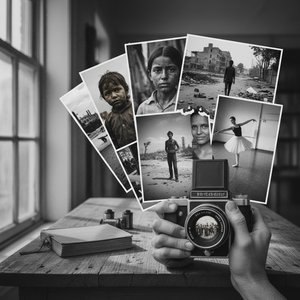
Born: June 14, 1904, in the Bronx, New York City, U.S.
Died: August 27, 1971 (aged 67)
Parents: Joseph White and Minnie Bourke. Her father was an engineer and inventor; her mother a resourceful homemaker.
Education: Attended Columbia University briefly, then transferred to the University of Michigan and Cornell University, graduating with a B.A. in biology in 1927.
Early interest in photography fostered by her father's enthusiasm for cameras and machines.
Career Beginnings: Architectural and Industrial Photography
1920s: Started as a freelance photographer in Cleveland, Ohio.
Developed a distinctive style focusing on architectural and industrial subjects.
Her photographs of steel mills gained recognition, leading to a commission from *Fortune* magazine.
1929-1935: Worked for *Fortune*, documenting American industry during the Great Depression.
First Western photographer permitted to photograph Soviet industry in 1930.
Created a monumental photo mural about radio for NBC's rotunda at Rockefeller Plaza in 1933.
Rise to Prominence with *Life* Magazine and Documentary Work
1936: Became the first female staff photographer for *Life* magazine.
Her photograph of the construction of Fort Peck Dam appeared on the cover of *Life*'s first issue, establishing her national recognition.
Documented the Great Depression and Dust Bowl, highlighting social injustices.
Collaborated with novelist Erskine Caldwell on You Have Seen Her Face (1937), a powerful photographic study of Southern sharecroppers.
Covered World War II as a war photojournalist, documenting key events including the liberation of Buchenwald concentration camp.
Later Career and Global Perspectives
1940s-1950s: Continued working for *Life* magazine, covering international events.
Photographed apartheid in South Africa, bringing attention to racial segregation.
Covered the Korean War.
Developed Parkinson's disease later in life, which impacted her career.
Legacy and Historical Significance
Pioneering Photojournalist: Broke barriers for women in photojournalism, demonstrating skill and courage in a male-dominated field.
Documentary Vision: Her work documented significant historical events and social issues, providing valuable insights into the 20th century.
Influence on Photography: Helped popularize industrial photography and established *Life* magazine as a leading platform for photojournalism.
Firsts: First female war correspondent, first foreign photographer in the Soviet Union, and many other groundbreaking achievements.
Her photographs are held in major museum collections including MoMA and the Library of Congress.
ArtsDot.com 編集部
アート・クイズ
各質問の正解は1つだけです。
問題 1:
What was Margaret Bourke-White known for being the first to do?
問題 2:
What was Margaret Bourke-White's father’s profession?
問題 3:
Which magazine did Margaret Bourke-White work for as a staff photographer, eventually retiring from in 1969?
問題 4:
What was the title of the book she co-authored with Erskine Caldwell that documented the lives of poor, rural sharecroppers?
Explore the rich history & artistic power of black and white photography. From early techniques to iconic masters like Ansel Adams, discover why monochrome continues to captivate art lovers today. Expert insights for collectors.
Explore 10 iconic white paintings by Monet, Whistler & Rothko! Discover the stories behind these serene masterpieces and their impact on art history. Find museum-quality reproductions for your home decor at .
Explore the powerful history of documentary photography – from its origins to contemporary masters like Gordon Parks. Discover how this art form shapes our understanding of society and witness pivotal moments in time.