


1



11月 2026 更新 · 当サイトの人気スコア(各作品の検索数、閲覧数、注文数)に基づくランキング · 16点の Knud Aggerの作品がカタログにあります
要約すると
Knud Aggerの最も有名な作品はUncle Hugo from Vansittart (1932)で、コペンハーゲンのStatens Museum For Kunstで鑑賞することができます。 その直後にPortrait of a Lady with Red Background (1934)、そしてAt the Window (1939)が続きます。 Knud Aggerの全16作品のうち、特に有名な16作品をご紹介します。各作品には制作年、所蔵美術館、そしてその作品の魅力についての解説が添えられています。


このページに掲載されている絵画を最も多く所蔵している 1 の美術館
| 美術館 | 所在都市 | Knud Aggerの作品 | このリストの絵画 |
|---|---|---|---|
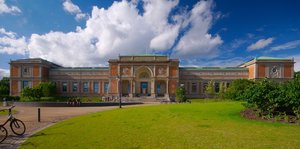 Statens Museum For Kunst |
コペンハーゲン | 16 | Uncle Hugo from Vansittart, Portrait of a Lady with Red Background, At the Window |
年代を選択して、その時代の代表作をご覧ください。

リストのトップはStatens Museum For Kunst, コペンハーゲンのUncle Hugo from Vansittart (1932)です。それに続くのはPortrait of a Lady with Red Background (1934)、そしてAt the Window (1939)です。
37歳。Knud Aggerは1895に生まれ、Uncle Hugo from Vansittartは1932年の作品です。
Uncle Hugo from Vansittart, Portrait of a Lady with Red Background, At the Window, The Veranda. September, Lady Wearing a Black Hat, Ingeborg Agger, née Stuhlmann, Wife of the Artist, A Woman and two Children at the Beach, Late Afternoon by the Sea, Surf at Hvide Sande と On the Balcony. Summer。制作年および所蔵美術館については、上記のリストをご参照ください。
当カタログにはKnud Aggerによる作品が16点あり、制作時期は1925から1966にわたります。
その多くはStatens Museum For Kunst (コペンハーゲン)で見ることができます。上記の美術館リストに詳細が記載されています。
1930sは、他のどの時期よりも多くの作品が集中しています。このページにある全16点のうち6点がその時代の作品であり、そのうちUncle Hugo from Vansittart点が含まれます。
ここにある最も古い作品はA Woman and two Children at the Beach (1925)、最新の作品はStudy of a Stone (1966)です。
Statens Museum For Kunst, コペンハーゲンにあるUncle Hugo from Vansittart, Portrait of a Lady with Red Background と At the Windowを含む16点の作品を、このページでご覧いただけます。
To look at the work of Knud Agger is to confront a specific, heavy reality. He was not a man of academic pretension, but a self-taught Danish painter who moved from the architectural precision of his studies in Copenhagen toward a deeply existentialist mode of expression. His trajectory followed a path from the literal to the symbolic. Early on, his canvases captured the mundane rhythms of everyday life, yet there was an inevitable shift occurring. By the time he settled in Helsingør, his focus had narrowed and deepened, moving away from mere observation toward a style that felt both visionary and grounded in the physical earth.
His development was marked by a retreat into the landscape, specifically the regions of Limfjorden and Venø. In 1928, he returned to his native Jutland to document these landscapes, but it was his later years that defined his true aesthetic impact. The work became less about what the eye sees and more about what the spirit feels under pressure. He utilized oil on canvas to create scenes like Rolling Hills Under Heavy Sky, where the atmosphere is thick with a sense of brooding presence. This was not decorative art; it was an engagement with the weight of existence.
Agger’s technical evolution reveals a painter obsessed with the tactile elements of his environment. While he began with traditional figurative approaches, his later methods became increasingly experimental and tied to the literal soil of Denmark. He did not merely paint the sky; he sought to incorporate its essence through unconventional means.
The following elements defined his late-stage approach:
This reliance on found objects—the stones from Venø—transformed his work from landscape painting into something more sculptural and textured. The stones eventually dominated his compositions, forcing the viewer to acknowledge the physical reality of the land he inhabited.
Agger’s geography was his destiny. From his origins in Holstebro to his long residence in Helsingør, his movements were dictated by a need to remain connected to specific landscapes. His work in 1939 for the state high school at Struer, which included depictions of the town and its harbor, shows an artist capable of large-scale, communal engagement. However, it was the summerhouse on Venø that served as his true laboratory.
Even as heart problems forced him to cease his journeys to Venø in 1965, the influence of that island remained embedded in his final works. He had moved through Expressionism and Figurative Art to reach a point where the distinction between the subject and the medium began to dissolve. His receipt of the Thorvaldsen Medal in 1971 serves as a concrete marker of the recognition his rigorous, self-directed path eventually commanded within the Danish art scene.


