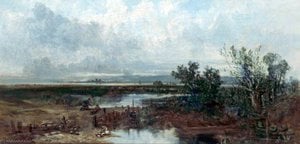
John Wright Oakesの肖像画

John Wright Oakesの最も有名な25の絵画ガイド

11月 2026 更新 · 当サイトの人気スコア(各作品の検索数、閲覧数、注文数)に基づくランキング · 25点の John Wright Oakesの作品がカタログにあります

要約すると

John Wright Oakesの代表作はMoonlight, Near Cemmaes, Anglesea (1871)です。 次に続くのは、A North Devon Glen, Autumn (1870)とSlate Quarries, Llanberis (1847)です。 当カタログにはJohn Wright Oakesによる作品が25点収められています。本ガイドでは、その中から最も有名な25作品を厳選し、制作年、所蔵美術館、そして各作品にまつわる物語とともにご紹介します。

1820 – 1887, Cheshire West and Chester 最多収蔵館: ウォーカー・アート・ギャラリー

まず知っておきたいJohn Wright Oakesの絵画10選

1
Moonlight, Near Cemmaes, Anglesea (1871) による John Wright Oakes

Moonlight, Near Cemmaes, Anglesea

1871 · Oil

In Moonlight, Near Cemmaes, Anglesea, John Wright Oakes captures a moment of profound stillness as the sun begins its descent or perhaps prepares to rise, casting warm, glowing hues across the sky. A tranquil landscape unfolds, centered around a quiet body of water that mirrors the shifting colors of the heavens. Upon this liquid surface, a small boat carries a single figure, a solitary presence that provides a sense of…

手描き油彩複製画: $175 35 × 29 cm
手描き作品を購入する 作品の背景を読む
2
A North Devon Glen, Autumn (1870) による John Wright Oakes

A North Devon Glen, Autumn

1870 · Oil On Canvas · ウォーカー・アート・ギャラリー, リバプール

A North Devon Glen, Autumn is an oil on canvas by John Wright Oakes. The work measures 124 x 167 cm. It was created about 1870. This piece resides within the collection of the Walker Art Gallery in Liverpool, United Kingdom.

手描き油彩複製画: $175 36 × 27 cm 原画と同サイズ $750 167 × 124 cm 原寸サイズで注文する →
手描き作品を購入する 作品の背景を読む
3
Slate Quarries, Llanberis (1847) による John Wright Oakes

Slate Quarries, Llanberis

1847 · Oil On Canvas · Harris Museum - Art Gallery, プレストン

is an oil painting by John Wright Oakes, executed in 1847. The artist, born in 1820 in Cheshire West and Chester, United Kingdom, transitioned from the precise study of still-life fruit pieces to the direct observation of the natural landscape. This work emerged during a period of significant industrial expansion and a simultaneous romantic interest in the untouched natural world.

手描き油彩複製画: $175 35 × 28 cm 原画と同サイズ $247 66 × 52 cm 原寸サイズで注文する →
この作品を注文する この作品の詳細を見る
4
The Mouth of the River Derwent (1848) による John Wright Oakes

The Mouth of the River Derwent

1848 · Oil On Canvas · Nottingham Castle Museum And Art Gallery, ノッティンガム

The landscape captures the confluence of the River Derwent, where the water meets the horizon under a vast, shifting sky. Mountains rise in the background, their forms softened by the heavy, moisture-laden air characteristic of the British Isles. A single boat floats upon the surface, a small, solitary presence amidst the expanse of the river. Scattered figures populate the banks, their scale emphasizing the quiet magnitude of the natural environment.…

手描き油彩複製画: $175 39 × 25 cm 原画と同サイズ $490 125 × 94 cm 原寸サイズで注文する →
この作品を注文する この作品の詳細を見る

11から25件目:John Wright Oakesの絵画をもっと見る

11Glen Muick, Aberdeenshire (1872) による John Wright OakesGlen Muick, Aberdeenshire1872 手描き作品を購入する 〜 $175 →
12Coast Scene with Fishing Boats and a Martello Tower, Jersey (1877) による John Wright OakesCoast Scene with Fishing Boats and a Martello Tower, Jersey1877 あなたのコレクションに 〜 $175 →
13The Tivey at Newcastle Emlyn, Cardiganshire (1878) による John Wright OakesThe Tivey at Newcastle Emlyn, Cardiganshire1878 · ウォーカー・アート・ギャラリー この作品を注文する 〜 $175 →
14A Devon Footbridge (1872) による John Wright OakesA Devon Footbridge1872 手描き作品を購入する 〜 $175 →
15Mountain Stream, Glen Derry, Aberdeenshire, 'Like time the restless waters rush along' (1873) による John Wright OakesMountain Stream, Glen Derry, Aberdeenshire, 'Like time the restless waters rush along'1873 · Touchstones Rochdale あなたのコレクションに 〜 $175 →
16Disturbed A Plover Rising from Its Nest (1879) による John Wright OakesDisturbed A Plover Rising from Its Nest1879 あなたのコレクションに 〜 $175 →
17A coastal scene with figures by beached fishing boats in the foreground (1887) による John Wright OakesA coastal scene with figures by beached fishing boats in the foreground1887 あなたのコレクションに 〜 $175 →
18Lieutenant Colonel Charles Grove Edwards (1843–1904), 2nd West Yorkshire Yeomanry Cavalry (The Prince of Wales's Own) at the Head of his Regiment Marching into Crown Street, Halifax, 1884 (1887) による John Wright OakesLieutenant Colonel Charles Grove Edwards (1843–1904), 2nd West Yorkshire Yeomanry Cavalry (The Prince of Wales's Own) at the Head of his Regiment Marching into Crown Street, Halifax, 18841887 手描き作品を購入する 〜 $175 →
19Flitshire Hills and Flint Castle による John Wright OakesFlitshire Hills and Flint Castle あなたのコレクションに 〜 $175 →
20Moorland Scene による John Wright OakesMoorland Scene この作品を注文する 〜 $175 →
21Old Mill at Nantille, Caernarvonshire による John Wright OakesOld Mill at Nantille, Caernarvonshire 手描き作品を購入する 〜 $175 →
22Glen Sannox (Arran) による John Wright OakesGlen Sannox (Arran) あなたのコレクションに 〜 $175 →
23Devil's Kitchen, Snowdon による John Wright OakesDevil's Kitchen, Snowdon この作品を注文する 〜 $175 →
24Pine Forest, Aberdeenshire による John Wright OakesPine Forest, Aberdeenshire 手描き作品を購入する 〜 $175 →
25A Sandy Bit of Road (1874) による John Wright OakesA Sandy Bit of Road1874 · Nottingham Castle Museum And Art Gallery あなたのコレクションに 〜 $175 →

John Wright Oakes の代表作

これらの作品に最も頻繁に登場する4つの主題と、それぞれの代表的な例。

John Wright Oakesの作品を見る

このページに掲載されている絵画を最も多く所蔵している 7 の美術館

美術館 都市 John Wright Oakesの作品 このリストの絵画
ウォーカー・アート・ギャラリー, リバプールウォーカー・アート・ギャラリー リバプール 3 A North Devon Glen, Autumn, Morning at Angera, Lago Maggiore, The Tivey at Newcastle Emlyn, Cardiganshire
Nottingham Castle Museum And Art Gallery, ノッティンガムNottingham Castle Museum And Art Gallery ノッティンガム 2 The Mouth of the River Derwent, A Sandy Bit of Road
Harris Museum - Art Gallery, プレストンHarris Museum - Art Gallery プレストン 1 Slate Quarries, Llanberis
Ludlow Library - Museum Resource Centre, LudlowLudlow Library - Museum Resource Centre Ludlow 1 Malltreath Bay
レイング・アート・ギャラリー, ニューカッスル・アポン・タインレイング・アート・ギャラリー ニューカッスル・アポン・タイン 1 Loch Muick, Aberdeenshire
New Walk Museum - Art Gallery, レスターNew Walk Museum - Art Gallery レスター 1 Picking up Wreckage on a Rocky Shore
Touchstones Rochdale, ロッチデールTouchstones Rochdale ロッチデール 1 Mountain Stream, Glen Derry, Aberdeenshire, 'Like time the restless waters rush along'

年代別:各年代におけるJohn Wright Oakesの代表作

年代別作品数

年代を選択して、その時代の代表作をご覧ください。

John Wright Oakes:絵画に関するよくある質問

John Wright Oakesの代表作は何ですか?答えを見る

リストのトップはMoonlight, Near Cemmaes, Anglesea (1871)です。それに続くのはA North Devon Glen, Autumn (1870)、そしてSlate Quarries, Llanberis (1847)です。

John Wright OakesがMoonlight, Near Cemmaes, Angleseaを制作した時の年齢は?答えを見る

51歳。John Wright Oakesは1820に生まれ、Moonlight, Near Cemmaes, Angleseaは1871年の作品です。

John Wright Oakesの代表的な絵画トップ10は?答えを見る

Moonlight, Near Cemmaes, Anglesea, A North Devon Glen, Autumn, Slate Quarries, Llanberis, The Mouth of the River Derwent, Landscape, Woman by River, Barmouth, Malltreath Bay, Loch Muick, Aberdeenshire, Morning at Angera, Lago Maggiore と Picking up Wreckage on a Rocky Shore。制作年および所蔵美術館については、上記のリストをご参照ください。

カタログの中にJohn Wright Oakesの作品は何点ありますか?答えを見る

当カタログにはJohn Wright Oakesによる作品が25点あり、制作時期は1847から1887にわたります。

John Wright Oakesの代表作は、どの美術館で鑑賞できますか?答えを見る

その多くはウォーカー・アート・ギャラリー (リバプール), Nottingham Castle Museum And Art Gallery (ノッティンガム) と Harris Museum - Art Gallery (プレストン)で見ることができます。上記の美術館リストに詳細が記載されています。

John Wright Oakesの代表作が最も多く生まれたのはいつ頃でしょうか?答えを見る

1870sは、他のどの時期よりも多くの作品が集中しています。このページにある全25点のうち10点がその時代の作品であり、そのうちMoonlight, Near Cemmaes, Anglesea点が含まれます。

John Wright Oakesの代表作の最初と最後は何ですか?答えを見る

ここにある最も古い作品はSlate Quarries, Llanberis (1847)、最新の作品はA coastal scene with figures by beached fishing boats in the foreground (1887)です。

John Wright Oakesが最も多く描いた主題は何ですか?答えを見る

このページに掲載されている25点のうち、Boat (2), Water (2) と Rural landscape (2)点

John Wright Oakesの作品の中で、最も多く使われている画材は何ですか?答えを見る

このページに掲載されている全25点のうち、3点にOil On Canvasが使用されています。

ウォーカー・アート・ギャラリーには、どの有名なJohn Wright Oakesの絵画が展示されていますか?答えを見る

ウォーカー・アート・ギャラリー, リバプールにあるA North Devon Glen, Autumn, Morning at Angera, Lago Maggiore と The Tivey at Newcastle Emlyn, Cardiganshireを含む3点の作品を、このページでご覧いただけます。

John Wright Oakesの複製画はどこで注文できますか?答えを見る

はい。このページに掲載されているすべての絵画は、お手持ちのスペースに合わせたサイズで、手描きの油彩複製画またはプリントとしてご購入いただけます。作品のページを開いてご注文ください。

John Wright Oakesの物語

The Soul of the Welsh Landscape: The Life and Art of John Wright Oakes

In the heart of the Victorian era, a period defined by both industrial expansion and a profound romantic longing for the untouched natural world, the works of John Wright Oakes emerged as a poignant bridge between reality and imagination. Born in 1820 at Sproston House near Middlewich, Cheshire, Oakes was a man whose lineage and upbringing provided a stable foundation for a life dedicated to the pursuit of aesthetic truth. While his early years were rooted in the English countryside, his artistic spirit found its true home amidst the rugged, mist-shrouded peaks and dramatic coastlines of Wales. His journey from a student of fine details to a master of atmospheric grandeur represents one of the most compelling narratives of nineteenth-century British landscape painting.

Oakes’s formal training began in Liverpool, where he studied under the guidance of John Bishop at the school attached to the Liverpool Mechanics’ Institution. This early education instilled in him a meticulous discipline that would later serve as the bedrock for his more expansive works. Interestingly, his initial foray into the art world was not through the sweeping vistas for which he is now celebrated, but through the delicate and precise genre of fruit paintings. These early still lifes, exhibited at the Liverpool Academy—where he eventually served as an honorary secretary—demonstrated a profound understanding of texture, light, and form. However, around 1843, a transformative shift occurred; drawn by the raw power of nature, Oakes began painting directly from the landscape, trading the controlled environment of the studio for the unpredictable beauty of the outdoors.

A Mastery of Light and Romantic Grandeur

The transition from still life to landscape allowed Oakes to explore the tenets of Romanticism, an art movement that prioritized emotion, the sublime, and the awe-inspiring power of the natural world. Influenced by the legendary techniques of masters like Turner and Constable, Oakes developed a signature style characterized by masterful tonal modulation and atmospheric perspective. He possessed a rare ability to capture the fleeting, ephemeral qualities of light—the way a sudden sunbeam pier sculpting through heavy clouds, or the soft, melancholic glow of twilight over a mountain glen. His canvases were not merely topographical records but emotional landscapes that invited the viewer to feel the dampness of the mist and the chill of the wind.

His technical prowess was particularly evident in his treatment of diverse terrains:

  • Mountainous Vistas: In works inspired by Snowdonia, he utilized rugged textures and dramatic shadows to convey the intimidating majesty of the Welsh peaks.
  • Coastal Scenes: His depictions of places like Aberffraw Bay and Malldraeth Sands showcased a fluid command of water, capturing the turbulent energy of the sea meeting the shore.
  • Rural Serenity: In pieces such as A North Devon Glen, Autumn, he employed warm palettes and soft brushstrokes to evoke a sense of pastoral peace and seasonal transition.

Legacy and Artistic Triumph

The trajectory of Oakes’s career was marked by consistent recognition from the most prestigious institutions of his time. His debut in London at the Royal Academy in 1847, featuring On the River Greta, Keswick, signaled his arrival as a significant force in British art. Throughout his prolific life, he became a regular contributor to the Society of British Artists, the Dudley Gallery, and the Portland Gallery. His accolades were numerous, including being elected an Associate of the Royal Academy in 1876 and receiving honorary membership in the Royal Scottish Academy in 1883. Even as ill health began to impede his physical practice in his final years, his dedication to the craft remained unshaken, continuing to exhibit at the Royal Academy until the very end.

Today, the historical significance of John Wright Oakes lies in his ability to have captured the vanishing essence of the nineteenth-century landscape. His works, now held in esteemed collections such as the Walker Art Gallery and the Nottingham Castle Museum, serve as windows into a world of sublime beauty and quiet contemplation. He remains a vital figure for anyone seeking to understand the Victorian fascination with the wild, untamed corners of the British Isles, leaving behind a legacy of over 300 canvases that continue to resonate with visual splendor and psychological depth.