The Architectural Soul of Mantua and Milan
Aldo Andreani was far more than a mere architect or a sculptor; he was a visionary who sought to weave the grandeur of Italy's Renaissance past into the complex, often turbulent fabric of the early twentieth century. Born in the historic city of Mantua on August 1, 1887, his very identity was forged in an environment saturated with classical beauty and architectural legacy. This profound connection to his roots would later define his artistic trajectory, as he spent his life attempting to bridge the gap between the harmonious proportions of antiquity and the monumental, often imposing aesthetic demands of his contemporary era. His journey from the quiet, storied streets of Mantua to the bustling, transformative urban landscape of Milan represents a lifelong pursuit of an art form that could command both space and history.
Early Training and the Pursuit of Form
The foundation of Andreani’s mastery was laid through rigorous academic discipline and a deep immersion in the classical tradition. His formal education began at the San Luca Academy in Rome, where he first learned to translate the nuances of life into line and shadow. However, it was his time at the Milan Polytechnic, studying under the esteemed Gaetano Moretti, that truly refined his architectural sensibilities. Under Moretti’s guidance, Andreani embraced the principles of the Italian Beaux Arts, a movement that prioritized meticulous craftsmanship, structural integrity, and an unwavering commitment to proportion. This period of his life was marked by a growing fascination with how sculpture could breathe life into stone, leading him to seek further specialization at the Brera Academy in Milan. It was here, in 1927, that the influence of Adolph Wildt became transformative. Wildt’s approach encouraged Andreani to move beyond purely decorative ornamentation and instead pursue a more expressive, monumental style of sculpture—one capable of conveying deep emotional and symbolic weight.
A Synthesis of Renaissance Grace and Monumental Vision
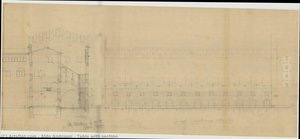
As his career progressed, Andreani’s work became a fascinating study in stylistic synthesis. He possessed the rare ability to honor the delicate, rhythmic beauty of the Renaissance while simultaneously embracing the bold, heavy-handed aesthetics that characterized much of the Italian art produced during the Fascist era. This duality allowed him to become a sought-after figure for large-scale civic projects. His architectural decorations were not merely additions to buildings but were integral components designed to evoke a sense of permanence and national identity. One of his most significant contributions can be seen in his detailed blueprints and designs for structures such as the
Palazzo della Ragione, where his technical precision met his artistic ambition. In these works, one can observe:
- The use of classical modeling techniques to create a sense of timelessness.
- A deliberate movement toward monumentalism, intended to inspire awe and civic pride.
- The seamless integration of sculptural elements into the very skin of architectural facades.
- A mastery of light and shadow through deeply carved, expressive forms.
Legacy and Historical Significance
The historical significance of Aldo Andreani lies in his role as a custodian of Italian tradition during a period of radical political and social change. While his career was undeniably shaped by the patronage of the Fascist regime, his work remains a testament to the enduring power of classical ideals. He did not simply replicate the past; he reinterpreted it for a new age, creating a visual language that felt both ancient and strikingly modern. Through his portraits, religious commissions, and monumental architectural interventions, Andreani left an indelible mark on the Milanese landscape. His ability to navigate the tension between the delicate grace of a sculptor and the structural rigor of an architect ensures that his name remains etched in the annals of Italian art history—a master who understood that true greatness is found in the balance between the weight of stone and the lightness of spirit.