


 プレビュー
プレビュー
 プリントを購入
 シェアする
シェアする シェアする
シェアする
 詳細を見る
詳細を見る

 ダウンロード
 似ている作品
 X線調査
X線調査 スライドショー
鹿狩り
 キャンバスに油彩
- ウォールアート
- Baroque Landscape Painting
 184.0 x 267.0 cm
 エルミタージュ美術館
 詳細を見る
詳細を見る




P118B S$10

P118H S$10

P118W S$10

P438Z S$10

P508JH S$12

P508YH S$12

P805H S$10

P805Z S$10

P919BZ S$10

P919G S$10

P919XJ S$10

P959ZH S$10

P968JZ S$12

W106C S$8

W218G S$10

W218JH S$8

W218Y S$10

W307PJ S$10

W316G S$10

W316PJ S$8

W316Y S$10

W398PJ S$8

W4111J S$10

W500HY S$15

W500JH S$15

W692G S$12

W849H S$8

W940BG S$15

W953PJ S$8




作品のオリジナル比率に合わせた、当店の規定サイズからお選びください。

特定のフレームやスペースに合わせて、ご希望のサイズをご入力いただけます。選択されたサイズが元の画像の比率と異なる場合、アートワークをトリミングするか、手描きで要素を追加して絵画を拡張いたします。デジタルモックアップ を制作し、制作開始前にご確認(承認)をいただきます。
画面上のプレビューは、実際のトリミングや拡張を正確に反映しているものではありません。最終的な構図は、モックアップによってのみ正確にご確認いただけます。
カスタムサイズもご利用いただけますが、元の比率を維持するためには、あらかじめ用意されたリストからサイズを選択することをお勧めいたします。
ご注文後、ArtsDot.com チームより詳細な指示をお送りするとともに、仕上がりイメージ(モックアップ)をご提供いたします。


 ガラスオプションは、110cm未満のサイズでのみご利用いただけます。

鹿狩り
複製技法
複製画のサイズ
-


合計金額
S$ 340
作品解説
ピーター・ウオウワマンの「シカ狩り」:バロック絵画の壮麗と狩猟者の精神
ピーター・ウオウワマン(1623年生まれ、ヘアールム出身)は、ドゥットランド黄金時代を代表する画家の一人であり、特に狩猟風景や騎兵隊肖像画でその名を轟かせました。彼の作品は、当時の美術界においてイタリア風のスタイルが流行していた時期に、ピエール・ファン・ラールのローマでの成功を称えるものでした。ウオウワマン家は芸術家の伝統を受け継いでおり、彼の兄弟であるヤン・ウオウワマンやフィリップス・ウオウワマンも同じくイタリア風の風景画家として活躍しました。フィリップスのスケッチを燃やすエピソードは、美術界における競争心の高さと、名声を維持するための不安を物語っています。 アーンヴォルド・ハウブラクンの証言によると、フィリップスは自身のスケッチを燃やしたことで、弟ヤンの名声を縮小することを恐れました。これは美術家の間で繰り広げられた競争精神を示す興味深い話であり、美術市場における名声と評判の維持に関する懸念を示しています。 ウオウワマンの作品は、特にバロック時代の狩猟風景において、その卓越した技術と表現力で高く評価されています。この絵画は、「シカ狩り」というタイトルを持ち、ロシアのサンクトペテルブルクにあるエルミタージュ美術館に所蔵されており、高さ約267センチメートル、キャンバスに油彩技法が用いられています。絵画全体を構成する要素は緻密に描写され、狩猟者の衣装や馬の動きなど、細部にまでこだわり抜かれた作品です。- 絵画の詳細: 絵画は、バロック時代の狩猟シーンを描いたもので、ピエール・ウオウワマンによって制作されました。エルミタージュ美術館に収蔵されており、寸法は高さ約267センチメートル、幅約184センチメートルです。キャンバスに油彩技法が用いられています。
- 絵画のテーマ: 絵画の中心となるのは、シカを追いかける狩猟者たちです。彼らは伝統的な狩猟衣装を着ており、帽子や外套など、狩猟活動に適した服装をしていました。また、馬に乗った狩猟者は数多く描かれ、動きと躍動感を表現しています。
- 風景描写: 絵画の背景には緑豊かな風景が広がり、シカ狩りのための自然環境を提供しています。絵画全体を優しく照らす空は雲が多くており、バロック絵画特有の光景を作り出しています。
- 建築要素: 絵画には城砦が描かれており、狩猟場を見渡すように聳え立っています。この建築要素は絵画に壮大さとスケール感を与えています。
関連作品


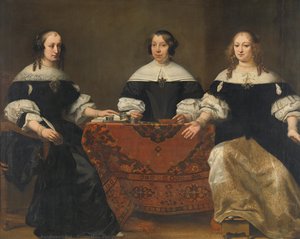


アーティストの略歴
Pieter Wouwerman: A Dutch Baroque Visionary
Pieter Wouwerman (1623 – 1682) stands as a prominent figure within the Dutch Golden Age, renowned for his captivating depictions of hunting scenes and cavalry portraits—a genre that cemented his reputation as one of the era’s foremost landscape painters. Born in Haarlem, Belgium, he was part of a family deeply rooted in artistic tradition; his brother Jan Wouwerman and Philips Wouwerman were also accomplished artists specializing in Italianate landscapes, mirroring a stylistic trend prevalent at the time – a deliberate homage to Pieter van Laer's success in Rome. The anecdotes surrounding Philips’s destructive tendencies toward his sketches offer a glimpse into the competitive spirit of the artistic milieu, hinting at rivalries and anxieties about maintaining prestige within the burgeoning art market. The story recounted by Arnold Houbraken—that Philips burned his sketchbook out of fear of diminishing his brother's fame—is debated amongst scholars, yet it underscores the pressures faced by artists striving for recognition during this period. It speaks to a broader cultural preoccupation with legacy and reputation, where artistic endeavors were viewed as investments in future success. This narrative contrasts sharply with Laer’s stubborn refusal to lower his prices when his work was deemed too expensive, illustrating the complex dynamics of patronage and artistic ambition. Wouwerman's formative years were shaped by the influence of Roelant Roghman, his elder brother Philips, who served as a mentor and instilled in him a foundational understanding of landscape painting techniques. Following Roghman’s guidance, Pieter embarked on his artistic journey, relocating to Amsterdam in 1657—a pivotal move that propelled him into the heart of the city's vibrant art scene. His early career saw him diligently copying paintings by Laer, establishing himself as a skilled imitator and gaining valuable experience within the established artistic hierarchy. This apprenticeship proved instrumental in shaping his distinctive style, characterized by dramatic lighting and meticulous detail—elements that would become hallmarks of his oeuvre. His artistic output is marked by an extraordinary sensitivity to capturing movement and atmosphere. Wouwerman’s paintings aren't merely representations of subjects; they are imbued with a palpable sense of immediacy, conveying the thrill of the hunt and the dynamism of military maneuvers. Consider “Hunting Party at a Fountain,” a monumental canvas measuring 184x267 cm housed in The Hermitage Museum—a testament to his mastery of Baroque composition and color palettes. Similarly, "Cavalry Men by a Suttler's Tent" exemplifies his ability to portray figures with remarkable realism, capturing the textures of clothing and facial expressions with astonishing precision. And “Deer Hunt,” another captivating piece measuring 184x267 cm, showcases Wouwerman’s profound understanding of animal anatomy and behavior—a skill honed through careful observation and anatomical studies. Ultimately, Pieter Wouwerman's contribution to Dutch Baroque art transcends mere stylistic imitation. He elevated the genre of hunting scenes and cavalry portraits to new heights of artistic achievement, establishing himself as a master of visual storytelling and cementing his place among the giants of the Golden Age. His paintings continue to resonate with audiences today, offering a glimpse into the spirit of an era defined by ambition, innovation, and a fervent appreciation for beauty—a legacy that secures his enduring significance within art history.
Pieter Wouwerman
1623 - 1682 , Belgium
基本情報
- Artistic Movement Or Style: Baroque Landscape Painter
- Artists Or Movements Influenced By This Artist:
- Jan Wouwerman
- Philips Wouwerman
- Artists Who Influenced This Artist: ['Roelant Roghman']
- Date Of Birth: 1623 Haarlem Belgium
- Date Of Death: 1682 Amsterdam
- Full Name: Pieter Wouwerman
- Nationality: Dutch
- Notable Artworks:
- Hunting Party at a Fountain
- Cavalry Men by a Suttler's Tent
- Deer Hunt
- Place Of Birth: Haarlem Netherlands
関連記事

Golden Age Reflections: Dutch Baroque Painting & Cultural Innovation
Explore the Dutch Golden Age of painting! Discover key artists like Vermeer & ter Borch, their innovative techniques, and the rich cultural context behind these Baroque masterpieces. Learn about collecting & appreciating this iconic art period.

黄金世紀の巨匠たち:バロック絵画が彩る10選|ArtsDot
オランダ黄金時代の10大傑作を紐解く!レンブラント、フェルメール…バロック絵画の魅力と時代背景を深く探求。ArtsDotで、至高のアートコレクションと空間演出のヒントを見つけよう。高品質なアートプリントで、お部屋を華やかに。

Dutch Baroque Masters: 10 Paintings That Shaped an Era | ArtsDot
Journey through the Golden Age with our guide to the Top 10 Dutch Baroque masterpieces! Explore iconic paintings by Rembrandt, Vermeer & Frans Hals. Find museum-quality art reproductions and elevate your home decor at ArtsDot.com.

Illuminating Innovation: Exploring the Dutch Golden Age of Painting
Explore the Dutch Golden Age of painting with ArtsDot. Discover Rembrandt, Vermeer & other Masters. Learn about key characteristics, iconic artworks, and lasting influence. Expert insights for collectors & enthusiasts.

Pieter de Hooch: Illuminating Dutch Domestic Life & Golden Age Charm
Explore the captivating world of Pieter de Hooch, a master of Dutch Golden Age painting. Discover his innovative use of light, intimate domestic scenes, and lasting influence on art history. Learn more at ArtsDot.


