

 プレビュー
プレビュー
 プリントを購入
 シェアする
シェアする シェアする
シェアする
 詳細を見る
詳細を見る

 ダウンロード
 似ている作品
 X線調査
X線調査 スライドショー
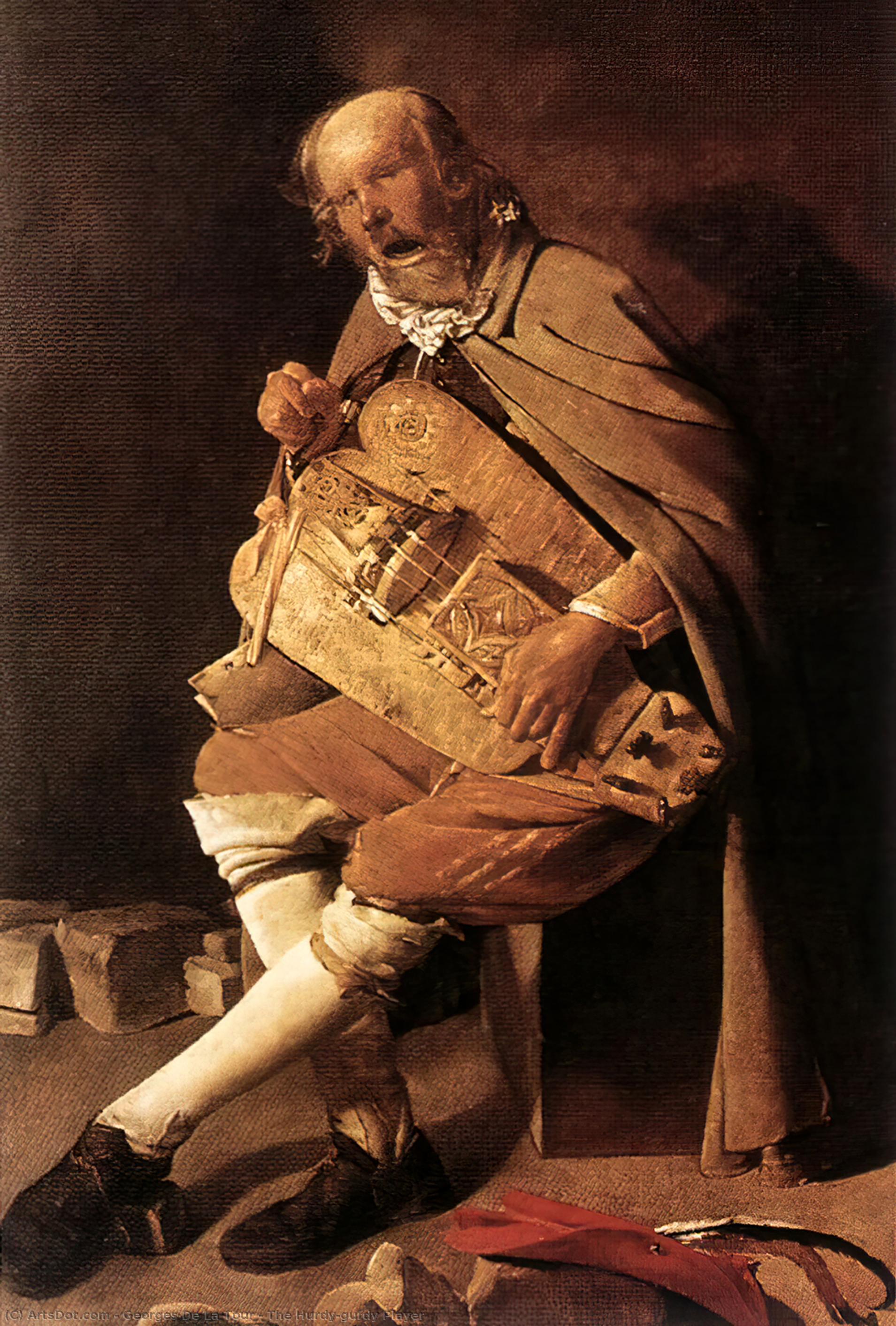
hurdy-gurdy player
 キャンバスにアクリル絵具
- ウォールアート
- Baroque
 1631
1631- ルネサンス
 162.0 x 105.0 cm
 Musée d'Arts de Nantes
 詳細を見る
詳細を見る




P118B $10

P118H $10

P118W $10

P438Z $10

P508JH $12

P508YH $12

P805H $10

P805Z $10

P919BZ $10

P919G $10

P919XJ $10

P959ZH $10

P968JZ $12

W106C $8

W218G $10

W218JH $8

W218Y $10

W307PJ $10

W316G $10

W316PJ $8

W316Y $10

W398PJ $8

W4111J $10

W500HY $15

W500JH $15

W692G $12

W849H $8

W940BG $15

W953PJ $8




作品のオリジナル比率に合わせた、当店の規定サイズからお選びください。

特定のフレームやスペースに合わせて、ご希望のサイズをご入力いただけます。選択されたサイズが元の画像の比率と異なる場合、アートワークをトリミングするか、手描きで要素を追加して絵画を拡張いたします。デジタルモックアップ を制作し、制作開始前にご確認(承認)をいただきます。
画面上のプレビューは、実際のトリミングや拡張を正確に反映しているものではありません。最終的な構図は、モックアップによってのみ正確にご確認いただけます。
カスタムサイズもご利用いただけますが、元の比率を維持するためには、あらかじめ用意されたリストからサイズを選択することをお勧めいたします。
ご注文後、ArtsDot.com チームより詳細な指示をお送りするとともに、仕上がりイメージ(モックアップ)をご提供いたします。


 ガラスオプションは、110cm未満のサイズでのみご利用いただけます。

hurdy-gurdy player
複製技法
複製画のサイズ
-


合計金額
$ 263
作品解説
ジョルジュ・ド・ラ・トゥール:劇的な光の達人
ジョルジュ・ド・ラ・トゥール(1593年 – 1652年)は、バロック美術における唯一無二の存在として、その卓越したキアロスクーロ—光と影の劇的な相互作用—と、一見単純な構図を通して深遠な感情を呼び起こす能力で知られています。多くの同時代の芸術家が壮大なスペクタクルを求めていたのに対し、ラ・トゥールはキャンドルの光に包まれた、静かな瞑想と精神的な欲求を捉えた、親密な場面に焦点を当てました。
構成と象徴性:占い師
絵画『ハルディ・ガーディ奏者』は、ラ・トゥールの特徴的なスタイルを体現しています。中心人物—ハルディ・ガーディを演奏する困窮者—は、フレームの外でちらつくキャンドルの光によって照らされた暗い背景に配置されています。このテクニックは単なる美観にとどまらず、意図的な象徴的ジェスチャーでした。光は神の恵みを表し、被写体の脆弱性を照らし出し、彼の貧困と精神的な探求を強調します。
技法:キアロスクーロ – カラヴァッジョの遺産
ラ・トゥールの絵画へのアプローチ—激しいキアロスクーロによって特徴づけられる—は、カラヴァッジョの影響を強く受けました。カラヴァッジョが光と影の使用方法を革命的に変えたことで、芸術的慣習は不可逆的に変化しました。ラ・トゥールはカラヴァッジョの方法を注意深く研究し、薄いグラつきを暗い下地の上に重ねるという同様の手法を採用することで、驚くほど微妙なトーンのグラデーションを実現しました。この綿密なプロセスにより、微妙な輝きで輝く表面が生まれ、彼の技術的な才能の証となりました。
歴史的背景:ロレーヌとバロック精神
ラ・トゥールの芸術作品は、彼がほとんど生涯を過ごしたロレーヌにおいて、重要な文化的変革期に花開きました。この公国は、マクシミリアン1世の治下で宗教的な熱狂が復活し、イノベーションに有利な環境を育みました。ラ・トゥールの絵画は、感情、劇的なジェスチャー、精神的な瞑想への関心といった、バロック精神—彼をその時代における最重要芸術家の一人とする、より広範な特徴—を反映しています。
美術館コレクション:ナンティーズのミュゼ・ドゥー・ボワ=アール
ラ・トゥールの作品の傑作は、フランスのナンティーズにあるミュゼ・ドゥー・ボワ=アールに収蔵されています。この絵画を鑑賞することで、シンプルさと心理的な深さを新たな高みへと高めた画家という、ラ・トゥールの永続的な遺産を訪問者は評価することができます—真のバロック芸術の体現です。
関連作品


アーティストの略歴
Georges de La Tour (1593–1652): French Baroque Master of Dramatic Chiaroscuro & Tenebrism
Georges de La Tour, a name that resonates with the hushed reverence reserved for masters of light and shadow, remains one of the most compelling figures of the French Baroque. Born in 1593 in Vic-sur-Seille, Lorraine—now Moselle—his life unfolded against a backdrop of religious fervor and political upheaval. While details surrounding his early training remain somewhat elusive—scholars speculate about potential journeys to Italy or apprenticeships with local artists like Jacques Bellange—the seeds of his artistic vision were undoubtedly sown in this environment. He wasn’t born into an artistically established family; his father was a baker, yet the circumstances of his mother's lineage hint at a possible connection to nobility, a subtle influence perhaps reflected in the dignity and quiet grace that permeate his work.
Early Life & Artistic Influences
Georges de La Tour’s educational background remains somewhat unclear, but it is assumed that he traveled either to Italy or the Netherlands early in his career. He may possibly have trained under Jacques Bellange in Nancy—the capital of Lorraine—although their styles are very different. His paintings reflect the Baroque naturalism of Caravaggio—the Italian master who revolutionized painting with his intensely realistic and emotionally charged scenes—yet, De La Tour didn’t simply imitate; he filtered Caravaggism through the prism of Dutch Caravaggisti, particularly those from the Utrecht School like Hendrick Terbrugghen. This fusion resulted in a style that was both powerful and restrained, characterized by a muted palette dominated by earth tones and subtle gradations of light. The Utrecht School's emphasis on dramatic lighting—a technique known as *tenebrism*—significantly shaped De La Tour’s artistic approach.
The Style of Lunéville & Major Works
In 1620 he established his studio in Lunéville, where he would spend much of his career serving both the French court and the Dukes of Lorraine. This dual patronage allowed him to flourish, yet it was within the intimate confines of domestic scenes and religious contemplation that his true genius found expression. His distinctive style—marked by a profound simplification of forms and an almost obsessive attention to detail—became synonymous with the Lunéville School. Among De La Tour’s most iconic works are *The Fortune Teller*, painted around 1630, which captures the eerie atmosphere of nocturnal storytelling; *St Joseph Carpenter*, depicting a serene domestic scene illuminated by candlelight—a motif that would become central to his oeuvre; and *The Lamentation over St Sebastian*, rendered with heartbreaking subtlety and realism—demonstrating De La Tour’s unparalleled ability to convey profound emotional truths.
Rediscovery & Legacy
Despite achieving recognition during his lifetime—he was appointed “Painter to the King” by Louis XIII in 1638—De La Tour’s work fell into relative obscurity after his death in 1652. For centuries, many of his paintings were misattributed to other artists, and his name faded from art historical memory. It wasn't until the early 20th century that a concerted effort was made to rediscover and re-evaluate his oeuvre, led by scholars like Hermann Voss. This rediscovery revealed an artist of extraordinary originality and depth—whose work bridged the gap between Caravaggism and French Classicism—solidifying his place as a pivotal figure in the history of European art. His innovative use of light and shadow—combined with his psychological insight into his subjects—continues to captivate audiences today. He remains celebrated for his ability to imbue everyday scenes with profound meaning and emotional depth.

ジョルジュ・ド・ラ・トゥール
1593 - 1652 , フランス
基本情報
- Artistic Movement Or Style: Барокко, Тенебризм
- Artists Who Influenced This Artist:
- Караваджо
- Генрик Тербрюгген
- Date Of Birth: 13 марта 1593 г.
- Date Of Death: 30 января 1652 г.
- Full Name: Georges de La Tour
- Nationality: Французский
- Notable Artworks:
- Пророк Эзекииль
- Поклонение пастухов
- Слезы святого Петра
- Place Of Birth: Вик-сюр-Сейль, Франция
関連記事

ジョルジュ・ブラック傑作25選:革新的なキュビスムの世界と装飾への誘い
ジョルジュ・ブラックの傑作25選。キュビスムを代表する画家、その革新的な色彩と技法に迫ります。名画から知られざる逸品まで、美術史に残る作品群をArtsDot.comで鑑賞。お部屋を彩るアートプリントも多数ご用意。今すぐオンラインでコレクションをご覧ください。

Georges de La Tour: Luminosity, Spirituality & Realism in Baroque Painting
Discover the captivating world of Georges de La Tour, a Baroque master renowned for his dramatic chiaroscuro & spiritual realism. Explore key works, influences, and his remarkable rediscovery. Learn more at ArtsDot.

ゴヤ傑作25選:スペインの魂を揺さぶる、深遠な芸術の世界 | ArtsDot
ゴヤ傑作25選:ロマン主義を代表するスペインの巨匠、フランシスコ・デ・ゴヤの世界へ。黒衣の女からマハまで、魂を揺さぶる絵画の物語と技法を紐解きます。ArtsDotで高品質なアートレプリカを見つけ、インテリアに深みと風格を。今すぐコレクションをご覧ください。

Demandes Commerciales
APS ofrece reproducciones de bellas artes y encargos personalizados desde 2004. Confían en nosotros corporaciones, hoteles y coleccionistas selectos para obras de arte de calidad museística, servicio discreto y soluciones artísticas completas. ¡Póngase en contacto con nosotros para obtener un presupuesto personalizado!

ジョルジュ・スーラ傑作25選:光と色彩の科学が織りなす芸術の世界|ArtsDot
ジョルジュ・スーラの傑作25選。点描画の光と色彩、印象派から新印象派へ—ArtsDotで美術史を紐解き、リビングやダイニングを彩る高品質なアートプリントを見つけましょう。セーラ作品集をオンラインで鑑賞ください。



