

 プレビュー
プレビュー
 プリントを購入
 シェアする
シェアする シェアする
シェアする
 詳細を見る
詳細を見る

 ダウンロード
 似ている作品
 X線調査
X線調査 スライドショー
風景
 キャンバスに油彩
- ウォールアート
- Dutch Baroque Landscape
 1670
1670 24.0 x 30.0 cm
 エルミタージュ美術館
 詳細を見る
詳細を見る




P118B $10

P118H $10

P118W $10

P438Z $10

P508JH $12

P508YH $12

P805H $10

P805Z $10

P919BZ $10

P919G $10

P919XJ $10

P959ZH $10

P968JZ $12

W106C $8

W218G $10

W218JH $8

W218Y $10

W307PJ $10

W316G $10

W316PJ $8

W316Y $10

W398PJ $8

W4111J $10

W500HY $15

W500JH $15

W692G $12

W849H $8

W940BG $15

W953PJ $8




作品のオリジナル比率に合わせた、当店の規定サイズからお選びください。

特定のフレームやスペースに合わせて、ご希望のサイズをご入力いただけます。選択されたサイズが元の画像の比率と異なる場合、アートワークをトリミングするか、手描きで要素を追加して絵画を拡張いたします。デジタルモックアップ を制作し、制作開始前にご確認(承認)をいただきます。
画面上のプレビューは、実際のトリミングや拡張を正確に反映しているものではありません。最終的な構図は、モックアップによってのみ正確にご確認いただけます。
カスタムサイズもご利用いただけますが、元の比率を維持するためには、あらかじめ用意されたリストからサイズを選択することをお勧めいたします。
ご注文後、ArtsDot.com チームより詳細な指示をお送りするとともに、仕上がりイメージ(モックアップ)をご提供いたします。


 ガラスオプションは、110cm未満のサイズでのみご利用いただけます。

風景
複製技法
複製画のサイズ
-


合計金額
$ 263
作品解説
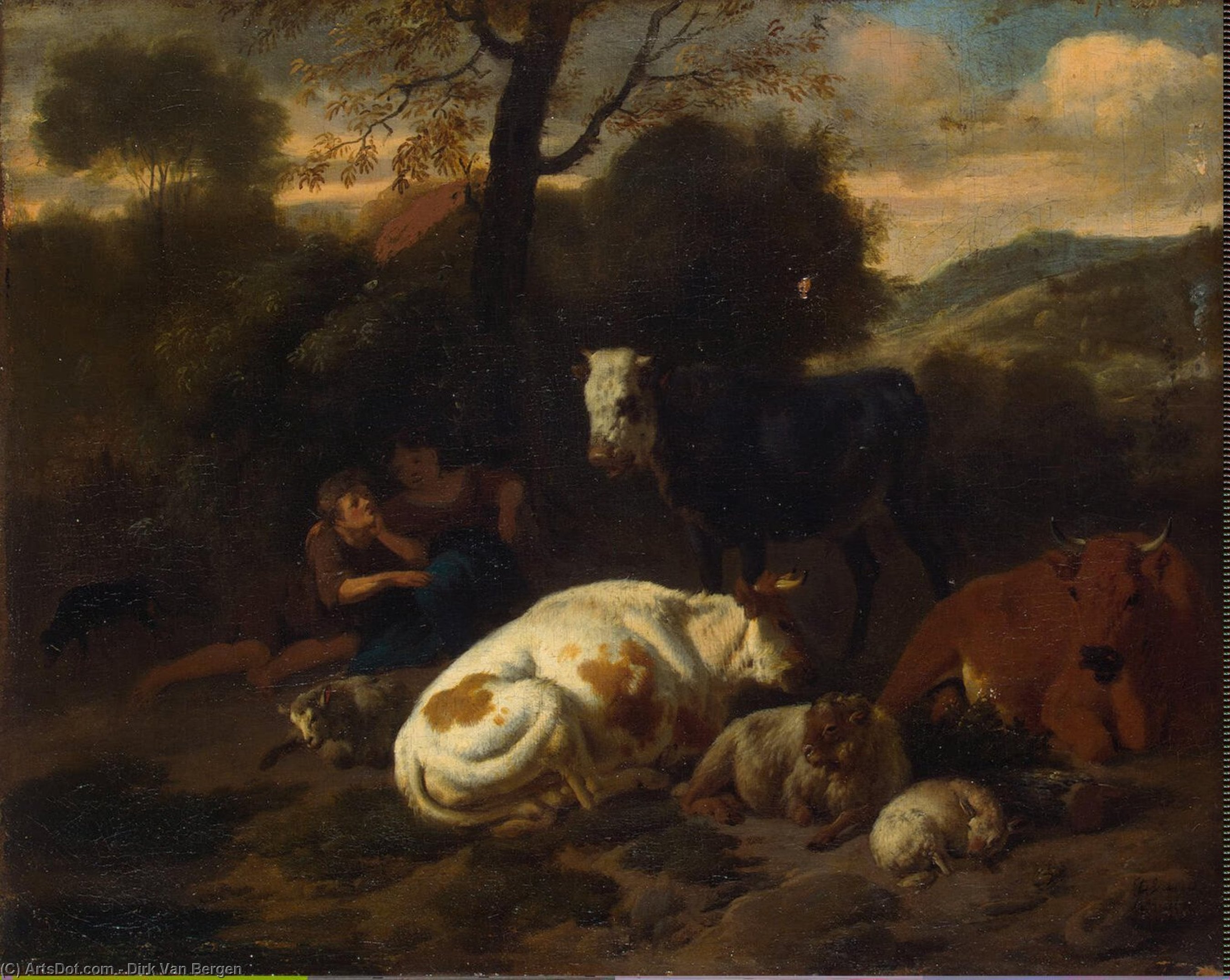
Dirk van Bergen と静謐なオランダ風景の融合
ディーク・ファン・ベルケンは、17世紀オランダ黄金時代における風景画の伝統を代表する画家の一人であり、繊細な美しさと神話的な要素が織り込まれた静かなオランダ風景を描くことで知られています。彼の作品は単なる自然描写を超え、見る人に深い感動と瞑想心を呼び起こします。初期の生涯と育成
ディーク・ファン・ベルケンは、約1645年にハアラーヘムで生まれました。彼はアドラエン・ファン・デルヴェルトに指導を受け、アンデルズハウゼンで風景画における空気遠近法や構成バランスといった基礎的な技術を習得しました。この影響は彼の作品全体を通して継続され、彼の芸術的スタイルを形成する上で重要な役割を果たしました。特徴的なスタイルと技法
ファン・ベルケンのスタイルは、特に植物の質感や動物の毛皮などの細部へのこだわりが特徴です。彼は緑、茶色、青色の淡いパレットを使用し、風景画に平和と静寂な雰囲気をもたらします。彼の筆使いは繊細で優雅であり、まるで自然の中に佇むように感じさせます。彼は特に空気遠近法を駆使して、奥行きのある空間表現を実現しました。歴史的背景と神話的な象徴
ファン・ベルケンの風景画は、ルネサンスからバロックへと移行する時期に制作され、イタリア美術の影響を受けました。しかし、彼はイタリア風の華やかさを避け、オランダ独自の美意識を追求しました。彼の作品にはしばしば神話的なモチーフが登場し、例えば「ミネルヴァとバッタス」などの伝説上の人物を描いた絵画があります。これらのモチーフは、自然に対する畏敬の念や人間の精神性を表現しています。ファン・ベルケンは、これらの要素を巧みに組み合わせることで、単なる風景画を超えた芸術作品を生み出しました。感動的な色彩と光の表現
ファン・ベルケンの絵画における色彩は特に印象的です。彼は太陽光が差し込む風景を描くことが多く、その光の移ろいを繊細に捉えることで、見る人に特別な感情を呼び起こします。彼の作品は、まるで自然の中に生きる喜びや静寂さを表現しており、鑑賞者に深い感動を与えます。彼の絵画は、オランダ黄金時代の風景画における最高の芸術的表現の一つとして評価されています。補足情報
さらに詳しい情報を知りたい方は、以下のリンクをご参照ください。- Landscape by BERGEN, Dirk van
- Landscape
- Cornelis van Poelenburch: Bridging Mannerism & the Dutch Baroque Landscape
関連作品


アーティストの略歴
The Serene Vision of Dirk van Bergen
In the golden twilight of the Dutch Golden Age, few artists captured the quiet pulse of the countryside with as much tenderness as Dirk van Bergen. Born in the vibrant artistic hub of Haarlem around 1645, Van Bergen emerged during an era when the Netherlands was redefining the boundaries of landscape painting. His work does not shout with the dramatic turbulence found in some of his contemporaries; instead, it whispers of pastoral peace, inviting the viewer into a world where time seems to slow beneath a soft, atmospheric sky. Through his eyes, the Dutch landscape became more than mere topography—it became a sanctuary of light and tranquility.
Van Bergen’s artistic foundation was laid in Amsterdam under the watchful eye of Adria rien van de Velde, one of the most esteemed masters of the era. This apprenticeship was transformative, gifting him a profound understanding of atmospheric perspective and the delicate balance required to compose a scene that feels both expansive and intimate. From Van de Velde, he inherited a mastery of light that allowed him to render the subtle shifts in a midday sun or the hazy glow of an approaching dusk. As his style matured, he began to weave subtle threads of classical mythology into his rural settings, creating a unique dialogue between the humble reality of Dutch farming life and the lofty ideals of humanist tradition.
Technique and the Art of Detail
To observe a Van Bergen landscape is to embark on a journey of discovery through texture and tone. He possessed an extraordinary ability to render the tactile world, from the coarse hair of a resting bull to the delicate, translucent leaves of a summer canopy. His palette was intentionally restrained, favoring a harmonious blend of earthy browns, deep forest greens, and soft, ethereal blues. This muted color scheme served a higher purpose: it prevented any single element from overwhelming the composition, ensuring that the viewer’s eye could wander freely across the canvas, discovering small wonders in every corner.
While his brushwork was deliberate and precise, there remained an underlying fluidity that breathed life into his subjects. He avoided the harsh, jagged edges of dramatic chiaroscuro, opting instead for soft tonal gradations that mimicked the natural diffusion of light through moisture-laden air. This technique allowed him to create a sense of depth that felt almost palpable, as if one could step directly into the meadow. His ability to capture the weight of livestock and the gentle posture of a shepherdess contributed to a sense of profound realism, grounded in an unwavering commitment to natural harmony.
Legacy of the Pastoral Ideal
The significance of Dirk van Bergen lies in his role as a custodian of the pastoral idyll. While the art world often gravitates toward the revolutionary and the chaotic, Van Bergen’s oeuvre stands as a testament to the enduring power of the serene. His works, such as “Landscape with Mercury and Battus”, demonstrate how he could elevate a simple scene of cattle and shepherds into something timeless by infusing it with classical narrative. He bridged the gap between the everyday and the eternal, making the local Dutch landscape feel part of a much larger, universal story.
Though many of his paintings remain in small, intimate formats, their impact is monumental. His influence can be traced through the way he balanced the realism of the Dutch tradition with a poetic sensibility that would inspire later generations of landscape painters. Today, his legacy survives in the quiet majesty of his compositions, reminding us that there is profound beauty to be found in the stillness of a sun-drenched field and the rhythmic, peaceful existence of the natural world.

dirk van bergen
1645 - 1700 , Netherlands
基本情報
- Artistic Movement Or Style: Landscape Painting
- Artists Who Influenced This Artist: [Adriaen van de Velde]
- Date Of Birth: ca. 1645
- Full Name: Dirk van Bergen
- Nationality: Dutch
- Notable Artworks: ['Landscape with Mercury and Battus']
- Place Of Birth: Haarlem, Netherlands
関連記事
ゴッホ傑作25選:魂を揺さぶる名画の世界 | ArtsDot
ゴッホの傑作25選🎨 印象派から表現主義へ。ひまわり🌻や星月夜🌌など、魂を揺さぶる名画の世界をArtsDotで。高精細な複製画で、ゴッホの色彩と感情が宿るアートをあなたの空間に。コレクションはこちら👉

黄金世紀の巨匠たち:バロック絵画が彩る10選|ArtsDot
オランダ黄金時代の10大傑作を紐解く!レンブラント、フェルメール…バロック絵画の魅力と時代背景を深く探求。ArtsDotで、至高のアートコレクションと空間演出のヒントを見つけよう。高品質なアートプリントで、お部屋を華やかに。

レンブラント傑作25選:光と影の巨匠、魂を揺さぶる名画の世界 | ArtsDot
レンブラントの傑作25選。光と影の魔術師が描いた魂を揺さぶる名画の世界へ。美術史に残る自画像、夜警、宗教画…ArtsDotで高品質なアートプリントやインテリアアートをお楽しみください。コレクションはこちら→

Golden Light & Dutch Skies: Bringing the Magic of Dutch Golden Age Landscapes into Your Home
Transform your home with the breathtaking light of Dutch Golden Age landscapes. Discover how hand-painted oil reproductions of masterworks like Ruisdael and Vermeer bring timeless elegance, atmosphere, and soulful texture to modern interiors. Elevate your space with museum-quality art.

Charles Leickert: Capturing the Dutch Golden Age Light – A Comprehensive Study of Technique, Context, and Legacy
Explore the captivating winter landscapes of Charles Leickert, a master of Dutch Golden Age light & atmosphere. Discover his techniques, symbolism, and lasting legacy – a comprehensive study for art enthusiasts and collectors.

