
- ホーム

- 油絵の複製画
- エドワード・ホッパー
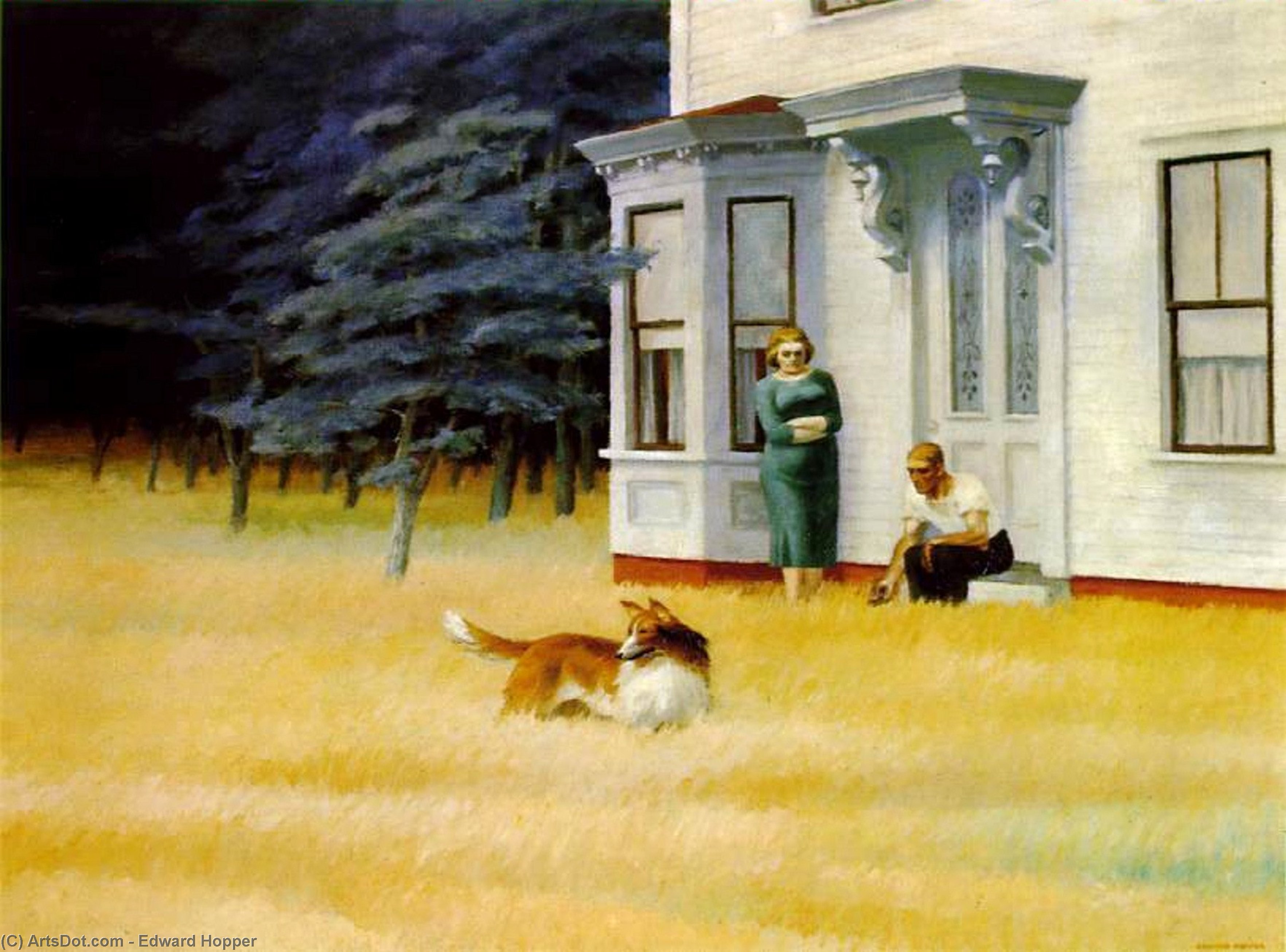
- Cape Cod evening of Mr and Mrs John H
 プリントを購入
 シェアする
シェアする シェアする
シェアする
 詳細を見る
詳細を見る

 ダウンロード
 似ている作品
 X線調査
X線調査 スライドショー
Cape Cod evening of Mr and Mrs John H


 詳細を見る
詳細を見る




P118B $10

P118H $10

P118W $10

P438Z $10

P508JH $12

P508YH $12

P805H $10

P805Z $10

P919BZ $10

P919G $10

P919XJ $10

P959ZH $10

P968JZ $12

W106C $8

W218G $10

W218JH $8

W218Y $10

W307PJ $10

W316G $10

W316PJ $8

W316Y $10

W398PJ $8

W4111J $10

W500HY $15

W500JH $15

W692G $12

W849H $8

W940BG $15

W953PJ $8




作品のオリジナル比率に合わせた、当店の規定サイズからお選びください。

特定のフレームやスペースに合わせて、ご希望のサイズをご入力いただけます。選択されたサイズが元の画像の比率と異なる場合、アートワークをトリミングするか、手描きで要素を追加して絵画を拡張いたします。デジタルモックアップ を制作し、制作開始前にご確認(承認)をいただきます。
画面上のプレビューは、実際のトリミングや拡張を正確に反映しているものではありません。最終的な構図は、モックアップによってのみ正確にご確認いただけます。
カスタムサイズもご利用いただけますが、元の比率を維持するためには、あらかじめ用意されたリストからサイズを選択することをお勧めいたします。
ご注文後、ArtsDot.com チームより詳細な指示をお送りするとともに、仕上がりイメージ(モックアップ)をご提供いたします。


 ガラスオプションは、110cm未満のサイズでのみご利用いただけます。

Cape Cod evening of Mr and Mrs John H
複製技法
複製画のサイズ
-


合計金額
-
作品解説
Edward Hopper’s Cape Cod Evening: A Portrait of Quiet Contemplation
Edward Hopper's *Cape Cod Evening*, completed in 1939, stands as an emblem of American Realism and arguably one of the most recognizable images of mid-century modern art. More than just a depiction of a seaside scene—a house bathed in twilight against a backdrop of windswept grass—the painting delves into profound themes of solitude, isolation, and the subtle beauty found within domestic tranquility. Hopper himself described it as “pieced together from sketches and mental impressions,” reflecting his meticulous approach to capturing not merely what he saw but also what he felt. ### Style and Technique: Precision Meets Atmosphere Hopper’s masterful technique is characterized by a deliberate restraint—a hallmark of his artistic vision. Executed in oil on canvas, the painting employs a muted palette dominated by browns, yellows, and blues, skillfully blending tonal gradations to create an atmosphere of palpable stillness. Hopper's meticulous attention to detail is evident in the rendering of textures: the rough surface of the porch railing, the smooth sheen of the polished wood furniture, and the delicate ripples of grass swaying in the breeze. This painstaking realism isn’t merely about accurate representation; it’s about conveying a sense of immediacy and capturing the very essence of the moment frozen in time. The use of directional lighting—a single lamp illuminating the interior—further enhances this dramatic effect, casting long shadows that emphasize the emptiness of the room and heighten the viewer's awareness of the figures within. ### Historical Context: Depression Era Reflection Painted during the Great Depression, *Cape Cod Evening* speaks to a pervasive mood of uncertainty and disillusionment prevalent in American society at the time. Hopper’s subject matter—a seemingly unremarkable evening scene—became imbued with symbolic significance as viewers interpreted it through the lens of existential anxieties. The couple on the porch represents humanity grappling with questions of purpose and connection amidst the vastness of existence. Their posture, slightly turned away from each other, suggests a disconnection despite their physical proximity – a poignant commentary on the challenges faced by individuals navigating relationships and societal pressures during this era. Furthermore, the presence of the dog serves as an anchor to domesticity and companionship, juxtaposed against the overarching feeling of loneliness. ### Symbolism: Light, Shadow, and Absence The painting’s symbolism extends beyond its narrative content. The lamp represents hope—a fragile beacon illuminating the darkness—but it also underscores the isolation experienced by those alone indoors. Hopper's masterful use of light and shadow is central to conveying this emotional resonance. The stark contrast between the illuminated interior and the darkened exterior amplifies the sense of separation, mirroring the psychological distance between the figures depicted. Even the absence of visible emotion – the couple’s faces averted from each other – contributes to the painting’s haunting beauty. Hopper deliberately avoids portraying explicit feelings, allowing viewers to project their own interpretations onto the scene and fostering a contemplative response. ### Emotional Impact: A Moment Suspended in Time Ultimately, *Cape Cod Evening* transcends its visual description; it evokes a powerful emotional experience for the observer. The painting captures a fleeting moment of domestic life—a quiet evening spent indoors—yet it resonates with an enduring sense of melancholy and introspection. Hopper’s ability to distill complex psychological states into a single image is remarkable, prompting viewers to confront questions about human connection and the pervasive feeling of solitude that characterizes modern existence. It remains a timeless masterpiece, continuing to inspire artists and captivate audiences worldwide with its understated elegance and profound emotional depth.関連作品


アーティストの略歴
Edward Hopper: A Master of American Realism, Capturing Solitude and Urban Life With Evocative Light & Shadow
Edward Hopper, a name inextricably linked to the quietude and subtle melancholy that permeated 20th-century American life, wasn’t simply a painter of scenes; he was a poet of light and shadow, a chronicler of modern isolation. Born in Nyack, New York, in 1882, to middle-class parents of Dutch ancestry, Hopper's early years provided a stable upbringing that nurtured his artistic inclinations. From childhood sketches meticulously dated and signed, it became evident that keen observation and an innate talent for drawing were central to his being. Though initially encouraged towards commercial illustration – a pragmatic suggestion from his parents – Hopper’s ambitions leaned toward fine art, leading him to the New York School of Art where he studied under William Merritt Chase and Robert Henri. These formative years instilled not only technical skill but also an appreciation for realism and a commitment to depicting the world as he saw it—unvarnished and honest. The writings of Ralph Waldo Emerson resonated deeply with Hopper, reinforcing his sense of individualism and acute observation – qualities that would become hallmarks of his artistic vision. Early travels to Paris exposed him to Impressionism, yet Hopper quickly diverged from its fleeting brushstrokes, forging a path uniquely his own. Early Life and Artistic Beginnings Edward Hopper was born in Nyack, New York, a yacht-building center on the Hudson River north of New York City, to Elizabeth Griffiths Smith and Garrett Henry Hopper, a dry-goods merchant. He possessed an exceptional aptitude for drawing from a young age, diligently documenting his surroundings with sketches signed and dated—a habit that would characterize his entire artistic career. Encouraged by his parents’ support for his creative pursuits, Hopper pursued studies at the New York School of Art under William Merritt Chase and Robert Henri, where he absorbed the principles of realism championed by Henri and honed his technical skills. These formative influences instilled in him a profound respect for observation and an unwavering dedication to portraying reality with uncompromising honesty—a stance that would define his artistic approach throughout his life. The philosophical ideas of Ralph Waldo Emerson profoundly impacted Hopper’s worldview, bolstering his belief in individualism and fostering a deep appreciation for the subtleties of human experience. Finding His Voice: Realism and the American Scene Hopper's artistic journey wasn’t immediate or effortless. He wrestled with discovering his distinctive voice, experimenting with various styles before settling into the realism that would become his hallmark. This wasn’t mere replication of reality; it was a distillation of its essence, stripping away extraneous detail to reveal underlying emotional truths. His paintings began to focus on everyday scenes—houses, diners, offices, hotel rooms—imbued with a sense of stillness and often, loneliness. He possessed an extraordinary ability to capture the psychological states of his subjects, hinting at narratives without explicitly stating them. Hopper’s technique involved careful consideration of composition and masterful manipulation of light and shadow – elements he believed were crucial for conveying mood and emotion. This approach distinguished him from many of his contemporaries who embraced abstraction, prioritizing instead a profound engagement with the visual world. Influences and Artistic Style Hopper's artistic sensibilities were shaped by several key influences. Impressionism, particularly the work of Edgar Degas and Édouard Manet, instilled in him an appreciation for capturing fleeting moments of beauty and conveying atmosphere—though he rejected its characteristic brushstrokes in favor of a more deliberate style. Robert Henri’s insistence on portraying the American landscape with unflinching honesty served as inspiration for Hopper's depictions of rural America, while William Merritt Chase encouraged him to develop his skills in portraiture and tonal painting. These influences combined to forge a unique artistic vision characterized by its quiet contemplation, understated emotion, and meticulous attention to detail. His paintings often featured solitary figures inhabiting sparsely populated spaces—a motif that became synonymous with Hopper’s oeuvre and resonated deeply with audiences across generations. Iconic Visions: Nighthawks and Beyond Hopper achieved recognition in the 1920s through his work as an illustrator, securing commissions for advertising agencies and publications. However, it was his paintings—particularly *Nighthawks* (1942)—that cemented his place in art history. This iconic image captures the pervasive sense of alienation experienced by individuals navigating urban life at night—a scene bathed in stark fluorescent light that evokes both unease and melancholy. The figures within are lost in their own thoughts, disconnected from one another despite their proximity—a poignant commentary on the human condition. Hopper’s masterful use of composition and tonal painting created a dramatic effect that captivated viewers and established him as a pioneer of American Realism. His enduring legacy lies not only in the beauty of his paintings but also in their ability to provoke reflection on themes of solitude, isolation, and the complexities of modern existence—a testament to Hopper’s profound understanding of human psychology and his unwavering commitment to portraying reality with uncompromising honesty.- His meticulous attention to detail—from the textures of brick walls to the subtle gradations of light—elevated ordinary subjects into moments of contemplative beauty.
- Hopper's ability to convey emotion through visual cues—particularly light and shadow—transformed his paintings into powerful expressions of psychological truth.
- The enduring fascination with Hopper’s work stems from its exploration of universal themes—loneliness, isolation, and the search for connection—that continue to resonate with audiences today.

エドワード・ホッパー
1931 - 1967 , アメリカ合衆国
基本情報
- Artistic Movement Or Style: リアリズム
- Artists Who Influenced This Artist:
- ウィリアム・ミルトン・チェイス
- ロバート・ヘンリー
- Date Of Birth: 1882年7月22日
- Date Of Death: 1967年5月15日
- Full Name: Edward Hopper
- Nationality: アメリカ合衆国
- Notable Artworks:
- ナイハウクス
- 鉄道沿いの家
- Place Of Birth: ニューヨーク州ナヤック
関連記事
Edward Hopper: American Realism, Urban Isolation & the Poetics of Modern Loneliness
Explore the profound world of Edward Hopper's American realism. Discover the symbolism, themes & enduring legacy of this iconic artist – from 'Nighthawks' to his lesser-known masterpieces. Expert analysis and insights.

American Realism's Defining Works: 10 Masterpieces for Your Home
Explore 10 defining American Realism masterpieces – Hopper, Homer & more. Discover the stories behind these iconic paintings and bring timeless art to your home with ArtsDot's museum-quality reproductions. Explore the full collection online.

エドワード・ホッパー傑作25選:アメリカの孤独と光影の世界 | ArtsDot
エドワード・ホッパーの傑作25選。アメリカ絵画を代表するモダンアート、孤独と光影の世界を紐解きます。名画「Nighthawks」や「ハウス・バイ・ザ・レールロード」など、美術史に残る作品群をArtsDotで高品質複製画としてお楽しみください。インテリアに深みを与えるアートプリントも多数。今すぐコレクションをご覧ください。

Echoes of Isolation: Solitude in Western Art from Renaissance to Modernism
Explore the profound representation of solitude in Western art from the Renaissance to Modernism. Discover iconic paintings & artists like Goya, Friedrich, and Rossetti. Handmade oil reproductions available at ArtsDot.

The Ashcan School: Realism, Urban Life & the Democratization of American Art
Explore the revolutionary Ashcan School! Discover how artists like Henri & Sloan challenged tradition with gritty realism, capturing urban life in early 20th-century America. Learn about their impact on American art history.



